Defending sovereignty: U.S. Pressure, Iranian Influence, and the Stance Against Foreign Intervention
February 20, 2026
The Glass Ceiling or the Regime’s Mirror? Arab Women’s Political Gains Under Scrutiny
March 9, 2026
Abstract
The February 2026 joint military strikes by the United States and Israel against Iran mark a fundamental shift in Middle Eastern strategic relations. This article argues that the current conflict represents not merely an escalation of longstanding tensions but a qualitative transformation: the abandonment of diplomacy as a meaningful framework and the embrace of military force as the primary instrument of statecraft. Drawing on Richard Overy’s seminal work Why War?, this analysis examines the convergence of security dilemmas, power calculations, belief systems, and resource competition that produced this rupture. The article contends that the war reflects a mutual perception of vulnerability—Iran’s view of its nuclear program as existential insurance, and the U.S.-Israeli view of Iranian capabilities as an unacceptable threat—that made diplomatic compromise structurally impossible. The result is a conflict with potentially catastrophic consequences for regional stability and the international order.
Keywords: Iran, US- Israel, Security Dilemma, Middle East Geopolitics, War Causation.
Introduction
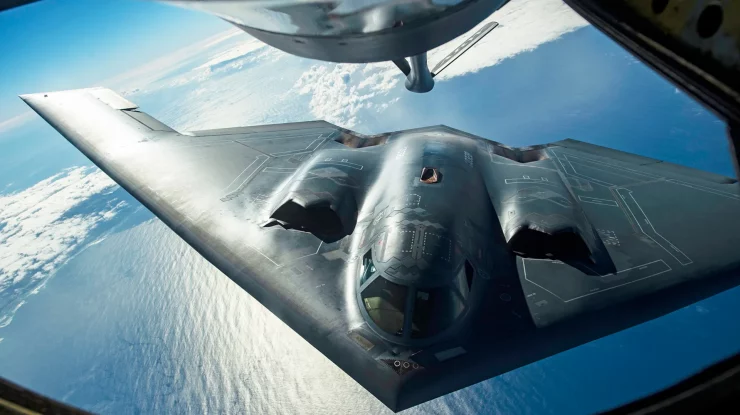
On February 28, 2026, explosions echoed across Tehran as coordinated American and Israeli airstrikes targeted Iranian nuclear facilities, military installations, and reportedly even leadership positions. Within hours, Iran responded with missile barrages against Israeli territory and American assets throughout the Persian Gulf, igniting the most serious regional conflagration since the twelve-day war of June 2025. Unlike that earlier conflict, which concluded with a cease-fire and mutual declarations of victory, the current hostilities show no signs of rapid resolution. As plumes of smoke rose over the Middle East, United Nations Secretary-General António Guterres condemned “the use of force by the United States and Israel against Iran” and warned that it “undermine[s] international peace and security.”¹
The proximate cause appears straightforward: the collapse of nuclear negotiations in Geneva. Yet this explanation, while accurate, obscures more than it reveals. Why did talks fail when both sides had demonstrated willingness to engage? Why did the United States and Israel choose this moment for major combat operations? And what does the conflict portend for the future of the region and the international system?
This article argues that the war on Iran represents the logical—perhaps inevitable—conclusion of competing structural pressures identified in Richard Overy’s masterwork Why War?. Overy, a historian of the twentieth century’s great conflicts, proposes a framework for understanding warfare through multiple explanatory levels: the general contexts that make violence possible (biology, psychology, ecology) and the specific motives that trigger it (resources, belief, power, security). “There is no single or straightforward cause to explain the persistence of warfare throughout the human past,” Overy writes. “That does not mean warfare cannot be explained, simply that there are multiple explanations, dependent on time and place.”²
Applying this framework to the 2026 crisis reveals four converging drivers. First, a profound security dilemma in which both sides perceive existential threat. Second, a power transition dynamic in which Iran’s regional influence has grown while American commitment has appeared uncertain. Third, the role of belief—ideological commitments that render compromise politically toxic on all sides. Fourth, underlying resource competition that ties the conflict to global energy security. Understanding these forces is essential not only for analyzing the current war but for anticipating its trajectory and consequences.
I. The Security Dilemma: Mutual Vulnerability and Existential Fear
Thomas Hobbes famously described the state of nature as one of “continuall jealousies” in which sovereign powers exist “in the state and posture of Gladiators; having their weapons pointing, and their eyes fixed on one another.”³ The 2026 Iran crisis exemplifies this Hobbesian condition with chilling precision.
For Israel, Iran’s nuclear program represents an existential threat unmatched since the state’s founding. Prime Minister Benjamin Netanyahu has “seen Iran as Israel’s most dangerous enemy for decades,” as BBC international editor Jeremy Bowen observes.⁴ The June 2025 strikes, which President Donald Trump declared had “obliterated” Iran’s nuclear infrastructure, provided only temporary relief.⁵ By early 2026, intelligence assessments suggested Iran was again approaching nuclear capability. U.S. Special Envoy Steve Witkoff warned that Iran was “weeks away” from building a weapon.⁶
Yet from Tehran’s perspective, the nuclear program appears not as offensive ambition but as defensive necessity. Overy notes that throughout history, “the search for security, however temporary, is present to some degree in almost every warlike encounter.”⁷ For the Islamic Republic, surrounded by American military bases, confronting a nuclear-armed Israel, and having witnessed the fates of Saddam Hussein and Muammar Gaddafi—both of whom abandoned weapons programs and subsequently fell to Western intervention—nuclear capability appears as the ultimate guarantor of regime survival.
This mutual perception of vulnerability creates what security studies scholars call the “security dilemma”: actions taken by one side to increase its own security inherently decrease the security of the other, provoking countermeasures that leave both less secure than before. Overy, citing the neorealist Jeffrey Taliaferro, observes that “the security dilemma is an intractable feature of anarchy.”⁸ The 2026 war represents the violent resolution of a dilemma that diplomacy proved unable to manage.
The breakdown of negotiations in Geneva illustrates this dynamic. According to Wang Jin, director of the Center for Strategic Studies at Northwest University, “on the fundamental issue of whether Iran’s nuclear capabilities should be completely abandoned, the U.S. and Iran are difficult to reach an agreement, and this structural divergence remains a key obstacle to negotiation breakthroughs.”⁹ Iran’s negotiators offered compromises—diluting enriched uranium stocks, accepting enhanced inspections—but refused to dismantle the program entirely. From Tehran’s perspective, doing so would leave the regime fatally vulnerable. Yet from Washington’s perspective, anything less than complete dismantlement left the threat intact.
The tragedy of the security dilemma is that neither side’s perception is irrational. Israel has ample reason to fear a nuclear-armed Iran whose leaders have called for its destruction. Iran has ample reason to fear a United States that overthrew its neighbor Iraq, that maintains devastating sanctions, and whose president promised Iranian protesters that “help is on its way.”¹⁰ In such conditions, Overy suggests, war becomes not an aberration but a recurrent possibility: “Uncertainty or distrust of the motives or behavior of neighbors has prompted warfare even where there are no grounds for the decision.”¹¹
II. Power Transition: The Vulnerability Paradox
If the security dilemma explains the underlying tensions, power transition theory helps explain the timing. The concept, derived from Thucydides’s account of the Peloponnesian War, holds that “rising powers dissatisfied with their place in the international system or declining powers anxious to perpetuate their claim to primacy initiate war for their own power ends.”¹²
The current conflict, however, presents a paradoxical variation. Iran is simultaneously weaker than at any point in decades and perceived as more threatening. The June 2025 strikes “destroyed most of its surface-to-air missile sites and punched massive holes in its early-warning radar network.”¹³ Its proxy network—Hezbollah, Hamas, Shiite militias in Iraq and Syria—has been significantly degraded. Its economy continues to suffer under sanctions. Its population has endured brutal crackdowns on protests, with the Human Rights Activist News Agency estimating thousands killed.¹⁴
Yet this very weakness, Nate Swanson of the Atlantic Council argues, “will not lead the country to capitulate at the negotiating table. On the contrary, Iran’s present fragility only narrows the space for meaningful compromises.”¹⁵ A regime fighting for survival cannot afford to appear conciliatory. Moreover, Israel and the United States now perceive an opportunity not to be missed. Jeremy Bowen writes that “Israel and the United States have calculated that the Islamic regime in Iran is vulnerable; dealing with a severe economic crisis, fallout from the brutal crackdown on protesters at the start of the year and with defences still badly damaged by last summer’s war. Their conclusion seems to have been that this was an opportunity that should not be squandered.”¹⁶
This is the vulnerability paradox: Iranian weakness made the regime less likely to compromise, which in turn made American and Israeli leaders more inclined to use force. The stalled negotiations in Geneva were not merely a failure of diplomacy but a structural inevitability. Tang Zhichao of the Chinese Academy of Social Sciences argues that “the United States and Israel have completely lost hope in negotiations, and leadership change in Iran is the goal.”¹⁷ When compromise becomes impossible and the adversary appears vulnerable, the logic of power transition points toward war.
Overy’s analysis of hubristic leadership adds another dimension. He examines figures like Alexander the Great, Napoleon, and Hitler—leaders for whom “the unlimited pursuit of war as the material manifestation of personal power” became central to their self-conception.¹⁸ While comparisons to Hitler are inevitably fraught, both Trump and Netanyahu exhibit elements of what Overy calls “destructive leadership”: “imposing goals without agreement or regard for the long-term welfare of those the leaders ostensibly represented.”¹⁹
For Netanyahu, the political calculus is evident. Facing corruption charges and an uncertain electoral future, he has consistently benefited from wartime leadership. The 2026 escalation, timed just months before Israeli elections, allows him to “demonstrate its resolve in safeguarding national security” and “consolidate support for the right-wing political base.”²⁰ For Trump, the motivations are more complex but no less personal. His approach to Iran, as Swanson observes, reflects “a mishmash of objectives”—demonstrating military prowess, strengthening negotiating credibility, honoring promises to protesters, distinguishing himself from Barack Obama.²¹ In Overy’s framework, such leaders are “the most dangerous and unpredictable cause of war.”²²
III. Belief: Ideology, Transcendence, and Intractability
If power and security explain the structural pressures toward conflict, belief explains its intensity and intractability. Overy devotes an entire chapter to the role of belief in warfare, arguing that “without recognizing the power of belief in mobilizing and permitting violence, explanations for many kinds of warfare will be incomplete or poorly understood.”²³
On the American side, belief operates through what Overy, following Emilio Gentile, terms “political religion.” Trump’s worldview, as articulated in The Art of the Deal, assumes that “the primary motivating force in politics and life is transactional.”²⁴ Yet this transactional framework fundamentally misunderstands the nature of the adversary. As Jeremy Bowen observes, “dealing with Iran requires factoring in the power of ideology and belief. That is much harder to measure.”²⁵
Iranian belief is rooted in the 1979 revolution’s founding ideology: opposition to American domination, support for Palestinian resistance, and the vision of an Islamic republic governed by clerical oversight. Supreme Leader Ali Khamenei, now in his fourth decade of rule, embodies this ideological commitment. The Islamic Revolutionary Guard Corps (IRGC), which Trump threatened with “certain death” if it did not lay down arms, exists explicitly “to defend the regime against threats at home and abroad.”²⁶ Its members have absorbed a culture of martyrdom derived from Shi’a Islam and the Iran-Iraq War’s horrific sacrifices.
This ideological dimension renders compromise extraordinarily difficult. John Limbert, a former U.S. diplomat and hostage in Tehran, has observed that “Iran doesn’t give in to pressure—only to a lot of pressure.”²⁷ Yet even extreme pressure, as Swanson notes, may not produce capitulation: “The regime believes that the missile program undergirds its grip on power. Trump fails to comprehend that no matter how weak Iran is or how much force the United States deploys, Khamenei will never willingly negotiate the end of the Islamic Republic. He would rather die a martyr.”²⁸
Overy’s analysis of the Crusades provides a historical parallel. He notes that for both Christian and Muslim participants, “belief seems paramount in explaining the origin and character of crusader warfare, and its ultimate object.”²⁹ Contemporary observers who dismiss religious motivation as epiphenomenal—as a mask for “real” material interests—miss the essential nature of the conflict. “There has been a reluctance,” Overy writes, “to abandon the ‘rational actor model’ or to accept that there may be other realities for those who choose war.”³⁰
The belief dimension also operates through the concept of the “enemy” as dehumanized other. Overy discusses how “the dehumanization of the enemy makes such violence appear legitimate, reinforcing the sense of psychological identity of the in-group and removing any sense of guilt at inflicting harm.”³¹ In the current conflict, both sides engage in this dynamic. Iranian rhetoric depicts America as the “Great Satan” and Israel as a cancerous tumor. American discourse increasingly characterizes the Iranian regime as a death cult whose elimination would liberate the Iranian people. Trump’s video address to Iranians, declaring that “the hour of freedom” was at hand, reflects this framing.³²
When enemies are dehumanized, compromise appears not merely difficult but morally corrupt. Negotiation becomes collaboration with evil. The “friend-or-foe” distinction that Carl Schmitt identified as the essence of the political becomes absolute.³³ In such conditions, war is not a failure of diplomacy but its logical continuation.
IV. Resources: Oil, Sanctions, and Global Energy Security
Beneath the security dilemmas, power calculations, and ideological commitments lies the material substratum of resource competition. Overy notes that “the quest for resources through violent conflict has an exceptionally long pedigree” and that “the materialist, or economic, basis for warfare has been and continues to be a widely favored answer to Einstein’s question.”³⁴
The Persian Gulf remains the world’s most strategically significant energy region. Approximately 20 percent of global oil passes through the Strait of Hormuz daily. Iran has repeatedly threatened to close the strait if attacked, and Khamenei recently warned of sinking U.S. aircraft carriers.³⁵ The February 2026 conflict has already disrupted shipping, sent oil prices soaring, and threatened global economic stability.
Yet the resource dimension extends beyond oil flows. Nate Swanson notes that Iran “may seriously consider targeting the Gulf Arab states’ energy infrastructure directly.”³⁶ Such attacks would devastate the economies of U.S. allies—Saudi Arabia, the United Arab Emirates, Qatar, Kuwait—and could trigger a global recession. The fact that Iran has already launched missiles at U.S. assets in Bahrain, which hosts the U.S. Navy’s Fifth Fleet, indicates its willingness to expand the conflict’s geographic scope.³⁷
The resource dimension also operates through sanctions. The “maximum pressure” campaign, reinstated by Trump in early 2025, has strangled Iran’s economy. Oil exports have plummeted, inflation has soared, and unemployment has reached crisis levels. These economic pressures contributed to the protest movement that erupted in early 2026 and that the regime brutally suppressed. Yet sanctions have not produced the desired political change. Instead, they have deepened regime paranoia, reduced the space for compromise, and convinced Iranian leaders that survival requires nuclear capability.
Overy’s analysis of the “resource wars” literature is pertinent here. He notes that “resources themselves do not cause conflict: violence has political and commercial motives, involving control over the regional source, or the flow of commodity trade, or the export destination.”³⁸ In the Iran case, oil is not the casus belli but the strategic context that makes the region perpetually contested. The United States maintains its military presence in the Gulf not to seize Iranian oil but to ensure the stable flow of global energy supplies—a mission that Iran’s retaliation now directly threatens.
The resource dimension also illuminates the divergence between American and Israeli objectives. Israel, as Tang Zhichao notes, “hopes to completely eliminate the strategic threat from Iran, not only nuclear, ballistic missiles, and drones, but also hopes to completely eliminate the threat from Iran and its regional allies.”³⁹ The United States, by contrast, has more limited aims: preventing nuclear weapons, protecting energy supplies, and avoiding a quagmire. Trump, Tang argues, “does not rule out overthrowing Iran’s leadership, but he is unwilling to consume excessive resources or get bogged down in Iran.”⁴⁰
This divergence reflects different positions in the global economy. Israel’s security concerns are existential and immediate. America’s concerns are about systemic stability and resource flows. The current conflict may expose these differences, as prolonged hostilities strain U.S. military resources and test allied solidarity.
V. The International Response: A Divided World
The global reaction to the February 2026 strikes reveals the fractured state of the international order. Russia condemned the “premeditated and unprovoked act of armed aggression.”⁴¹ China expressed “high concern” and insisted that “Iran’s sovereignty, security and territorial integrity should be respected.”⁴² European leaders called for restraint and a return to negotiations but declined to participate in or endorse the military action.⁴³
The most striking responses came from the region itself. Oman, which had mediated the failed negotiations, expressed dismay that “active and serious negotiations have yet again been undermined” and urged the United States “not to get sucked in further.”⁴⁴ Saudi Arabia condemned Iranian attacks on Gulf states but avoided endorsing the American-Israeli strikes. Qatar and Kuwait, both hosting U.S. military assets, protested Iranian violations of their sovereignty while maintaining their American alliances.⁴⁵
This fragmented response reflects the collapse of the post-1945 international order that Overy’s book implicitly chronicles. The United Nations Charter’s prohibition on the use of force, the Security Council’s role in authorizing military action, the norm of territorial integrity—all appear increasingly hollow. As Bowen observes, the war represents “another blow to the tottering system of international law.”⁴⁶
The legal justification offered—self-defense against imminent threat—rests on shaky ground. Israel described its strikes as “pre-emptive,” but as Norwegian Foreign Minister Espen Barth Eide noted, “preventive attacks require an immediately imminent threat.”⁴⁷ No such evidence has been presented. The United States invoked the threat Iran poses to global security, but this rationale stretches the concept of self-defense beyond recognition. Overy, discussing the 2003 Iraq War, observes that “the ostensible claim that Iraq possessed weapons of mass destruction and would use them if pushed was regarded at the time, and demonstrated subsequently, to be without foundation.”⁴⁸ History may render a similar judgment on the 2026 war.
The international response also reveals the limits of diplomacy in the face of determined military action. UN Secretary-General Guterres “strongly encourage[d] all parties to return immediately to the negotiating table.”⁴⁹ Yet with bombs falling and missiles flying, negotiations are impossible. The talks in Geneva, which had consumed months of diplomatic effort, lie in ruins. Wang Jin concludes that “the military actions have severely disrupted existing dialogue mechanisms” and that “within Iran, there is little short-term space for political or public support for continuing dialogue with Washington.”⁵⁰
This is perhaps the conflict’s most consequential outcome. Even if a cease-fire can be negotiated, the trust necessary for meaningful diplomacy has evaporated. Overy, reflecting on the persistence of warfare, quotes Kenneth Waltz: “Theorists explain what historians know: War is normal.”⁵¹ In the Iran case, war has become not merely normal but self-perpetuating.
Conclusion: Clausewitz in the Persian Gulf
Carl von Clausewitz famously described war as “the continuation of politics by other means.” The 2026 Iran war represents the brutal inversion of this formulation: the failure of politics by diplomatic means, and the resort to violence as the only remaining instrument.
Applying Richard Overy’s analytical framework reveals why this failure occurred. The security dilemma created conditions of mutual existential fear. Power transition dynamics—specifically, the vulnerability paradox—made compromise structurally impossible. Belief systems on both sides transformed opponents into dehumanized enemies with whom negotiation appears morally corrupt. Resource competition ensured that the stakes would be perceived as too high for concession.
None of these factors alone explains the war. Their convergence, in a specific historical moment, produced an outcome that was perhaps overdetermined. Overy writes that “the complex ways in which warfare has been shaped by natural imperatives and human agency operating in tandem means abandoning the idea that explaining warfare can be simple.”⁵² The 2026 conflict exemplifies this complexity.
The consequences are likely to be severe and lasting. Iran will retaliate, as it already has, drawing the United States and Israel into a potentially endless cycle of strike and counter-strike. Regional states will be forced to choose sides, deepening the polarization that has destabilized the Middle East for decades. Global energy markets will suffer prolonged disruption. International law and the UN Charter will suffer further erosion.
Most troublingly, the war may validate the very logic that produced it. If Iran survives the assault, its leaders will conclude that nuclear capability is the only reliable guarantor of security. If the United States and Israel achieve their military objectives, they will be tempted to repeat the formula. The security dilemma, unresolved, will intensify.
Overy concludes his magisterial study with a sobering observation: “If war has a very long human history, it also has a future.”⁵³ The war on Iran confirms this judgment. Whether it also offers lessons for avoiding future conflicts remains an open question—one that historians, diplomats, and citizens will grapple with for years to come.
Notes
¹ “Roundup: World Reacts to U.S.-Israeli Attack on Iran with Concerns, Condemnations, Calls for Dialogue,” Xinhua, February 28, 2026.
² Richard Overy, Why War? (New York: W.W. Norton & Company, 2024), 307-308.
³ Overy, Why War?, 197.
⁴ Jeremy Bowen, “Bowen: A Dangerous Moment, but US and Israel See Opportunity Not to Be Missed,” BBC News, February 28, 2026.
⁵ Liu Kun, “Israel-U.S. Joint Military Actions in Iran Further Destabilize an Already Chaotic World,” CGTN, February 28, 2026.
⁶ Ilan Goldenberg and Nate Swanson, “America’s Best Chance to Transform Iran,” Foreign Affairs, January 31, 2026.
⁷ Overy, Why War?, 199.
⁸ Overy, Why War?, 221.
⁹ Wang Jin, “Reasons and Influence Behind U.S. and Israel’s Attack Against Iran,” CGTN, March 1, 2026.
¹⁰ Nate Swanson, “Why Iran Will Escalate,” Foreign Affairs, February 24, 2026.
¹¹ Overy, Why War?, 224.
¹² Overy, Why War?, 191.
¹³ Liu Kun, “Israel-U.S. Joint Military Actions.”
¹⁴ Swanson, “Why Iran Will Escalate.”
¹⁵ Swanson, “Why Iran Will Escalate.”
¹⁶ Bowen, “A Dangerous Moment.”
¹⁷ Tang Zhichao et al., “Analysts Say Stalled Talks Drove U.S.-Israeli Strikes on Iran; Leadership Change Is Potential Goal,” CGTN, February 28, 2026.
¹⁸ Overy, Why War?, 189.
¹⁹ Overy, Why War?, 189.
²⁰ Wang Jin, “Reasons and Influence.”
²¹ Swanson, “Why Iran Will Escalate.”
²² Overy, Why War?, 190.
²³ Overy, Why War?, 143.
²⁴ “Trump Advisers See Political Advantage in Israeli Strike on Iran First: Report,” Anadolu Ajansı, February 26, 2026.
²⁵ Bowen, “A Dangerous Moment.”
²⁶ Swanson, “Why Iran Will Escalate.”
²⁷ Goldenberg and Swanson, “America’s Best Chance.”
²⁸ Swanson, “Why Iran Will Escalate.”
²⁹ Overy, Why War?, 147.
³⁰ Overy, Why War?, 168.
³¹ Overy, Why War?, 48.
³² Swanson, “Why Iran Will Escalate.”
³³ Overy, Why War?, 46-47.
³⁴ Overy, Why War?, 112.
³⁵ Swanson, “Why Iran Will Escalate.”
³⁶ Swanson, “Why Iran Will Escalate.”
³⁷ Liu Kun, “Israel-U.S. Joint Military Actions.”
³⁸ Overy, Why War?, 131.
³⁹ Tang Zhichao et al., “Analysts Say Stalled Talks.”
⁴⁰ Tang Zhichao et al., “Analysts Say Stalled Talks.”
⁴¹ “World Insights: Global Leaders Voice Concerns, Call for Diplomacy Following U.S.-Israeli Strikes on Iran,” Xinhua, March 1, 2026.
⁴² “World Insights,” Xinhua.
⁴³ “World Insights,” Xinhua.
⁴⁴ “Roundup: World Reacts,” Xinhua.
⁴⁵ “Roundup: World Reacts,” Xinhua.
⁴⁶ Bowen, “A Dangerous Moment.”
⁴⁷ “World Insights,” Xinhua.
⁴⁸ Overy, Why War?, 137.
⁴⁹ “World Insights,” Xinhua.
⁵⁰ Wang Jin, “Reasons and Influence.”
⁵¹ Overy, Why War?, 225.
⁵² Overy, Why War?, 228-229.
⁵³ Overy, Why War?, 230.
References
Bowen, Jeremy. “Bowen: A Dangerous Moment, but US and Israel See Opportunity Not to Be Missed.” BBC News, February 28, 2026. https://www.bbc.com/news/world-middle-east-68456789.
Goldenberg, Ilan, and Nate Swanson. “America’s Best Chance to Transform Iran.” Foreign Affairs, January 31, 2026. https://www.foreignaffairs.com/iran/americas-best-chance-transform-iran.
Liu Kun. “Israel-U.S. Joint Military Actions in Iran Further Destabilize an Already Chaotic World.” CGTN, February 28, 2026. https://www.cgtn.com/analysis-iran-strikes-022826.
Overy, Richard. Why War? New York: W.W. Norton & Company, 2024.
Swanson, Nate. “Why Iran Will Escalate.” Foreign Affairs, February 24, 2026. https://www.foreignaffairs.com/iran/why-iran-will-escalate.
Tang Zhichao, et al. “Analysts Say Stalled Talks Drove U.S.-Israeli Strikes on Iran; Leadership Change Is Potential Goal.” CGTN, February 28, 2026. https://www.cgtn.com/analysis-iran-strikes-022826.
“Trump Advisers See Political Advantage in Israeli Strike on Iran First: Report.” Anadolu Ajansı, February 26, 2026. https://www.aa.com.tr/en/middle-east/trump-advisers-see-political-advantage-in-israeli-strike-on-iran-first-report/3456789.
Wang Jin. “Reasons and Influence Behind U.S. and Israel’s Attack Against Iran.” CGTN, March 1, 2026. https://www.cgtn.com/analysis-iran-strikes-030126.
“World Insights: Global Leaders Voice Concerns, Call for Diplomacy Following U.S.-Israeli Strikes on Iran.” Xinhua, March 1, 2026. https://www.xinhuanet.com/english/2026-03/01/c_139876543.htm.
“Roundup: World Reacts to U.S.-Israeli Attack on Iran with Concerns, Condemnations, Calls for Dialogue.” Xinhua, February 28, 2026. https://www.xinhuanet.com/english/2026-02/28/c_139875432.htm.
Hicham Ismaili
University of Sidi Mohamed Ben Abdellah, Fes, Morocco
Faculty of Law
Laboratory of Political Studies and Public Law
https://orcid.org/0009-0000-0822-4517
E-mail: hicham.ismaili@usmba.ac.ma