
Algorithmic Warfare in Evolution: A Cyber-Conflict Analysis of Israel’s AI Targeting from Gaza 2021 to Gaza 2023-2025
January 6, 2026
The Multipolar Trap in the New Middle East: How Gulf States Are Learning to Hedge in an Uncertain World Order
January 20, 2026The ostensible Israeli recognition of Somaliland between breakthrough and liability: a constructivist analysis
1. Introduction
As Prime Minister Benjamin Netanyahu repeatedly stated, “not everyone who wants a country gets one,” confirming that most aspirants did in fact get a country. Somalia became a country with borders encompassing most of Somali ethnics in 1960, after both the United Kingdom (UK) and Italy relinquished control over Somali territories. At that time, (South) Yemen and the United Arab Emirates were still under British control.
After a decades-long struggle to reconcile various factions and formidable attempts to organize the political landscape, movements and conflicts aiming to annex further Somali-inhabited territories from neighboring countries, and a stiff internal power competition, the Somalis remain entangled between aspirations and capacity, and between interests of exogenous actors.
The December 2025 Israeli recognition of Somaliland was considered both daring and controversial, as it barely resembles a normalization pathway. Normalization, in the sense of international cooperation and peace, and in the declared peaceful sense of Abraham Accords, implies a pathway to stability and collaboration. However, as the Abraham Accords appear to have triggered a regional militarization, amid an Israeli uninterrupted use of military force in neighboring countries and against Iran, and Saudi response to the Israeli attack from Qatar hints at a response to Israeli escalation, the Israeli recognition of Somaliland can hardly be equated to a “normalization”, unless the state of continuous conflict is considered normal.
After failed attempts to obtain recognition from neighbors and great powers, Somaliland has been officially recognized by Israel, a small state, and embattled in various conflicts, that has been recognized by most countries around the world, including great powers, but not all its Middle Eastern neighbors. Current research aims to analyze the significance of mentioned recognition, and its potential impact throughout the broader region.
2. Theoretical framework and methodology
Somaliland is a federal state within Somalia with sinuous and contextual claims to independence as a separate state. Since Somalia is recognized at international / United Nations (UN) level as a state with clearly borders, this study employs the formal term Somaliland as a federal state of Somalia from a normative perspective, without any implication related to UN human rights and internationally shared values.
Amid a tense international scene, with growing multidimensional and circular conflicts, and numerous indications of international law’s potential infringements, Israeli government selected Somalia’s Somaliland state as a potential new partner in its regional domination strive: from this perspective, Israel is a much more assertive regional actor when compared to Somaliland. Although realist frameworks tend to better match conflictual situations, international relations explanatory paradigms contain both common and distinctive elements, as well as dominant research directions. For example, the power balance is a wider and more encompassing analysis criterion, but the constructivist framework allows assessing data from the perspective of “making choices in the process of interacting with others” (Fierke, 2013, p. 189), and the constraints on freedom of choice in various circumstances.
The considered constructivist framework emphasizes on social construction of reality, hence Israel’s recognition of Somaliland is a constructed object, with meaning and use according to Fierke, part of a larger object, i.e. the mutual but unsymmetrical recognition agreed upon by the two partners: presuming that the publicly available data is accurate enough, and Israel aims to build a military base, and attempt to relocate Palestinians on the territory of Somaliland, there are no symmetrical claims from Somaliland to build military presence in Israel or relocate population on Israeli territory. From this perspective, the meaning and use of recognitions might be reciprocal, but differently balanced in various dimensions. Furthermore, there are competing objects, or social constructs, that interact with the mutual Israeli – Somaliland recognition, and these may find themselves in various stages of development. As Israel plans to expand regional influence, regional competitors and other forums not only condemn the recognition (Ahram, 2026) (Al Arabiya, 2026) (Xinhua Arab League, 2025), but employ measures to counter what they perceive as threats to own interests (TOI Staff TR, 2026).
When considering the process of change, constructivism focuses particularly on norms, values, beliefs, shared understanding and structures as part of actors’ identities. The adopted constructivist explanatory framework maintains that language is “bound up in the world rather than a mirror of it” (Fierke, 2013, pp. 193-194). This latter perspective on language allows distinguishing between the objects of recognition themselves, i.e. official or public statements as objects, on one hand, interactions with other objects and other parameters of the social change process.
The study includes three main sections. In the first section, a brief historical review of processes in which Somaliland was involved is delivered, with emphasis on identities, meanings, norms and rules. Subsequently, the mutual Israel – Somaliland recognition and wider context are analyzed, accentuating on language, historical patterns and related social constructs/objects, and in the final section, responses to and implications of the initiative, until January 17th, 2026, are assessed.
3. Somalia and Somaliland since 1960: transformations and change processes
Constructivism challenges the assumption of states’ “sameness” in time and space, Fierke emphasizing that “sovereignty or the borders dividing states exist only by virtue of human agreement” (Fierke, 2013, p. 192), equating them to social facts, i.e. social constructs or objects with meaning and use/value.
In the early 20th century, the UK was expanding its presence in the Red Sea along European competitors such as France and Italy, and the Ottoman Empire was still attempting to counter European challenges at its borders, including on the territory of contemporary Somalia. With more or less Ottoman help, various Somali factions were fighting British, Italian and Ethiopian occupation forces. London regarded its Somali possessions as paramount to commercial interests in India, and along the Suez Canal route. British-occupied Somalia was closely connected to the British Protectorate of Aden from contemporary Yemen, and represented a major factor in British control of the Suez route.
The most prominent Somali nationalist initiative at the beginning of 20th century, the Dervish movement, was based and stretched mostly across territories that Somaliland claims. Peter Schraeder claims that even these anti-colonial and anti-occupation efforts were organized based on clans rather than pan-Somali movements, and emphasizes four factors that shaped Somali national identity, and nationalism. According to Schraeder, Somalia reportedly hosts Africa’s most homogenous population encompassing 75 % inheritors of Samaale pastoral nomads and 20 % inheritors of Sab, i.e. a sedentary agricultural community from the inter-river Somali region, along a common culture, language, literature and religion (Islam). The other three factors were clan structure and allegiance system, a “segmented”, i.e. distributed, political system – called by the author “a nation without a state”, and the impact of colonialism (Schraeder, 2006, pp. 110-112).
The largest clan families in contemporary Somalia are the Hawiye, Daarood, Isaaq, Dir (Samaale) and Digil and Rahanwayn. Whether Hawyie or Daarood is the largest clan depends on the assessed territory: while Hawiye tends to be presented as the clan with highest population in Somalia, Daarood stretches on the territories of Ethiopia (Ogaden) and North-East Kenya and is the largest clan family from the Horn of Africa (Africa 101 Daarood, 2026). The Hawiye tribe also inhabits parts of Djibouti, Ethiopia, and Kenya, and represent the majority in capital city of Somalia, Mogadishu (Africa 101 Hawiye, 2026). Somali tribes also constitute the largest ethnic group from Djibouti, and the Somali diaspora was nearing 2 million as of 2015, with large communities in Kenya, Ethiopia, Yemen, the UK, US, Canada, Scandinavian countries, Netherlands, Germany, and other countries (Connor & Krogstadt, 2016).
As the two Somali colonial territories administered by Italy and the UK gained independence and founded Somalia in 1960, further Somali-inhabited territories remained under foreign rule: the French “Le Territoire Français des Afars et des Issas” became independent as Djibouti, Ethiopian-annexed Ogaden remained under Addis Abeba’s control, and the Northern Frontier District (NFD) remained under British-ruled Colony/Protectorate of Kenya. Various sources, particularly those that support the partition of Somalia, and a separate (British) Somaliland country, argue that Somaliland was an independent country for the less than one week period between July 26th, 1960, when the UK granted independence to British Somaliland, and July 1st, when Italy granted independence to Italian Somaliland and the union of these territories took place in a recognized country. The sources also equate the recognition of British Somaliland by several dozens of countries with the existence of a pre-Somalia Somaliland.
The one nation one state endeavor does not represent a unique Somali endeavor after 1960, but a rather broader regional tendency after 1960. Combined with the segmented political landscape, and the military takeover by Siad Bare (from Daarood clan family), and Soviet support to Ethiopia in the last phase of Ogaden War, it consumed significant resources of a young Somali state, and contributed to further internal fragmentation.
From an identity perspective, Somalia pursued the same trajectory of countries that attempted to follow the rule of one nation one country. Post-World War II (WWII) history offers many examples of ethnical groups living across borders of recognized countries, in post-colonial and other states. Therefore, the attempt to transform a self-imposed rule into a norm, proved so far both futile and costly for its proponents in Somalia.
The 1960 British Somaliland pursued a nationalist, pan-Somali, trajectory throughout initial decades, as it did during foreign occupation, but in the wake of Siad Bare’s overthrow in 1991, United Somali Congress (USC), a Hawiye faction, attempted to monopolize power without significant success, and generated significant rifts between Somali centers of power. The concept of a self-declared independent Somaliland, despite a unity pledge, emerged initially in 1991 as a response to USC’s power grab attempt, rather than an objection to the fundamental Somali identity, culture, religion, or unity.
The social construct/object of secession was the Burao Grand Conference attended by clan elders (guurti, i.e. council of elders) and Somali National Movement (SNM) with the purpose of repealing the union act of 1960. After serving as Somaliland’s first President Abdirahman Ahmed Ali Tuur (1991 – 1993), shifted back his perspective and in 1994 supported federalism, relinquishing separatism (Bryden, 2004, p. 24).
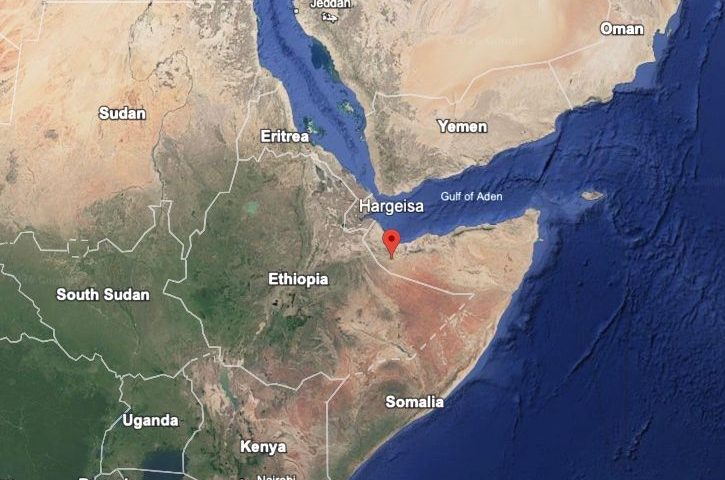
Successive administrations in Somaliland attempted to obtain international recognition, unsuccessful for the period 1991 – 2025, considering the so-called recognition by Chinese Taipei and Israel’s December 2025 recognition. This has maintained a tense political landscape in Somaliland, and while demanding recognition as an independent state, Hargeisa faces territorial control challenges similar to the ones Mogadishu faces for the entire Somalia. On the territory of Somaliland and bordering Puntland – another federal state of Somalia, the North Eastern State / SSC-Khatumo (self-declared breakaway state from Somaliland with capital city at Las Anod) controls territories claimed by Somaliland (Hassan, 2025) and pursues a pan-Somali/nationalist agenda, as well as alignment with Mogadishu. The maps presenting regions controlled by SSC-Khatumo hint at a significant footprint of approximately one third of Somaliland’s claimed territory, after the 2023 Las Anod war. Furthermore, the relations between Awdal Region, claimed as part of Somaliland territory, and Hargeisa oscillated after latter’s self-declared independence. As of early December 2025, a three-months long ongoing tension was reported in the Awdal region, with the potential to draw Ethiopia, Djibouti and other parts of Somalia into a crisis (Barawani, 2025). The Awdal State Movement seeks “…to establish the Awdal State as an independent entity with autonomy within the federal structure of Somalia…” (Awdal State Movement, 2026), and tensions between Hargeisa and Awdal populations are not new.
While SSC-Khatumo claims control of its territory, the Awdal region has not yet instated control over a territory, but spats and political differences with Hargeisa are identifiable and ongoing. The representation of SSC-Khatumo and Awdal Region territories relative to Hargeisa-controlled regions depend on a perspective. A minimalist representation from literature, that depicts Hargeisa’s fully controlled territory as relatively large is presented in figure 1a, and a maximalist perspective, also from literature/media, that presented Hargeisa’s fully controlled territory as a smaller part of entire Somaliland’s territory, is presented in Figure 1b.
Figure 1. Perspectives on Awdal region/state and SSC-Khatumo State territories relative Hargeisa-controlled regions

Figure 1a. Minimalist representation of Awdal and SSC-Khatumo territories (Bhardwaj, 2024).

Figure 1b. Larger/maximalist representation of Awdal and SSC-Khatumo territories (Xunjuf, 2012)
The unilaterally-constructed object of secession from Mogadishu has been thus altered in the sense that, despite maintaining autonomy and a relatively independent governing structure, Somaliland does not control anymore the territory it claims. Furthermore, the secessionist identity assumed by Hargeisa has been challenged by internal forces that resisted military attacks, hinting at more political agendas rather than one. Consequently, the identity of entire Somalia shaped by the four factors, i.e. Somali ethnical, cultural, religious homogeneity, clans, distributed political system and colonialism, appears to dominate the identity of the breakaway Somaliland federal state in a similar manner at a smaller scale, although potentially with relatively small but not systematic differences.
In a post-recognition media release, Israeli media equates the presence of a “mysterious tribal clan” on the territory of Somaliland, and the presence of Yemenite Jewish merchants with “Somaliland’s little-known Jewish past” (Stub, 2026). Amid enthusiasm, the report transforms the identity of Somaliland as a Somali politically-organized entity, into an entity potentially connected to Israel from an ethnic perspective, facilitating thus further new (territorial) claims, such as the one on Ethiopia, formulated by Erwin Kraft and Marie Ginsberg in their 1944 letter to Paul Richman, as part of the Harrar Council / Council For An Autonomous Jewish Province in Harrar, Ethiopia. In the mentioned letter, prophetic words from the Book of Sohar are mentioned: “The Diaspora will come to an end when Jews enter the Land of Cush” (Harrar Council, 2026), a plan ultimately rejected by Ethiopia despite claimed support from the Americans and British.
Besides Israel, further actors raise additional claims to Somalia and Somaliland. The British appear to pursue a post-colonial joint development and cooperation framework, and other regional and global powers project further plans including this region and its inhabitants. Meanwhile, Mogadishu is fighting own internal divisions, secession attempts, and insurgency from groups like Al Shabab, after one of the longest UN-imposed arms embargoes in history, spanning from 1992 to 2023, when the restrictions were lifted for the Somali Armed Forces and Somali federal government.
4. Israel’s recognition of Somaliland in context
The official acknowledgement of Somaliland’s recognition was published on the Israeli Ministry of Foreign Affairs (MoFA) website on December 26th, 2025 (Israel MoFA, 2025), alongside a declaration signed by Prime Minister Bejamin Netanyahu and Minister of Foreign Affairs Gideon Sa’ar (Netanyahu & Sa’ar, 2025).
The Declaration by the State of Israel is a simple one-page with a hardly distinguishable apostille in English, with approximately 150 words including title and signatories. It states that the recognition of Somaliland had been considered at the request of latter’s president. In motivating the recognition, this document cites shared values, strategic interests and mutual respect among peoples. The establishment of full diplomatic relations is expected to contribute, according to declarants, to peace, stability and prosperity. The declaration’s structure is classical and concise, listing two reasons (the request and shared values, interests, reciprocal respect), one action (the recognition itself) and a call to action (establishment of relations for advancing peace, stability and prosperity).
The acknowledgement published by Israeli MoFA (Israel MoFA, 2025) expands on the context, emphasizing on the connection with Abraham Accords, and cooperation in the fields of agriculture, health, technology, and economy.
In the sense of Fierke’s distinction between reason and cause (Fierke, 2013, pp. 197-199), the two official reasons provided in the declaration are defining the constructed object, i.e. the recognition, as an act anchored in recognizable norms and values. Additional reasons claimed by various parties as an argument for countries to recognize Somaliland as a state, unsuccessful so far, include also the so-called compliance with the Montevideo criteria (Osman, 2026), from a convention signed by 19 American states before the United Nations system was instated and decolonization became mainstream. Neither does Somaliland act according to 1933 historical conditions, nor did the UN countries consider this reason so far, but from a constructivist perspective, it can be further analyzed as a reason with the purpose of convincing countries to recognize Somaliland, although the Israeli declaration did not list it. From the same perspective, a potential convolution between the officially-stated reasons, and Somaliland’s invoked “Jewish past” may render the recognition more complex.
In the 2026 global dynamics, recognition’s context is more complex, and many causes may have contributed to its implementation. Israel’s Agency for International Development Cooperation (MASHAV, 2025) has worked since 1958 to expand cooperation with African and other states around the world, among others through aid. In the context of this paper, relations particularly with countries from the Horn of Africa and East Africa attempted to overcome traditional competition, but also relatively new energic actors like Türkiye’s TIKA (TIKA, 2026) may have raised the stakes and determine resolute measures. Although the Abraham Accords represented a breakthrough in expanding Israel’s recognition, the radical unilateral measure of recognizing Somaliland may hint at challenges in continuing their enlargement, unless this was a complementary measure not directly related by Accords’ evolution.
The hypothesis that Israel’s action may trigger a chain reaction, and suggestions for the US (Meservey, 2026) or President Trump (Rubin, 2025) to follow suit and recognize Somaliland would place the US in a follower’s position, whilst the US has both the political capital and experience to initiate and carry out recognitions from a leading position. However, suggestions for the US to recognize Somaliland, for example from British media, are not new (Harper, 2025).
In UK Parliament’s session on the Recognition of Somaliland from January 2022 (UK Parliament, 2022), the debate includes reference to discrimination against “people from the north of Somalia in historically British Somaliland”. The recognition of Somaliland was connected to opportunities for both inhabitants of Somaliland and British investors and business, and the perspective of Somaliland joining the Commonwealth was also debated. British contributions to already achieved development were discussed, along joint investments in Berbera port by British International Investment (BII) in cooperation with Emirati company DP World. The reasons for a potential British recognition of Somaliland as an independent state resemble in essence with those considered by Israel, although the potential Commonwealth membership perspective contrasts with the type of cooperation envisioned by Israel, and unofficial suggestions on Somaliland’s Jewish past from the media.
As the world had strived to update global connectivity especially after China’s Belt and Road Initiative (BRI) had been launched, the strategic location of Berbera port was recognized by both the UK and Israel, but also Ethiopia (Rickett & Hooper, 2026). As a landlocked country, Ethiopia attempted to gain access to the Red Sea after Eritrea’s independence, by securing 19 % stake in Berbera port from 2018 until mid-2022 when it lost the rights (Desiderio Consultants, 2022), and signed the MoU with Somaliland in January 2024 to build a naval base on latter’s coast (Mosley, 2024). Ethiopia’s relentless quest for access to trade routes represents a third important factor connected to Somaliland’s status and evolution, confirmed by Adissa Ababa’s January 2026 decision to pursue the $ 12.5 bln. construction of Africa’s largest airport under the coordination of Ethiopian Airlines (Endeshaw, 2026).
Emirati influence in the Red Sea and Somalia is connected in literature and media reports with both Israeli cooperation and an increased control over adjacent trade routes. Particularly the port from Berbera (Somaliland), operated by DP World, proved its key role in potential crisis situations, such as the getaway of Aidous al-Zubaidi, head of Emirati-backed Southern Transitional Council from Yemen, to Berbera via a boat, and then airplane to the UAE (Gritten, 2026).
Tel Aviv and London regarded Somaliland’s independence as a goal aligned with their interests, and Addis Ababa appears to favor any solution that might provide it with effective sea access. The UAE pivoted between Mogadishu and Hargeisa, with a wider view on region’s strategic role, while Türkiye worked exclusively with Mogadishu and signed agreements in oil and gas sector, maritime security and defense (Baez, 2024), and fisheries (Birceroglu, 2025). Except the cooperation between Mogadishu and Ankara, frameworks mentioned above tend to favor or at least consider Somaliland’s independence. Therefore, should Israel’s recognition of Somaliland trigger subsequent recognitions, particularly from countries that have clearly expressed interest in either economic or security/military projects on its territory, besides the challenges posed by Somaliland’s breakaway SSC-Khatumo-controlled region, Mogadishu’s opposition along its supporters in this matter, overlapping interests may arise.
Besides arranging financial support for Israeli companies seeking to enter Somaliland (i24NEWS, 2026), the regional role of Somaliland as envisioned by Israel may include hosting a military base (TOI Staff & Berman, 2026), as literature reports an accelerated militarization resulting from the Abraham Accords (Dana, 2023). A potential advancement of defense cooperation between Tel Aviv and Hargeisa, or the situation of potential Israeli military assets on Somaliland’s territory vis-à-vis the SSC-Khatumo confrontation have not yet been analyzed in detail. Likewise, Awdal Regions aspirations to become a separate independent federal subject (state) in Somalia may be impacted by an imminent Tel Aviv – Hargeisa militarization in the Horn of Africa.
Unlike the UK, the United States appear to balance between goals within alliances, such as the one with Israel, and sovereign goals, such as its counterterrorism operations in Somalia carried out with Mogadishu. Hence, the reality constructed by Israel’s recognition of Somaliland as independent state does not fill a clear void in American policy for this region.
5. Reactions to the Israel – Somaliland deal and broader considerations
Unilaterally recognizing Somaliland as an independent state might also aim to place Israel into a group of countries that set directions on the international stage, assuming that this initiative is pursued by other countries. From a normative perspective, it rather reinforces the concept of a tolerant international community, and a further departure from the UN-led consensus pursued also by former superpowers and contemporary competitors. Apart from previously-analyzed British, Ethiopian and Emirati interests in the region, and a tacit or public approval of Somaliland’s independence, be it declared by Hargeisa, Tel Aviv or under any other form, there is no to very scarce evidence of a normative pathway for this initiative. Washington defending Israel’s right to recognize Somaliland resonates more with the norm to unconditionally support Israel rather than a hypothetical norm of allowing states to contest UN-recognized states and their borders. Hence, the right to recognize regions from other countries territories as independent state is not a right that the US actually championed in recent decades or throughout 20th century.
The contentious nature of this recognition is confirmed by the group of entities Israel entered when recognizing Somaliland. Entities such as Taiwan, an island recognized by the US as part of China through the One China Policy, and Liberland, an utopian project itself rather than a recognized state that reportedly had recognized Somaliland (Jirglová, 2017), preceded Israel’s recognition of Somaliland as an independent state. Reciprocally, should the recognition be followed by strengthened cooperation, Hargeisa would join a larger confrontation in which Israel and its allies are involved, as Ukraine became involved in a wider front including at least Africa (Melly, 2024) and Syria (Spirlet, 2024), after the invasion of its territory by the Russian Federation in 2022. In this context, various reports claim an alleged Israeli plan to displace Palestinians to Somaliland, but such allegations have not been identified in any official statement or press release from the two parties.
Mogadishu strongly condemned the recognition as an Israeli “flagrant assault” on its territorial integrity and sovereignty, as did many other UN states and organizations. The League of Arab States and Organization of Islamic Cooperation and member states such as Egypt, Kingdom of Saudi Arabia (KSA), Türkiye, among others, condemned the recognition (Fetouri, 2026). On the occasion of Israeli recognition, The European Union (EU) reaffirmed the importance of respecting sovereignty and territorial integrity of Somalia, its constitution, the Charters of the African Union and of United Nations (EEAS Press Team, 2025), while the African Union’s Chairperson rejected the recognition (African Union, 2025). China reportedly called out selfish interests and collusion with external forces vis-à-vis the recognition, and reaffirmed support for Somalia (Reuters, 2025). Hence, irrespective of the tone and language, Israel clearly did not consult or agreed with European or African institutional partners in pursuing Somaliland’s independence, nor did a relatively recognized normative framework exist on the act or process of recognition that was carried out.
The reasons for rejecting Israel’s recognition of Somaliland as independent country are very diverse. They span from the strive to maintain post-colonial borders in various regions in order to avoid widespread global instability to concerns of many countries related to own separatist movements. Additionally, Somaliland’s pivot towards an Israel-centered regional order strengthens the concerns of regional countries with respect to a Greater Israel-like domination project, with potential consequences on their respective territories. From this perspective, it also underlines the limits and fragility of Abraham Accords, that if considered as a norm that can be sustainably developed, it would have required coordination at least at regional level. The development further underlines the variation of commitment to declared norms and values in time and space, and to previous agreements.
The September 2025 Israeli bombing in Doha, with military planes, has been responded to by an immediate Strategic Mutual Defense Agreement between KSA and Pakistan, as the perspective of an Israeli domination over the region, rather than cooperation, became more apparent. Despite historical divisions, regional powers such as Türkiye, Iran, Saudi Arabia and Egypt appear to converge on increasingly more regional security issues, and strengthen cooperation.
Israel’s interests in the Red Sea and the Horn of Africa have been identified in literature as aligned to Emirati interests in recent years, the two parts cooperating especially after signing the Abraham Accords. This alignment was visible particularly in Yemen, the Socotra Islands developments, and reportedly in Sudan (Robinson, 2025). Likewise, the Israeli recognition of Somaliland as independent state overlaps at least with DP World’s presence in Berbera, although UAE’s cooperation framework with Mogadishu went beyond Berbera port and Somaliland’s territory. However, amid Israeli recognition of Somaliland as independent state by Israel, and the Saudi – Emirati spat from Yemen, Mogadishu decided to cancel all agreements with Abu Dhabi, including operation of ports, and to ban Emirati aircraft from utilizing Somali airspace (Eshetu, 2026). In doing so, the so-called Israeli-Emirati “Axis of Fragmentation” (Cafiero, 2026), “Axis of Secession” (Aynte, 2026), or “Arc of Influence”, reportedly visible in Libya, Yemen, Sudan, Somalia and Syria, is confronted with logistical challenges at least on short term on Somalian territory and at its ports. The creative names may isolate this conflict form from previous confrontations, such as the Arab Spring, but it essentially confirms an almost continuous conflict that destabilizes certain regional countries to the expected benefit of others.
As global powers and regional countries rush to open bases in the Red Sea, the architecture of regional alliances is also evolving. The two BRICS members, Egypt and Ethiopia remain entangled in a protracted conflict related to Grand Ethiopian Renaissance Dam (GERD) and in general regional influence. Egypt signed relatively recent cooperation agreements with Djibouti and strengthened its partnership with Eritrea, constraining Ethiopia’s choices related to Red Sea access. As Egypt secures leverage over Ethiopia, Saudi Arabia is reforming its regional alliances system, by working, after the defense pact with Pakistan, on a military coalition with Egypt and Somalia (Marks & Dagher, 2026). Furthermore, the coordination between Saudi Arabia and Pakistan on one hand, and the potential extension of the framework to include Türkiye (Hussain, 2026), while the restoration of relations with Iran amid a Chinese mediation effort is ongoing. Although Israel and KSA were signaling cooperation on regional peace and development through various frameworks, such as Abraham Accords or India-Middle East-Europe Economic Corridor (IMEEC), the two countries appear to expand and consolidate competing alliances, a development visible in Somalia as well.
The process of change in regional relations exacerbates older confrontation patterns and hints at the potential reverse of a pacification based on Israeli-Saudi cooperation. From a constructivist perspective, most Persian Gulf countries found themselves in a societal and economic transformation process, aiming to transition from a rentier-state system towards diversification and post-oil sustainable economies. The transformation process and projects like Neom rely on a pacified region, capable to compete with other regions in tourism and other economic sectors. Such an endeavor signaled readiness to align norms and interests in order to stabilize the entire region. KSA’s leverage especially as a leading OPEC member, with the capacity to sovereignly negotiate in global energy markets, is likely to shift once the world begins to phase out fossil fuels. Hence, any action challenging the norms and assumptions on which the transition was planned, is perceived as a threat to Saudi state itself, be it in Yemen or Somaliland. Hence, although not a neighbor of Somalia, KSA still reacted vigorously.
Israel’s recognition represents a complex and dynamic promise to Hargeisa, and the two partners expect mutual benefits should the relations develop significantly in a positive direction, and reactions do not overpower the created paradigm with other constructs. Deposits of gypsum, iron and titanium ore, gold, tin gemstones and other minerals, oil and gas, sea coast and territorial waters represent potential assets for developing local economy, but as the case of South Sudan demonstrated, these are not guarantees. Nor is the good relation with an assertive state, as demonstrated by the recent spat between Argentina and Israel, that although planned to move its Embassy from Israel to Jerusalem, reportedly reversed the plans. In early January 2026, news emerged that the Israeli company Navitas Petroleum was joining Rockhopper (UK) in a $ 2.1 bln. project to extract petroleum from the Malvinas (Falkland Islands for the British), despite lacking agreement between Argentina and the UK, as mandated by a 1976 UN resolution requiring no unilateral action by Argentine or the UK (TOI Staff Malvinas/Falkland, 2026).
6. Conclusion
In late December 2025, Israeli government issued a statement recognizing Somalia’s breakaway region Somaliland as an independent state. The subsequent common actions, such as state visits envision a developing relation between Tel Aviv and Hargeisa, on multiple levels. Constructivism has been adopted as the main analysis framework, the study focusing on identities, meanings, values, norms and rules rather than balance of power or economic considerations.
Somaliland’s evolution as part of Somalia in the post-colonial era was marked by challenges and difficulties, as were those of other Somali regions and neighboring countries. Citing hardships, the Somaliland declared itself an independent state in 1991 and unsuccessfully attempted to obtain recognition on the international stage, despite sharing the same ethnic roots, cultural space and religion with other Somali regions.
The study identified that while certain sources claim a so-called compliance with Montevideo criteria for statehood, even if hypothesizing that the criteria were relevant – subject to a use case analysis, Hargeisa reportedly faces challenges in controlling claimed territory. The Somali federal government recognized Khatumo State, situated on the territory claimed by Hargeisa, and considers to establish a new federal-aligned administration in Awdal State, raising the question which territory did the Israeli government recognize.
Somali political sphere is dominated by clan and sub-clan structures and allegiance systems. Somaliland’s bid to capitalize on this state of affairs in its attempt to become a separate state would have to overcome this challenge, but territorial disputes and other conflicts, such as the ones from Awdal region, hint at difficulties in tackling the same problems that Mogadishu also strives to overcome.
Although Israeli media emphasizes on a potential common heritage, associated to Jewish presence in Somaliland or broader region, the recognition itself resembles a calculated exchange of favors and assets, in the broader competition based on interests. The study distinguishes between reasons and causes, and analyses recognition’s context. While it may align with Ethiopian and British interests, it is only Israel as a state that joins a small group of actors that reportedly recognized Somaliland, such as Liberland and Chinese Taipei.
The recognition constructs a bridge between Tel Aviv and Hargeisa, but operating it successfully might be challenging due to regional dynamics. Conflicts from West Asia/Middle East, and particularly the one from Sudan, prompted neighboring countries to reassess region’s dynamics and responses. While Israel and the UAE are reportedly carrying out a joint secessionist agenda, Saudi Arabia appears to take leadership in responding to assertive measures together with Somali federal government and other partners. The geopolitics of recognition can thus be assessed from an Axis of Fragmentation perspective, while the role of Abraham Accords in uniting Saudi and Israeli efforts towards regional appears to become a secondary agenda.
The study determined that Ethiopia’s lack of a sea port on terms it considers acceptable represents a major factor in region’s stability/instability, along disputes with Egypt. As Ethiopia did not manage to negotiate a stable and advantageous solution with the federal Somali government, Addis Abeba positions itself closer to the Hargeisa – Tel Aviv – London axis of interests rather than Mogadishu, although a potential separate recognition remains distant. Ethiopia itself struggles to cope with the secession of Eritrea.
While the recognition of Somaliland as independent state by Israel represents a contested political move, it cannot be separated from a broader Israeli push to advance regional influence, which triggered successive increasingly energic responses from regional powers such as Türkiye, Saudi Arabia and Egypt. On one hand, Israeli government’s economic and military calculus related to Somaliland may hint at gains, hence the decision can contribute to a breakthrough. But at the same time, the issues it faces in Syria, Lebanon, confrontation with Iran and the ever-increasing presence of Pakistan in alliances with countries that geographically surround Israel have the potential to transform the bold recognition act into another endless war front.
Bibliography
Africa 101 Daarood. (2026, January 11). Darod (Somali Clan). Retrieved from Africa: 101 Last Tribes: https://www.101lasttribes.com/tribes/darod.html
Africa 101 Hawiye. (2026, January 11). Hawiye (Somali clan) / Hawiya. Retrieved from Africa: 101 Last Tribes: https://www.101lasttribes.com/tribes/hawiye.html
African Union. (2025, December 26). The Chairperson of the African Union Commission rejects any recognition of Somaliland and reaffirms the African Union’s unwavering commitment to the unity and sovereignty of Somalia . Retrieved from African Union: https://au.int/en/pressreleases/20251226/auc-chairperson-rejects-any-recognition-somaliland
Ahram. (2026, January 10). Egypt reaffirms support for Somalia’s unity, Palestinian rights at OIC Extraordinary Meeting. Retrieved from Ahram Online: https://english.ahram.org.eg/NewsContent/1/1234/560241/Egypt/Foreign-Affairs/Egypt-reaffirms-support-for-Somalia%E2%80%99s-unity,-Pales.aspx
Al Arabiya. (2026, January 09). Saudi Arabia condemns Israeli FM visit to Somaliland . Retrieved from Al Arabiya: https://english.alarabiya.net/News/saudi-arabia/2026/01/09/saudi-arabia-condemns-israeli-fm-visit-to-somaliland-
Awdal State Movement. (2026, January 17). About us. Retrieved from Awdal State Movement: https://awdalstatemovement.com/about/
Aynte, A. (2026, January 16). Why Israel’s recognition of Somaliland backfired. Retrieved from Al Jazeera: https://www.aljazeera.com/amp/opinions/2026/1/16/why-israels-recognition-of-somaliland-backfired
Baez, K. (2024, June 18). Türkiye signed two major deals with Somalia. Will it be able to implement them? Retrieved from Atlantic Council: https://www.atlanticcouncil.org/blogs/turkeysource/turkey-signed-two-major-deals-with-somalia-will-it-be-able-to-implement-them/
Barawani, A. (2025, December 10). Awdal and the strategic calculus in the Horn . Retrieved from Geeska: https://www.geeska.com/en/awdal-and-strategic-calculus-horn
Bhardwaj, A. (2024, December 15). What is significance of Adwal state and Khatumo state both bordering Somaliland . Retrieved from Foreign Affairs Forum: https://www.faf.ae/home/2024/12/15/what-is-significance-of-adwal-state-and-khatmmo-state-both-bordering-somaliland
Birceroglu, E. (2025, December 22). Somali fisheries minister hails strategic cooperation with Türkiye. Retrieved from Anadolu Agency: https://www.aa.com.tr/en/africa/somali-fisheries-minister-hails-strategic-cooperation-with-turkiye/3777692
Bryden, M. (2004). SOMALIA AND SOMALILAND: Envisioning a dialogue on the question of Somali unity. African Security Review 13(2), 23-33.
Cafiero, G. (2026, January 14). Exposed fault lines: Why the Saudi-UAE alliance has ruptured. Retrieved from The New Arab: https://www.newarab.com/analysis/exposed-fault-lines-why-saudi-uae-alliance-has-ruptured
Connor, P., & Krogstadt, J. M. (2016, June 01). 5 facts about the global Somali diaspora. Retrieved from Pew Research Center: https://www.pewresearch.org/short-reads/2016/06/01/5-facts-about-the-global-somali-diaspora/
Dana, T. (2023, June). The Geopolitics of the Abraham Accords: A Critical View on Militarization . Retrieved from PRISME: https://prismeinitiative.org/publications/abraham-accords-tariq-dana/
Desiderio Consultants. (2022, June 10). Ethiopia loses 19% stake in the port of Berbera. Retrieved from Desiderio Consultants: https://www.ddcustomslaw.com/index.php?option=com_content&view=article&id=640:ethiopia-loses-19-stake-in-the-port-of-berbera&catid=1:ultime&Itemid=50&lang=it
EEAS Press Team. (2025, December 27). Retrieved from EU External Action: Israel/Somalia: Statement by the Spokesperson on the territorial integrity of the Federal Republic of Somalia
Endeshaw, D. (2026, January 13). Ethiopia begins $12.5 billion construction of ‘Africa’s biggest airport. Retrieved from Reuters: https://www.reuters.com/world/africa/ethiopia-begins-125-billion-construction-africas-biggest-airport-2026-01-10/
Eshetu, B. (2026, January 13). Saudi In, UAE Out: Somalia’s Strategic shift. Retrieved from Horn Review: https://hornreview.org/2026/01/13/saudi-in-uae-out-somalias-strategic-shift/
Fetouri, M. (2026, January 15). Somaliland and the Israeli recognition: A post-mortem of Arab strategic impotence. Retrieved from Middle East Monitor: https://www.middleeastmonitor.com/20260115-somaliland-and-the-israeli-recognition-a-post-mortem-of-arab-strategic-impotence/
Fierke, K. (2013). Constructivism. In T. Dunne, M. Kurki, & S. Smith, International Relations Theories – Discipline and Diversity (pp. 187-204). Oxford: Oxford University Press.
Gritten, D. (2026, January 07). Saudi-led coalition says UAE helped smuggle separatist leader out of Yemen. Retrieved from BBC: https://www.bbc.com/news/articles/c5y2mvp3r2do
Harper, M. (2025, January 2025). The would-be African nation in love with Donald Trump. Retrieved from BBC: https://www.bbc.com/news/articles/cp3j1qn0499o
Harrar Council. (2026, January 11). PROJECT FOR SETTLEMENT OF JEWISH REFUGEES IN HARRAR PROVINCE, ETHIOPIA (1944). Retrieved from linktr.ee: https://linktr.ee/TsedayM#270026132
Hassan, F. (2025). Map of SSC Khaatumo State. Retrieved from X: https://x.com/FaisalAHassan/status/1861044615018692964
Hussain, T. (2026, January 16). Türkiye, Pakistan, Saudi Arabia plan defence pact as US-Iran row threatens Middle East. Retrieved from South China Morning Post: https://www.scmp.com/week-asia/politics/article/3340136/turkey-pakistan-saudi-arabia-plan-defence-pact-us-iran-row-threatens-middle-east
i24NEWS. (2026, January 11). Theses are the Israeli companies set to enter Somaliland’s market. Retrieved from i24 News: https://www.i24news.tv/en/news/israel/diplomacy/artc-theses-are-the-israeli-companies-set-to-enter-somaliland-s-market
Israel MoFA. (2025, December 26). Israel recognizes the Republic of Somaliland as an independent and sovereign state . Retrieved from gov.il: https://www.gov.il/en/pages/israel-recognizes-the-republic-of-somaliland-as-an-independent-and-sovereign-state-26-dec-2025
Jirglová, P. (2017, September 26). Liberland Signs Memorandum of Understanding with Somaliland. Retrieved from Free Republic of Liberland: https://liberland.org/news/liberland-signed-memorandum-of-understanding-with-somaliland-on-cooperation-in-banking-technology-and-energy-sectors-259.htm
Marks, S., & Dagher, S. (2026, January 16). Saudi Arabia in Talks With Egypt, Somalia on Military Coalition. Retrieved from Bloomberg: https://www.bloomberg.com/news/articles/2026-01-16/saudi-arabia-in-talks-with-egypt-somalia-on-military-coalition
MASHAV. (2025, January 13). MASHAV – Aid from Israel. Retrieved from MASHAV: https://mashav.mfa.gov.il/
Melly, P. (2024, August 12). Was Ukraine’s role in big Wagner defeat an own goal in Africa? Retrieved from BBC: https://www.bbc.com/news/articles/c78ld18lgr9o
Meservey, J. (2026, January 12). Israel recognized this small enclave as a country. America should, too. Retrieved from The Washington Post: https://www.washingtonpost.com/opinions/2026/01/12/somaliland-trump-somalia-africa/
Mosley, J. (2024, February 19). Ethiopia’s Quest for Sea Access and the Question of Somali Sovereignty. Retrieved from African Arguments: https://africanarguments.org/2024/02/ethiopias-quest-for-sea-access-and-the-question-of-somali-sovereignty/
Netanyahu, H., & Sa’ar, H. (2025, December 26). Declaration by the State of Israel (in Jerusalem, on 26 December 2026). Retrieved from gov.il: https://www.gov.il/BlobFolder/news/israel-recognizes-the-republic-of-somaliland-as-an-independent-and-sovereign-state-26-dec-2025/en/English_NEWSROOM-2025_Declaration_by_the_State_of_Israel-26-dec-2025.jpg
Osman, M. (2026, January 13). Recognizing Somaliland Would Be in Somalia’s Interest . Retrieved from The Times of Israel: https://blogs.timesofisrael.com/recognizing-somaliland-would-be-in-somalias-interest/
Reuters. (2025, December 29). China opposes recognition of Somaliland, affirms support for Somalia. Retrieved from Reuters: https://www.reuters.com/world/china/china-opposes-recognition-somaliland-affirms-support-somalia-2025-12-29/
Rickett, O., & Hooper, S. (2026, January 09). UK government co-owns Somaliland port at centre of Horn of Africa crisis. Retrieved from Middle East Eye: https://www.middleeasteye.net/news/uk-government-co-owns-somaliland-port-spotlight-over-horn-africa-crisis
Robinson, W. N. (2025, November 13). Blood and business: The Israel-UAE nexus fuelling Sudan’s war. Retrieved from THe New Arab: https://www.newarab.com/analysis/blood-and-business-israel-uae-nexus-fuelling-sudans-war
Rubin, M. (2025, December 28). Recognizing Somaliland Would Be Trump’s Ultimate Response to Ilhan Omar. Retrieved from AEI: https://www.aei.org/op-eds/recognizing-somaliland-would-be-trumps-ultimate-response-to-ilhan-omar/
Schraeder, P. J. (2006). From Irredentism to Secession. In L. W. Barrington, After Independence: Making and Protecting the Nation in Postcolonial & Postcommunist States (pp. 107-137). Ann Arbor: University of Michigan Press.
Spirlet, T. (2024, June 04). Ukraine sent special forces to Syria to attack Russians there, revealing a new front to the war: report . Retrieved from Business Insider: https://www.businessinsider.com/ukraine-special-forces-syria-attack-russians-new-war-front-report-2024-6
Stub, Z. (2026, January 01). Somaliland’s little-known Jewish past spans Yemenite traders and contested legends. Retrieved from The Times of Israel: https://www.timesofisrael.com/somalilands-little-known-jewish-past-spans-yemenite-traders-and-contested-legends/
TIKA. (2026, January 13). Turkish Cooperation and Coordination Agency. Retrieved from TIKA: https://tika.gov.tr/en/
TOI Staff Malvinas/Falkland. (2026, January 11). Report: Argentina halts Jerusalem embassy move over Falklands drilling dispute. Retrieved from The Times of israel: https://www.timesofisrael.com/report-argentina-halts-jerusalem-embassy-move-over-falklands-drilling-dispute/
TOI Staff TR. (2026, January 11). Türkiye said ‘very likely’ to join Saudi Arabia-Pakistan mutual defense pact. Retrieved from Tthe Times of Israel: https://www.timesofisrael.com/turkey-said-very-likely-to-join-saudi-arabia-pakistan-mutual-defense-pact/
TOI Staff, & Berman, L. (2026, January 08). Somaliland official confirms talks with Israel on hosting a military base. Retrieved from The Times of Israel: https://www.timesofisrael.com/somaliland-official-confirms-talks-with-israel-on-hosting-a-military-base/
UK Parliament. (2022, January 18). UK Government Recognition of Somaliland, Volume 707: debated on Tuesday 18 January 2022. Retrieved from UK Parliament – Hansard: https://hansard.parliament.uk/Commons/2022-01-18/debates/8DBF2CDF-6DDF-4E0A-A2C6-9D677628EBFB/UKGovernmentRecognitionOfSomaliland
Xinhua Arab League. (2025, December 29). Arab states condemn Israel’s recognition of Somaliland, calling it threat to regional stability. Retrieved from Xinhua: https://english.news.cn/africa/20251230/2930e276156b4b359ea9790e612b0a5a/c.html
Xunjuf, X. (2012, March 18). Allssc reveals the khaatuumo Map . Retrieved from Somalia Online: https://www.somaliaonline.com/community/topic/59578-allssc-reveals-the-khaatuumo-map/
Ecaterina MATOI
Prof. Ecaterina MAȚOI is Program Director at MEPEI, and President, Strategic Dialogue for Global Affairs Initiative (SDGAi)