Tracing King Salman Energy Park: Saudi Arabia’s Drive for Localisation of Energy Supply Chain
December 14, 2025
Algorithmic Warfare in Evolution: A Cyber-Conflict Analysis of Israel’s AI Targeting from Gaza 2021 to Gaza 2023-2025
January 6, 2026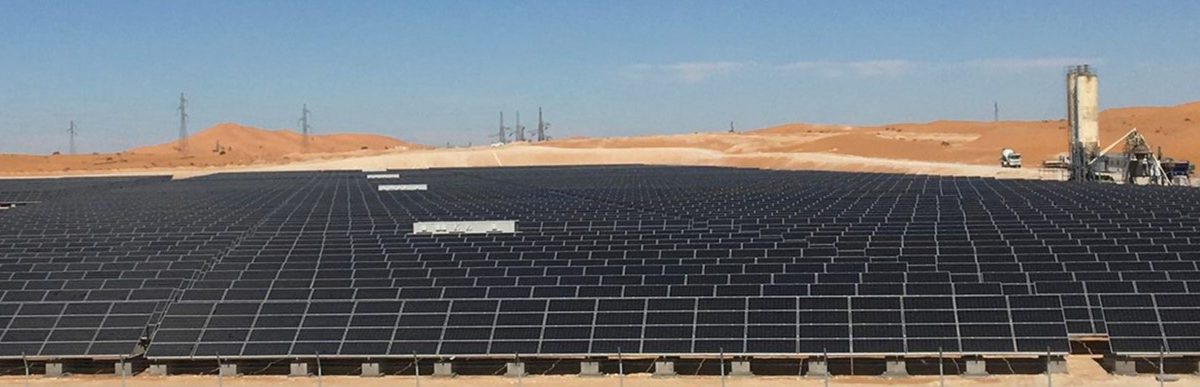
The global energy transition has become an urgent challenge for the Middle East and North Africa (MENA), changing economic models, political priorities, and regional power dynamics. For many years, hydrocarbon wealth shaped the region’s ties to the global economy and supported domestic social contracts.
Currently, faster decarbonization, new technologies, and changing energy demand are pushing MENA hydrocarbon states to ask how they can stay relevant as the world moves away from fossil fuels.Early predictions that oil and gas producers would quickly decline have not come true. Instead, the energy transition is creating a new landscape where success depends on adaptability, strong governance, and planning ahead. Hydrocarbons will still be important in global energy markets for some time, but their future as a reliable source of economic security is less certain.
The Changing Global Energy Context
Global demand for oil and gas has not collapsed, although its future trajectory is increasingly constrained by climate policies, electrification, and technological innovation. Major economies are investing heavily in renewables, electric vehicles, hydrogen, and carbon capture technologies. At the same time, energy security concerns exacerbated by geopolitical tensions and supply disruptions have introduced new complexities.
This dual dynamic has created a paradox for MENA producers: short-term demand and revenues remain strong, while long-term prospects are clouded by structural decline.This challenge is especially tough for states that depend on oil and gas exports for financial stability. The issue is not just about switching to renewables, but about changing whole economic systems that rely on energy income.
Diverging Pathways Among MENA States
MENA hydrocarbon states are responding differently to the energy transition. Wealthier Gulf Cooperation Council (GCC) countries, such as Saudi Arabia, the United Arab Emirates, and Qatar, are actively using their financial reserves and state resources to manage the transition. They focus on diversifying their economies, investing in renewable energy, and aiming to lead in low-carbon technologies such as green hydrogen.
Saudi Arabia’s Vision 2030 shows that the country recognizes that oil alone cannot support long-term growth or jobs. Large investments in renewables, tourism, logistics, and advanced manufacturing are meant to reshape its economy. The UAE is also working to be both a major oil exporter and a regional centre for clean energy, hosting climate events and growing its solar and nuclear capacity.
In contrast, countries like Algeria, Iraq, and Libya face bigger challenges. They face limited financial flexibility, governance challenges, and political instability, which make it hard to invest in diversification or renewable energy on a large scale. In these states, the energy transition could make their existing problems worse rather than providing a clear path to change.
Energy Transition as a Political Economy Challenge
The energy transition is not just a technical or environmental issue; it is also highly political. In many MENA countries, oil and gas revenues support social contracts where economic benefits are traded for political support. Subsidized energy, public jobs, and welfare systems have long relied on income from hydrocarbons.
As revenues become more volatile and competition intensifies, and revenues become less predictable and competition grows, governments must make tough choices. Cutting subsidies and changing labor markets are needed for the economy, but can be politically risky. If not handled well, these reforms could lead to social unrest, especially in countries with many young people and high rates of unemployment, as they negotiate state–society relations. Investments in renewable energy, digital infrastructure, and private-sector development can support more inclusive growth models if accompanied by institutional reform and transparency. Without such reforms, diversification efforts risk reproducing rent-seeking dynamics under a new label.
The Strategic Role of Gas and “Transition Fuels”
Natural gas occupies a critical, if contested, position in MENA’s energy future. Many producers view gas as a “bridge fuel” that can support decarbonization while maintaining export revenues. Qatar’s expansion of liquefied natural gas (LNG) capacity illustrates how gas-rich states aim to remain indispensable to global energy markets during the transition.
However, depending on the gas, there are risks. If climate policies become stricter faster than expected, long-term investments in gas infrastructure could lose value. Additionally, the concerns about methane emissions and the full environmental impact make it harder to argue that gas is a clean option. For MENA countries, the key question is whether investing in gas aligns with a real long-term transition plan or merely extends their reliance on hydrocarbons.
Renewables, Hydrogen, and Competitive Advantage
The region’s natural advantages, abundant sunlight, vast land availability, and existing energy infrastructure position MENA states as potential leaders in renewable energy and green hydrogen production. Large-scale solar projects are already among the cheapest in the world, and hydrogen offers a pathway to export clean energy using familiar trade relationships.
But having the right technology is not enough. Success also requires strong regulations, regional collaboration, and links to global value chains. Competition is growing, as countries in Africa, Australia, and Latin America have similar goals. MENA states need to go beyond plans and small projects to create solutions that work at scale and make money.
Conclusion: Adaptation, Not Decline
The energy transition does not mean MENA hydrocarbon states will disappear, but it does mean they cannot keep doing things the same way. Countries that adapt early by diversifying their economies, reforming governance, and investing in low-carbon technologies are more likely to stay influential. Those who wait may face financial problems, social unrest, and being left behind.
In the end, the future of MENA hydrocarbon states depends more on their own decisions than on how fast the world decarbonizes. The energy transition tests their ability to govern, make tough choices, and plan for the long term. It is not just an economic shift, but a key moment in the region’s modern political economy.