Guterres in Damascus: Restoring the Role of the United Nations and Syria’s Future in the Emerging Regional Order
July 27, 2026
The Mecca Joint Defense Agreement and the Limits of Gulf Strategic Autonomy
August 8, 2026Syria and China: Seven Decades of Political Accumulation and the Transformation of Geography into a Strategic Opportunity
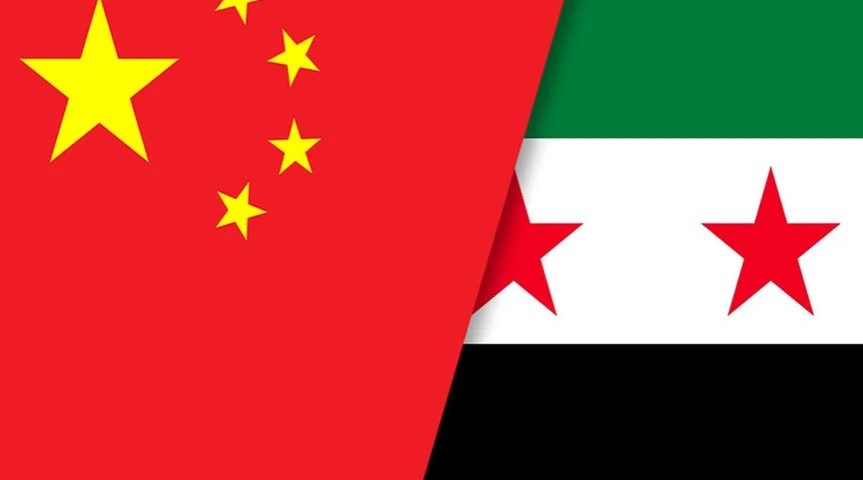
Introduction: A Relationship That Transcends History and Reflects the Reshaping of the International Order
As Syria and China commemorate the seventieth anniversary of the establishment of diplomatic relations between them, this occasion represents more than merely a chronological milestone in the history of bilateral relations. It reflects a long historical trajectory shaped over seven decades by major transformations that have redrawn the map of the international order.
Syrian–Chinese relations began at a time when the world was experiencing a sharp ideological division between East and West during the Cold War. The relationship then passed through the collapse of the bipolar international system and has now entered a period in which the world is gradually moving from an era of unipolar dominance toward a more complex order characterized by multiple centers of power and the growing interaction between economic and geopolitical interests.
From an international relations perspective, the importance of this relationship cannot be measured solely by the volume of trade or the number of agreements signed. Its significance lies in the intersection between Syria’s geopolitical position and China’s vision of global transformation.
Syria lies at the heart of the Arab Levant, a region that has historically served as a meeting point for major trade routes and civilizations. China, meanwhile, has transformed over the past four decades from a developing country seeking integration into the global economy into a rising international power building economic, technological, and commercial networks that extend across continents.
For this reason, the relationship between Damascus and Beijing cannot be understood merely as a bilateral relationship between two states. It is part of a broader transformation in the nature of global power, in which economic corridors, supply chains, technology, and development partnerships have become major instruments of influence.
As international relations scholar Joseph Nye argues, power in the twenty-first century no longer depends solely on military capabilities; it is also linked to the ability to build networks of influence and interdependence. From this perspective, Syrian–Chinese relations represent a model of a cumulative relationship founded on political trust and strategic convergence rather than on a conventional military alliance.
- Seventy Years of Political Accumulation: From Early Recognition to Strategic Trust
Syria was among the first Arab countries to establish diplomatic relations with the People’s Republic of China in 1956, at a time when Beijing was striving to consolidate its international presence within a global system governed by the strategic calculations of the Cold War.
At that time, China did not possess the economic and technological power for which it is known today. Nevertheless, it had a clear political vision based on principles that would later become central elements of its foreign policy, most notably respect for state sovereignty, non-interference in internal affairs, and support for the right of peoples to choose their own political paths.
Syria, having only recently emerged from the colonial era, was seeking a framework for international relations that would enable it to preserve the independence of its political decision-making in a region that had become an arena for competition among the major powers.
It was here that an important convergence emerged between the Chinese and Syrian perspectives. China emphasized the right of states to determine their own choices free from external pressure, while Syria placed national independence and the rejection of political dependency at the center of its approach.
During the Cold War, the relationship between the two countries was not a military alliance directed against a third party. Rather, it provided a space for political convergence on a number of international issues, particularly those concerning national sovereignty and the rejection of the imposition of political models from abroad.
This particular feature gives the Syrian–Chinese relationship its distinct character. It was not built on the basis of “shared hostility” or opposition to a specific adversary, but rather on a convergent vision of the need for an international order that grants medium-sized and smaller states a meaningful margin of independence and freedom of action.
- China’s Rise and the Redefinition of the Middle East’s Importance
With the beginning of China’s reform and opening-up process in the late 1970s, the nature of China’s role in the world began to change gradually.
China no longer focused solely on gaining political recognition. Instead, it moved toward building a global network of economic and strategic partnerships capable of supporting its development and safeguarding its long-term interests.
Within this context, the Middle East acquired increasing importance in Chinese strategic thinking. Beijing’s interest in the region was no longer linked solely to energy resources; it also became closely associated with the region’s geographical position within the global trade network.
The concept of power has changed in the twenty-first century. While the geopolitical thinker Halford Mackinder viewed control over the “Heartland” as being closely connected to the control of geographical space, contemporary competition increasingly revolves around the ability to influence and secure networks of communication, energy, technology, and economic corridors.
It was within this context that China launched the Belt and Road Initiative in 2013 as a project aimed at rebuilding networks of connectivity among Asia, Europe, and Africa—not only through infrastructure, but also through the creation of a more interconnected economic space.
Within this framework, Syria acquires particular importance because it lies at a historic intersection between the Eastern Mediterranean and the Asian interior. For centuries, it formed part of the trade routes linking China with the Arab world and Europe.
Syria’s geography therefore gives it the potential to play a role that extends beyond its political borders and to become part of emerging Eurasian connectivity networks, provided that the appropriate conditions are in place.
III. Syria in China’s Strategic Calculations: From Geographic Location to Political Value
China does not view Syria merely as a country located in the Middle East, but as a state with geopolitical value because of its central position in the Arab Levant.
Syria’s stability is indirectly connected to the stability of regional trade and energy routes—an issue of importance to China as one of the world’s largest industrial and trading economies in terms of the volume of its external trade.
Syria also possesses political significance that exceeds the scale of its economy. It is a country with a long history and influence within the Arab regional environment, and a stable relationship with Damascus provides China with a broader presence in a region experiencing increasing international competition.
Syria’s importance to China can therefore be summarized across three interconnected levels:
First: The geographical dimension: Syria represents a potential point of connection between Asia, the Mediterranean, and Europe.
Second: The economic dimension: Syria could become part of future transportation, energy, and reconstruction networks.
Third: The political dimension: Syria is a central state in the Arab Levant and an important platform for understanding regional transformations.
- China in Syria’s Strategic Calculations: From Political Partner to Developmental Option
If Syria represents a source of geographical and political value within China’s strategic vision, China represents one of Syria’s most important potential partners in the process of economic reconstruction and international repositioning within a changing global order.
China is not merely a major economic power. It is also an exceptional development experience that, over the course of four decades, has transformed from a developing economy largely dependent on agriculture and low-value industries into a global leader in advanced manufacturing, infrastructure, digital technology, artificial intelligence, and new energy.
This experience is of particular importance to Syria, which faces major challenges related to rehabilitating productive sectors, developing infrastructure, revitalizing industry, and improving transportation and energy networks.
However, China’s importance to Syria is not limited to the economic sphere. It also extends to the political and strategic domains. In a world moving toward greater multipolarity, states can no longer rely on a single center of power. Instead, they need to build broad and diversified networks of international relations that provide them with greater room for strategic maneuver and enhance their ability to advance national interests.
From this perspective, Syrian–Chinese relations can be understood through the concept of “diversifying strategic partnerships.” Through such diversification, states seek to expand their foreign-policy options and reduce excessive dependence on any single international actor.
This does not mean replacing one international relationship with another. Rather, it involves creating a balance among external partnerships that enables states to preserve the independence of their national decision-making within an increasingly competitive international environment.
China offers a different model of international cooperation. It generally focuses on development projects, infrastructure, trade, and investment while seeking to build long-term relationships based on mutual interests.
- From Political Relations to Economic Partnership: The Test of Moving from History to the Future
Despite the depth of political relations between Syria and China, the central challenge in the coming phase will be the ability to move from political convergence toward strategic economic cooperation.
International relations in the twenty-first century are no longer measured solely by diplomatic positions. They are increasingly defined by the capacity of states to create mutual economic interests and translate political relations into tangible projects.
In this context, several important opportunities exist for the two countries.
- Reconstruction and Infrastructure
Chinese companies possess extensive experience in implementing major projects in the fields of roads, railways, energy, telecommunications, and modern urban development.
For Syria, the rehabilitation of infrastructure requires substantial investment and advanced technologies. This could therefore become one of the most important areas of future cooperation between Damascus and Beijing.
However, reconstruction should not be understood merely as an engineering process aimed at repairing buildings and physical infrastructure. It should also be viewed as an opportunity to rebuild a more productive economic model based on industry, technology, and regional connectivity.
- The Energy Sector
The energy sector represents one of the principal areas for potential cooperation, whether through the development of conventional energy resources or investment in renewable energy sources.
China is paying increasing attention to clean energy and green technologies. This could open new avenues for cooperation, particularly as the global economy continues to move toward lower-carbon development models.
- Technology and Digital Transformation
In recent years, China has emerged as one of the world’s most advanced countries in fields such as artificial intelligence, telecommunications, e-commerce, and smart cities.
This area presents an opportunity for Syria to move beyond conventional reconstruction and toward the development of a digital economy capable of integrating into the emerging global economic landscape.
The development of digital infrastructure could also contribute to improving public services, expanding economic opportunities, strengthening communication networks, and supporting the modernization of productive sectors.
- Challenges to Building a Genuine Strategic Partnership
Despite these significant opportunities, transforming Syrian–Chinese relations into a broad and sustainable economic partnership faces several challenges.
The first challenge is the complexity of the regional and international environment. Syria has become part of a broader arena of competition among major and regional powers, making economic projects subject to multiple political and security considerations.
The second challenge concerns the need to establish a more attractive economic and legal environment capable of encouraging long-term investment. International companies, including Chinese firms, require legal clarity, stability in the investment environment, and effective financial and administrative mechanisms that facilitate the implementation of major projects.
The third challenge is the need for Syria to develop a clear vision of its economic priorities.
The success of a partnership with China does not depend solely on China’s capacity to invest. It also depends on the ability of the Syrian side to identify and present specific projects with clear economic viability and to move beyond a model based on awaiting external support toward one centered on productive and mutually beneficial partnerships.
China is not seeking merely symbolic or political relationships. It is also interested in projects capable of generating economic and strategic value for both parties.
The future of Syrian–Chinese economic cooperation will therefore depend on the ability to connect political trust with institutional capacity, economic planning, investment readiness, and clearly defined national priorities.
VII. Syria and China in the New Middle East
The seventieth anniversary of Syrian–Chinese relations comes at a time when the Middle East is undergoing an important transformation in the nature of its international relations.
China no longer views the region merely as a source of energy. It has become a more prominent diplomatic and economic actor, with an expanding role in regional affairs.
This transformation has become increasingly evident through the expansion of China–Arab relations, the convening of the first China–Arab States Summit in Riyadh, and China’s role in facilitating the rapprochement between Saudi Arabia and Iran in 2023.
These developments reflect China’s gradual transition from a predominantly economic role toward a more influential political presence—one based on mediation and development partnerships rather than traditional military alliances.
Within this context, Syria can be viewed as part of the broader transformations taking place across the Middle East, where many states are reassessing their international relationships according to the logic of economic interests, development, and regional stability.
The Arab world today is not seeking security protection alone. It is also seeking partners capable of contributing to development, technology transfer, infrastructure modernization, and the construction of future-oriented economies.
China’s growing role reflects a broader shift in the regional balance of international engagement. Economic connectivity, investment, technological cooperation, and diplomatic mediation are becoming increasingly important alongside traditional security arrangements.
For Syria, this evolving regional environment may create new opportunities to strengthen cooperation with China while expanding its international partnerships and supporting its long-term economic recovery.
VIII. From Passive Geography to Active Geopolitics
Syria’s importance throughout history has long been associated with its geographical location. Yet geography alone does not create influence.
As modern geopolitical thought emphasizes, location becomes a source of power only when a state possesses the capacity to transform it into economic and political value. This is where Syria’s strategic opportunity lies.
Syria possesses a location capable of connecting Asia, the Mediterranean, and the Arab world. However, it requires a comprehensive strategy capable of transforming this geographical advantage from a natural feature into an integrated economic project.
China, for its part, possesses financial and technological capabilities as well as extensive experience in building global connectivity networks. Yet it also requires stable environments and partners capable of implementing long-term projects.
The relationship between Syria and China can therefore evolve from one based primarily on historical memory into one increasingly shaped by future-oriented interests.
This transformation requires more than diplomatic goodwill. It depends on the ability to develop practical frameworks that connect Syria’s geographical potential with China’s experience in infrastructure, technology, investment, and regional connectivity.
The central issue is not whether Syria possesses a strategic location, but whether it can develop the institutional capacity, economic vision, and long-term planning required to convert that location into a source of national and regional influence.
Geography may provide opportunity, but strategy determines whether that opportunity becomes power.
Conclusion: A New Seventy-Year Chapter in a Multipolar World
Seventy years of Syrian–Chinese relations have created an important reserve of political trust and mutual understanding. At the same time, this anniversary raises a fundamental question concerning the future direction of the relationship.
History provides states with symbolic legitimacy, but history alone does not create the future. The future is shaped by the capacity to transform trust into projects, geographical location into economic value, and political convergence into a productive strategic partnership.
In a world moving toward a new form of multipolarity, power is no longer the exclusive domain of states possessing the largest military forces. It is increasingly associated with the ability to build economic and technological networks, develop flexible partnerships, and create sustainable forms of international cooperation.
From this perspective, Syria and China have a historic opportunity to move from the stage of “historical friendship” to that of “strategic partnership.”
The past seventy years have created a shared political memory. The coming decades, however, will determine whether the two countries can build a shared future within an emerging international order shaped not by a single dominant power, but by a complex network of interests, balances, partnerships, and competing centers of influence.
Just as geography itself does not change, the value of geography changes according to the ability of states to understand and invest in it.
This is the central challenge: not merely possessing a strategic location, but possessing the vision and capacity to transform that location into power.
Disclaimer. The views and opinions expressed in this op-ed are those of the author and do not necessarily reflect the official policy or position of MEPEI. Any content provided by our author is of her opinion and is not intended to malign any religion, ethnic group, club, organization, company, individual, or anyone or anything.

Prof. Shaher Al Shaher
Dr. Shaher Al SHAHER is an Associate Professor at the School of International Studies, Sun Yat-Sen University, China. Shaher@mail.sysu.edu.cn