
To what extent has the Islamic Development Bank fostered economic integration in the MENA region?
January 8, 2025
Israel’s Security Dilemma: Analysing the Role of External Actors and the Potential Impact of a Trump Presidency
January 13, 2025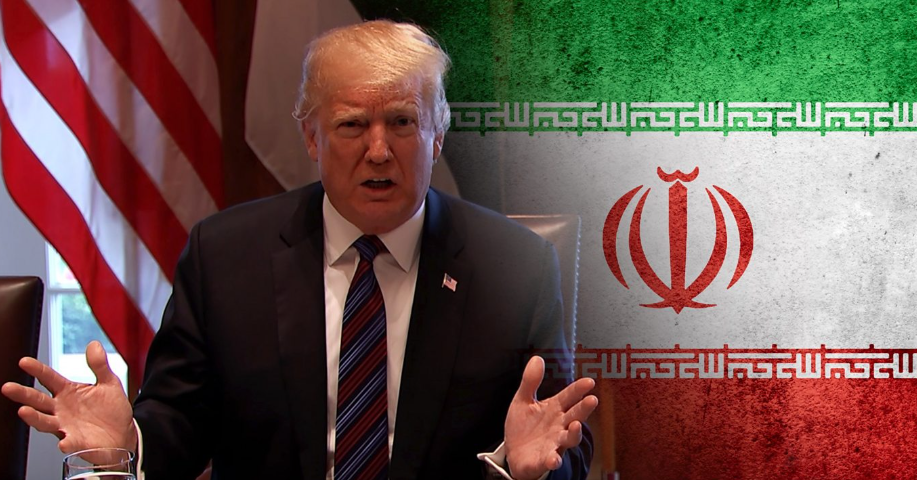
Source of the photo: President Donald Trump, BBC
Despite the fact that Joe Biden is still holding power in the United States and the country’s presidential inauguration is approaching, Donald Trump has expressed his intention to engage in comprehensive negotiations with the Islamic Republic of Iran in an early message to Tehran. In this message, which was sent to Tehran via Oman, President- elect Trump expressed his hope for the possibility of reaching a new agreement that is different from the 2015 JCPOA agreement. He also announced that Washington is firmly determined to implement and realize it. Trump’s recent message has elicited a broad range of interpretations among political experts, generating considerable debate regarding the feasibility of establishing a new agreement between Iran and the United States. A considerable number of political commentators have asserted that, in light of the recent challenges faced by Tehran both domestically and regionally, the formation of a new agreement appears to be imminent. Others posit the hypothesis that a consensus may be attainable, contingent upon Trump’s adoption of a more conciliatory policy toward the Islamic Republic of Iran than previously exhibited. While a win-win agreement would undoubtedly be a favorable outcome for both parties, as it would address the interests and aspirations of both nations, the realization of such a scenario is encumbered by substantial obstacles and challenges. These obstacles, which are primarily rooted in Donald Trump’s personal and political characteristics, as well as the conflicting interests between the parties involved, have led to a challenging environment for some experts, making it difficult to anticipate the attainment of a favorable and expeditious deal. These challenges can be broadly categorized into the following five areas:
1) Principles and foundations of Donald Trump’s diplomacy
According to many experts, Donald Trump’s approach to international issues is influenced by an economic perspective, and his diplomatic actions appear to align with the “Mercantilist” principle, which is predicated on a zero-sum game and a win-lose situation. This principle, which is consistent with the core of Trump’s foreign policy, “America First,” has led him to perceive most of the United States’ international agreements, cooperation, and consultations from this transactional lens. During his previous presidential period, he repeatedly declared the NATO security organization illogical and useless due to its cost to Washington, and called for its Dissolution. He has recently proposed a plan to annex Canada to the United States, citing tax and security savings, and has thus called for the imposition of 25% tariffs on the country. Trump’s approach to diplomacy is predominantly characterized by predetermined demands, exhibiting minimal adaptability to the dynamic nuances of the negotiation process. His diplomatic experiences with countries such as North Korea and China demonstrate a propensity to employ a “carrot and stick policy,” predicated on the principles of threats and appeasement. Trump’s negotiating principles, which many experts consider to be in accordance with the “mad man theory,” involve two fundamental steps: -in the initial phase, his negotiating team presents its intended demand, which is usually very uncompromising and unchangeable. In the event of acceptance, he considers the diplomacy strategy successful and continues it; however, if the opposing government does not comply with the demands, he enters the second phase of diplomacy and applies all punitive mechanisms against it. It appears improbable that the Trump administration will deviate from this principle in future negotiations with the Islamic Republic of Iran, as it did in the past. Recent events in the region and the economic challenges faced by the Islamic Republic of Iran may provide further incentive for the Trump administration to adopt such an approach.
2) The objectives of the Trump administration’s foreign policy and the stance of the Islamic Republic of Iran
The Trump administration’s demands can be partially understood in light of the recent statements made by former Secretary of State Mike Pompeo during his previous tenure. During his speech at the Heritage Foundation in Washington, D.C. in 2018, Pompeo outlined 12 conditions that must be met for a new agreement to be reached with the Islamic Republic of Iran. Among the most salient demands articulated by the Trump administration in this statement were a complete cessation to uranium enrichment and a comprehensive IAEA monitoring of Iran’s nuclear activities, Iran’s lack of support for Shiite movements in Iraq, Syria, Lebanon, Yemen, and Palestine, and a halt to ballistic missile activities. In the light of Wendy Sherman’s recent remarks as a senior diplomat during the Barack Obama administration, it is foreseeable that President Trump would be amenable to reiterating these three demands during his consultations with Tehran. In regard to the nature of the Trump administration’s negotiations, Sherman has stated that the upcoming negotiations will encompass a broad range of regional issues in addition to Iran’s nuclear program. It is noteworthy that at least two of the aforementioned issues are regarded as national security red lines for the Islamic Republic of Iran, and it appears that Tehran’s political and security elites are reluctant to negotiate these issues.
3) Trump administration’s chosen cabinet
The Trump administration’s cabinet lineup and appointments clearly indicate that the president has not abandoned the policy of “maximum pressure” against the Islamic Republic of Iran as one of the options on the table. The Trump administration’s appointments suggest a tendency to favor individuals who have demonstrated a history of unwavering support for Israel and who hold a confrontational stance toward America’s adversaries, particularly the Islamic Republic of Iran. The appointment of hard-line figures, such as Mike Huckabee as ambassador to Israel, Marco Rubio as secretary of state, J.D. Vance as vice president, and Mike Waltz as national security advisor has prompted Benjamin Netanyahu to characterize Trump’s return to power as “the greatest comeback in history.” The selection of the aforementioned individuals – reflect the Trump administration’s likely strong desire to opt for “coercive diplomacy” in future negotiations with the Islamic Republic of Iran.
4) Israeli Cabinet
Undoubtedly, one of the most important factors that could influence the negotiations between Iran and the United States and prevent them from reaching a desirable outcome is the Israeli cabinet, especially Prime Minister Netanyahu and some of the extremist members of his cabinet, who are among Iran’s staunchest enemies. After the 2015 agreement to limit Iran’s nuclear program, Netanyahu called the deal a historic mistake as he believed it would not limit Iran’s nuclear ambitions. In this regard, almost 10 years after that agreement, Tehran’s nuclear program, along with its missile and drone programs, has made remarkable progress, and Tel Aviv considers these developments, especially the nuclear progress, an existential threat to itself. Therefore, Israeli politicians and military officials, including Netanyahu himself, who are aware of Iran’s military movements, firmly believe that only a strong military attack on Tehran’s nuclear and missile facilities can stop the country from this path, and that negotiations are not enough to contain Iran. Considering this issue, as well as Tel Aviv’s recent clashes with the resistance axis, the possibility of resuming the war with Hezbollah, the Ping-Pong attacks between Iran and Israel, and Tel Aviv’s concerns about the implementation of Operation True Promise 3, it seems Israeli officials would do their utmost to change Trump’s attitude toward war instead of negotiations with Iran.
5) Nuclear Developments in the Islamic Republic of Iran
Although some observers cite Iran’s recent economic and regional challenges as one of Tehran’s main motivations for reaching a new agreement with the United States, it should not be overlooked that the Islamic Republic of Iran’s progress in uranium enrichment has brought the country to an irreversible stage. In fact, the expansion of uranium enrichment, which has given Iran the ability to build a nuclear bomb within a minimum of two weeks, can be considered the only trump card in a situation where the country is facing some regional challenges and problems, and Tehran does not consider it negotiable in any way. Recently, Rafael Mariano Grossi, the Director General of the International Atomic Energy Agency, also warned that the Islamic Republic of Iran will soon test a nuclear bomb. When the Joint Comprehensive Plan of Action was concluded, Iran’s nuclear program was in the early stages of development; nonetheless now the country’s nuclear program has reached a level where it has acquired a special place in Tehran’s strategic choices.
In short, despite these complex obstacles, reaching a common position is very difficult and far away in sight, as it largely depends on the extent to which Tehran considers what it has defined as the red lines of the “axis of resistance” to be negotiable and, on the other hand, the extent to which the Trump administration is willing to back down from its hardline positions on these security lines of Iran. Past experiences remind us that if the diplomatic option fails, there is also a possibility that Tehran and Washington will experience a new series of tensions and conflicts in the Middle East.
Disclaimer. The views and opinions expressed in this analysis are those of the authors and do not necessarily reflect the official policy or position of MEPEI. Any content provided by our authors is of their opinion and is not intended to malign any religion, ethnic group, club, organization, company, individual, or anyone or anything.