Iran’s nuclear choice
November 3, 2026
A Democratic takeover of Congress exposes the limits of Trump’s political mandate. For the Middle East, however, the result promises neither an immediate American retreat nor a clean break with the region’s war-driven order.
The 2026 United States midterm elections have produced a result that few observers expected at the beginning of the campaign: Democrats have won control of both the House of Representatives and the Senate, turning what was expected to be a difficult contest into a sweeping rebuke of President Donald Trump and the Republican Party. Democratic gains extended into states and districts that had supported Trump decisively in 2024, including a series of Republican strongholds in the Senate. The outcome will deprive the president of unified congressional control during the final two years of his term and place his administration under a more adversarial legislature.1
The result is significant not simply because it changes the balance of power in Washington, but because it exposes the limits of Trump’s ability to convert personal dominance over the Republican Party into an enduring political mandate. The campaign was shaped by high living costs, inflation, corruption concerns and the consequences of the administration’s foreign policy. The war against Iran became part of this domestic calculation: it raised energy prices, sharpened concerns about the cost and purpose of American military engagement, and gave voters a direct economic reason to question the administration’s regional strategy. Trump himself acknowledged on 4 November that the Iran war had contributed to Republican losses, while maintaining that the decision to launch it had been justified.2
It would nevertheless be premature to describe the result as the end of Trumpism. The election does not remove Trump from office, dissolve his political movement or automatically reverse the policies of his administration. Nor should the vote be reduced to a single-issue referendum against war. What it does reveal is that the political costs of an expansive and uncertain foreign policy can no longer be insulated from domestic accountability. This is particularly consequential for the Middle East, where the administration’s military decisions have reshaped security calculations from Tehran to the Gulf and placed Washington’s regional partners in an increasingly difficult position.
A new constraint on the Trump presidency, not an immediate change of policy
The immediate significance of the election lies in the emergence of a divided government. The new Congress will take office in January 2027; until then, the current Congress remains in place. Trump therefore retains command of the armed forces, broad executive authority over diplomacy and sanctions implementation, and the ability to veto legislation. The election does not, by itself, terminate military operations, compel a ceasefire or produce a new negotiating framework with Iran. Its implications will emerge through the next Congress’s control of appropriations, committee investigations, arms-transfer scrutiny and legislative efforts to define the limits of American military engagement.3
This distinction is essential when assessing the likely consequences for the region. Congress cannot easily replace the president as the principal actor in a fast-moving security crisis, but it can raise the political and financial cost of continuing one. The incoming majorities will be positioned to request intelligence assessments, examine the administration’s stated objectives, investigate the costs of the war, question the use of emergency authorities and decide whether further appropriations should be approved, conditioned or withheld. They can also intensify scrutiny of weapons transfers to Israel and Arab partners, and of the terms under which American forces operate from bases across the Gulf.4
The new balance of power is not, however, a unified anti-war mandate. Democrats are divided between legislators who favor a more restrained foreign policy and those who remain strongly committed to deterrence, Israeli security and an assertive posture toward Iran. A Democratic majority may challenge the administration’s conduct of the war without agreeing on a comprehensive alternative. It may oppose an open-ended military commitment while supporting air and missile defense for regional partners, or demand greater oversight while resisting a rapid withdrawal that could leave allies exposed. The most likely near-term outcome is therefore not a wholesale reversal of policy, but a more contested process of making it.
Iran: an opening for diplomacy, but not a guarantee of de-escalation
For Tehran, the election offers an opportunity to frame the American result as evidence that the domestic political foundations of the war are weakening. Parliament Speaker Mohammad Bagher Ghalibaf presented the Democratic victory as a rejection of war, arguing that American voters had said “no to war” and that Iran endorsed that message.5 Such statements are designed to turn an American electoral outcome into diplomatic leverage: they suggest that the continuation of military pressure may be increasingly difficult for the White House to sustain and that a negotiated settlement could become politically attractive in Washington.
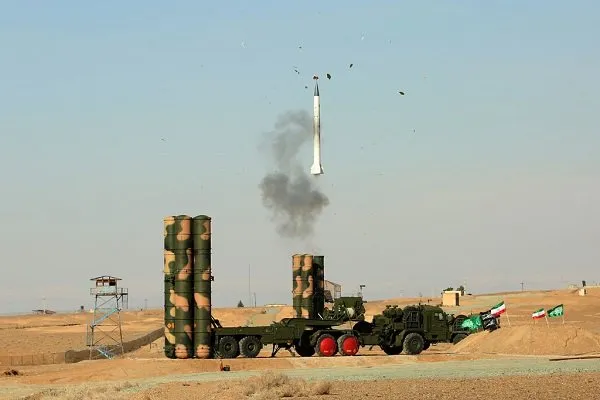
Yet Tehran should not mistake electoral pressure for a strategic consensus in favor of accommodating Iran. The central disputes remain unresolved: the future of Iran’s nuclear programme, its missile capabilities, its regional relationships and the security of maritime routes through the Strait of Hormuz. The conflict that began with U.S. and Israeli strikes on 28 February 2026 has extended well beyond the bilateral relationship. Iranian retaliation has affected several Gulf states, commercial shipping through Hormuz has been severely disrupted, and the conflict has intensified the risks facing regional infrastructure and energy markets. The Congressional Research Service has identified several possible paths ahead, including an uneasy ceasefire, a negotiated settlement or an expansion of military action.4
A Democratic-controlled Congress could make the third option more difficult to finance and defend politically, especially if the administration seeks new appropriations or a wider campaign involving American ground forces. It could also scrutinize any agreement with Tehran, challenge sanctions relief or seek to impose additional sanctions. The statutory review mechanism created by the 2015 Iran Nuclear Agreement Review Act would remain relevant to a new nuclear agreement. Congressional control therefore cuts in two directions: it may strengthen the political case for negotiations, but it may also make the terms of any agreement more difficult to secure domestically.
The central question for Iran is whether it interprets the result as an incentive to negotiate or as an opportunity to test American resolve. If Tehran concludes that Washington has become more risk-averse, it may seek to improve its bargaining position through pressure around Hormuz, calibrated military activity or demands for sanctions relief. Such a strategy could be counterproductive. A renewed attack on Gulf infrastructure or American forces would reinforce the arguments of legislators who oppose concessions to Iran and could reunite otherwise divided American political factions around deterrence. Electoral vulnerability may create a diplomatic opening, but it does not eliminate the risks of miscalculation.
Israel: a more difficult political environment in Washington
Israel is likely to be among the regional actors most directly affected by the new congressional balance. The strategic partnership with the United States remains deeply institutionalized, built around military assistance, intelligence cooperation, defense technology and a long-standing assessment that the two countries share important security interests. These foundations will not disappear with the change in congressional control. However, the political environment surrounding that partnership is changing. Congressional scrutiny of U.S. aid and arms sales to Israel has increased, and in 2026 one Senate resolution seeking to block an arms transfer attracted the support of 40 senators, even though it did not pass.6
The incoming Congress may use hearings, reporting requirements and the arms-transfer review process to question whether Israeli military operations are consistent with wider American interests.
This scrutiny is likely to include the continuation of Israeli operations in Gaza and Lebanon, the establishment of buffer zones in neighboring territories, settlement expansion and violence in the West Bank, and the risk that Israeli decisions could draw the United States into further regional escalation. These questions are not peripheral to the alliance: they concern the extent to which U.S. support is helping to deter conflict or enabling policies that make a durable regional settlement more difficult.
For Prime Minister Benjamin Netanyahu, the result also weakens the assumption that close personal alignment with Trump can provide a stable political shield in Washington. Israeli opposition figures have already interpreted the Democratic victory as a warning about the political costs of Netanyahu’s relationship with the American president and the damage that a confrontation with a future Democratic administration could cause to Israel’s international position.7 The point should not be overstated: the incoming Congress is not uniformly hostile to Israel, and support for Israel’s defensive capabilities is likely to remain substantial. But Israeli leaders will have to account for a legislature less inclined to provide automatic political cover for every decision of the government.
This may encourage a recalibration of Israeli tactics rather than a fundamental change in security doctrine. The broad Israeli consensus on confronting Iran, containing Hezbollah and maintaining control over security arrangements in Gaza and along the northern borders is unlikely to disappear overnight. The potential change lies in the diplomatic and political costs attached to these policies. A government that relies on American arms, intelligence and diplomatic protection will have to consider whether actions that alienate a growing share of the U.S. political establishment are sustainable in the long term. The debate over future military assistance after 2028 may become an important test of this relationship.
The Gulf: security guarantees under pressure
For Saudi Arabia, the United Arab Emirates, Qatar, Bahrain, Kuwait and Oman, the election raises a different but equally important question: how dependable will the American security commitment be after a conflict that has exposed the vulnerability of the Gulf itself? Iranian strikes and threats have demonstrated that even states hosting U.S. forces or maintaining close security ties with Washington can face direct retaliation. The disruption of the Strait of Hormuz has also underlined the extent to which Gulf economic diversification, energy exports, international investment and transport connectivity depend on regional stability.8
The Gulf states have not responded to the war in the same way. Saudi Arabia has emphasized de-escalation and diplomacy while asserting its right to self-defense; Qatar and Oman have maintained roles as intermediaries; and the UAE has adopted a more confrontational posture toward Iran while deepening certain security relationships.
The conflict has also raised questions about the future of American basing arrangements, the use of Gulf territory and airspace for operations, and the ability of U.S. forces to protect partners without exposing them to additional retaliation. These concerns are not abstract: they affect decisions about defense procurement, infrastructure protection and the long-term credibility of the U.S.-Gulf security partnership.8
A Democratic Congress may subject arms sales, military deployments and future defense commitments to greater scrutiny. It could ask whether emergency procedures used to expedite weapons transfers should become routine, whether Gulf partners are contributing sufficiently to shared defense arrangements and whether the United States should continue to underwrite an approach that exposes regional allies to retaliation. This does not mean that Congress will seek to abandon the Gulf. The importance of energy routes, counterterrorism, maritime security and the regional balance of power gives Washington strong reasons to preserve its partnerships. Yet the political debate may shift from the volume of assistance to the conditions, purposes and risks attached to it.
For Gulf governments, the result may reinforce the need to diversify rather than simply deepen dependence on Washington. The Congressional Research Service notes that regional states could respond to the conflict by strengthening ties with the United States, pursuing alternative security partnerships or combining both approaches.8 Saudi Arabia’s engagement with Pakistan and its diplomatic efforts to reduce tensions with Iran, the UAE’s closer security links with Israel, and the wider interest in suppliers and partners beyond the United States should be understood in this context. The election is unlikely to trigger an immediate strategic realignment, but it may strengthen the conviction that American policy can change sharply with domestic political conditions.
Gaza, Lebanon and the limits of regional normalization
The consequences will also be felt beyond the direct U.S.-Iran confrontation. The future of Gaza, the security arrangement along the Israel-Lebanon border and the prospects for a wider regional diplomatic framework all depend, to varying degrees, on American willingness to use its leverage with Israel and regional partners. A Democratic-controlled Congress may increase pressure for transparency around humanitarian assistance, reconstruction arrangements and the use of American weapons. It may also question whether the continuation of Israeli buffer zones in Gaza, Lebanon and Syria is compatible with the goal of a more stable regional order. The Congressional Research Service has specifically identified the sustainability and regional consequences of these buffer zones as issues for congressional consideration.6
The Palestinian issue is particularly important for the future of Saudi-Israeli normalization. Riyadh has repeatedly linked a broader agreement with Israel to progress on Palestinian statehood, while Israeli politics has moved in a direction that makes such a commitment difficult.8
A weakened Trump presidency may have less leverage to press either side into a compromise, while a more assertive Congress could increase the political cost of treating Palestinian rights and humanitarian conditions as secondary to regional alignment. At the same time, there is no guarantee that a Democratic majority will produce a coherent alternative to the administration’s approach. Congressional pressure may grow, but the executive branch will still control the principal diplomatic channels.
For Egypt, Jordan and the smaller Gulf states, the main concern will be whether Washington can still deliver a predictable framework for de-escalation. Their interests are not identical, but they share an interest in preventing renewed conflict from spreading across borders, destabilizing domestic politics or disrupting the economic projects on which their governments have staked their legitimacy. The election has therefore created a new political variable in an already unsettled regional environment; it has not resolved the underlying conflicts that make the Middle East insecure.
The regional order after the midterms: more uncertainty, not less
The most important geopolitical consequence of the election may be the uncertainty it introduces into the calculations of both American partners and adversaries. Allies that have relied on Trump’s personal assurances must now consider whether those commitments can survive a more hostile Congress and the approach of the 2028 presidential election. Adversaries may see an opportunity to exploit domestic division, but they also have reason to fear that an administration under pressure could respond unpredictably in order to demonstrate resolve. The risk is not simply that the United States will withdraw from the region; it is that Washington’s signals will become harder to interpret.
This uncertainty may accelerate an existing regional trend: governments are seeking to preserve American security ties while reducing their exposure to the consequences of American strategic choices. The Gulf states want access to U.S. defense systems but do not want their territory to become the launchpad for a war they cannot control. Israel wants continued American support but must consider the growing political debate over the costs of its military strategy. Iran may hope that Washington’s domestic divisions will weaken the pressure on it, but it must also calculate the consequences of provoking a bipartisan response. Meanwhile, regional actors are increasingly conscious that a change in the political balance in Washington does not necessarily translate into a change in the interests that guide American policy.
The midterms should therefore be read as a warning against the assumption that the United States can sustain an open-ended regional strategy without domestic consequences. They have weakened Trump’s political authority, made congressional oversight a central feature of the next two years and increased the likelihood that future decisions on Iran, Israel and the Gulf will be contested in public. But they have not produced an electoral mandate for American disengagement, nor have they settled the debate over what a stable Middle East should look like.
The beginning of the end?
The 2026 midterms may mark the beginning of the end of Trumpism as an uncontested governing project, but they do not mark its disappearance. Trump retains the presidency, his movement retains a national constituency, and the Republican Party will continue to debate whether its future lies in personal loyalty to Trump, a more conventional conservative foreign policy or a stronger current of restraint toward overseas commitments. The election has opened that debate; it has not settled it.
For the Middle East, the result is best understood as the beginning of a more difficult phase in American regional policy. The administration will face greater scrutiny over the war with Iran, the use of military force, arms transfers and the balance between support for Israel and the wider interests of regional stability. Iran may see a diplomatic opening, Israel may face a more demanding political environment in Washington, and Gulf states may intensify their efforts to diversify security relationships. None of these developments guarantees de-escalation. They do, however, narrow the space for policy to proceed without congressional and domestic contestation.
Ultimately, the regional consequences of the midterms will depend less on the symbolism of the Democratic victory than on what happens after the new Congress convenes: whether appropriations are conditioned, whether arms transfers are subjected to meaningful review, whether the administration is pressed to clarify its objectives in Iran, and whether Washington is prepared to use its leverage to advance diplomacy rather than merely manage escalation. The election has changed the political conditions under which American power is exercised. Whether it changes the direction of that power remains an open question.
References
1. The Associated Press, “The Latest: Democrats win US House, cementing control over Congress,” 4 November 2026. The AP reports that Democrats won control of both chambers, with the result driven by voter frustration over high prices, the Iran war and concerns about government corruption. https://apnews.com/article/ef6199e25927a9ac9f4c18eae0e497cd
2. Reuters, “Trump acknowledges role of Iran war in Democratic sweep in midterm elections,” 4 November 2026. Reuters reports Trump’s acknowledgement that the Iran war contributed to Republican losses. https://www.reuters.com/world/us/trump-acknowledges-iran-played-role-republican-midterm-losses-2026-11-04/
3. U.S. Constitution, Amendment XX, Section 1. The terms of Senators and Representatives begin at noon on 3 January. https://constitution.congress.gov/browse/amendment-20/
4. Congressional Research Service, U.S. Conflict with Iran, R48887, 26 March 2026, especially “Issues for Congress,” the Summary and “Outlook: Potential Scenarios.” The report addresses arms sales, appropriations, the War Powers Resolution, negotiation oversight, sanctions and possible paths from ceasefire to expanded military action. https://www.everycrsreport.com/reports/R48887.html
5. Shafaq News, “Tehran views US election outcome as rejection of war,” 4 November 2026. The report quotes Iranian Parliament Speaker Mohammad Bagher Ghalibaf interpreting the result as an American rejection of war. https://shafaq.com/en/Middle-East/Tehran-views-US-election-outcome-as-rejection-of-war
6. Congressional Research Service, Israel: Major Issues and U.S. Relations, R44245, updated 2 July 2026, especially “Recent U.S. Aid and Arms Sales to Israel” and “Role of Congress and Key Questions.” The report reviews congressional scrutiny of assistance and the regional implications of Israeli security arrangements. https://www.everycrsreport.com/reports/R44245.html
7. The Times of Israel, “Election panel ratifies result, says probe found no irregularities even as Shin Bet pushes claim of widespread foreign interference,” 4 November 2026, live updates. The report records Yair Lapid’s and Yair Golan’s comments linking the U.S. midterm result to Netanyahu’s political position and Israel’s standing in Washington. https://www.timesofisrael.com/liveblog-november-4-2026/
8. Congressional Research Service, The Arab Gulf States, the Iran Conflict, and U.S. Relations: In Brief, R48971, 3 June 2026, especially “Implications for Gulf State Relations and Foreign Policy” and “Considerations for Congress.” The report covers Gulf security, energy and infrastructure exposure, U.S. basing and arms sales, defense diversification and regional normalization. https://www.everycrsreport.com/files/2026-06-03_R48971_0ef11e7717f94482f81c35cdf07bad07f0ea04f8.html

Ahmad Mohee
Ahmad Mohee is a PhD researcher in Global and Development Studies at the University of Porto, Portugal and a Junior Researcher at the Middle East Political and Economic Institute in Bucharest. His research focuses on the intersection of international relations, security studies, political theory, and emerging technologies, particularly artificial intelligence, cyber conflict, deterrence, strategic dependence, and regional and international order. His work seeks to connect classical theories of international relations with emerging technological transformations through theoretically grounded and empirically oriented research.