From Shenzhen to the World: A New Test of the International Balance of Power
November 2, 2026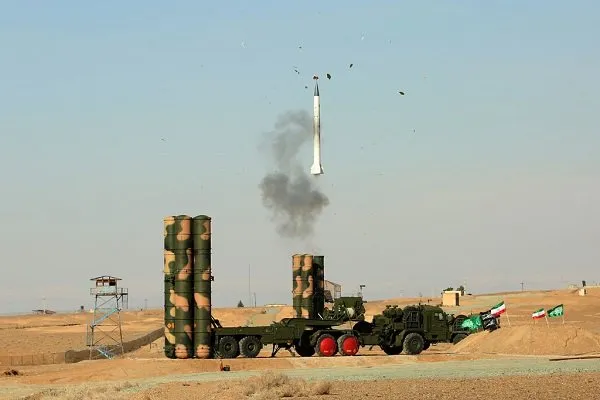
The common view is that nuclear proliferation begets proliferation or that it is an automatic chain reaction to a rival’s nuclear capability. Yet a critical review of latent nuclear weapon states’ nuclear policies, including Iran’s, shows that acquiring nuclear weapons is a political decision shaped by shifting assessments of the relative costs of acquisition and restraint. This article asks a narrower question: how does tacit nuclear blackmail shape nuclear decision-making in Tehran?
The decision to remain non-nuclear carries potential costs when a state perceives that restraint could undermine its fundamental security. Therefore, states weigh the cost of pursuing a nuclear capability against the prospective cost of restraint the latter depends on how threatening a rival’s nuclear capability is perceived to be. The off-ramp from the conflict between the US and Iran is not in sight. On October 23, 2026, President Donald Trump said, “We may do another little Epic Fury.” This discussion examines Tehran’s nuclear policy by focusing on the historical determinants of the pursuit of nuclear weapons and trends in Iran’s contemporary strategic environment.
The Islamic Republic of Iran was established after the monarchy was toppled on February 11, 1979; since then, the Iranian ruling elite has viewed nuclear-armed Israel and the United States as an existential threat. Despite developing an advanced nuclear program and mastering uranium enrichment in recent years, while also deepening enmity with Israel and the US, Iran has refrained from acquiring nuclear weapons. Iran’s remaining a member of the Nuclear Non-Proliferation Treaty (NPT) and its official declaration not to develop nuclear weapons till the writing of these lines show that a state does not automatically pursue nuclear weapons in response to a rival’s nuclear capability.
Nuclear blackmail is an important determinant of a decision to acquire nuclear weapons. For instance, China pursued nuclear weapons due to its experience with nuclear blackmail. Truman and Eisenhower both considered nuclear use during the Korean War Mao’s distrust of the Soviet Union’s positive security assurance or nuclear umbrella, led China to develop its own nuclear industry, culminating in the first nuclear test on October 16, 1964. The Iranian ruling elite appears to be weighing four options: acquiring nuclear weapons, observing restraint within the framework of the NPT, retaining its stock of highly enriched uranium complying with the Trump Administration’s demand to transfer enriched uranium.
Acquiring nuclear weapons would impose substantial financial, technological, diplomatic, reputational military costs, including possible sanctions, international isolation preventive action by other states. Iran is already bearing these costs, even without developing nuclear weapons, because its current posture has triggered them. If it withdrew from the NPT and conducted a nuclear weapons test, sanctions would likely have limited impact. The benefit is clear: adversaries’ nuclear blackmail would stop. Iran has already shown that it can conduct punishing missile strikes against Israel and US assets in the region.
Since the US and its like-minded states have questioned Iran’s compliance with the NPT norms, Tehran has clearly maintained that it does not pursue nuclear weapons. Its nuclear pursuits are peaceful. But the US and Israel invaded twice within a year and attempted to obliterate its civilian nuclear sites, which were under the International Atomic Energy Agency (IAEA) safeguards. Thus, Tehran’s decision to remain a member of NPT and permit IAEA inspectors to inspect its nuclear sites did not quash the impression that it was not developing nuclear weapons. The continuity of nuclear-related sanctions shows that remaining a non-nuclear weapons state has not brought Iran the expected benefits.
Iran’s retaining its stock of highly enriched uranium (400-450 kg of 60% enriched uranium) has emerged as a major point of contention after the failure of Israel and the US military campaign against Iran to change the regime, which began on February 28, 2026. Article 8 of the Islamabad Memorandum of Understanding between the US and Iran, signed in June 2026, resolved the highly enriched uranium stockpile issue, i.e., the highly enriched uranium “to be down blended on site under the supervision of the IAEA.” The compromise was made to dilute or down-blend the 60% uranium to lower percentages domestically under strict IAEA monitoring, provided the US lifts its naval blockades and economic sanctions. The continuity of sanctions and blockades by the US is the main obstacle to down blending the enriched uranium.
The Trump Administration is demanding that Iran agree to transfer enriched uranium. After signing the 2015 Joint Comprehensive Plan of Action (JCPOA), Iran dismantled two-thirds of its nearly 20,000 uranium centrifuges and its entire plutonium facility. It relinquished about 97% of its almost eight tons of low-enriched uranium stockpile. Iran shipped out approximately 25,000 pounds (11,000 kg) of low-enriched uranium and all of its 20%-enriched uranium to Russia in late 2015. The IAEA inspectors received unprecedented powers to monitor Iran’s nuclear facilities in perpetuity. Despite these arrangements, the US withdrew from the JCPOA. Therefore, Tehran has no incentive to repeat the actions enshrined in the JCPOA. Therefore, Tehran announced that uranium is a national asset; it will not be exported.
The preceding discussion, analyzed with the assistance of International Relations’ rational decision-making theory, concludes that nuclear optimists are gaining more voice in Iranian nuclear decision-making. Iran’s restraint to remain a non-nuclear-weapon state is weakening hope for the Middle Eastern nuclear weapon-free zone is wishful thinking.
Prof. Zafar Nawaz Jaspal
Prof. Zafar Nawaz JASPAL, Nonresident Fellow at MEPEI, is an Islamabad-based analyst and meritorious professor of International Relations at SPIR, Vice Chancellor of the Quaid-i-Azam University and an advisory Board Member of the Institute for East-West Strategic Studies (RIESS), affiliated with Oxford University, U.K. E-mail: jaspal_99@hotmail.com, X: @zafar_jaspal