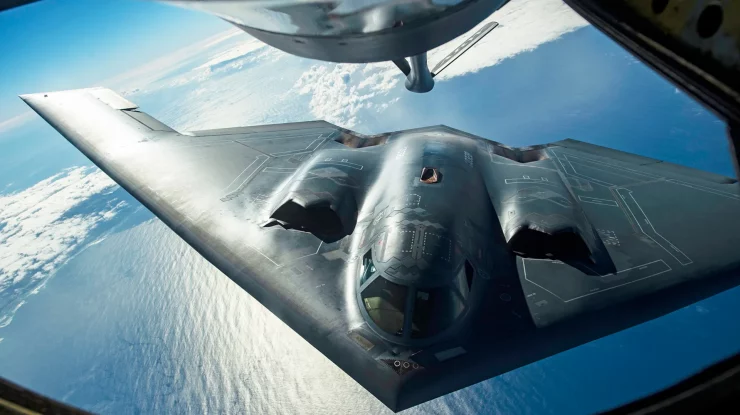

New technologies and deterrence
September 29, 2026
The 13th Beijing Xiangshan Forum
October 7, 2026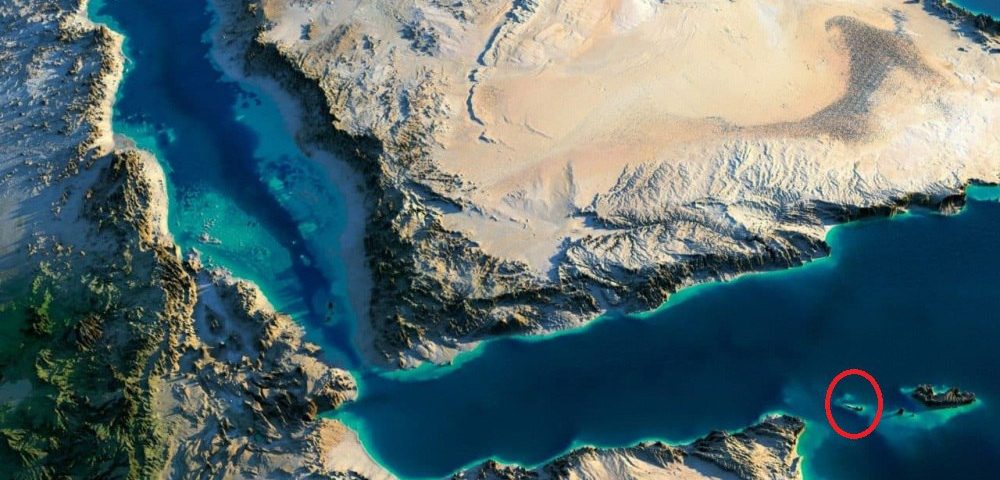
For four decades, Egypt’s foreign policy rested on a single, durable bargain: approximately $1.3 billion in annual U.S. military aid in exchange for maintaining the Camp David Accords and guaranteeing free passage through the Suez Canal. For Washington, it was cheap stability. For Cairo, it was regime insurance. In 2024, that bargain was effectively broken, not by a vote in Congress or a statement from the Foreign Ministry, but by a militia in Yemen and a balance sheet in Cairo.
When Houthi forces in Yemen began targeting commercial shipping in the Bab el-Mandeb in November 2023, the global shipping industry was forced to reroute around the Cape of Good Hope. The impact on Egypt was immediate and catastrophic. According to official data from the Suez Canal Authority (SCA), canal revenues, which had reached a record $9.4 billion in FY 2022/23, collapsed to $7.2 billion in 2023/24 and further to an annualized $3.9 billion in early 2024. Some months saw a 64% year-on-year decline in traffic. In six months alone, Egypt lost over $6-7 billion in hard currency, precisely when it needed it most to service its $168.1 billion external debt and negotiate a new $8 billion IMF program.
Washington’s response was predictably military. In December 2023, the U.S. launched Operation Prosperity Guardian, a multinational naval coalition to protect Red Sea shipping. It was a classic demonstration of American security provision. It also failed to restore Suez traffic. Insurance premiums for Red Sea transits rose by 300%, and major carriers like Maersk and Hapag-Lloyd continued to avoid the canal until mid-2024. Beijing’s response was not military. It was financial, and for Egypt, far more relevant.
In October 2023, two months before the crisis peaked, the People’s Bank of China and the Central Bank of Egypt quietly renewed and expanded their bilateral currency swap agreement to 18 billion yuan, or roughly $2.5 billion. This allowed Egyptian importers to settle Chinese trade in yuan and Egyptian pounds, bypassing the acute dollar shortage that had paralyzed Egyptian industry. While U.S. aid was earmarked for F-16 spare parts, Chinese liquidity paid for wheat, medicine, and factory inputs.
Simultaneously, Chinese policy banks accelerated disbursements for projects that Western lenders had deemed commercially unviable. The $1.2 billion light rail transit (LRT) connecting Cairo to the New Administrative Capital, built by AVIC International, entered operation. China State Construction Engineering Corporation (CSCEC) continued work on the $20 billion central business district of the New Capital, including the Iconic Tower, Africa’s tallest building. In Ain Sokhna, the Tianjin Economic-Technological Development Area (TEDA) zone, a flagship BRI project, expanded to host over 140 Chinese manufacturing firms with over $2 billion in realized investments, according to SCZone Chairman Waleid Gamal El-Dien.
The message to Cairo’s decision-makers was unmistakable: the United States protects ships passing through Egypt; China protects the Egyptian state itself when those ships stop coming. This explains why the Suez Canal Economic Zone has become the center of Sino-Egyptian integration. It is no longer just a transit corridor; it is a production base. Chinese companies are not just passing through; they are manufacturing in Sokhna to export to Europe and Africa under Egypt’s free trade agreements. In 2023, China-Egypt trade reached $15.6 billion, but more importantly, Chinese FDI stock in Egypt reached $2.2 billion, a 150% increase since 2018.
This is not the simplistic “debt-trap diplomacy” narrative often used to describe BRI. Egypt is not Sri Lanka. Egypt possesses structural leverage that Colombo did not: it owns a chokepoint through which 12% of global trade and 30% of container traffic passes. China needs a stable, functioning Suez more than Egypt needs any single Chinese loan.
What is emerging in Cairo is a sophisticated model of hedging that I call “dual dependency.” It is being perfected by President Sisi’s government: American weapons systems and security guarantees on one side, Chinese infrastructure, industrial capacity, and financial safety nets on the other. Egypt remains a Major Non-NATO Ally of the United States. It also conducts its largest joint naval exercise, “Sea Guardians,” with China.
For Beijing, Egypt is the ultimate laboratory for its Global Security Initiative (GSI) and Global Development Initiative (GDI). The GSI argues that security should be comprehensive, including economic security. If Beijing can demonstrate that its industrial investments and yuan swap lines kept Egypt solvent during a Red Sea blockade that the U.S. Fifth Fleet could not prevent, it will have provided a powerful alternative narrative to the entire Global South. The question will no longer be “who protects you from Iran or the Houthis?” but “who pays your civil servants when your canal revenue collapses?”
For Washington, the strategic risk is therefore more subtle than defection. Egypt will not leave the American orbit. It will do something more consequential: it will lease the economic future of its most strategic asset to Washington’s primary competitor while remaining a nominal American ally. The Suez Canal will remain open to U.S. aircraft carriers, as required by the Constantinople Convention of 1888, but its ports, its 5G networks, its fiber-optic cables, its industrial zones, and its debt repayment schedules will be increasingly denominated in Chinese standards and yuan.
The lesson of the 2024 Red Sea crisis extends far beyond Egypt. If disruption in the Red Sea, whether from Yemen, Sudan, or climate-related low water in Panama, becomes a semi-permanent feature of global shipping, every chokepoint state from Djibouti to Oman to Morocco will face the same choice Cairo faced. The superpower that compensates for lost transit revenue, not the superpower that merely patrols the water, will win their long-term alignment.
The Suez bargain is no longer about $1.3 billion in military aid. It is about who underwrites sovereignty when globalization itself breaks down. In 2024, for the Arab world’s most populous state, that underwriter was not Washington. It was Beijing.
Prof. Shaher Al Shaher
Dr. Shaher Al SHAHER is an Associate Professor at the School of International Studies, Sun Yat-Sen University, China. Shaher@mail.sysu.edu.cn