
China’s Position and Strategic Considerations on the Gulf States’ Involvement in the Iran-US-Israel Conflict
April 15, 2026
Pakistan’s deft diplomacy in Iran-US mediation
April 21, 2026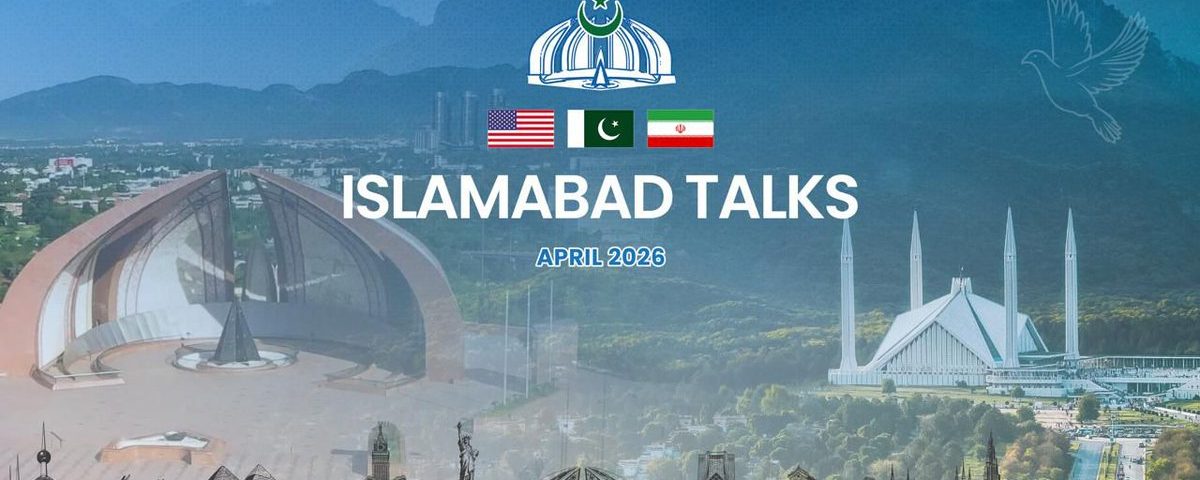
PAKISTAN succeeded in convening historic direct talks between Iran and the United States, known as the Islamabad Talks, on April 11-12, 2026.
Both sides had started discussions from their maximalist positions; however, they had shown flexibility and maturity in their stances, which led to the beginning of a process. Consequently, the next round will not start from “zero”; it will begin with “Islamabad Talks,” as the delegations reached an understanding on several issues.
Holding the Islamabad Talks is a praiseworthy accomplishment of Prime Minister Shehbaz Sharif, Deputy Prime Minister and Foreign Minister Ishaq Dar, Chief of the Defense Staff (CDS) and Chief of Army Staff (COAS) Syed Asim Munir and brilliant officers of the Pakistan Foreign Service. The delegations from the US and Iran, led by US Vice President JD Vance and Iranian Parliament Speaker Mohammad Bagher Ghalibaf, traveled to Pakistan for the negotiations, underscoring the diplomatic weight of the engagement and their trust in Pakistan. Both sides expressed their appreciation to the government of Pakistan for hosting the negotiations and their benevolent efforts in advancing the peace process in the region.
Before the Islamabad talks, they brokered a ceasefire between Iran and the United States. By facilitating decisive diplomatic breakthroughs, Pakistan asserts itself as a key middle power in volatile global politics and the shifting Middle Eastern security landscape. These achievements have propelled Pakistan’s global standing and fueled optimism for greater regional stability.
The two-week ceasefire between Iran and the United States ended the 39-day Gulf War. Pakistan brokered the ceasefire at a critical moment when both sides were ready to escalate. US President Donald Trump threatened to wipe out an “entire civilization,” a concealed nuclear threat. Iran, undeterred, refused to surrender. Amid escalating tensions, Pakistan’s skillful diplomacy averted catastrophe in the region. After 21 tense hours, talks ended early Sunday with no agreement. Before departing, US Vice President JD Vance declared in Islamabad, “We’ve had substantive discussions with the Iranians; that’s the good news. The bad news is we haven’t reached an agreement—and that’s far worse for Iran than for the USA.” He asserted Tehran’s leadership had “refused our terms.”
Although a ceasefire is only temporary, optimism for regional peace stems from three main achievements: the Islamabad Talks, the start of a diplomatic process and the Iranians and Americans engaging in dialogue despite deep mistrust and unresolved issues. As a result, de-escalation has begun. President Trump wrote in a Truth Social post, “The points agreed to are better than continuing military operations, but none matter compared to allowing nuclear power to be in the hands of such volatile, unpredictable people.” Washington demands Iran end uranium enrichment, a move Tehran may weigh. However, Iran stands firm on preserving its missile capability and civilian nuclear program under International Atomic Energy Agency safeguards. Historically, Iran has not shied from negotiating its nuclear program.
Many critics expressed skepticism over the outcome of the Islamabad Talks, without realizing the presence of a huge wall of mistrust between Iran and the United States. Mohammad Bagher Ghalibaf, before the negotiations, had emphasized, “We have the necessary good faith and will, but due to the experiences of the two previous wars, we have no trust in the opposing side”. Admittedly, a decades-long enmity and memories of the devastating 39-day war cannot be quashed in one meeting. Secondly, Israel has continued acting as a spoiler of the peace. Since the ceasefire was announced, Israel has completely gone rogue, defying the US-Iran ceasefire and ignoring the international community, including European leaders’ appeals to stop bombing innocent citizens of Lebanon. Precisely, the Israeli military has been launching unprecedented attacks on Lebanon just to sabotage peace.
To conclude, the Pakistani leadership’s skillful diplomacy prevented escalation between the US and Iran. US President Donald Trump and others acknowledged their role in brokering a ceasefire and starting negotiations to end hostilities. The Islamabad Talks thus mark a significant diplomatic achievement for Pakistan.