Mapping the International Relations of Romania with Middle Eastern Countries: A Policy Analysis
September 17, 2026
Will Syria’s Druze Become Israel’s Kurds? The Proxy Protection Trap in Post-Assad Syria
September 17, 2026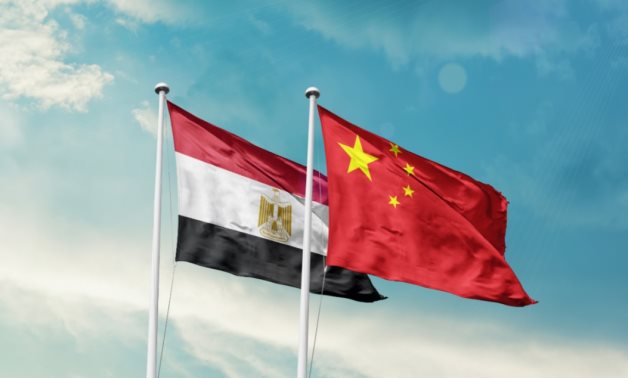
Chinese President Xi Jinping’s planned visit to Cairo to mark the 70th anniversary of diplomatic relations between China and Egypt comes at a moment when the Middle East is undergoing profound geopolitical and economic transformation. Trade routes, energy corridors, supply chains, and strategic partnerships are being reshaped, while maritime security from the Red Sea to the Strait of Hormuz has become increasingly uncertain. At the same time, competition between the United States and China is expanding beyond trade into technology, artificial intelligence, infrastructure, and global supply chains.
Against this backdrop, the significance of Xi’s visit extends far beyond the symbolism of an anniversary. It reflects the changing strategic value of Egypt in China’s broader Middle Eastern strategy. The central question is therefore not simply what new agreements Beijing and Cairo may sign, but whether Egypt is becoming something more important to China than an economic partner: a strategic platform from which Beijing can deepen and redefine its presence across the Middle East, Africa, and Europe.
Beyond Economics: The Civilizational Dimension
The depth of the Chinese-Egyptian relationship cannot be explained solely by trade, investment, or infrastructure. Both countries belong to two of the world’s oldest continuous civilizations, with historical experiences shaped by strong states, centralized institutions, agriculture, trade, and extensive networks of cultural exchange.
For China, Egypt is not simply a large Arab and African country occupying a critical geographical position. It is also a civilization with a historical legacy that has contributed profoundly to human history. This civilizational dimension matters because Chinese foreign policy frequently attaches considerable importance to historical continuity and the long-term evolution of states. In this sense, Beijing’s relationship with Cairo is not merely a transactional partnership. It also reflects a broader Chinese conception of international relations in which historical depth, sovereignty, continuity, and national development remain central.
The two civilizations developed around different geographical environments, yet both built political and economic systems around strategic waterways and long-distance networks. Ancient Egypt developed around the Nile, while China’s civilization was shaped by major river systems and extensive land and maritime trade routes. Today, the two countries are attempting to transform that historical capital into contemporary strategic influence.
Why Egypt Matters to Beijing
Egypt’s importance to China derives less from the size of its domestic economy than from its geographical position. The Suez Canal connects the Red Sea with the Mediterranean and provides one of the most important maritime links between Asia and Europe. Egypt also sits at the intersection of three major strategic spaces: the Middle East, Africa, and Europe. Few countries in the region possess comparable connectivity. Egypt’s diplomatic relationships further enhance its strategic value. Cairo maintains extensive ties with Washington, Beijing, Moscow, European capitals, Gulf states, and other regional actors. This gives Egypt unusual diplomatic flexibility and makes it a potential bridge between competing centers of global power.
From Beijing’s perspective, therefore, Egypt is not simply a market of more than 100 million people. It can potentially function as a platform connecting Chinese economic interests to three major regions simultaneously. This becomes increasingly important as geopolitical tensions disrupt traditional supply chains and raise the costs and risks associated with maritime transportation.
China and Egypt elevated their relationship to a comprehensive strategic partnership in 2014. Over the past decade, cooperation has expanded from political and commercial relations into infrastructure, transportation, energy, industrial development, and investment. The next stage could be more consequential: moving from individual infrastructure projects toward integrated production and value chains.
From a Trade Route to a Production Platform
The China-Egypt Suez Economic and Trade Cooperation Zone, particularly the TEDA industrial area, illustrates this transformation. The zone has attracted hundreds of companies and billions of dollars in investment while creating thousands of jobs. Its strategic significance, however, lies beyond the number of companies operating there.
The underlying question is gradually changing from “how Chinese goods can move through the Suez Canal” to “how Chinese companies can produce in Egypt and use its geographical position to reach Arab, African, and European markets”. That distinction is critical.
Global supply chains are being reorganized as companies seek greater geographical diversification and resilience. Chinese companies, meanwhile, increasingly have incentives to establish production capacity outside mainland China in order to access foreign markets, reduce logistical vulnerabilities, and respond to changing trade policies.
Egypt has an equally strong interest in this process. Chinese investment can provide employment, technology, infrastructure, foreign exchange, and export capacity. Yet the real test will not be whether bilateral trade continues to expand. It will be whether Chinese investment helps Egypt increase domestic production and exports.
The trade relationship remains heavily tilted toward China. A sustainable next phase should therefore focus increasingly on productive investment rather than simply expanding the volume of bilateral trade. Egypt’s strategic objective should be to become a manufacturing and export platform rather than merely a major destination for Chinese products.
Why China Needs Egypt in an Unstable Maritime Environment
The disruptions in the Red Sea have demonstrated once again the strategic importance of the Suez Canal to global trade. For China, the issue is particularly significant. The Chinese economy depends heavily on maritime commerce and remains deeply connected to Middle Eastern energy markets. The Strait of Hormuz is one of the world’s most important energy chokepoints, while the Suez Canal is a crucial artery connecting Asian production centers with European markets. Any prolonged disruption to either corridor can affect shipping costs, insurance premiums, energy prices, and global supply chains.
Consequently, Egypt’s stability has implications for China’s broader economic security. This helps explain why economic and geopolitical considerations are increasingly intertwined in Beijing’s relationship with Cairo.
China’s approach to the Middle East also differs fundamentally from the traditional American model of influence. Washington has historically relied heavily on military alliances, security partnerships, weapons sales, and strategic deployments. Beijing has generally sought to expand its influence through trade, infrastructure, investment, energy, ports, technology, and finance. China does not necessarily need to replace the United States militarily to become more influential in the region. If Chinese companies become deeply embedded in critical infrastructure and production networks, economic interdependence itself can generate political influence.
Technology Could Define the Next Decade
If the previous decade of Chinese engagement in the Middle East was largely associated with infrastructure, the next decade may increasingly be defined by technology. China has emerged as a global power in electric vehicles, batteries, solar energy, telecommunications, and artificial intelligence. Egypt, meanwhile, is seeking to modernize its economy, attract advanced industries, develop digital infrastructure, and increase domestic value added. This creates a new area of strategic convergence.
Reports about potential Chinese technology deployments in Egyptian data centers illustrate how bilateral cooperation may be moving from ports and factories toward digital infrastructure. That transition could eventually place Egypt at the center of a much more sensitive form of competition between China and the United States. The challenge for Cairo, however, is not simply to acquire Chinese technology. It is to “localize it”. Every major technology investment should contribute to developing Egyptian skills, training local engineers, transferring knowledge, and building domestic companies capable of participating in global value chains. Otherwise, Egypt risks becoming merely a consumer of imported technology rather than a producer and regional exporter of technological capabilities.
Cairo Between Washington and Beijing
A deeper strategic relationship with China does not necessarily mean that Egypt is choosing Beijing over Washington. Egypt’s foreign policy has traditionally sought to diversify its international partnerships and preserve relations with multiple major powers, including the United States, China, Russia, Europe, and the Gulf states. This strategic flexibility gives Cairo considerable room for maneuver. But maintaining that balance will become increasingly difficult if US-China competition expands further into artificial intelligence, telecommunications, semiconductors, cloud computing, and data centers. These sectors are no longer purely economic. They are increasingly linked to national security.
For Egypt, therefore, the question is not whether to choose China or the United States. The more important question is whether Cairo can benefit from great-power competition without becoming an arena for it. This is where Egypt’s strategic autonomy will be tested.
The African Dimension
Africa may provide another opportunity to redefine the Chinese-Egyptian partnership. China has significantly expanded its economic presence across the African continent, while Egypt possesses political, geographical, and institutional assets that could allow it to serve as a gateway between Chinese capital and African markets.
Egypt’s membership in the African Union, its transportation infrastructure, its ports, and its position between Asia and Africa provide it with a potentially unique role. If Cairo succeeds in linking the Suez Economic Zone more effectively to African markets, the relationship could evolve beyond a bilateral China-Egypt framework toward a broader “China-Egypt-Africa economic triangle”. Such a model would increase Egypt’s strategic importance while giving Chinese companies a more effective platform for accessing African markets.
Is Egypt the Beginning of a New Chinese Middle East Strategy?
It would be an exaggeration to argue that China is seeking to reconstruct the Middle East or replace the United States as the region’s dominant power. Beijing has no declared project to reshape regional political systems or establish a closed military alliance structure. Its economic interests instead encourage it to maintain balanced relations with competing regional actors. But a more accurate interpretation is that China is attempting to redefine the “nature” of its presence in the Middle East.
Beijing is gradually moving from being primarily an energy importer and exporter of manufactured goods toward becoming an investor, technology provider, infrastructure partner, industrial producer, and participant in regional supply chains. Egypt could become one of the most important nodes in that transformation.
For Cairo, however, geography alone is not enough. The existence of the Suez Canal does not automatically turn Egypt into a global economic hub. Nor does attracting Chinese companies guarantee industrial transformation if Egypt remains primarily a market for imported products. The strategic objective should therefore be a progression from “the canal to the industrial zone, from the industrial zone to technology, and from technology to exports”.
The ultimate goal should be to make Egypt a partner in production rather than simply a transit point for Chinese trade. If this transformation occurs, Xi Jinping’s visit to Cairo could represent much more than the celebration of seven decades of diplomatic relations. Also, it could mark the beginning of a new phase in which Egypt becomes one of the principal nodes in China’s global economic network—and in which the Chinese-Egyptian partnership becomes part of a wider restructuring of the Middle East around trade, investment, technology, energy, and competing forms of connectivity.
The deeper irony is that two of the world’s oldest civilizations may be meeting today not to celebrate their past, but to negotiate their place in the future. China brings industrial capacity, technological power, and global supply chains. Egypt brings geography, demographic weight, civilizational capital, and access to Arab and African markets. If these assets can be combined effectively, the result could be a new model of partnership in which civilization, geography, and economic power reinforce one another.
The real question after Xi’s visit, therefore, will not simply be “what China and Egypt signed”. It will be “what Egypt is becoming within the emerging geopolitical and economic order—and whether Cairo can turn its geography into genuine strategic power.”

Prof. Shaher Al Shaher
Dr. Shaher Al SHAHER is an Associate Professor at the School of International Studies, Sun Yat-Sen University, China. Shaher@mail.sysu.edu.cn.