Peace Made by Businessmen: The Illusion Behind Trump’s Unsustainable Peace Deals
February 5, 2026
Termination of new START and nuclear order
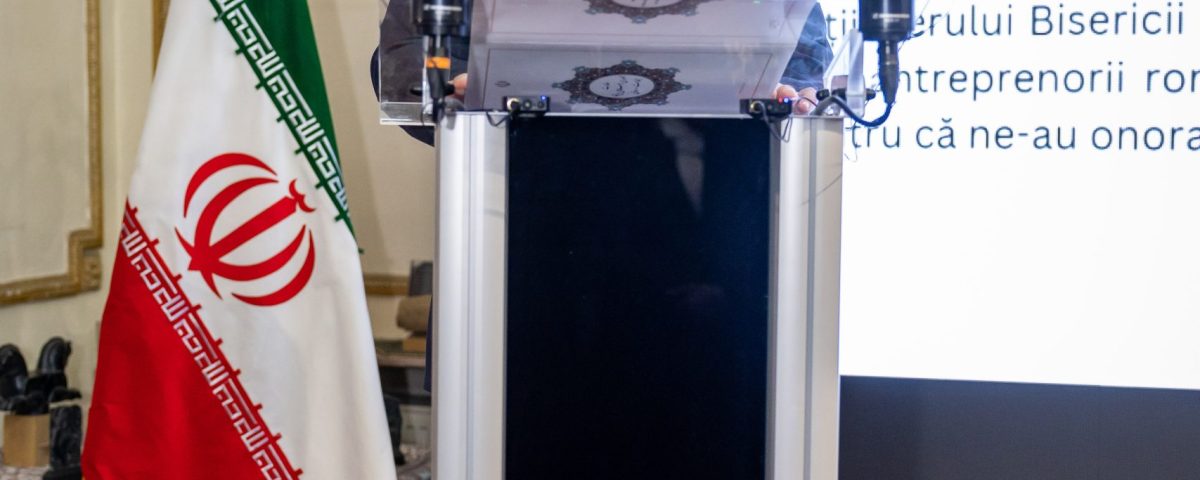
February 11, 2026Chargé d’Affaires, a.i. Javad Karimi’s Remarks at the 47th Anniversary of the Victory of the Islamic Republic of Iran
Distinguished Guests,
Your Excellencies,
Ladies and Gentlemen,
It is a great honor to stand before you today as we celebrate the 47th Anniversary of the Victory of the Islamic Revolution of Iran. I would like to express my profound gratitude to the esteemed Romanian officials, the esteemed Members of the Romanian Parliament, Your Excellencies Ambassadors and Heads of Diplomatic Missions as well as the clergy of the Orthodox Church, Muslim leaders, cultural and academic figures, Romanian entrepreneurs, and my distinguished fellow Iranians residing in Romania for joining us on this auspicious occasion.
The Islamic Revolution of Iran was the manifestation of the will and the fruit of the sacrifices of a nation that, on February 11, 1979, relied on its faith and its rich cultural and civilizational identity to liberate itself from a foreign-dependent dictatorship. By its own resolve, the nation established the Islamic Republic of Iran: an independent, democratic government free from foreign influence and dominance. From its very inception, the Islamic Republic has charted its course based on the principles of independence, freedom, justice, and the rejection of hegemony—a path that has been pursued with steadfastness and continuity despite numerous pressures and challenges.
Over the past nearly five decades, notwithstanding complex regional and international shifts, the Islamic Republic of Iran has strived by relying on indigenous capacities, social cohesion, and a talented workforce to reach remarkable levels of scientific and technological progress, coupled with the stabilization of an endogenous and resilient economy. In this journey, it continues its efforts to realize the ideal of justice in all its dimensions.
In the realm of science and technology, Iran’s global standing in scientific production has consistently risen. Knowledge-based companies have expanded, and significant breakthroughs have been achieved in emerging technologies and the healthcare sector. In the fields of economy and production, despite unjust sanctions and difficult global economic conditions, we have witnessed growth in industrial output, an increase in non-oil exports, and the strengthening of tax bases all indicators of a transition toward a more diversified and resilient economy.
Furthermore, in social services and infrastructure, the expansion of healthcare coverage, extensive self-sufficiency in pharmaceutical production, the progress of national housing projects, improved access to potable water, and the development of communication infrastructure have played an effective role in enhancing the quality of life for our citizens.
Foreign Policy of the Islamic Republic of Iran
In the realm of foreign policy, the Islamic Republic of Iran—relying on a balanced foreign policy, dynamic diplomacy, and smart engagement has consistently pursued the expansion of ties with neighboring countries and emerging powers, alongside active membership in key regional and international organizations. Iran views itself as a responsible, independent, and influential actor on the global stage, consistently advocating for dialogue, multilateralism, and cooperation to ensure peace, stability, and sustainable development.
However, the Iranian nation has long been confronted with extensive and synchronized campaigns orchestrated by the United States and the Israeli regime. These campaigns encompass escalating sanctions aimed at strangling the livelihood of our people, a media-driven wave of “Iranophobia” by mainstream outlets, intense political and diplomatic pressure, and growing military threats. This reached its peak with military aggression against our territorial integrity and sovereignty, and finally, the failed orchestration of a recent coup attempt. Once again, the Iranian nation, through its vigilance and responsible presence, neutralized this planned coup intended to destabilize the country.
The principles of our defense policy against threats and aggressive attacks are crystal clear. These principles are rooted in “Active Deterrence” and “Rational Logic.” The ultimate objective of this policy is the preservation of independence, territorial integrity, and the prevention of any aggression. Iran will never initiate a war; however, in the event of an attack, it will deliver a decisive and regrettable counter-strike.
The Islamic Republic of Iran has always remained committed to the path of diplomacy and negotiation. Yet, it was the United States that, in the midst of diplomatic efforts on June 13, 2025, attacked our country while providing military support to Israel.
Despite this, the Islamic Republic of Iran remains committed to the diplomatic path to secure the interests of the Iranian people and to safeguard regional peace and security. The fundamental principle of diplomacy is respect for national sovereignty and mutual interests. Therefore, for negotiations to proceed correctly and yield results, they must be free from threats, bullying, and the demand for unilateral and illegitimate concessions.
Prospect of Bilateral Relations
The cultural and historical ties between Iran and Romania trace back to the 17th century a time when Dimitrie Cantemir, the Prince of Moldavia and a prominent Orientalist, praised the wisdom of Saadi Shirazi and quoted verses from the Gulistan in his works. Having read Saadi in the original Persian, Cantemir stands as the first direct and unmediated bridge between Romanian and Persian literature. In subsequent eras, generations of Romanian Iranologists sustained this path by translating the masterpieces of Khayyam, Hafez, Ferdowsi, and Rumi. Conversely, Iranians have introduced their cultural and academic communities to Romanian heritage by translating the works of great thinkers such as Mircea Eliade and Mihai Eminescu.
Our formal diplomatic relations, which began in 1902, are now on the threshold of their 125th anniversary. These relations possess a profound historical and cultural identity, built upon the mutual interests and commonalities of two civilized nations. We firmly believe that these solid cultural foundations have always upheld the structure of our bilateral relations, ensuring they remain resilient against transient political fluctuations.
At the Embassy of the Islamic Republic of Iran in Bucharest, we view the horizon of our relations through this very lens. We believe that intercultural and interfaith dialogues among religious leaders, thinkers, and artists are the ultimate guarantors for strengthening and safeguarding these ties in today’s sensitive global climate. It is a matter of great satisfaction that this approach has been warmly welcomed by Romanian authorities. The meaningful continuity of nine rounds of religious dialogue between Shia and Orthodox scholars, alongside academic elites, serves as clear testimony to this shared commitment.
In conclusion, I would like to express my heartfelt gratitude once again for your presence. I wish for the nations and governments of both the Islamic Republic of Iran and Romania a future defined by peace, stability, progress, and prosperity.
Thank you for your kind attention.