Trump’s Middle East Doctrine and the End of U.S. Moral Authority
May 28, 2025
Morocco Competes with Algeria in the African Sahel
June 1, 2025
Key issue:
On May 30, 2025, reports emerged that Israel has decided to prevent a delegation of Middle Eastern foreign ministers led by Saudi Foreign Minister Prince Faisal bin Farhan from visiting the occupied West Bank to meet with Palestinian Authority (PA) President Mahmoud Abbas in Ramallah.
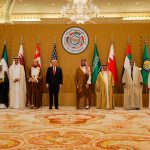
The delegation, which would include representatives from Saudi Arabia, the United Arab Emirates, Qatar, Türkiye, Egypt and Jordan, was to mark a significant diplomatic gesture as it would be the most important Saudi visit to the West Bank since Israel occupied the territory in 1967 following the Six-Day War.
Israel’s decision to refuse entry, citing security concerns and the PA’s alleged intention to use the visit to promote Palestinian statehood, has/could have significant implications for regional dynamics, the Israeli-Palestinian conflict and the wider geopolitics of the Middle East.
(Potential) Implications for policy makers:
1. Normalization with Saudi Arabia is at risk
- Saudi Arabia has linked diplomatic recognition of Israel to tangible progress on Palestinian statehood. By blocking the delegation, Israel is undermining US-brokered normalization talks, a key priority for the Trump administration.
- Risk: Riyadh may turn to alternative strategies, such as unilateral recognition of Palestine or deeper engagement with China, weakening US influence.
2. Eroding Israeli-Arab relations
- The decision strains ties with key Arab states (Egypt, Jordan, United Arab Emirates), which have peace agreements with Israel but face domestic pressure to support the Palestinians.
- Risk: Growing Arab-Muslim solidarity could lead to coordinated diplomatic pressure (e.g. UN resolutions, sanctions) against Israel.
3. PA legitimacy vs. Israeli control
- The visit aim/ed to strengthen the PA’s role in the post-war governance of Gaza. Israel’s refusal presents the PA as a security threat, deepening regional divisions.
- Risk: further weakening of PA could favour Hamas/lead to emergence of a similar organization, or lead to greater instability in the West Bank.
4. Escalating international isolation
- The move follows recent clashes between Israeli forces and foreign diplomats in the West Bank, which drew condemnation from Western and Arab states.
- Risk: France and other European nations may accelerate recognition of Palestinian statehood, further isolating Israel.
5. Strategic perspectives:
- Israel’s calculus: The Netanyahu government prioritizes West Bank security and settlement expansion over diplomatic engagement, despite risks of long-term isolation.
- Saudi Arabia’s next steps: Riyadh could use the June 2025 UN conference with France to push for global recognition of Palestine, challenging US mediation efforts.
- US policy dilemma: The Trump administration must choose between unconditional support for Israel and mediating a Saudi deal that includes Palestinian concessions.
Recommendations:
- For the U.S.: Recalibrate the mediation to prevent a failure of Saudi-Israeli negotiations.
- For the Arab League: Unify diplomatic pressure at the UN to counter Israeli obstructionism.
- For the EU: Prepare contingency plans, including recognizing Palestine if Israel continues to block peace efforts.
Conclusion:
Israel’s decision to block access to this ministerial delegation further exacerbates regional tensions, weakens US diplomatic leverage, and risks a protracted crisis if not strategically addressed by all actors directly and indirectly involved.
Main sources:
- https://www.timesofisrael.com/saudi-fm-to-make-landmark-west-bank-visit-leading-delegation-of-arab-counterparts/
- https://www.jpost.com/breaking-news/article-856107
- https://www.axios.com/2025/05/30/israel-blocks-saudi-arab-visit-palestine
- https://kesq.com/news/national-world/cnn-world/2025/05/31/saudi-foreign-minister-to-make-rare-visit-to-west-bank-palestinians-say-as-anger-over-gaza-grows/