Pakistan’s mining ecosystem & QAU
November 17, 2026
Speech by HE Mr. Amangeldy SAINOV, Ambassador of the Republic of Kazakhstan to Romania
November 18, 2026Round Table – “Kazakhstan’s Current Priorities in a New Historical Cycle”, 17 November 2026
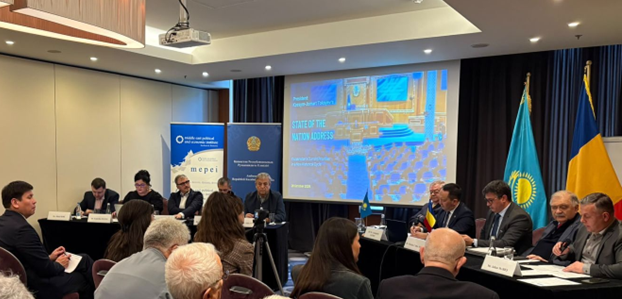
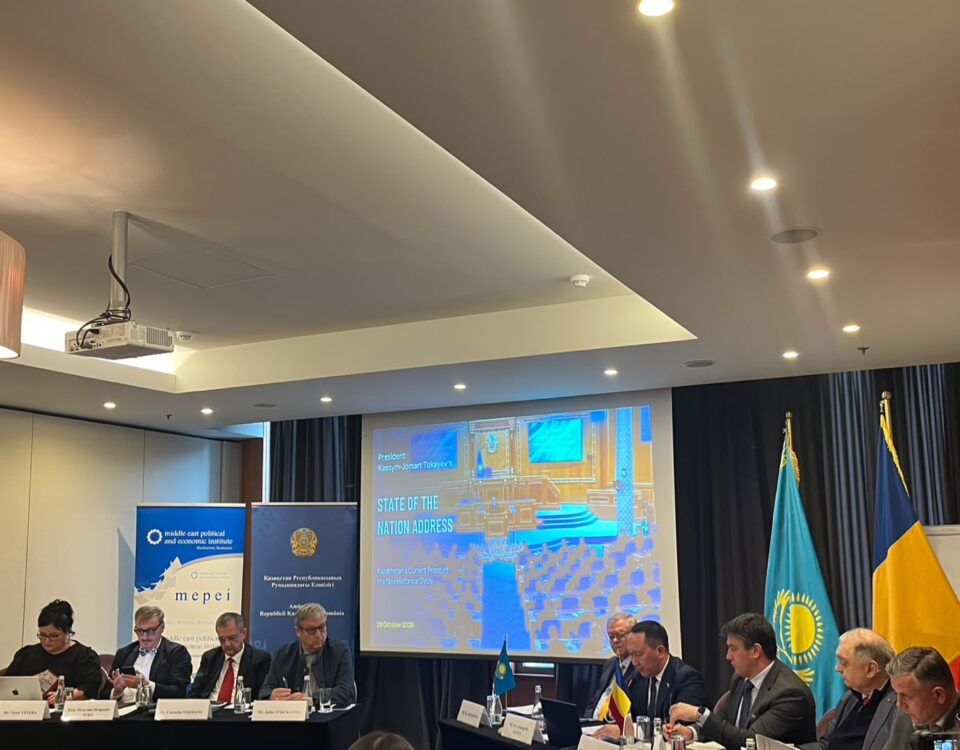
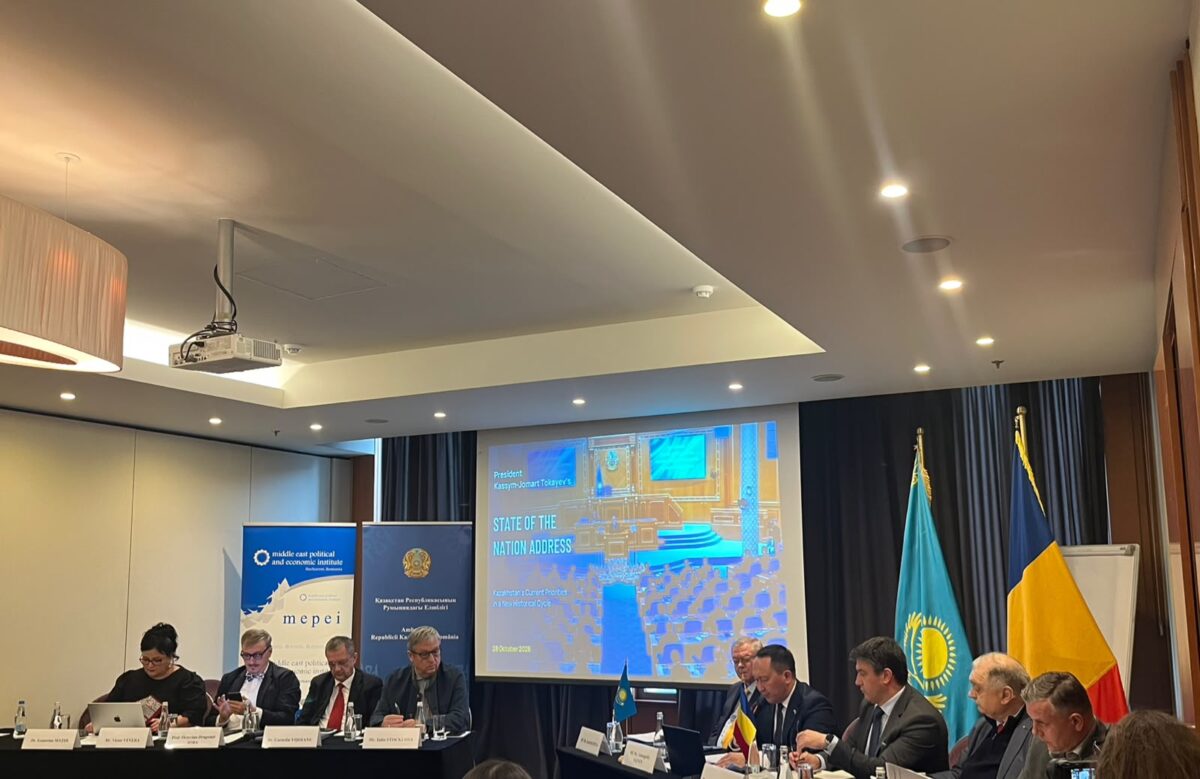
On November 17th, 2026, experts in international diplomacy, geopolitical analysis, defense manufacturing, economics, and academic research convened at the Sheraton Bucharest Hotel for a high-level round table titled “Kazakhstan’s Current Priorities in a New Historical Cycle.”
Jointly organized by the Middle East Political and Economic Institute (MEPEI), EuroDefense Romania, and the Strategic Dialogue for Global Affairs Initiative (SDGAi), with the support of the Embassy of the Republic of Kazakhstan in Romania, the event brought together prominent figures to analyze Kazakhstan’s strategic evolution and its expanding partnerships in Southeastern Europe.
Opening the proceedings, the Ambassador of the Republic of Kazakhstan to Romania, H.E. Mr. Amangeldy Sainov, outlined Kazakhstan’s core domestic and foreign priorities following President Kassym-Jomart Tokayev’s landmark State of the Nation address from October 2026. He highlighted that Kazakhstan is channeling roughly 3 billion euros into social and infrastructure projects between the current year and early 2027, focusing on modernizing rural healthcare and educational facilities. Kazakhstan’s GDP is projected to approach $400 billion in 2026, with real economic growth expected at 4.4% and total reserves exceeding $130 billion. Ambassador Sainov stressed that economic diversification, a move away from raw-material dependency, and the enhancement of Eurasian transit corridors are critical to building a sustainable future.
The discussions heavily emphasized energy security, nuclear development, and critical raw materials. Speakers noted that Kazakhstan produces approximately 123 billion kilowatt-hours of electricity, with a strategic goal to secure a stable energy surplus by 2029 to power large-scale industrialization and digitalization. Plans include constructing Kazakhstan’s first nuclear power plant in the Almaty region alongside renewable energy expansion. Furthermore, Kazakhstan’s global standing as a green energy pillar was underscored, noting that the country produces roughly 40% of the world’s uranium and extracts 19 of the 34 critical raw materials essential to the European Union, including ranking first globally in tungsten reserves. On the bilateral front, the enduring significance of Rompetrol (owned by KMG International and serving as Kazakhstan’s largest asset in Europe and a major Romanian taxpayer) was highlighted alongside Kazakhstan becoming Romania’s primary supplier of mineral fuels.
Transcontinental connectivity and the Trans-Caspian International Transport Route (the Middle Corridor) emerged as a central theme of the round table. With approximately 85% of overland cargo from China to Europe transiting through Kazakhstan, participants discussed how modernized ports like Aktau and Kuryk seamlessly link to Europe via Romania’s Port of Constanța and the Danube River. Defense and transport experts proposed concrete bilateral frameworks, including digital tracking corridors, green industrial parks, and joint operational working groups to turn the Caspian-Black Sea route into a leading economic ecosystem.
Other important topics were digital sovereignty and multi-vector cybersecurity. Speakers reviewed Kazakhstan’s deployment of supercomputers, submarine fiber-optic cables, and AI integration across public administration under the Digital Kazakhstan program. To safeguard critical infrastructure, Kazakhstan maintains a balanced cybersecurity architecture, combining Western AI monitoring tools (such as Palo Alto Networks) with Eastern operational agreements and formal accession to the Budapest Convention on Cybercrime. Complementing this, institutional cyber-diplomacy agreements between Romania’s ICI Bucharest and Kazakh security bodies illustrate growing technical synergy.
Geopolitical and security analyses presented during the event demonstrated how Astana successfully executes strategic autonomy through a non-aligned foreign policy. By balancing bilateral security treaties, spanning border cooperation with China, resource-linked regional pacts in Central Asia, and law enforcement agreements with Qatar and Serbia, alongside active multilateral coordination within the Organization of Turkic States, the Shanghai Cooperation Organization (where Kazakhstan is a founding member and third-largest budget contributor), and the CSTO, Kazakhstan actively mitigates cross-border security challenges while championing UN institutional reforms.
On the topic of bilateral relations between Romania and Kazakhstan, H.E. Mr. Amangeldy Sainov brought forward the importance of strengthening links towards developing the Middle Corridor: “We are interested in the active involvement of Romanian companies in developing this route. We invite Romanian businesses to cooperate in transport and logistics, port infrastructure, trade, industry and joint investment projects. I am confident that combining Kazakhstan’s transit opportunities with Romania’s logistics potential will create new economic opportunities for both countries and strengthen our strategic partnership.”
Concluding the event, participants and attending diplomats praised Kazakhstan’s rising international stature and urged both nations to build upon these robust foundations by fostering higher-level political dialogues and expanded industrial, technological, and academic cooperation in the coming year.