
China’s Position and Strategic Perspectives on President Trump’s 2026 State Visit: A Comprehensive Analysis
May 11, 2026
Interactions among Major Countries in a Evolving Landscape: An Analysis of President Putin’s 2026 State Visit to China
May 30, 2026Interactions among Major Countries amid a Turbulent Middle East: An Analysis of China-U.S. Policy Dialogue on Middle East Affairs during Trump’s Visit to China in 2026
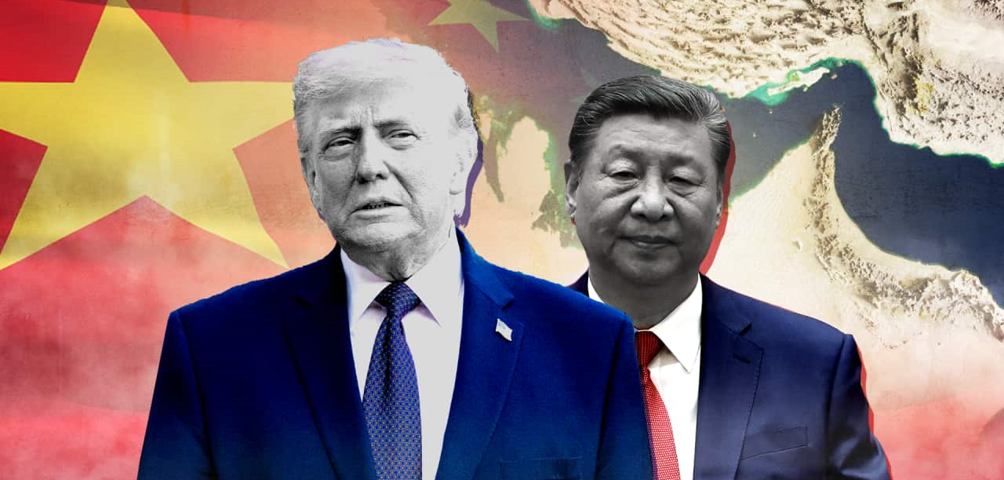
Photo Source: https://www.sbs.com.au/
- Introduction
Against the backdrop of escalating tensions in the Middle East and the official visit of U.S. President Donald Trump to China from May 13 to 15, 2026, this paper systematically analyzes the outcomes of the meeting between the two heads of state on the Middle East conflict. President Donald J. Trump paid a state visit to Beijing for a highly anticipated bilateral summit with Chinese President Xi Jinping. While the meeting was originally scheduled earlier in the year and was expected to focus predominantly on trade tariffs, technology restrictions, and the volatile U.S.–China bilateral relationship, the rapid deterioration of the Middle East security environment—most notably the prolonged Iran–Israel/U.S. confrontation and the unresolved humanitarian catastrophe in Gaza—elevated the region to a central item on the agenda.
The Middle East conflict, especially the Iran crisis and the situation in the Strait of Hormuz, was one of the core topics of this meeting. This high-level major-country dialogue is widely regarded as an effective way to prevent conflict escalation and uphold orderly international relations. Being the first U.S. presidential visit to China in nine years, this meeting carries considerable strategic value amid growing global uncertainties. The Middle East has long been one of the most volatile regions in the world, with frequent conflicts and crises that have far-reaching impacts on global energy security, economic development and international order.
Since the beginning of 2026, the situation in the Middle East has deteriorated rapidly, with the escalation of the Iran war leading to the partial closure of the Strait of Hormuz, which has severely impacted the global energy supply and economic stability. Also, since the outbreak of the latest Iran-related conflict, the situation in the Gulf region has remained tense, causing serious losses to the people of all countries in the region and continuously expanding spillover effects, which have severely impacted the stability of global industrial and supply chains, international trade order and energy supply. Thus, the Middle East situation stood high on the agenda, given its protracted unrest, grave humanitarian plight and profound influence over global energy security and geopolitical patterns.
As the world’s largest energy importer and a permanent member of the United Nations Security Council, China has important interests in the Middle East region and has been committed to promoting peace talks and resolving conflicts through political means. For Washington, securing Beijing’s constructive engagement on the Iran crisis and the freedom of navigation through the Strait of Hormuz had become a strategic imperative. For Beijing, whose Belt and Road Initiative partners in the Gulf and Levant are directly affected by regional instability, preventing an energy shock and demonstrating China’s credentials as a responsible stakeholder in global security were paramount. The results of the two leaders’ discussion on the Middle East conflict, though short of a breakthrough peace blueprint, produced several noteworthy diplomatic outcomes with both immediate and long-term implications.
This analysis is based on the official statements released by the Chinese and U.S. governments after the meeting and the briefing by Chinese Foreign Minister Wang Yi on the outcomes of the meeting. It objectively analyzes the consensus reached and differences remaining between the two sides on the Middle East conflict, and evaluates the significance and limitations of this meeting. Drawing on official releases and China’s established diplomatic doctrines, it sorts out consultation context, core policy stances, dialogue traits and foreseeable impacts, so as to provide reference for international institutions in regional situation assessment and major-country relation research.
- Background and Core Concerns of Both Sides on the Middle East Issue
2.a. The Current Situation of the Middle East Conflict
Since the outbreak of the Iran war in early 2026, the regional security situation has continued to deteriorate. The Middle East remains trapped in intense geopolitical tensions, with spreading conflicts, intensified multi-party rivalry and worsening regional governance deficits. The military conflict between the United States and Iran has escalated, and Iran has partially closed the Strait of Hormuz in response to U.S. military strikes, leading to a sharp rise in international oil prices. Ongoing U.S.-Israeli military pressure on Iran has weakened navigational safety in the Strait of Hormuz, and volatile energy prices keep disturbing global trade operations.
At the same time, the Palestinian-Israeli conflict has not been effectively resolved, and the humanitarian situation in the Gaza Strip remains severe. The prolonged Gaza conflict continues to claim civilian lives, severely curbing humanitarian delivery and making the universally acknowledged two-state solution harder to put into practice. Growing internal frictions and rampant external meddling have deepened bloc divides, rendering regional security order unsustainable. Persistent conflicts have retarded local development and undermined global trade, energy supply chains and industrial chain stability. The continuous turmoil in the Middle East has become the most important source of instability affecting global peace and development, and the international community fears the situation could spiral into a wider regional war.
2.b. China’s Core Concerns
China’s core concerns in the Middle East mainly include three aspects: first, ensuring the security of energy supply. More than 60% of China’s crude oil imports come from the Middle East, and the closure of the Strait of Hormuz will directly threaten China’s energy security. Second, safeguarding the legitimate rights and interests of Chinese enterprises and citizens in the region. Third, maintaining regional peace and stability, which is in line with China’s overall diplomatic strategy of promoting the building of a community with a shared future for mankind.
China has always adhered to the principle of non-interference in other countries’ internal affairs, advocated resolving conflicts through dialogue and negotiation, and opposed the use of force or the threat of force. China has played a constructive role in promoting the reconciliation between Saudi Arabia and Iran in 2023, and has been actively working to promote a political solution to the Middle East conflict. As two globally influential major countries, China and the United States shape regional de-escalation progress and peace prospects through their perceptions and interactive patterns.
The international community calls on both sides to discard confrontation logic, sustain regular communication, coordinate conflict easing efforts and keep the Middle East free from major-country rivalry. Prioritizing Middle East issues in high-level talks demonstrates shared recognition of the region’s strategic importance, as well as practical willingness to manage differences and lower misjudgment risks.
2.c. The United States’ Core Concerns
The United States’ core concerns in the Middle East mainly include: first, ensuring the security of Israel, its most important ally in the region. Second, preventing Iran from acquiring nuclear weapons and curbing Iran’s regional influence. Third, ensuring the freedom of navigation in the Strait of Hormuz and maintaining the stability of the global energy market. Fourth, protecting the security interests of the U.S. and its citizens in the region.
Since taking office for the second time, the Trump administration has adopted a tough policy towards Iran, resuming “maximum pressure” sanctions and launching military strikes against Iran. However, the escalation of the conflict has also brought heavy costs to the United States, and it hopes to coordinate with China to ease regional tensions and avoid being trapped in a long-term war in the Middle East. U.S. statements during the visit are in line with its established Middle East strategic arrangements, which center on alliance interests and key waterway control.
Washington puts regional ally security in a prominent position, commits itself to shielding Israel and other regional allies from external threats, and takes a tough stance against Iran’s nuclear development and regional armed power expansion. The U.S. side reiterated its longstanding position on freedom of navigation, expressing opposition to any disruption of lawful passage through the Strait of Hormuz. It does not rule out diplomatic mediation, and voiced readiness to ease regional strains via multilateral platforms and contain uncontrolled conflict expansion. On Iran-related issues, the U.S. sticks to its containment strategy and retains existing sanctions to force policy adjustments from Tehran. Overall, Washington introduced no new regional governance concepts with no major policy shifts, and its core focuses remain ally protection, waterway jurisdiction and sustained pressure on Iran.
- China’s Principled Position and Propositions
China consistently upholds an objective, impartial and balanced Middle East policy, fully consistent with the propositions anticipated by President Xi Jinping and foreign policy guidelines released by Chinese diplomatic authorities. Recently, President Xi Jinping put forward four propositions for maintaining and promoting peace and stability in the Middle East, which have received positive responses from the international community. Grounded in regional realities, the initiative reflects China’s enduring commitment to ceasefire promotion and dialogue-based dispute settlement, and offers down-to-earth solutions for regional tension relief.
First, China maintains that the international community must adhere to the principle of peaceful coexistence. China believes that countries in the Middle East and the Gulf are neighbors that cannot be moved away and should live in peace and harmony. China supports the improvement of relations among countries in the region and promotes the construction of a common, comprehensive, cooperative and sustainable security architecture in the Middle East and the Gulf. This security architecture should be based on mutual respect, equality and mutual benefit, and should not target any third party. Beijing regards an immediate ceasefire as the top priority for tension mitigation, meaning all parties should halt hostile military actions, protect civilians and civilian facilities, unblock humanitarian access and stop conflict deterioration.
Second, China insists on the necessity to adhere to the principle of national sovereignty. Sovereignty is the foundation for the survival and development of all countries, especially developing countries. China emphasizes that the sovereignty, security and territorial integrity of all countries in the Middle East and the Gulf should be effectively respected, and the safety of personnel, facilities and institutions of all countries should be effectively protected. China opposes any interference in the internal affairs of other countries and any act that violates the sovereignty of other countries. Military operations without UN authorization lack legitimate grounds, and assaults targeting civilians and civilian infrastructure must be firmly opposed.
Third, China urges the international community to adhere to the principle of international rule of law. China maintains that the authority of international law and the United Nations Charter should be safeguarded, and international relations should be governed by international law. Double standards should be rejected in the application of international law, and the legitimate rights and interests of all countries should be equally protected. China believes that the Middle East issue should be resolved in accordance with international law and relevant UN resolutions. China firmly opposes arbitrary unilateral sanctions and long-arm jurisdiction, which only fuel regional estrangement, and notes that all nations ought to abide by the UN Charter and resolve disputes through consultation.
Fourth, China highlights the importance to adhere to the integration of development and security. Development is the foundation of security, and security is the guarantee of development. China advocates that while maintaining regional security, countries in the Middle East should strengthen economic cooperation, promote common development, and eliminate the root causes of conflicts and unrest. China is willing to strengthen practical cooperation with countries in the Middle East in the fields of infrastructure construction, energy, trade and investment, and help them achieve sustainable development.
China maintains that Middle East affairs should be decided independently by regional peoples themselves, opposing arbitrary external intervention and externally imposed settlement models. It supports regional reconciliation and cooperation, and advocates building inclusive, sustainable regional security frameworks tailored to local realities. China has repeatedly stressed that it seeks no proxies, exclusive blocs or a geopolitical vacuum in the Middle East, and always stands firm on peace, justice and people-centered diplomacy.
- Key Consensus Reached during the Meeting
According to the briefing by Chinese Foreign Minister Wang Yi on May 15, 2026, and the statements released by the White House, China and the United States reached important consensuses on Middle East affairs during the meeting, particularly regarding the Iran situation and the Strait of Hormuz navigation security. The Middle East featured prominently in the extended bilateral session at the Great Hall of the People and in subsequent working-group discussions attended by U.S. Secretary of State Marco Rubio and Chinese Foreign Minister Wang Yi. Unlike many previous U.S.–China communiqués, which relegate Middle East references to generic calls for peace, the 2026 summit produced explicit, if carefully qualified, shared formulations on two critical issues: the Strait of Hormuz and the Iranian nuclear program.
4.a. Commitment to Keeping the Strait of Hormuz Open
Both sides agreed that the Strait of Hormuz must remain open, which is crucial to global energy security and economic stability. Both China and the U.S. agree that the Strait of Hormuz, as a vital international waterway for global energy transportation, must remain open and unimpeded. The closure of the strait would cause catastrophic consequences for the global economy, leading to sharp rises in oil prices, disruptions in supply chains and even global economic recession.
The Chinese side, for its part, reiterated its longstanding opposition to the militarization of the waterway and to any attempts by parties to the conflict to impose unilateral tolls or blockades on international shipping lanes—a thinly veiled reference to Tehran’s intermittent threats to restrict passage in response to Western sanctions or military action. President Xi Jinping emphasized that the solution to the Strait of Hormuz issue lies in achieving a permanent and comprehensive ceasefire. China advocates reopening the Strait of Hormuz as soon as possible on the basis of maintaining a ceasefire, and prioritizes alleviating the humanitarian and transportation crises to create conditions for subsequent political negotiations.
China advocates that the issue of the Strait of Hormuz should be resolved through peaceful negotiations, and the fundamental solution lies in achieving a permanent and comprehensive ceasefire in the region. During the meeting, it was reported that Iran had granted passage to some ships from coordinating countries, which was regarded as an example of the effectiveness of security coordination in specific situations and confirmed China’s long-advocated principle of innocent passage.
4.b. Opposition to Iran Acquiring Nuclear Weapons
The two sides reached an important consensus on the Iranian nuclear issue, agreeing that Iran must not acquire or possess nuclear weapons. On the Iranian nuclear question, the convergence was more rhetorical than operational but nonetheless symbolically significant given the depth of U.S.–China strategic mistrust. Beijing has traditionally resisted endorsing rigid non-proliferation language directed at specific countries in bilateral documents with Washington, preferring to emphasize the universality of the Nuclear Non-Proliferation Treaty. In this instance, however, Xi Jinping signaled Beijing’s acceptance of the formula that “Iran shall not possess a nuclear weapon,” while simultaneously affirming Iran’s legitimate right to the peaceful use of nuclear energy under IAEA safeguards—language that preserves China’s diplomatic space with Tehran while offering Washington a face-saving joint statement.
China has always supported the international nuclear non-proliferation system and believes that Iran has the right to use nuclear energy peacefully, but it must not develop nuclear weapons. This is consistent with the international community’s long-standing position of maintaining the international nuclear non-proliferation regime. The U.S. has always regarded preventing Iran from acquiring nuclear weapons as its core strategic goal in the Middle East. This consensus provides a basis for the two sides to cooperate on the Iran nuclear issue and prevent the proliferation of weapons of mass destruction in the region. Western analysts characterized this as a “low-cost concession” by China, yet its inclusion in a summit document between the world’s two largest economies raises the diplomatic stakes for Iranian non-compliance and provides a baseline for coordinated pressure should the situation deteriorate further. China believes that the Iranian nuclear issue can only be resolved through dialogue and negotiation, and calls for reaching a comprehensive solution that takes into account the concerns of all parties.
4.c. Support for Resolving Conflicts through Dialogue and Negotiation
President Xi Jinping elaborated on China’s consistent position, emphasizing that force cannot solve problems and dialogue is the right way forward. China welcomes the recent ceasefire between the U.S. and Iran and their exploration of resolving issues through negotiations. President Xi Jinping emphasized that negotiations will not be achieved overnight, but since the door to dialogue has been opened, it should not be closed again. China encourages both the United States and Iran to continue to resolve their differences, including the nuclear issue, through negotiations, and to consolidate the current momentum of de-escalation.
Both sides agreed to encourage all parties to the conflict to return to the negotiating table and resolve differences through peaceful means. Both China and the U.S. recognize that the prolonged conflict in the Middle East is not in the interests of any party. China calls for an early comprehensive and lasting ceasefire to prevent further escalation of the situation and reduce casualties and losses among civilians. The two sides agreed to maintain communication on the Middle East issue and play constructive roles in promoting the political settlement of the crisis.
Beyond declaratory consensus, the summit revealed a tacit recalibration of expectations regarding China’s role as a mediator in the Iran crisis. The United States, through Treasury Secretary Scott Bessent and National Security Advisor figures present in the delegation, conveyed to their Chinese counterparts the hope that Beijing would use its unique economic leverage—China remains Iran’s largest single purchaser of crude oil and a major trade partner—to encourage Tehran to de-escalate, cease threatening the Strait of Hormuz, and return sincerely to nuclear negotiations. President Trump, speaking to Fox News after the meeting, claimed that President Xi had offered to “help, if I can be of any help whatsoever,” and had pledged that China would not supply Iran with lethal military equipment—a commitment Trump described as a “big statement”. Whether this translates into verifiable changes in Chinese dual-use exports or energy import volumes remains to be seen, but the very fact that Beijing appeared willing to discuss its conduct toward Tehran at a leaders-level summit marks a departure from its usual insistence that regional conflicts are none of Washington’s business in bilateral talks.
4.d. Establishment of a Communication Mechanism on Middle East Affairs
The two sides agreed to establish a regular communication mechanism on Middle East affairs to strengthen coordination and cooperation on regional hotspot issues. This mechanism will provide a platform for the two sides to exchange views in a timely manner, avoid strategic misjudgments, and jointly promote the peaceful resolution of regional conflicts.
The dialogue is marked by tangible divergences and broad consensus on risk control. Both sides adopted a pragmatic and restrained attitude with clear red lines and risk prevention as core priorities. Both sides steered clear of empty strategic debates and focused discussions on ceasefire execution, humanitarian aid, waterway operation and energy stability. Their core aim is to defuse misjudgment risks, avoid accidental military friction and stop a dangerous spiral of escalation, rather than forcing unified strategic decisions or joint operations. Despite conceptual and interest divides, Beijing and Washington agreed to keep regular exchanges and maintain dedicated dialogue channels on Middle East issues.
- Remaining Differences and Geopolitical Challenges
As disclosed publicly, Beijing and Washington signed no dedicated cooperation deals, reached no landmark agreements, and made no attempt to align their Middle East policies. Each side stated its views in line with long-standing diplomatic frameworks and narrowed down mutual concerns through constructive communication, with no joint statements or new cooperation pacts issued. Their divergent diplomatic ideas, strategic priorities and overseas layouts lead to distinct approaches toward regional affairs. Deep-seated policy gaps remain with no short-term intention of compromise.
5.a. Differences on Sanctions against Iran
The United States insists on maintaining comprehensive sanctions against Iran and even threatens to impose secondary sanctions on countries that continue to trade with Iran, leveraging this containment strategy to force policy adjustments from Tehran. China, on the other hand, believes that sanctions cannot fundamentally solve the problem and will only worsen the humanitarian situation in Iran. China advocates lifting illegal unilateral sanctions against Iran and creating favorable conditions for negotiations. The U.S. tends to use pressure and sanctions to force the other side to make concessions, while China advocates resolving issues through equal dialogue and negotiation without attaching any preconditions.
5.b. Differences on the Use of Force
Also, the U.S. reserves the right to use military force against Iran and has repeatedly threatened to launch larger-scale military strikes if Iran does not make concessions. On top of that, it follows an ally-centered geopolitical mindset, leverages maritime superiority and maintains tough pressure on Iran. The Chinese readout emphasized that force cannot resolve problems; dialogue is the right path, implicitly criticizing the U.S.–Israeli military campaign against Iranian targets while stopping short of condemning it outright.
China firmly opposes the use of force or the threat of force, and believes that military means will only lead to more serious conflicts and humanitarian disasters. China adheres to unbiased diplomatic positioning, rejects unilateralism and excessive use of force, and pursues balanced regional stability. The two differ sharply over the legitimacy of Iran sanctions, the rationality of overseas military operations and regional security architecture construction, and neither will budge on core interests.
5.c. Differences on the Israeli-Palestinian Issue
Regarding the Israeli–Palestinian dimension of the Middle East conflict, the summit results were more circumscribed. Differences on the Israeli-Palestinian issue remain a primary source of friction. The United States has long maintained a close alliance with Israel and has often taken a biased position on the Israeli-Palestinian issue. The U.S. side, reflecting the Trump administration’s closer alignment with the Netanyahu government and its own postwar Gaza redevelopment concepts, did not formally endorse China’s formulations but did not contest Beijing’s right to advocate them.
China used the occasion to reiterate its established position: an immediate and durable ceasefire in Gaza, unhindered humanitarian access, and a return to a credible political track anchored in the two-state solution, with an independent State of Palestine based on 1967 borders and East Jerusalem as its capital. China has always supported the legitimate national rights and interests of the Palestinian people and advocates the implementation of the two-state solution, noting that military means can never eradicate rooted contradictions. China believes the international community should uphold the two-state solution, reject radical unilateral acts and push for equal bilateral consultations.
The absence of public friction on this point was itself a minor deliverable; in previous Trump-era encounters, sharp disagreement over the status of Jerusalem and the Palestinian question had threatened to derail broader communiqués. This time, both sides elected to note their respective positions without allowing divergence on Gaza to contaminate agreement on other files such as Iran or trade.
5.d. Differences on the Future of the Regional Security Architecture
The U.S. hopes to maintain its dominant position in the Middle East security architecture and continue to rely on its alliance system to maintain regional security. On top of that, it has long maintained a large military presence in the region and regards it as an area of its own influence. China, on the other hand, advocates building a new regional security architecture that is common, comprehensive, cooperative and sustainable, and believes that the fate of the Middle East should be in the hands of the people of the Middle East countries themselves.
Geopolitical competition remains intense, as China’s growing influence in the Middle East has caused some concerns in the United States. Furthermore, a lack of mutual trust impacts their interactions; the long-term strategic competition between China and the U.S. has led to a lack of mutual trust, which has affected the depth and effectiveness of their cooperation on international issues including the Middle East.
- Potential and Challenges of China-U.S. Cooperation
The establishment of the “China-U.S. Constructive Strategic Stability Relationship” provides a good framework for the two countries to strengthen cooperation on the Middle East issue. The two capitals agreed to build a strategically stable relationship between China and the United States, setting a new direction for bilateral ties. Under the framework of this relationship, the two countries should strengthen communication, enhance mutual trust, properly handle differences, and carry out pragmatic cooperation in areas of common interest, so as to make positive contributions to promoting a comprehensive, lasting and sustainable peace in the Middle East.
Moreover, there is substantial potential for China-U.S. cooperation in maintaining maritime security in the Gulf, as both China and the United States have important interests in maintaining the freedom of navigation and security of the Strait of Hormuz. China attaches great importance to global energy and maritime security, and works to guarantee unimpeded navigation on key waterways including the Strait of Hormuz and the Red Sea, stabilize energy infrastructure operation and maintain sound global industrial and supply chains. The two countries can strengthen information sharing and maritime security cooperation to jointly prevent incidents that may disrupt navigation.
Promoting humanitarian assistance presents another area of shared interest, as the Middle East conflict has caused a serious humanitarian crisis, with millions of people displaced and in urgent need of humanitarian assistance. China and the U.S. can coordinate their humanitarian aid efforts to provide more support to the affected people. Supporting UN mediation is also crucial, since the United Nations plays an irreplaceable role in resolving the Middle East issue. They should also support the UN’s mediation efforts and work together to promote the political settlement of the crisis under the UN framework.
- Impact, Significance, and Limitations of the Meeting Outcomes
7.a. Positive Impact on the Middle East Situation
The meeting outcomes have sent a positive signal to the international community that the world’s two largest economies are willing to cooperate to ease tensions in the Middle East. The consensus on keeping the Strait of Hormuz open and preventing Iran from acquiring nuclear weapons has helped stabilize market expectations and prevent further escalation of the conflict. The establishment of a communication mechanism on Middle East affairs will also provide a channel for the two sides to coordinate their positions and avoid conflicts. High-level major-country consultations have calmed regional sentiment and sent clear restraint signals to conflicting parties.
Mainstream international opinion rejects reckless warfare and advocates peace negotiation, imposing stronger external constraints on extremist radical moves and creating favorable conditions for third-party mediation. China continues to advance peace-building efforts, set up neutral communication platforms for regional states, consolidate the outcomes of Saudi-Iranian détente and sustain regional reconciliation momentum.
7.b. Significance for Global Energy Security
The Strait of Hormuz is the most important energy transportation channel in the world, through which about 30% of the world’s seaborne crude oil trade passes. The consensus reached by China and the United States on keeping the Strait of Hormuz open is of great significance for maintaining the stability of the global energy market and ensuring the energy security of all countries. It has helped ease the pressure of rising international oil prices and reduced the risk of a global economic recession.
The constructive strategic stability between China and the U.S. provides a rare opportunity for easing tensions in the Middle East, and the two countries should strengthen coordination and cooperation to jointly promote a comprehensive, lasting and sustainable peace in the region. Continuous high-level interactions amid global turbulence reflect rationality and a sense of responsibility, deliver anti-confrontation signals to the world and ease market concerns over intensified major-country frictions. Middle East-related consultations have become a vital practice for China and the United States to manage differences and prevent hostile competition. Open discussions on sensitive geopolitical topics without deliberate avoidance or emotional confrontation have accumulated valuable experience for difference management, and laid solid groundwork for future cooperation in climate governance, economic and trade ties and non-proliferation fields.
The consensus on building a strategically stable bilateral relationship has defined the future development path featuring cooperation priority, regulated competition, manageable differences and lasting peace. The United States also showed positive attitudes toward sustained communication, proper difference management and bilateral relationship improvement, which facilitates deeper market cooperation between U.S. enterprises and Chinese partners. Global media and academic circles widely acknowledge that sound major-country interactions serve both bilateral interests and the global common good. Experts point out that the abandonment of zero-sum thinking and adherence to rational dialogue have forged a new major-country interaction model fit for the current international order, and prevented the Middle East from becoming a new hotspot for bilateral confrontation.
In global governance, the meeting reaffirms the UN’s core coordinating role and basic norms of international law, and pushes back against unilateral sanctions and power politics, thus facilitating global governance system optimization. Rational bilateral communication spreads major-country restraint and multilateral coordination ideas, reduces global development uncertainties and consolidates foundations for world economic recovery and international order stability.
The strategic implications of the meeting’s Middle East-related outcomes extend beyond the immediate crisis. First, the willingness of both Washington and Beijing to address regional security issues in a top-level bilateral format validates the notion—long championed by Beijing—that China’s participation is indispensable to any sustainable Middle East security dialogue. Following the successful Chinese-brokered Saudi–Iranian détente of 2023, the 2026 summit further institutionalized China’s self-ascribed role as a balancing mediator rather than a disengaged observer. Second, the joint affirmation on the Strait of Hormuz subtly expands the normative expectation that great-power responsibility includes guaranteeing global commons—energy transit chokepoints—even when they traverse active conflict zones. Third, by managing disagreement on Gaza while finding overlapping interests on Iran’s nuclear status and freedom of navigation, the two sides erected a modest “guardrail” suggesting that competition in the Middle East need not preclude issue-specific coordination where national interests align.
7.c. Limitations of the Meeting Outcomes
It should be noted that the meeting outcomes have certain limitations, and the summit yields limited immediate operational outcomes yet boasts far-reaching long-term stabilizing effects. Restrained by inherent differences, the two failed to roll out executable joint crisis response plans, resulting in limited direct influence over regional situations. The two sides only reached a consensus on some basic principles, but did not resolve the fundamental differences on issues such as sanctions against Iran and the use of force. No detailed roadmap for ending hostilities between Iran and U.S./Israeli forces was produced; no timetable for the Iranian withdrawal of blockade threats was attached to the joint statement; and Beijing stopped short of committing to reduce imports of Iranian crude or to coerce Tehran in ways that might jeopardize its multifaceted partnership with the Islamic Republic.
Skeptics in Washington and among Gulf Arab allies were quick to note that the “consensus” amounted to agreement on basic principles—open sea lanes, no Iranian bomb—that both capitals had already espoused separately. Thus, the summit yielded a stabilizing tone and a framework for continued consultation, but not a mechanism that would, by itself, halt the fighting or revive the JCPOA.
The implementation of the consensus also faces many uncertainties. Whether the Middle East conflict can be effectively resolved still depends on the political will of all parties to the conflict and the continuous efforts of the international community. Multiple practical constraints set clear limits on the meeting’s actual influence, making a short-term reshaping of the established Middle East geopolitical pattern impossible. Structural divergences between China and the United States run deep, and their conflicting interests and value judgments on Iran policies, overseas military activity definition and alliance mechanism building leave little room for rapid reconciliation.
U.S. foreign policies are also subject to domestic political restraints. Electoral cycles, interest group demands and ally claims often interfere with decision-making, leading to unstable regional policies and insufficient implementation capacity, which hinders long-term peace process advancement. In addition, intricate internal interest conflicts, rampant extremist activities and intertwined external intervention forces bring huge obstacles to ceasefire talks and post-conflict reconstruction. Even with unified communication attitudes, China and the U.S. alone cannot resolve deep-rooted regional contradictions, and regional geopolitical restructuring will remain a long-term undertaking.
- Conclusion
The discussion between President Xi Jinping and President Trump on the Middle East conflict during Trump’s visit to China in May 2026 is an important event in the history of China-U.S. relations and international relations. President Trump’s 2026 visit to China has achieved important results in promoting the easing of tensions in the Middle East. The two sides reached important consensuses on keeping the Strait of Hormuz open, preventing Iran from acquiring nuclear weapons, supporting dialogue and negotiation, and establishing a communication mechanism on Middle East affairs. These consensuses have laid a foundation for the two sides to coordinate their positions on Middle East issues and jointly promote regional peace and stability. Also, the summit’s significance lies less in concrete deliverables, and more in responsible engagement between two influential major countries on sensitive geopolitical issues to contain strategic miscalculations and calm global market sentiment.
In evaluating the results of President Trump’s meeting with Chinese leadership regarding the Middle East conflict, a balanced assessment would characterize the outcome as a qualified success in diplomatic signaling rather than a substantive conflict-resolution milestone. The summit produced an explicit binational consensus on non-proliferation and open seaways, opened a channel through which Beijing may incrementally lean on Tehran, and avoided a public fissure over Gaza that could have spilled over into the trade and financial discussions also on the table. These are not insignificant achievements in a period of heightened Sino–American rivalry. Yet the enduring test will be implementation: whether China follows through on its implicit undertaking to discourage Iranian brinkmanship in the Strait of Hormuz, whether Iran takes note of the unified message from both permanent UN Security Council members, and whether the U.S. and China can sustain a habit of consulting—rather than acting at cross-purposes—when the next flare-up occurs in the region. For the Middle East, long accustomed to being a theater of great-power proxy competition, even a tentative convergence in Beijing represents a noteworthy shift in the diplomatic landscape.
At the same time, there are still significant differences between China and the United States on some fundamental issues, which means that the cooperation between the two sides on the Middle East issue will be a long-term and complex process. China’s four propositions for maintaining and promoting peace and stability in the Middle East are based on the fundamental interests of the people in the region and conform to the trend of the times for peace, development and cooperation. In the long run, though lacking immediate tangible results, the meeting delivers irreplaceable value in geopolitical stability maintenance, bilateral relation improvement and global risk prevention. It has eased Middle East tensions, optimized major-country interaction modes and safeguarded a multilateralism-centered international order.
In the future, China will continue to adhere to its consistent position, play a constructive role in promoting the peaceful resolution of the Middle East conflict, and work with the international community to build a more peaceful, stable and prosperous Middle East. As a responsible major country, China will continue to stand on the side of peace dialogue, the right side of history and the side of human civilization progress, and work with the international community to promote the realization of long-term peace and stability in the Middle East. Against the backdrop of frequent global shocks and rising uncertainties, this high-level diplomatic engagement carries demonstrative strategic significance, and 2026 is widely seen as a pivotal turning point for China-U.S. relations.
The international community should fully support all peace-promoting initiatives, accelerate Middle East tension de-escalation and lay solid foundations for long-term regional peace and sound development. All major countries should carry forward such a dialogue-oriented mindset, uphold a cooperation vision, properly handle divergences and drive steady global development via win-win interactions.
Disclaimer. The views and opinions expressed in this analysis are those of the authors and do not necessarily reflect the official policy or position of MEPEI. Any content provided by our authors is of their opinion and is not intended to malign any religion, ethnic group, club, organization, company, individual, or anyone or anything.
Mingyuan Tan, Yixuan Xie, Xinyu Cui, and Yahan Xiao
Mingyuan Tan, Yixuan Xie, Xinyu Cui, and Yahan Xiao are MEPEI interns and students at Chinese universities, in Law and Engineering.