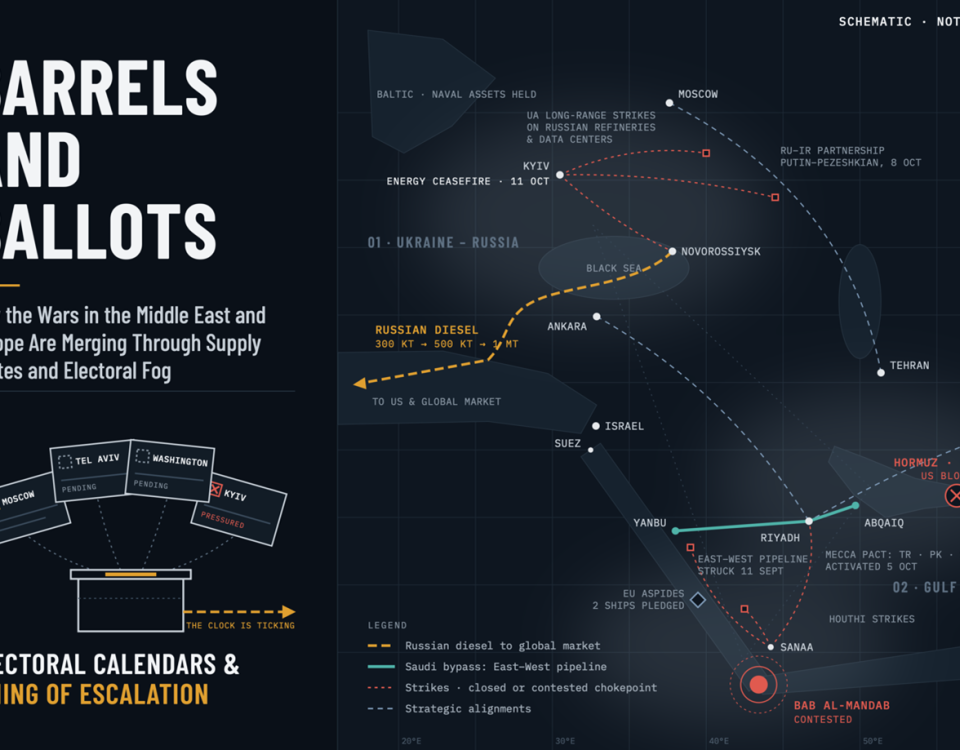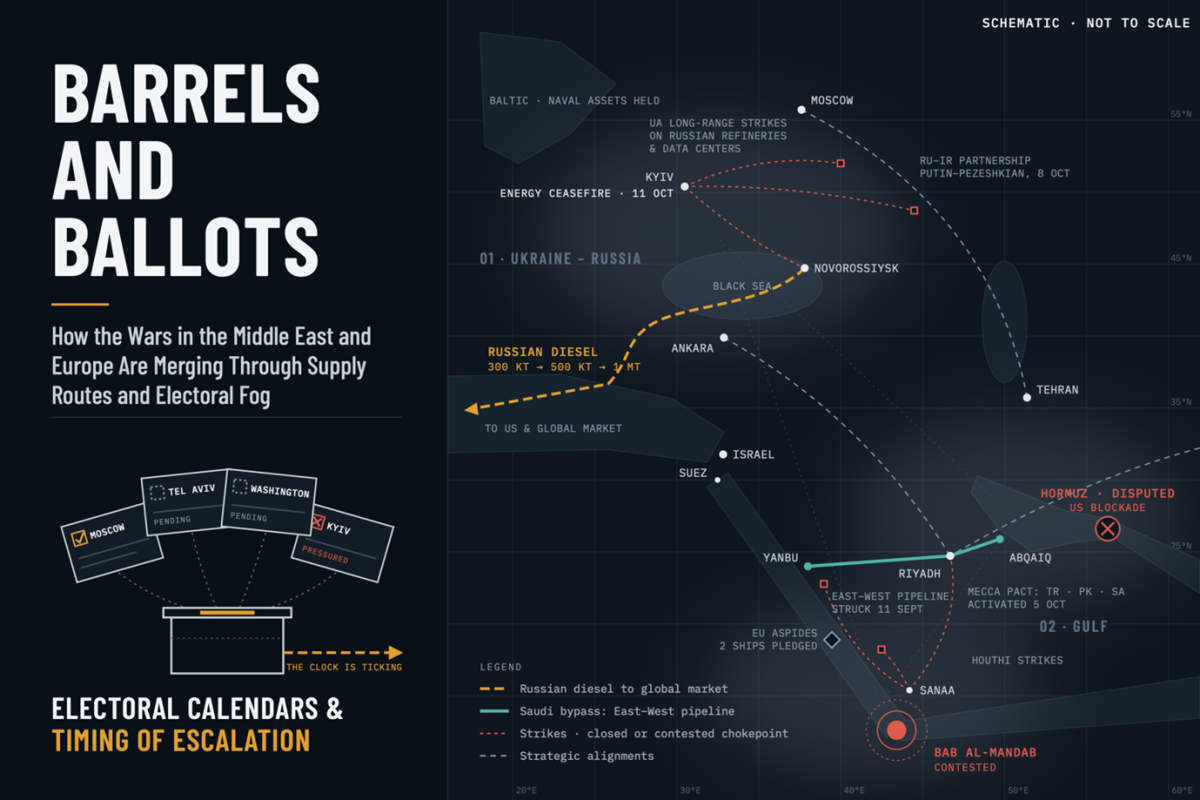

Corridors and Competition: The Turkish-Israeli Rivalry in the Age of Connectivity
April 28, 2026
Interactions among Major Countries amid a Turbulent Middle East: An Analysis of China-U.S. Policy Dialogue on Middle East Affairs during Trump’s Visit to China in 2026
May 26, 2026China’s Position and Strategic Perspectives on President Trump’s 2026 State Visit: A Comprehensive Analysis
Source: https://www.scmp.com/
I. Introduction: A pivotal milestone in global diplomacy
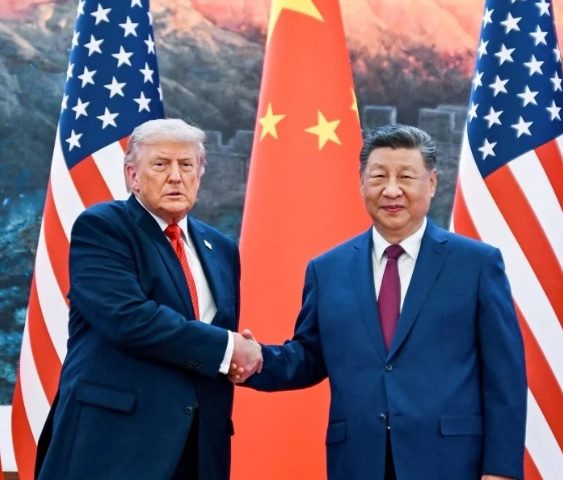
The upcoming official state visit of United States President Donald Trump to the People’s Republic of China, scheduled for May 13 to May 15, 2026, marks an exceptionally significant milestone in the complex, multifaceted, and often turbulent relationship between the world’s two largest economies. As the first visit by a U.S. president to Chinese soil in nearly a decade — nine years to be precise — this summit represents a critical, high-stakes opportunity to stabilize the most consequential bilateral relationship in the modern global system.
This high-level interaction comes at a critical juncture and a time of heightened global uncertainty, with the international landscape being reshaped by ongoing, volatile conflicts in the Middle East and Europe, a growing trend toward economic fragmentation, and a rapid, disruptive technological transformation. For China, this summit is viewed as both a formidable challenge and a unique strategic opportunity to reset and recalibrate bilateral relations following a sustained period of intense strategic competition, emotional confrontation, and economic friction that characterized much of Trump’s second term.
As the world’s largest developing country and the largest developed country, respectively, the trajectory and health of China-U.S. relations do not merely affect the fundamental interests of the two peoples involved; they play a pivotal, non-negotiable role in maintaining global peace and stability, driving the recovery of the world economy, and upholding the integrity of the multilateral governance system. Consequently, the international community regards this visit as a crucial window for the two superpowers to manage their deep-seated differences, resume high-level dialogue, and explore a constructive, sustainable way of coexistence.
II. Background and realistic motivations for the visit
The necessity for this visit is driven by the continuous evolution of the international political and economic pattern. In recent years, the relationship has faced a barrage of challenges across the economy, trade, science, technology, and regional strategy, leading to a marked increase in strategic games and competition. However, the two nations also share significant common interests in global economic recovery, the resolution of regional hotspot issues, climate change, and non-traditional security governance.
From China’s perspective, the practical motivations for hosting President Trump include:
- Easing frictions: Negotiating complex industrial and tariff adjustment issues to alleviate ongoing economic and trade frictions.
- Coordinating strategy: Conducting in-depth communication on global hotspot affairs and coordinating regional strategic layouts to avoid strategic misjudgment caused by a lack of high-level communication.
- Stabilizing interaction: Opening a new round of normalized high-level communication mechanisms to straighten out the development direction of bilateral relations.
The Chinese government perceives this 2026 visit as a natural continuation of the diplomatic momentum established during the Busan summit in October 2025. At that prior meeting, the two leaders successfully negotiated a one-year truce in their trade dispute and agreed on specific guidelines aimed at stabilizing their economic relations.
III. China’s core position and diplomatic principles
China’s approach to President Trump’s visit is not transactional, but is instead shaped by long-standing foreign policy principles and immediate strategic priorities as the nation embarks on its 15th Five-Year Plan (2026-2030). China has consistently handled the relationship in accordance with three fundamental principles proposed by President Xi Jinping: mutual respect, peaceful coexistence, and win-win cooperation.
- Adhering to mutual respect and equal dialogue
China’s basic position is to always adhere to the principles of mutual respect and equality, insisting that high-level visits must take equal dialogue as a prerequisite. While China respects the United States’ strategic concerns and legitimate development demands, it insists that China’s own core interests, national dignity, and bottom-line positions must not be violated or compromised. China holds that differences should be resolved through consultation rather than confrontation, and it explicitly refuses any form of coercion or unilateral demands.
- Advocating win-win cooperation and opposing zero-sum games
China firmly opposes a zero-sum mentality and the implementation of exclusive bloc strategies or camp confrontation. Foreign Minister Wang Yi has explicitly stated that different social systems and development paths are no reason for confrontation, and they certainly should not serve as an excuse for zero-sum games where one side gains at the expense of the other. China maintains that cooperation is the only correct choice, as it benefits both nations while confrontation inevitably harms both.
- Maintaining regional and global strategic stability
China insists that its relationship with the U.S. should not target any third party. As permanent members of the United Nations Security Council, both countries must assume major-country responsibilities in maintaining regional peace and global economic stability. China advocates for properly managing geopolitical differences through this visit to avoid intensified regional confrontation and strategic friction.
IV. Core concerns and key agenda items
- The Taiwan question: the most important and sensitive issue
For China, the Taiwan question remains the most important and sensitive issue, representing an uncrossable red line that serves as the political foundation of China-U.S. relations. China’s position is clear and consistent: Taiwan is an inalienable part of Chinese territory, and the government will firmly safeguard its national sovereignty and territorial integrity.
China urges the United States to abide by the one-China principle and the three China-U.S. Joint Communiqués, which it considers the prerequisite for a steady and sustainable relationship. During the upcoming summit, China is expected to:
- Urge prudence: Call on the U.S. side to handle the issue of arms sales to Taiwan with extreme prudence.
- Cease official exchanges: Demand an end to all forms of official exchanges between the U.S. and Taiwan.
- Oppose containment: Reject any act of “containing China with Taiwan” and stop sending wrong signals to “Taiwan independence” separatist forces.
- Economic and trade relations: opposing unilateralism
Economic and trade issues are expected to feature prominently on the agenda, given the significant frictions of recent years. China firmly opposes unilateral trade protectionist measures, maximum pressure, and the unilateral tariffs imposed by the U.S. on Chinese goods, which currently average approximately 19%.
China’s strategic perspectives in this field include:
- Normalizing relations: Calling for the removal or reduction of these tariffs, which China argues impose high costs on both Chinese exporters and American consumers.
- New cooperation mechanisms: Discussing the establishment of a “Board of Trade” to explore cooperation in key sectors, such as agriculture, energy, and aerospace.
- Market access: Pushing for greater market access for Chinese products in the U.S. and an end to discriminatory trade measures targeting Chinese enterprises.
- Maintaining supply chains: Opposing “decoupling” and the building of “small yards with high walls,” which China views as detrimental to the stability and security of global industrial and supply chains.
- Technology and Artificial Intelligence (AI) governance
Technology and AI have emerged as critical areas of both intense competition and potential cooperation. China’s position is based on the principle that all countries have the right to develop and utilize advanced technologies for peaceful purposes.
China firmly opposes U.S. export controls on advanced technologies and the placement of Chinese companies on “entity lists,” characterizing such actions as technological bullying. During the summit, China is expected to call for:
- Lifting restrictions: The removal of restrictions on advanced AI chips and semiconductor manufacturing equipment.
- AI dialogue: Engaging in official discussions about AI governance and risk management to avoid misjudgment and conflict escalation, particularly regarding military applications.
- Global governance and security challenges
China believes the two nations must work together to address common challenges that no single country can solve alone. This includes:
- Middle East peace: Coordinating diplomatic efforts to promote a ceasefire and a political solution to the ongoing crisis in the Middle East.
- Regional hotspots: Discussing the situation on the Korean Peninsula, the conflict in Ukraine, and nuclear non-proliferation.
- Global issues: Strengthening coordination on climate change, public health, and combating transnational crimes to provide more public goods for the international community.
V. Strategic expectations and “guardrails”
China has set clear and realistic expectations for President Trump’s visit, viewing summit diplomacy as the “ballast stone” and “propeller” of bilateral relations. The primary goal is to establish a more predictable and constructive framework for future interactions.
Specifically, China hopes the summit will:
- Reaffirm consensus: Validate the important understandings reached in Busan and subsequent communications, particularly the commitment to pursue peaceful coexistence.
- Establish guardrails: Create effective “guardrails” to prevent accidental conflicts, such as a military crisis hotline to manage potential crises in the Taiwan Strait and the South China Sea.
- Pragmatic breakthroughs: Reach mutually acceptable consensus on tariff policies and industrial chain coordination to create a stable economic environment.
- Deepen people-to-people exchanges: Restart and expand exchanges in education, culture, tourism, and youth fields to enhance public understanding and friendship between the two peoples.
VI. International perspectives and third-party views
The international community generally believes that as the world’s top two economies, high-level dialogue between China and the U.S. is an important pillar of the global order.
- Global expectations: International organizations, including the United Nations, have called on both sides to provide certainty for the international community and oppose camp division.
- Developing countries: Most third-party nations hope that the dialogue will pay attention to the legitimate appeals of smaller countries, preventing major-country games from harming their interests.
- Opposition to confrontation: Both developed and developing countries generally oppose zero-sum games and expect the two sides to meet each other halfway.
VII. Challenges and uncertainties
Despite China’s constructive attitude and positive expectations, significant challenges remain that could affect the ultimate success of the summit.
- Polarized U.S. environment: The domestic political environment in the U.S. is highly polarized, with “being tough on China” enjoying rare bipartisan support, which limits the Trump administration’s political space for making concessions.
- Fundamental divergences: Deep-seated differences on core issues such as human rights and the future of the international order are unlikely to be resolved in a single meeting.
- Transactional diplomacy: The transactional nature of the Trump administration’s foreign policy creates uncertainty about the long-term durability of any agreements reached; China will be looking for concrete, verifiable commitments rather than mere rhetorical promises.
- Contradictory expressions: U.S. statements are often accompanied by contradictory expressions and tendencies toward unilateralism, which continue to inject uncertainty into the relationship.
VIII. Conclusion: The path forward
President Trump’s 2026 visit is a critical opportunity to steer the relationship back onto a track of sound and steady development. China maintains a clear, rational, and consistent position, handled through the lens of global peace and long-term development.
China firmly believes that the common interests between the two nations far outweigh their differences, and that dialogue and engagement are the only viable ways forward for the two major powers. As President Xi Jinping has emphasized, progress should be made “step by step to build mutual trust and find the right way for China and the United States to get along in the new era”. If both sides can approach these high-level talks with genuine mutual respect and a focus on areas where cooperation is possible, the summit has the potential to lay a foundation for a stable and healthy relationship that benefits not only the two countries but the entire world.
Mingyuan Tan, Yixuan Xie and Xinyu Cui are MEPEI interns and students at Chinese universities, in Law and Engineering.