
A Study on the Impact of the US-Israel-Iran Conflict on North African Countries: A Multidimensional Analysis Based on 2026 Data
April 22, 2026
China’s Position and Strategic Perspectives on President Trump’s 2026 State Visit: A Comprehensive Analysis
May 11, 2026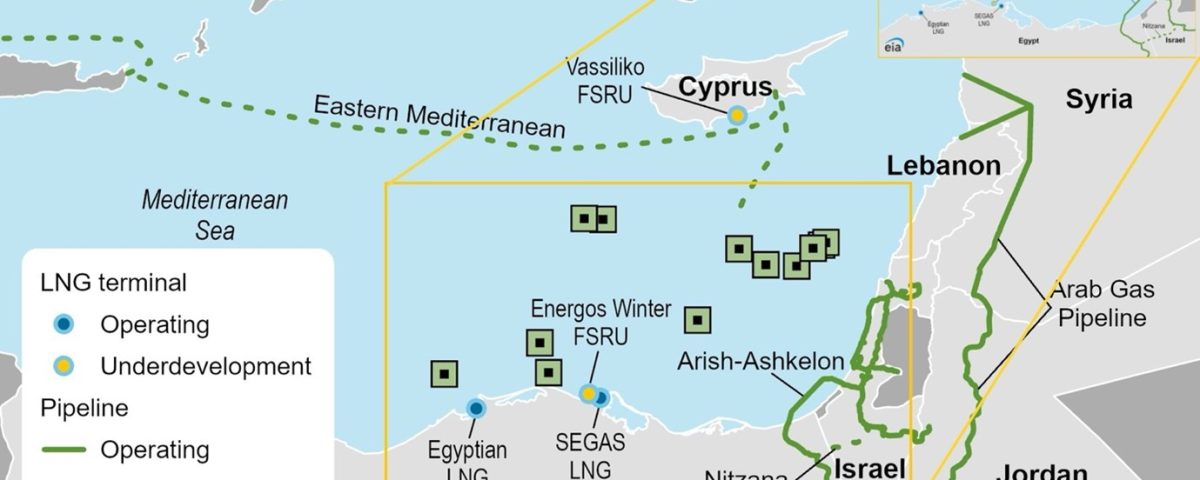
Source: U.S. Energy Information Administration, Global Energy Monitor, Global Gas Infrastructure Tracker, and the World Bank Group
Beyond Gaza, Iran, Ukraine, and most recently Lebanon, there is a more silent competition that is often treated as background noise: the Turkish-Israeli one. The escalation risk is often underestimated, as for the moment it takes the form of a diplomatic and economic rivalry, but it is already shaping alignments across the Eastern Mediterranean, the Horn of Africa, and Europe. The aspirations that both Türkiye and Israel have been those of becoming the regional leader, winning the status of corridor-state, thus becoming a bridge between Asia and Europe. Consequentially, bilateral relations are deteriorating between the two, with Erdoğan’s and Netanyahu’s rhetoric, together with that of their governments, growing more aggressive towards the other.
As such, it is worth taking a closer look at the Turkish-Israeli rivalry in the wider context with conflicts defined by global competition and the underlying reason for the turmoil: reconfiguration of power aimed at securing advantages in the design and construction of future energy and connectivity projects. The questions that arise are: How are the direct and indirect attacks manifesting? What is each part doing to secure its influence and power projection? How is the international community reacting?
First front: Eastern Mediterranean
Cyprus
One front where this rivalry becomes more visible is the Eastern Mediterranean. Hakan Fidan’s recent warning that Muslim countries are concerned by a growing military alliance between Israel, Greece, and Cyprus aligns with what Ankara has been implying for some time: that the Turkish interpretation of the trilateral framework is that of a mechanism of pressure directed at Turkish power projection in the Eastern Mediterranean. Although the Greece – Cyprus – Israel alignment dates back to the 2010s, there were Netanyahu’s comments in December 2025 to bring it back into the spotlight, where, next to the Greek prime minister and the Cypriot president, he said “To those who fantasise they can re-establish their empires and their dominion over our lands, I say: Forget it”, which Türkiye perceived as a direct reference to itself.[1] The framework has recently been reinforced with a trilateral plan for military cooperation between Cyprus, Greece, and Israel, along with two bilateral cooperation plans between the Israel Defense Forces (IDF) and the Hellenic Armed Forces, and between the IDF and the Cypriot National Guard. Turkish reactions have been diverse, ranging from describing the cooperation as an “anti-Turkish axis of evil” to somewhat more moderate, as Türkiye’s main concern at the moment is arms procurement from Israel.[2] Greece and Cyprus have already purchased missile systems from Israel, and Athens is also in talks to buy from Israel medium and long-range anti-aircraft and anti-ballistic missile systems for a planned multi-layer air and drone defense system known as the “Achilles Shield”, and the Greek parliament approved the purchase of artillery systems from Israel to bolster defenses along Greece’s northeastern border with Türkiye and on Greek islands in the Aegean Sea.[3]
However, the battle over the Eastern Mediterranean is not new. As early as 2020, the relations between Türkiye and Israel started deteriorating, overlapping with Greece’s and Cyprus’s search for potential partners, considering the economic instability and growing concern over Turkish assertiveness. Offshore gas discoveries provided the immediate incentive, but export routes are deeply embedded in regional dynamics. The EastMed Pipeline, linking Israel to Europe via Cyprus and Greece, offered a direct corridor bypassing Türkiye, despite its cost and technical uncertainty, while the Great Sea Interconnector represents the mirror image in the electricity sector and broader connectivity. Moreover, even in the late 2010s and early 2020s, despite Israel’s good bilateral relations with most European countries, the Israeli-Palestinian conflict has become a major stumbling block to cooperation with Israel in the formal EU frameworks[4], an issue that continues to create division within the European Union even under the latest wars in the region.
The Eastern Mediterranean, from this perspective, is where we can best witness the variable geometry in action: NATO members positioned on opposing sides of a regional competition. Türkiye’s counter-move to indirectly secure influence in the region came through the 2019 Libya maritime agreement, which disrupted the spatial continuity required for EastMed and challenged the emerging corridor architecture, with the maritime demarcation agreement between Türkiye and Libya’s internationally recognised government being registered by the United Nations, which marks an advancement in the process.[5]
Cyprus itself represents one of the fronts where the competition is taking place, where Cypriot, Greek, Turkish, and Israeli interests intersect in a more direct form, somewhere between territorial disputes and demographic concerns. A Cypriot court sentenced in late 2025 an Israeli businessman, Simon Aykut, over the development and sale of luxury apartment complexes in the occupied north without the permission of the Greek Cypriot owners of the land, and his subsequent transfer in April 2026 to Israel to serve the rest of his sentence came alongside statements by the Cypriot justice minister that Israel recognised the underlying offence and had even issued a travel advisory which recommends that Israelis not buy properties which have been built on Greek Cypriot land[6]. Cyprus considers them occupied territories, and from this perspective, despite tensions with Türkiye and alignment with Israel, it is viewed as stolen property that should not be exploited, which would be a punishable criminal act.[7] Simultaneously, there are claims about an increase in demand from Israelis for apartments in Cyprus since the outbreak of war in Gaza.[8] Reports placing the Israeli population in Greek Cyprus at around 15,000 have triggered warnings about demographic and security implications, including claims by the leader of the main opposition party AKEL, Stefanos Stefanu, that Greek Cyprus is “slipping away”, labelling the island as a “new country occupied by Israel”. Turkish perspectives mention fears that settlements in places such as Limassol and Larnaca could eventually function within an infrastructure of security and intelligence, as they could allow for monitoring of Türkiye’s naval and air operations, from where actions of surveillance, propaganda, and political manipulation could be carried out by organized groups operating under civilian or religious pretenses against Türkiye and the Turkish Republic of Northern Cyprus.[9] A similar incident emerged recently in Greece, too. Mehran Khalili, a member of DiEM25 (an European, controversially viewed party, with labels ranging from left populism, transnational populism, and even radical left by political adversaries), published a photo from Athens International Airport of an advertisement in Hebrew targeting Israeli tourists for buying homes in Greece.[10] Israeli presence is viewed with suspicion in strategically important territories, as solely civilian presence can shift dynamics and provide Israel with possibilities to claim influence and interfere in domestic and foreign decisions of other states, which Türkiye assesses as a possible risk within Cyprus, too, a strategically important island.
Gaza Strip
Gaza remains one of the principal fronts, where competition manifests in the form of mediation and post-war governance, with the recent phase being affected by disagreements over the implementation of the Gaza ceasefire and consequent Peace Plan in 2025. Türkiye seeks to assert itself as indispensable in any future ground reality, drawing legitimacy from its longstanding support for the Palestinian cause and its relations with both Hamas and the Palestinian Authority, while also trying to position itself within ceasefire-related mechanisms, such as the International Stabilization Force. For these reasons, its mediation claim is treated with suspicion by Israeli and pro-Israeli voices, which argue that Ankara’s dialogue with Hamas is not meant to produce peace, but to strengthen Hamas against Israel.[11] The Qatar–Türkiye relation is further feeding into the suspicion.
Lebanon
The Lebanon front has also raised issues about the buffer zone, or the new security zone that the IDF has set up in the southern part of Lebanon, which would redefine the maritime EEZs, as the ground advancements would theoretically translate to the sea by absorbing Lebanon’s Qana gas field, whose exploration rights were guaranteed under the 2022 maritime border agreement mediated by the US.[12] The agreement has been repeatedly put under doubt following the 2023 change of the status quo, with Israeli voices calling for its dissolution in 2024, considering assuming control over the disputed gas field. France would also be impacted by such a move, since Total Energies, a French consortium that works with Eni and Qatar Energies, too, is the one that holds a licensing agreement with Lebanon, and has completed their first well drilling in Block 9 back in 2024.[13] Recently, Retired Brig. Gen. Mounir Shehadeh, former head of Lebanon’s Military Court, said Israel would face significant challenges in attempting to control or exploit offshore gas resources: “Maritime operations differ fundamentally from land occupation. Israel may assert military pressure, but it cannot legally operate gas fields unilaterally without the participation of international firms”. [14] He also warned that attempts to seize oil fields would bring major escalations and would represent direct threats to the Eastern Mediterranean’s economic infrastructure, and despite experts saying that Israel cannot unilaterally cancel the agreement, as it is registered with the UN and would require a complaint with the American side, Israeli Energy Minister Eli Cohen said in mid-March that the Israeli government was considering canceling the maritime border demarcation agreement.[15] With regard to Israel’s actions in Lebanon, Türkiye’s Foreign Ministry condemned them as “Israeli expansionism”[16] and conveyed their offer of “unequivocal support for the preservation of Lebanon’s sovereignty and territorial integrity.”[17] However, Türkiye is not a full ally of Lebanon, as in November 2025, Lebanese President Joseph Aoun signed a maritime demarcation deal with Cypriot President Nikos, of which Ankara says it “violates the rights of Turkish Cypriots on the island and is therefore unacceptable.”[18] It remains to be seen to what extent the Turkish influence in the region can deliver political results, within the volatility of the armed operations taking place in Southern Lebanon, where the IDF continues to strike after the ceasefire and during ongoing negotiations mediated by the US.

Photo source: https://www.arabnews.pk/node/2641182/middle-east
Syria
Another front of the competition is represented by Syria. The collapse of the Assad regime in December 2024 created a direct conflict of interests between Ankara and Tel Aviv. Türkiye, presented as the principal supporter behind the Syrian order, is expanding its influence across Syria. Israel, meanwhile, prioritizes security in the south, particularly in relation to the Druze communities, while increasingly treating Turkish presence as a threat that must be contained. From an Israeli perspective, preventing direct confrontations between the IDF and Turkish forces requires a separation of spheres of influence, with southern Syria kept free of Turkish presence, and any escalation should be addressed through mediated arrangements, potentially brokered by the United States.[19] Türkiye has an advantageous position, as it has long worked with HTS (Hayat Tahrir al-Sham) in the intelligence sphere (against ISIS and al-Qaeda), whose leader took over the power in December 2024, and Fidan is said to have had meetings with Russia and Iran in order to allow the rebel-turned-revolutionary forces to advance their fight against the Assad regime.[20] Continuous diplomatic engagement led to a good relationship between the two states, which now have relatively aligned leaders, which is opening opportunities for the Turkish government and investors in Syria’s post-conflict recovery. For the Syrian-Israeli relations, the road to recovery is much more challenging. It is still shadowed by the Golan Heights dispute, and after Syria had been bombed in 2025, even the US administration manifested its dissatisfaction towards the Israeli approach to Syria[21]. Israel’s approach has been filled with suspicion, and alongside striking former regime military assets and intervening in the Druze issue, it responded by seizing Mount Hermon and the demilitarized zone, which became the central point of the conflict: Syria wants a return to the 1974 agreement, which functioned during the Assad regime. International pressure is favoring Syria as it provides a possibility for a wider, much-needed stability in the region and has, so far, been open to negotiations with all sides, and although an Israeli precaution about Türkiye’s influence into Syria is to be expected, an understanding with Damascus and Ankara could benefit Israel’s security needs, as it in already preoccupied with Gaza, the West Bank and Iran.[22]
Egypt
Egypt, as the host of the peace talks that led to the creation of the Board of Peace in 2025, and as the country that controls the Suez Canal, is also a major player in the region. Türkiye and Egypt are partners and have cooperation initiatives in multiple sectors. These include: increasing bilateral trade, exporting liquefied gas from Egypt to Türkiye, expanding military cooperation around joint naval exercises, and armament deals for both export from Türkiye and production in Egypt.[23] Moreover, they share their stance on Gaza, opposing Israel’s policy both there and in the wider region. At the same time, both Egypt and Türkiye are part of discussions that bring together other regional powers, such as Saudi Arabia and Pakistan (who signed a defense pact in 2025), with the aim of creating a framework that can provide a multilateral security format, after the USA-Israel war on Iran has deeply affected the local economies.[24] The two are also directly contributing to the negotiations process with Iran, as Foreign Minister Abbas Araghchi held separate calls with Badr Abdelatty and Hakan Fidan to “discuss diplomacy, ceasefire efforts and regional developments”.[25] These dynamics raise concerns in Israel, which has historically had a turbulent relation with Egypt, and has reached a stalemate in normalization through the Abraham Accords, finding itself still in relative isolation and opposition to most of the current potential decisions. After Turkish President Recep Tayyip Erdogan visited Cairo and then Riyadh, Hebrew media pointed out the consequences it could bring for Israel, with the principal researcher at Israel’s Institute for National Security Studies (INSS), Dr. Gallia Lindenstrauss, saying that the Türkiye–Egypt–Saudi Arabia alignment is “against the policies of the United Arab Emirates (UAE) and Israel in the region.”[26] This alignment could also have consequences for the Bab al-Mandab status, since the UAE withdrew from Yemen and Saudi Arabia supports the government. What poses a challenge to Ankara’s agenda with the regional partners is the UAE[27], who leans towards Israel and the USA after having signed the Abraham Accords, as it is now following a different course of action for the war in Iran, trying to leverage its partnerships, as opposed to supporting a more prominent role of regional powers in the negotiations, the way Türkiye, Egypt and Saudi Arabia do.
Second Front: Horn of Africa
Somalia
Their rivalry manifests visibly even in the Horn of Africa, within the Somalia-Somaliland issue. Türkiye’s Somali investments, oil explorations, and broader security role give it major economic and operational leverage, while the Somali administration sees in this partnership an opening for natural resource development and long-term energy cooperation. This could also facilitate Somalia’s position within the Belt and Road environment and potentially pull China back into a development framework where it can coordinate with both Somalia and Türkiye. At the same time, Israel’s recognition of Somaliland and the appointment of a diplomatic envoy can be read as an attempt to counter Turkish influence in Somalia and to secure a strategic point relevant to the conflict with the Yemeni Houthis, integrated in the bigger Iranian war. Most recently, on April 22, 2026, the Somali government announced through its ambassador to Ethiopia and the African Union that it will impose a ban on Israeli ships passing through the Bab al-Mandab Strait, presenting the decision as a response to Tel-Aviv’s relations with and recognition of Somaliland.[28] With the Strait of Hormuz’s traffic presently restricted by both Iran and the US, the Bab al-Mandab remains a crucial transition point. Previously, US and Israeli-linked shipping in the Red Sea has been blocked by the Houthis, who possess a more strategic position and have at their disposal the military means to impose at least a partial blockade and disrupt traffic, instruments that Somalia does not have.[29] What Somalia does have instead is Turkish-trained forces[30] and Türkiye’s recently reopened $50 million military base in Mogadishu.[31] More than this, Türkiye is deeply embedded in Somalia’s not only military, but also civilian infrastructure. It has signed a memorandum for patrolling the coast and rebuilding the navy, for which it is to have access to revenues from Somalia’s exclusive economic zone, and another one for petroleum exploration and exploitation. In addition to this, it has been managing Mogadishu’s airport since 2013 and its seaport since 2014, and has contributed humanitarian and economic aid since 2011.[32] Somalia’s domestic disputes and clashes between the federal government and regional authorities serve as both a reason for Ankara’s support of the government and a challenge to its influence there, as it is at the center of informational warfare in the country, where public trust in the already perceived as weak government is a target of those campaigns.[33] In Africa, as well as in the Middle East, foreign powers interfering in domestic affairs are not welcomed, and generate suspicion and precaution as to what the real objective of that country is. Türkiye’s logic for military presence is that of protecting its investments in Somalia, and if the tensions within Israel–Somaliland–Yemen (Houthis) – Somalia continue to rise, the length at which Türkiye is willing to go to achieve said protection might be put to the test.
Third front: international narrative and international response
On the media front, the reciprocal accusations are intensifying, and in recent months minister Fidan accused Israel of using security as a pretext to acquire more land and said that after Iran, Israel “cannot live without an enemy”, implying that Ankara is being prepared as the next one. Türkiye’s foreign ministry went further, calling Netanyahu “the Hitler of our time”, while Erdoğan praised the International Criminal Court (ICC) arrest warrants and called on the UN to recommend the use of force against Israel.[34] Ankara imposed restrictions on Israeli-owned and linked ships, urged Islamic countries to work toward suspending Israel from UN General Assembly activities, and supported The Hague Group, all while mobilising around South Africa’s genocide case at the International Court of Justice (ICJ).[35]
The signals from Europe show a lack of alignment between member states when it comes to both Türkiye and Israel. Ursula von der Leyen’s recent warning that Europe must not fall under Russian, Turkish, or Chinese influence[36] suggests that Ankara is starting to be perceived by different actors as an adversary rather than an ally, which points in the opposite direction of Türkiye eventually joining the EU. Despite the fact that Türkiye is a part of NATO, the Cyprus status quo has long been a problematic issue for the EU. When it comes to Israel, given the fact that it is at the center of many international controversies, European divergences on the topic are more visible, with countries such as Ireland, Spain, and Slovenia who started pushing for the suspension of the EU-Israel association agreement.[37] Other countries are taking individual measures, such as Italy, which decided not to automatically renew its defense agreement with Israel. However, the cooperation between Italy and Israel is not embedded within the specific agreement, and along with Germany, Italy has been one of the strongest opponents of calls to suspend a trade agreement between Israel and the European Union.[38] The EU did, however, take into consideration to impose sanctions directly on Israelis linked to violent settler attacks, but it remains unclear for the moment if these sanctions would mirror the ones imposed on Russian oligarchs, or if they will apply only to private citizens or to political figures as well, since French Foreign Minister Jean-Noel Barrot said that the aim is not to suspend EU-Israel ties for their own sake, but to drive policy change. [39]
The tacit war: route security, corridors, and energetic connectivity
All these fronts start to connect within the corridor dimension. Israel is the second-highest natural gas producer in the Eastern Mediterranean, due to the Tamar, Leviathan, and Karish fields. Yet the infrastructure remains exposed to attacks, and operations have been shut down at times since the start of the Gaza crisis in 2023. Integrating all the important nodes within certain corridors requires at least a sense of stability and security, which is ultimately the goal of current power reconfigurations. EastMed has stalled and is being reconsidered because of technical, financial, and territorial difficulties. The Nitzana pipeline to Egypt has been delayed to 2028, the Arab Gas Pipeline is affected by Syrian sanctions and regional constraints, the Arish-Ashkelon pipeline already reflects the reversal of earlier Egypt-to-Israel cooperation, and Cyprus itself is looking to Egypt’s LNG infrastructure as its export gateway.[40] For Israel, it is important to convert infrastructure into legitimacy, as it would contribute to virtually eliminating the risk of isolation. Greece and Cyprus are facilitating Israel’s regional integration at a time of growing international polarization over Gaza, and the Great Sea Interconnector, later linked by the three governments to IMEC (India–Middle East–Europe), is presented by Netanyahu as a corridor designed to embed Israel in long-term regional and European networks.[41] For the US and EU, the IMEC corridor serves to counter the Belt and Road Initiative. Azerbaijan also has a strategic significance in the calculations. Around 30 percent of Israel’s oil supply comes from the Baku – Tbilisi – Ceyhan Pipeline (BTC), from Azerbaijan through Georgia, Türkiye and the Mediterranean. When Iran threatened to strike “enemy oil lines,” attention shifted to BTC, highlighting how quickly a regional escalation can put pressure on a critical energy route. At the same time, circling back to the variable geometry aspect, it can also be witnessed in this situation: Israel’s energy security is partly routed through Turkish routes, so even within a context of rivalry, both actors have to share certain infrastructures.
The trajectories of all actors involved continue to depend on the volatility of the regional security situation, as it generates losses, but it can also be used for gains. For Türkiye, the consolidation of influence in Syria and Somalia, combined with its expanding security partnerships with Egypt and good relations with Saudi Arabia, points toward a continued effort to create frameworks to support its regional role, though the extent to which this projection can advance without generating direct friction with its NATO status, or provoking a counter-response, remains an open question. For Israel, the priority is likely the transformation of security and military gains into durable infrastructure projects, positioning itself as an important link for the European connectivity frameworks before the political window closes, as the reputational damages of the Gaza war, and now Iran and Lebanon, are becoming more pressing, delaying energy projects due to the instability and lack of trust. Lebanon occupies a particular position, too, as it represents a potential alternative to intercontinental Eastern Mediterranean projects, should it become politically stable enough. The European Union is likely to continue trying to keep all options open, to not fully alienate either side, and member states appear to continue to follow their own agenda, so a European consensus will not arrive soon. The Russian invasion of Ukraine exposed the vulnerability of dependence on a single major energy source or corridor, and the diversification priority that followed has since become one of the principal drivers behind European interest in Eastern Mediterranean projects. The United States are predominately interested in combating Chinese infrastructure and influence in the region, which could provide support for alternative routes, but it also aims to redirect energy buyers towards American suppliers. The Turkish-Israeli rivalry, as two regional powers of the Eastern Mediterranean that enjoy a certain degree of stability too, and considering all these dimensions, portrays the broader process of reconfiguration of power, even as it continues to be treated as background noise. Should the competition evolve into a direct confrontation, the most likely fronts remain Cyprus and Syria: Cyprus would affect NATO and would implicate European powers into the conflict, while forcing a NATO-skeptic US to pick a side, whereas Syria would throw the Middle East further into chaos. It all lies within who will, if at all, take the first decision to strike, and what the target is going to be.
Disclaimer. The views and opinions expressed in this analysis are those of the author and do not necessarily reflect the official policy or position of MEPEI. Any content provided by our author is of his opinion and is not intended to malign any religion, ethnic group, club, organization, company, individual, or anyone or anything.
[1] https://www.middleeasteye.net/news/turkey-says-muslim-countries-concerned-israel-greece-cyprus-alliance
[2] https://www.dw.com/en/greece-cyprus-israel-military-cooperation-explained-turkey-reaction/a-75394974
[3] https://www.ekathimerini.com/politics/foreign-policy/1291060/greece-israel-and-cyprus-to-step-up-joint-exercises-in-eastern-mediterranean/
[4] https://www.inss.org.il/strategic_assessment/israels-policy-in-its-triangular-relations-with-greece-and-cyprus/
[5] https://www.reuters.com/world/middle-east/un-registers-turkey-libya-maritime-deal-turkish-ministry-2020-10-02/
[6] https://cyprus-mail.com/2026/04/17/aykut-transferred-to-israel-to-serve-out-remaining-sentence-over-property-usurpation-case
[7] https://www.ekathimerini.com/politics/foreign-policy/1284865/israeli-mans-sentence-over-illegal-development-in-cyprus-breakaway-north-sends-a-stark-warning/
[8] https://bmby.co.il/real-estate-market-in-cyprus/
[9] https://www.turkiyetoday.com/region/is-greek-cyprus-becoming-new-israel-15000-israelis-spark-demographic-and-security-deb-3203435?s=7
[10] https://blogs.timesofisrael.com/jewish-exceptionalism-antisemitism-in-plain-sight/
[11] https://www.jpost.com/opinion/article-893469
[12] https://www.jpost.com/middle-east/article-893604
[13] https://en.kataeb.org/articles/lebanon-presses-totalenergies-for-report-on-oil-exploration
[14] https://www.arabnews.pk/node/2641182/middle-east
[15] https://www.almodon.com/amp/economy/2026/03/15/israeli-minister-calls-lebanon-maritime-deal-surrender
[16] https://www.arabnews.com/node/2640466/middle-east
[17] https://www.aa.com.tr/en/turkiye/turkiye-criticizes-israel-s-intensifying-attacks-on-lebanon-urges-global-action/3898686
[18] https://carnegieendowment.org/middle-east/diwan/2025/12/is-turkiye-a-new-iran-in-lebanon
[19] https://jiss.org.il/en/siboni-winner-turkey-israel-relations/
[20] https://www.ispionline.it/en/publication/turkey-syria-relations-the-outcome-of-long-term-cooperation-218440
[21] https://www.washingtoninstitute.org/policy-analysis/prospects-syria-israel-relations
[22] https://israelpolicyforum.org/israel-and-the-new-syria/
[23] https://www.inss.org.il/social_media/egypt-and-turkey-draw-closer/
[24] https://www.scmp.com/week-asia/politics/article/3351335/middle-easts-new-power-brokers-pakistan-turkey-saudi-arabia-egypt-unite?module=perpetual_scroll_0&pgtype=article
[25] https://www.middleeasteye.net/live-blog/live-blog-update/araghchi-holds-calls-egypt-and-turkey-diplomacy
[26] https://manassa.news/en/news/30165
[27] https://www.theguardian.com/world/2026/mar/30/egypt-pakistan-saudi-arabia-turkey-talks-embryo-new-order
[28] https://thecradle.co/articles/somalia-bans-israeli-linked-vessels-from-bab-al-mandab-strait
[29] https://www.newarab.com/news/amid-hormuz-deadlock-somalia-blocks-israels-red-sea-shipping
[30] https://www.garoweonline.com/en/news/somalia/somalia-government-deploys-turkish-trained-elite-forces-to-gedo-region
[31] https://africa.businessinsider.com/local/markets/turkey-and-israel-clash-for-control-of-the-red-sea-as-somalia-and-somaliland-become/lvsgek0
[32] https://www.washingtoninstitute.org/policy-analysis/halt-jihadist-advance-somalia-work-turkey-and-uae
[33] https://nordicmonitor.com/2025/12/turkish-intelligence-report-warns-somalias-fragility-as-ankara-boosts-military-and-economic-role/
[34] https://www.foxnews.com/world/trump-squeezed-between-israel-turkey-netanyahu-erdogan-escalate-feud
[35] https://www.middleeasteye.net/news/israel-and-turkey-trade-accusations-tensions-widen-over-syria-and-gaza
[36] https://www.politico.eu/article/charles-michel-slams-ursula-von-der-leyen-eu-clash-over-turkey-comments/
[37] https://www.theguardian.com/world/2026/apr/21/eu-foreign-ministers-reject-proposal-suspend-association-agreement-israel
[38] https://www.aljazeera.com/news/2026/4/15/why-has-italys-giorgia-meloni-suspended-a-defence-pact-with-israel
[39] https://www.timesofisrael.com/liveblog_entry/france-says-eu-may-adopt-sanctions-on-violent-israeli-settlers-in-the-coming-days/
[40] https://www.eia.gov/international/analysis/regions-of-interest/Eastern_Mediterranean
[41] https://www.newarab.com/analysis/israel-greece-cyprus-axis-new-anti-turkey-alliance

Larisa-Nicoleta PĂTRAȘCU
Junior Researcher at the Middle East Political and Economic Institute (MEPEI). Her research and professional interests center on peacebuilding, diplomacy and conflict resolution, international cooperation, and MENA geopolitics.