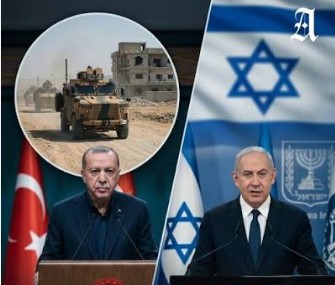
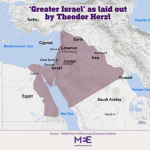
A Blueprint of Western Colonialism: The Controversy Over Greater Israel Project
March 31, 2026
An Analysis of Bilateral Relations between China and Algeria
April 1, 2026
From the historical traces of Zheng He’s fleet visiting Jeddah and Mecca in the 15th century AD to the in-depth development of the comprehensive strategic cooperative partnership between China and Saudi Arabia today, the two countries have crossed mountains and seas, known and cherished each other. Over the course of more than 30 years of diplomatic relations, they have built a new type of state-to-state relations based on mutual respect, equality, mutual benefit and win-win cooperation. As China’s important strategic partner in the Middle East and Saudi Arabia’s core cooperative partner in Asia, the relations between the two countries not only profoundly affect the regional pattern, but also become a model for South-South cooperation, yielding fruitful results in political mutual trust, economic integration, people-to-people and cultural exchanges, and writing a friendly chapter across civilizations.
I. Guided by Heads of State, Laying a Solid Foundation for Political Cooperation
The steady development of China-Saudi Arabia bilateral relations has always been inseparable from the strategic guidance and top-level design of the heads of state of the two countries. On July 21, 1990, China and Saudi Arabia formally established diplomatic relations, ushering in the institutionalized development of bilateral relations. The bilateral trade volume that year was less than 500 million US dollars, and today it has achieved a qualitative leap and quantitative breakthrough. In 2016, the two countries established a comprehensive strategic cooperative partnership and set up a High-Level Joint Committee, elevating bilateral relations to a new height; in 2022, the two sides signed the Agreement on the Comprehensive Strategic Cooperative Partnership between the People’s Republic of China and the Kingdom of Saudi Arabia, further consolidating the foundation for cooperation.
Over the years, China and Saudi Arabia have maintained regular high-level exchanges and formed a multi-level and wide-ranging communication mechanism. In international and regional affairs, the two sides have maintained close coordination and mutual support. Saudi Arabia firmly adheres to the one-China principle and supports the Global Development Initiative, the Global Security Initiative and the Global Civilization Initiative proposed by China; China, in turn, supports Saudi Arabia in playing a leading role in regional affairs, appreciates Saudi Arabia’s efforts to maintain regional security and stability, and jointly defends the legitimate rights and interests of developing countries. 2025 marked the 35th anniversary of the establishment of diplomatic relations between China and Saudi Arabia. Taking this important node as an opportunity, the two countries will further deepen strategic communication and promote the steady and long-term development of bilateral relations.
II. Complementary Advantages, Activating the Driving Force for Two-Way Economic Development
Moreover, economic cooperation is the “ballast stone” of China-Saudi Arabia bilateral relations. Relying on their respective resource endowments and development needs, the two sides have realized the transformation and upgrading from a single energy cooperation to diversified and coordinated development, which perfectly aligns with the in-depth docking of China’s Belt and Road Initiative and Saudi Arabia’s Vision 2030. As the core pillar of cooperation between the two sides, energy cooperation has always maintained stable development: Saudi Arabia is one of China’s largest crude oil suppliers. In 2024, China imported 78.639 million tons of crude oil from Saudi Arabia, and the import volume reached 59.527 million tons from January to September 2025; China is Saudi Arabia’s most important energy export market. In October 2024, Saudi Aramco supplied about 51 million barrels of crude oil to China in a single month, and the two sides have formed a highly complementary pattern in oil trade, refining and chemical technology and other fields.
With the deepening of cooperation, China-Saudi Arabia economic cooperation has broken through the limitations of the energy field and extended to many fields such as infrastructure, digital economy, green energy and finance. In terms of infrastructure construction, the Mecca Light Rail built by China Railway Construction Corporation has transported more than 25 million pilgrims, winning wide praise with a zero-accident record. The Jeddah Stadium project, as one of the main venues for the 2034 Saudi World Cup, is becoming a new landmark of cooperation between the two countries; the China Changshu China-Saudi International Cooperation Industrial Park, which started construction in November 2025, has an investment of 650 million yuan and plans to build 100,000 square meters of trade, production and R&D space, becoming a key platform connecting the industrial chains of the two countries.
Also, cooperation in emerging fields is flourishing. China has deeply participated in the construction of Saudi Arabia’s NEOM New City. Chinese enterprises such as Huawei have built 5G and cloud infrastructure to provide core technologies for the construction of smart cities; the Al Shubah Photovoltaic Power Station built by China Energy Engineering Corporation has been connected to the grid for power generation, and the world’s largest green hydrogen plant in Yanbu is planned to be put into operation in 2030, helping Saudi Arabia achieve energy transformation. Cooperation in the financial field has continued to deepen. The Public Investment Fund of Saudi Arabia signed a 50 billion US dollar cooperation memorandum with major Chinese financial institutions, covering petrochemicals, digital platforms and other fields. In 2024, China’s investment in Saudi Arabia increased by nearly 30% to 8.2 billion US dollars, and the bilateral trade volume exceeded 107.53 billion US dollars, an increase of nearly 220 times compared with the early stage of the establishment of diplomatic relations.
III. Civilization Exchanges and Mutual Learning, Consolidating the Power of People-to-People Bonding
People-to-people bonding is the source of vitality for the development of China-Saudi Arabia relations. Relying on their profound cultural heritage, the two countries have carried out various and rich people-to-people and cultural exchange activities to promote in-depth civilization exchanges and mutual learning. In 2025, taking the 35th anniversary of the establishment of diplomatic relations as an opportunity, the two countries launched the “China-Saudi Arabia Cultural Year” and held about 60 cultural activities, which became a milestone in China-Saudi Arabia people-to-people and cultural exchanges. At the “Cultural Market” held in Riyadh, Saudi Arabia, Chinese folk dances, intangible cultural heritage skills and characteristic cuisines were displayed together with Saudi date leaf weaving, metal carving and other handicrafts. VR “cloud tour” of Beijing’s central axis and other experience activities allowed Saudi people to fully feel the charm of Chinese culture.
In addition, educational cooperation has become an important link in people-to-people and cultural exchanges. At present, 2 universities in Saudi Arabia have established Confucius Institutes, 4 universities offer Chinese majors, and 8 primary and secondary schools have piloted Chinese elective courses. The “Chinese Bridge” World Middle School Students Chinese Competition has been successfully held in Saudi Arabia, and more and more Saudi young people have come to China to study. In June 2025, a delegation of students from top Saudi universities went to Guangzhou and Shenzhen in China to carry out a cultural exchange summer camp, visiting well-known universities and enterprises such as DJI and Tencent, and intuitively feeling the achievements of China’s technological innovation and cultural inheritance.
Tourism exchanges have become increasingly convenient. In 2022, Saudi Arabia became a destination for Chinese citizens to travel in groups. Also, in 2025, China implemented a unilateral visa-free policy for Saudi Arabia, with more than 10 direct flights between China and Saudi Arabia every week, creating convenient conditions for people-to-people exchanges between the two countries. In addition, the exhibition “AlUla: The Miracle Oasis of the Arabian Peninsula” was held at the Palace Museum in Beijing, and the “Saudi Town” in Shanghai displayed Saudi customs. Through two-way cultural exhibitions, the two sides have further enhanced the mutual understanding and friendship between the two peoples, and rooted China-Saudi Arabia friendship deeply in the hearts of the people.
IV. Moving Forward Hand in Hand to Start a New Journey of Cooperation
At present, the global geopolitical pattern is undergoing profound adjustments. Factors such as fluctuations in the energy market and complex regional security situations have brought certain challenges to the development of China-Saudi Arabia bilateral relations. Saudi Arabia still maintains close ties with the United States in the field of military security, and the external environment of Sino-US competition also has a certain impact on China-Saudi Arabia cooperation; at the same time, the uncertainty of economic transformation in the process of promoting Saudi Arabia’s Vision 2030 also brings potential variables to bilateral cooperation. However, on the whole, the common interests of China and Saudi Arabia far outweigh their differences, and the endogenous driving force for cooperation remains strong.
Looking forward to the future, China and Saudi Arabia will continue to be guided by head-of-state diplomacy, deepen political mutual trust, implement the consensus reached by the China-Saudi Arabia High-Level Joint Committee, consolidate the foundation of energy cooperation, and expand the cooperation potential in emerging fields such as digital economy, artificial intelligence and the Beidou application. In terms of people-to-people and cultural exchanges, the two countries will continue to do a good job in the series of activities of the “China-Saudi Arabia Cultural Year”, promote in-depth exchanges between young people, artists, scholars and other groups, and let civilization exchanges and mutual learning become a lasting driving force for the development of bilateral relations.
Thirty-five years of trials and hardships, thirty-five years of fruitful achievements. The development of China-Saudi Arabia bilateral relations not only benefits the two peoples, but also injects positive energy into the peace, stability, development and prosperity of the Middle East. In the future, the two countries will continue to move forward hand in hand, deepen the fertile soil of mutual trust, expand cooperation space, promote the China-Saudi Arabia comprehensive strategic cooperative partnership to develop to a higher quality and deeper level, and contribute.
Disclaimer. The views and opinions expressed in this analysis are those of the author and do not necessarily reflect the official policy or position of MEPEI. Any content provided by our author is of his opinion and is not intended to malign any religion, ethnic group, club, organization, company, individual, or anyone or anything.