
Pakistan’s deft diplomacy in Iran-US mediation
April 21, 2026
China-Iran Bilateral Relations and the 25-Year Partnership: Navigating the 2026 Conflict
April 22, 2026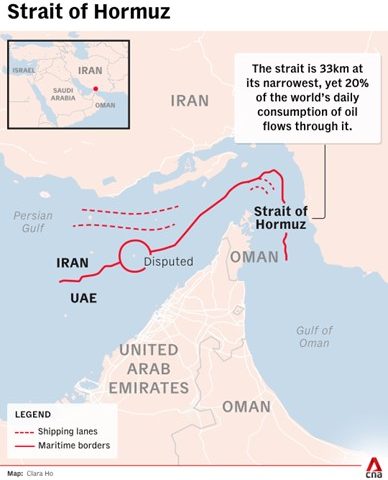
As the global “throat” of energy transportation, the Strait of Hormuz carries nearly 20 million barrels of crude oil and refined oil products per day, controlling about 30% of the world’s seaborne oil trade. It is the core hub for Middle Eastern oil and gas resources to be transported to Asia and Europe. For China, this waterway is not only a key link connecting domestic energy demand with Middle Eastern oil-producing regions but also a critical risk prevention link in the energy security system. Currently, China’s external dependence on crude oil reaches 72.7%. Although long-term planning has reduced the proportion of crude oil imported via the Strait of Hormuz to about 33%, accounting for only 22% of the country’s total consumption, a strait blockade will still exert multi-dimensional and multi-level impacts on the domestic energy market.
Ⅰ. Short-term Supply Disruption and Cost Surge, Highlighted Market Volatility
If the Strait of Hormuz is completely blocked in the short term (1-3 months), China’s energy market will face direct and concentrated impacts, focusing on three core dimensions: supply gap, price fluctuation and supply chain disruption. However, the impact has been buffered to a certain extent by early-stage planning.
From the supply side, about 33% of China’s imported crude oil is transported through the Strait of Hormuz, with a daily affected volume of 4.6-5.8 million barrels. Although some Middle Eastern oil-producing countries can bypass the strait for export through the Red Sea Pipeline and Fujairah Pipeline, covering more than 70% of the original Middle Eastern imports, and Iran can still maintain an annual supply of about 69 million tons to China through a complex transshipment system, there is an obvious lag in short-term transport capacity allocation and route adjustment, and some refineries will still face tight raw material supply. Meanwhile, the shipping market will fall into chaos: oil tankers are forced to detour around the Cape of Good Hope, the voyage distance from the Middle East to China increases by 40%, the transport cycle is extended by 10-14 days, the daily charter rate of oil tankers surges by 584%, and the war risk insurance premium soars by 50%, further exacerbating the risk of supply delay. Notably, Goldman Sachs analysis shows that only about 6% of China’s energy consumption is directly exposed to the risk of a Strait of Hormuz disruption, which means the short-term supply impact has not reached a systemic crisis level.
From the price side, international oil prices will see an explosive surge. According to forecasts by JP Morgan Chase, Goldman Sachs and other institutions, within one month of the blockade, Brent crude oil prices will exceed 120-130 US dollars per barrel; if the blockade lasts more than one month, prices may climb to 150-200 US dollars per barrel. High prices will quickly transmit to the domestic market: China’s refined oil pricing mechanism is linked to international oil prices, and the price of 92-octane gasoline may approach 10 yuan per liter, leading to a sharp rise in costs in logistics, chemical, transportation and other industries. On the one hand, rising logistics and transportation costs push up prices of daily necessities and agricultural products, increasing domestic inflationary pressure — it is estimated that every 10 US dollars increase in oil prices raises the global inflation rate by 0.4-0.7 percentage points, and a 150 US dollars oil price may push up the global inflation rate by 4-6 percentage points. On the other hand, as an upstream raw material of the chemical industry chain, rising prices of petroleum products such as plastics, chemical fibers and rubbers squeeze manufacturing profit margins and drag down industrial production growth.
Ⅱ. Medium-term Alternative Supplementation and Structural Adjustment, Gradual Release of Resilience
When the Strait of Hormuz blockade enters the medium term (3-12 months), the risk resistance capacity of China’s energy market will be fully unleashed. Through diversification of import sources, supplementation by overland corridors, strategic reserve regulation and industrial structure optimization, the impact will be gradually hedged, and the market will shift from volatility to orderly adjustment.
Diversification of import sources becomes the core response path. In recent years, China has continuously optimized its energy import landscape. In 2025, the proportion of crude oil imported from the Middle East dropped to 42.3%, a decrease of 10 percentage points compared with a decade ago. Russia, with an annual import volume of 101 million tons, has remained China’s largest crude oil supplier for three consecutive years, and the proportion of imports from non-Middle Eastern regions such as Angola, Brazil and Canada rose to 57.7%. After the strait blockade, Russia can increase crude oil supply by 50 million tons per year through the Far East Pipeline, covering 27% of the gap; African and American oil-producing countries can provide short-term incremental supply to cover the remaining gap. Calculations by the National Energy Administration show that if the strait is completely blocked, alternative channels such as Russia, the Americas and Africa can increase supply by a total of 130 million tons per year, basically covering the gap.
Overland energy pipelines act as a “stabilizer”. China has built stable overland energy corridors in three strategic directions: northeast, northwest and southwest. In 2025, the proportion of oil transported through onshore pipelines reached 38%. The China-Russia Crude Oil Pipeline in the northeast corridor has an annual transmission capacity of 30 million tons, and the Eastern Route Gas Pipeline has an annual gas transmission capacity of 38 billion cubic meters; after the Western Route Pipeline is put into operation, the China-Russia natural gas cooperation target will reach 106 billion cubic meters per year by 2030. The China-Kazakhstan Crude Oil Pipeline and the Central Asia-China Gas Pipeline network in the northwest corridor directly transport oil and gas resources from the Caspian Sea and Central Asia to Xinjiang. The China-Myanmar Oil and Gas Pipelines in the southwest corridor have transported more than 100 million tons in total, with an annual designed oil transmission capacity of 22 million tons, allowing crude oil from the Middle East and Africa to “abandon ships and land” and be transported to Yunnan via pipelines, perfectly avoiding maritime chokepoints. This dual-track system of “simultaneous development of sea and land routes” realizes that “when sea routes are blocked, land routes take over”, and the blockade of a single corridor can no longer pose a systemic threat.
The strategic petroleum reserve system consolidates the security bottom line. By the end of 2025, China has built a three-tier system of “national strategic reserves, compulsory enterprise reserves and commercial reserves”, with a total reserve scale of about 1.2-1.47 billion barrels, covering 110-180 days of net import demand, far exceeding the 90-day safety standard of the International Energy Agency (IEA). Among them, strategic reserves are about 450 million barrels, commercial reserves are about 850-1020 million barrels, and reserve bases form a pattern of “coastal-based, inland-supplemented”, which can complete national allocation within 15-30 days in emergencies. In the medium-term blockade stage, the state will orderly release strategic reserves to give priority to ensuring demand in key sectors such as transportation and chemicals, avoiding supply disruption panic in the market. In addition, domestic refineries will adjust processing loads, optimize product mix, give priority to producing refined oil and basic chemical raw materials, reduce output of high value-added and high energy consumption products, and improve energy efficiency. Meanwhile, the coal chemical industry can play an alternative role, with a cumulative alternative oil and gas equivalent of about 130 million tons, equivalent to 22.5% of the annual crude oil import volume, further easing supply pressure.
Ⅲ. Long-term Effects: Strategic Upgrading and Accelerated Transformation, Reshaping the Market Pattern
If the Strait of Hormuz blockade lasts for more than one year, its risk will become a “catalyst” for the transformation of China’s energy market, promoting in-depth reforms of the energy security system, consumption structure and global layout, forming a more resilient development pattern, and completely downgrading the impact of the strait blockade to a “local disturbance”.
First, the diversification of energy import corridors is comprehensively deepened. China will accelerate the expansion of overland corridors in the northwest, northeast and southwest: the China-Russia Western Route Natural Gas Pipeline and the Central Asia-China Gas Pipeline Line D will be put into operation at an accelerated pace, and the China-Myanmar Pipelines will be expanded and upgraded, striving to break through 45% of the proportion of oil transported through overland pipelines by 2030. At the same time, new paths such as the Arctic Passage and the China-Pakistan Economic Corridor (CPEC) energy corridor will be developed to reduce dependence on a single maritime channel and build a “multi-dimensional and three-dimensional” energy transportation network. It should be noted that the China-Pakistan Oil and Gas Pipeline still faces huge challenges in promotion due to the severe security situation in Baluchistan Province, Pakistan, and this strategically important but high-risk backup project needs to be prudently promoted in the future.
Second, the green transition of energy consumption structure is accelerated. High oil prices will force China to accelerate the pace of new energy substitution, which is also in line with China’s primary energy endowment characteristics of “rich in coal, poor in oil and gas”. The installed capacity of photovoltaic and wind power will continue to expand, nuclear power projects will be promoted in an orderly manner, and the penetration rate of new energy vehicles will accelerate, striving to break through 25% of the proportion of non-fossil energy consumption by 2030. Meanwhile, energy-saving technologies and energy recycling technologies will be promoted on a large scale, and energy efficiency in industrial, transportation and construction sectors will be significantly improved, reducing dependence on crude oil from the demand side. In addition, domestic crude oil production will remain stable at 200 million tons, natural gas production will increase continuously, further improving energy self-sufficiency rate. China’s energy self-sufficiency rate has reached more than 80% in 2025.
Third, global energy cooperation and supply chain layout are optimized. China will deepen strategic energy cooperation with Russia, Central Asia, Latin America and other regions, sign long-term supply agreements, and lock in stable resource sources. It will promote in-depth and solid progress in energy cooperation under the Belt and Road Initiative. In 2025, the overseas oil and gas equity output equivalent of Chinese enterprises reached 196 million tons, operating more than 200 oil and gas investment and cooperation projects in more than 60 countries and regions around the world, and the overseas oil and gas resource security capacity continues to strengthen. In addition, domestic energy enterprises will optimize the global storage and logistics layout, build crude oil reserve bases in Southeast Asia and coastal Middle East, and rely on infrastructure such as Pipe China’s 112,900 kilometers of oil and gas long-distance pipelines and 10 LNG terminals to enhance supply chain flexibility and risk resistance capacity.
Ⅳ. China’s Response Resilience: System Support from Passive Pressure to Active Prevention and Control
Facing the risk of the Strait of Hormuz blockade, China has constructed a “four-in-one” defense system. Through diversification of import sources, three-dimensional corridors, large-scale reserves and precise policy regulation, it effectively reduces impacts and ensures energy market stability, making China one of the world’s major economies with the strongest energy security resilience.
First, remarkable results have been achieved in the diversification of import sources. China’s crude oil import sources cover 49 countries, and none of the top five source countries accounts for more than 20%, avoiding systemic risks caused by supply disruptions in a single region. Dai Houliang, Chairman of PetroChina, clearly stated in 2026 that the company’s imports through the Strait of Hormuz account for only about 10% of its total operation volume, and risk diversification at the enterprise level further enhances overall resilience.
Second, a three-dimensional pattern of overland corridors has taken shape. Three major pipeline corridors in the northeast, northwest and southwest run in parallel, cooperating with maritime channels to form a layout of “four strategic corridors + five oil and gas cooperation zones”. In 2025, the proportion of overland oil transportation reached 38%, becoming a key supplement when maritime channels are blocked. The crude oil pipeline network managed and operated by Pipe China has a one-way transmission capacity of 345 million tons per year, and the natural gas pipeline has a one-way transmission capacity of about 420 billion cubic meters per year, providing solid infrastructure support for stable energy supply.
Third, the reserve system is large-scale and continuously expanding. Adequate strategic reserves buy sufficient time for market adjustment. By the end of 2025, the total crude oil reserve scale was about 1.2-1.47 billion barrels, covering 110-180 days of net import demand, far exceeding the IEA safety standard. From 2025 to 2026, China added 11 reserve bases with a total capacity increase of 16.9 million barrels. It is expected that the total oil storage capacity will exceed 2 billion barrels by the end of 2026, further improving emergency support capacity.
Fourth, precise policy regulation ensures people’s livelihood and industrial stability. The state stabilizes market expectations and guarantees people’s livelihood demand through combined policies such as price intervention, reserve release and industrial subsidies. In the actual crisis in 2026 when the traffic volume of the Strait of Hormuz plummeted by more than 90%, the volatility of domestic oil prices was only 1/5 of the international market, and there was no panic in the market, fully demonstrating the effectiveness of policy regulation.
Conclusion
The impact of the Strait of Hormuz blockade on China’s energy market presents a stepwise characteristic of “short-term violent volatility, medium-term orderly hedging, long-term transformation and upgrading”. Although the short-term impact will bring supply disruption and cost pressure, relying on diversified import layout, three-dimensional transportation corridors, large-scale strategic reserves and precise policy regulation, China has successfully downgraded the strait blockade from a single vulnerability point that may trigger a “systemic crisis” to a manageable “local disturbance”, which can effectively resist risks and avoid overall crises. In the medium and long term, the continuous risk of the Strait of Hormuz will transform into a strong driving force for the transformation of China’s energy market, promoting a more complete energy security system, a greener energy structure and a more balanced global layout.
Disclaimer. The views and opinions expressed in this analysis are those of the author and do not necessarily reflect the official policy or position of MEPEI. Any content provided by our author is of his opinion and is not intended to malign any religion, ethnic group, club, organization, company, individual, or anyone or anything.
Bo Wang
Intern at MEPEI, Hefei University of Technology, Bachelor of Law