
The Board of Peace: Charter Logic, Security Projection, and the Limits of Implementation
February 3, 2026
Peace Made by Businessmen: The Illusion Behind Trump’s Unsustainable Peace Deals
February 5, 2026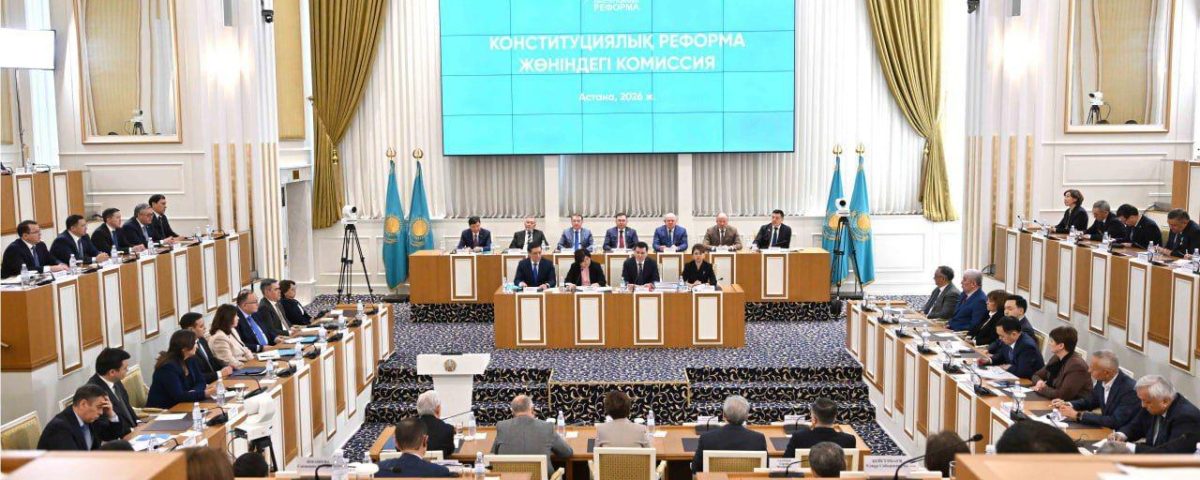
The Constitutional Court of the Republic of Kazakhstan has published the draft of a new Constitution on 31 January 2026, following an extensive constitutional reform process initiated by President Kassym-Jomart Tokayev.
The draft marks a transition from targeted amendments to a comprehensive constitutional transformation, reflecting changes across the political system, governance model, and the state’s value framework. The final decision on adopting the new Constitution will be taken by citizens through a nationwide referendum.
The constitutional reforms currently unfolding in Kazakhstan represent a strategic commitment to institutional modernization and the rule of law. By moving toward a more balanced distribution of power, Kazakhstan is increasingly aligning its governance framework with international standards, fostering a stable environment for deepened cooperation with European partners.
Key Institutional Changes
A significant pillar of the reform package is the proposed transition from a bicameral legislature to a unicameral Parliament known as the Kurultai. A single-chamber system of 145 deputies can reduce institutional duplication and accelerate the legislative process. The shift to a purely proportional party-list system is intended to strengthen the role of political parties, encouraging a more cohesive and accountable legislative body.
The reforms introduce structural changes designed to ensure long-term political stability and prevent the concentration of executive authority. Among these changes are the limitation of the president to a single seven-year term, the establishment of a Vice President position and creation of a new consultative institution – People’s Council of Kazakhstan.
The presidency would remain the central pillar of the state system and that Kazakhstan would continue to develop as a presidential republic. The logic is managerial rather than ideological: clarifying the hierarchy of power, reducing institutional duplication, and stabilizing governance in a period of heightened uncertainty.
Rule of Law and Legal Guarantees
The draft Constitution significantly strengthens legal safeguards and procedural rights, including: explicit protection of the legal profession through a dedicated constitutional article on advocacy; enhanced protection of intellectual property; prohibition on retroactive application of laws that impose new obligations or worsen citizens’ legal position; constitutional reinforcement of the presumption of innocence; ban on double jeopardy; constitutional enshrinement of the “Miranda rule”.
Values and strategic direction
Human rights and freedoms are placed at the centre of the state’s constitutional framework. The draft reaffirms unity and solidarity, interethnic and interfaith harmony, sovereignty, independence, territorial integrity, justice, law and order, and responsible stewardship of nature as foundational values.
The Constitution also redefines the country’s long term development trajectory by identifying education, science, culture, and innovation as constitutional priorities. This signals a strategic shift toward human capital as the primary driver of growth, reducing reliance on natural resources. Digital transformation is addressed explicitly, with new protections for citizens’ rights in the digital environment.
Secularism and social provisions
The draft reinforces the secular nature of the state, clearly separating religion from government and affirming the secular character of education.
In the social sphere, marriage is constitutionally defined as a voluntary and equal union between a man and a woman. The provision is framed by the drafters as a measure to protect traditional values and strengthen legal protections for women.
Conclusions
The internal political transformation now unfolding in Kazakhstan is a response to evolving political realities, governance needs, and social expectations, as well as Kazakhstan’s growing international engagement.
The new Constitution shows Kazakhstan’s unwavering commitment to implementing large-scale democratic reforms, thereby consolidating the country’s status as a regional leader in democratic governance, human rights protection, and the rule of law.
The reforms are designed to ensure stability and predictability, which are vital for international energy and trade partners like Romania. They signal a shift toward a more stable, rules-based environment intended to secure global supply chains and attract foreign direct investment. Kazakhstan remains a pivotal energy partner for Romania and the broader EU, leading global positions in uranium, coal and fossil fuels reserves.

Monica SURUGIU
Vice-President of MEPEI and a former diplomat in Kazakhstan and Ukraine.