Enforcing Peace or Losing Influence? Trump’s Gaza Fiasco in the New Middle East
February 19, 2026
Why War on Iran?
March 6, 2026Defending sovereignty: U.S. Pressure, Iranian Influence, and the Stance Against Foreign Intervention
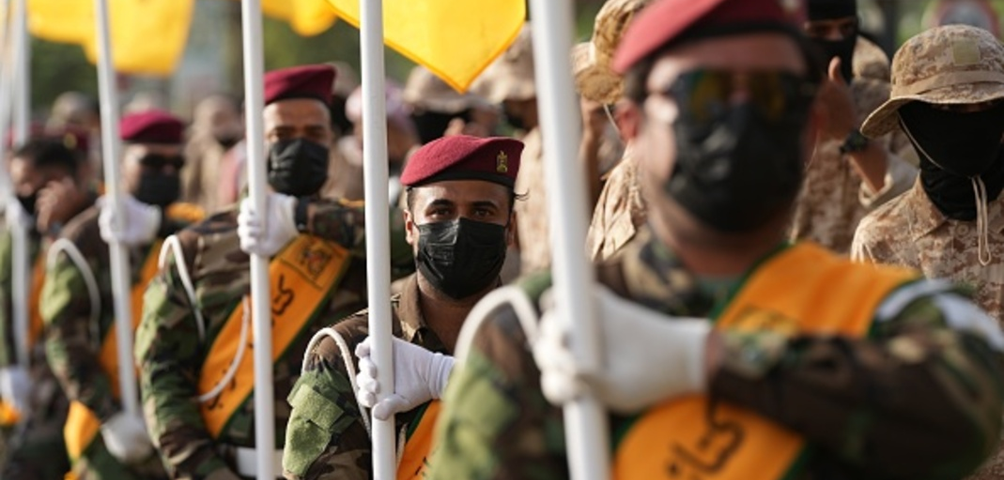
Source of photo: https://www.newarab.com/news/exclusive-us-steps-pressure-iraq-curb-irans-influence
America and Iraq have a long and complicated past, defined by support and conflict, with America constantly jumping between the two. While America supported Iraq during the Iraq-Iran war, providing financial and military aid, less than two decades later they launched a full invasion of Iraqi under false accusations of them being a nuclear threat. This pattern of America’s quick changing support continues into modern day, as seen by recent threats by America to stop all support to Iraq after over a decade of good relations.
Washington’s Threat to Bagdad
On 27th January 2026, Donald J. Trump went to Truth Social with complains of Nouri Al-Maliki being a candidate for Iraq’s next Prime Minister, calling him a “very bad choice” for Iraq, claiming that his previous terms, between 2006-2014, were defined by “poverty and chaos”[i]. Trump continued on, stating that “because of his insane policies and ideologies, if elected, the United States of America will no longer help Iraq and, if we are not there to help, Iraq has ZERO chance of Success, Prosperity, or Freedom”[ii]. This heavy claim has stirred up much confusion as to why Trump is so opposed to Al-Maliki, however it is supposed that this threat is not a personal attack against Al-Maliki, but rather is part of a larger military strategy against Iran.
As two of the region’s leading Shia powers, Iraq and Iran have generally maintained relatively strong relations, particularly during Al-Maliki’s previous two terms, a period of deepened bilateral ties and weakening U.S. political and military influence. This worries the USA, as, if a relationship reignites between Iraq and Iran, the U.S. fears that’s Iran will use Iraq as a means to gain access to weapons and political influence[iii]. Trump and the U.S. administration view Al-Maliki as part of Iran’s direct network of influence in Iraq, and fear that his return to office will undermine their efforts to counter Iran. Therefore, America’s threat to Al-Maliki was less about Al-Maliki himself, and rather out of concern that Iraq would become an obstruction to protentional U.S. military action against Iran.
Iraq has long navigated a delicate balance between the U.S. and Iran. As the tension between the two countries has increased over the years, particularly with Iran’s stance against Israel and America in regard to the genocide in Gaza, Iraq has managed to maintain close allyship with them both[iv]. However, Trump’s adamance to remove Iraq as an obstacle and prevent any possible alliance between Iran and Iraq, admits his current rivalry with Iran, has put Iraq in a bind. With its weakening economic growth, Iraq cannot risk punitive measures by the U.S., and America’s threat of sanctions is putting pressure on the country’s elites.
Iraq’s Economic Vulnerability
Since 2014, America has provided a variety of different forms of support to Iraq, following the mass destruction of the country and the countries requests for America to help them push out ISIS (Islamic State of Iraq and Syria)[v]. Support from America ranges from financial and military aid (with them investing millions in defense financing and training for Iraqi security forces) to humanitarian aid for displaced civilians and assistance in rebuilding infrastructure. This aid has been essential in strengthening political and economic stability over the past decade. In just 2025 alone, Iraq received $31 million in direct foreign assistance from Washington, with $20 million devoted to security related costs and almost $9 million to help cover government and civil society operating costs[vi].
Additionally, the revenue from Iraq’s oil exports is routed through the U.S. Federal Reserve Bank in New York. Oil is traded globally in the U.S. Dollar, and so if America decides to close this account, Iraq will lose access to the global financial system and oil trade.
Following the 2003 invasion of Iraq, President George W. Bush issued a presidential executive order, granting legal protection for Iraq’s oil revenue funds, prevented them from being seized and frozen by Iraqi creditors[vii]. The order is expected to be renewed in May, however if Trump decides against renewal, Iraq loses all legal protection over their revenues and creditors may go to New York courts seeking to claim their funds[viii]. The freezing of Iraqi assets would disrupt the transfer of funds necessary to pay for public salaries and sustain the economy for months or even years. If Trump follows through with his threats, Iraq’s economy would come to a halt.
Standing for sovereignty and democracy
Despite the heavy consequences that Trump’s threat could have on Iraq’s economy, Al-Maliki and Iraqi officials are not backing down to Trump. On the 28th January 2026, Al-Maliki came to X in response to Trump, rejecting his threats and refusing to back down from the election. Al-Maliki stated that “we categorically reject blatant U.S. interference in Iraq’s internal affairs, which we consider a violation of its sovereignty and a contradiction of the democratic system established in Iraq in 2003”[ix]. Al-Maliki went on to emphasize his intentions to prioritize and work to achieve the “supreme interests of the Iraqi people”[x].
Al-Maliki received overwhelming support on his position to not back out of the election; however, some division has arisen within The Coordination Framework (CF), a coalition of Shia political parties established in 2021. Trumps threats have stirred up understandable worry amongst Iraq’s elite, and some are willing to give into Trump’s threats[xi]. Regardless of this minority, the CF have decided to remain in support of Al-Maliki. The official stance of the CF was issued on Saturday 31st January during their meeting in Bagdad, stating that “choosing the Prime Minister is an exclusively Iraqi constitutional matter … free from Foreign interference”[xii].
Overall, America’s primary contention is not with Iraq directly, but rather roots from their rivalry with Iran and their worries that Iraq will be an obstacle in their ongoing military operation against Iran. A loss of American support will drastically harm Iraq’s economy, as sanctions would cut them off from the global financial system and global oil trade, thus inhibiting the government’s ability to pay public salaries. However, despite the major impact of such a situation, Iraq has decided to defend its sovereignty and democratic system against foreign intervention and keep Al-Maliki as their candidate in the election.
[i] https://www.cbsnews.com/news/trump-threat-punish-iraq-if-former-prime-minister-nouri-al-maliki-reelected/
[ii] https://www.cbsnews.com/news/trump-threat-punish-iraq-if-former-prime-minister-nouri-al-maliki-reelected/
[iii] https://www.cbsnews.com/news/trump-threat-punish-iraq-if-former-prime-minister-nouri-al-maliki-reelected/
[iv] https://time.com/7358384/trump-al-maliki-iraq-iran-oil/
[v] https://www.washingtoninstitute.org/policy-analysis/us-support-iraqi-security-forces-challenges-and-future-prospects-under-trump#main-content
[vi] https://www.cbsnews.com/news/trump-threat-punish-iraq-if-former-prime-minister-nouri-al-maliki-reelected/
[vii] https://www.cbsnews.com/news/trump-threat-punish-iraq-if-former-prime-minister-nouri-al-maliki-reelected/
[viii] https://www.cbsnews.com/news/trump-threat-punish-iraq-if-former-prime-minister-nouri-al-maliki-reelected/
[ix] https://www.aljazeera.com/news/2026/1/27/trump-says-us-will-end-support-for-iraq-if-al-maliki-reinstated-as-pm
[x] https://www.aljazeera.com/news/2026/1/27/trump-says-us-will-end-support-for-iraq-if-al-maliki-reinstated-as-pm
[xi] https://www.aljazeera.com/features/2026/2/6/iraq-shia-bloc-divided-over-tactics-after-us-rejects-maliki-pm
[xii] https://www.aljazeera.com/features/2026/2/6/iraq-shia-bloc-divided-over-tactics-after-us-rejects-maliki-pm
Disclaimer. The views and opinions expressed in this analysis are those of the author and do not necessarily reflect the official policy or position of MEPEI. Any content provided by our author is of her opinion and is not intended to malign any religion, ethnic group, club, organization, company, individual, or anyone or anything.