
Israeli Aid Airdrops: Blending Skill with Deceptive Illusion
July 27, 2025
Can China Dethrone the Dollar? Geo-Economic Shifts in Global Power Dynamics
August 3, 2025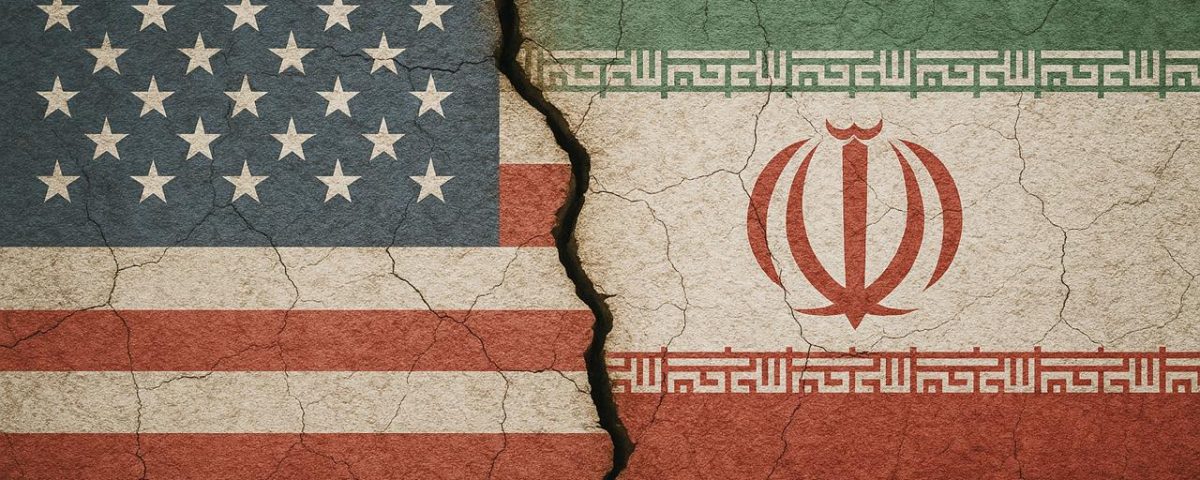
1. Introduction
One of the main goals of the United States (US) Presidential Administration, since Donald Trump retook office in January of 2025, has been to revitalize the Islamic Republic of Iran’s Nuclear Deal. (The White House 2025)
This comes after Trump unilaterally withdrew from a nuclear deal with Iran, the Joint Comprehensive Plan of Action (JCPOA), in 2018, during his first term. The reasons he cited for the withdrawal were that the deal, brokered by his predecessor, President Barack Obama, did not address Iran’s ballistic missile program and its regional proxy groups.
Since then, the US imposed even more sanctions on Iran and blocked it from exporting oil to the West. (The White House 2018)
This article will explore how a history of mistrust between Iran and the West has prevented a deal and how it may continue to do so now, despite the US’s “maximum pressure” foreign policy.
2. Operation Ajax
During the slow but steady collapse of the Ottoman Empire, the former ruler of most lands that are now collectively referred to as the “Middle East”, the British began to show a great interest in the resources of the region. Therefore, for a significant amount of time, the British Empire, along with other European powers, during times of both war and peace, ran on Middle Eastern oil. (Davies 1973)
After the World Wars, British imperial influence began to wane, much like the Ottoman Empire’s before it. This was especially highlighted in the Middle East, where multiple countries pushed back against British influence, including Iran, which, under the government of Prime Minister Mohammad Mosaddegh[1], decided to nationalize the oil company that was fueling the British machine, the Anglo-Iranian Oil Company (AIOC). The negotiation efforts of the British to try and retain control over the oil ultimately failed and they orchestrated a global embargo on Iranian oil exports.
Mosaddegh was relentless and it very much affected the British Empire, which was counting on its would-be successor, the US, to help them organize a coup d’etat in Iran. The British failed to persuade President Truman, but found a willing partner in his successor, President Eisenhower, who feared Iran might fall under Soviet influence through the communist Tudeh Party. Therefore, the newly founded American Central Intelligence Agency (CIA), and British Secret Intelligence Service (also known as SIS or MI6), organized what would come to be known as Operation Ajax (TPAJAX).
Through this Operation, the two agencies launched a massive propaganda campaign. They planted fabricated stories in newspapers, spread rumors that Mosaddegh intended to abolish Islam and embrace communism, and bribed journalists, clerics, members of parliament, even athletes and street gangs, to stage violent protests and counter-protests, creating the illusion of national chaos.
Ultimately, though on the second attempt, Mosaddegh’s government was overthrown and replaced by General Fazlollah Zahedi, who was noticeably friendlier to the British. The Shah of Iran, Mohammad Reza Pahlavi, who left the country after the unsuccessful first coup, also came back with warmer feelings towards the West, which did not come unnoticed by his people, whom, a majority of, considered him a puppet of the US.
The seeds sown by Operation Ajax in 1953 ultimately bore bitter fruit for the West in 1979, when the Islamic Revolution overthrew the western-friendly Shah and dismantled the monarchy.
While the US viewed the Operation as a Cold War victory, most Iranians saw it as a direct attack on their national sovereignty and democracy. The memory of the West’s foreign interference became etched into the national consciousness, feeding a deep mistrust that would be only worsened in the upcoming years. (Koch 1998)
3. Iran’s Nuclear Program
Ironically, given today’s events, the US essentially started Iran’s nuclear program, through the “Atoms for Peace” initiative, a program launched in the 1950s to share civilian nuclear technology with allied nations. Under this framework, the US helped Iran build nuclear reactors (Malus 2018). Iran even signed the Non-Proliferation Treaty (NPT) in 1968 and ratified it in 1970, showing early commitment to the international nuclear framework. (United Nations 1968)
After the Islamic Revolution, the nuclear program was temporarily halted, viewed with suspicion as a relic of the Shah’s Western-aligned regime (Huang 2016), but amid the devastating Iran-Iraq war, in which the US-backed Iraq used chemical weapons against Iran (Central Intelligence Agency 2010), nuclear ambitions quietly resumed with assistance from powers such as Pakistan, China, and Russia. (Huang 2016)
However, in the post-9/11 era, as fears of nuclear proliferation grew, so did Western alarm over Iran’s intentions, which was soon labeled part of the “Axis of Evil”, by US President George W. Bush. (Bush 2002)
4. The Joint Comprehensive Plan of Action (JCPOA)
While nuclear negotiations with Iran had been attempted before, they never advanced meaningfully until the election of Iranian President Hassan Rouhani in 2013. His moderate stance, combined with Obama’s willingness to engage diplomatically, created a perfect opening for serious negotiations. Talks began between Iran and the P5+1, the five permanent members of the UN Security Council (China, France, Russia, the United Kingdom, and the United States) plus Germany, under the leadership of U.S. Secretary of State John Kerry and Iranian Foreign Minister Mohammad Javad Zarif.
After years of tense and complex negotiations, a deal was made, the Joint Comprehensive Plan of Action. Under its terms, Iran agreed to reduce its uranium stockpile to 300 kg, limit its enrichment levels to 3.67%, dismantle thousands of centrifuges, and allow unprecedented inspections from the International Atomic Energy Agency (IAEA) to its nuclear facilities – all in exchange for nuclear sanctions relief. (Joint Comprehensive Plan of Action 2015)
The agreement was hailed as a diplomatic breakthrough: it diminished the possibility of a nuclear conflict in the Middle East, it gave Iran the chance to use nuclear energy for peaceful purposes, and it also lifted nuclear sanctions which were formerly put on Iran. The agreement was seen as a win-win, the West gained peace of mind and Iran got its economy back.
5. Trump’s first mandate
When Trump took office in 2017, things changed. Trump criticized the JCPOA as fundamentally flawed, arguing that it failed to address Iran’s ballistic missile program and its support for regional proxy groups. In an effort of “squeezing every drop” from the negotiations, Trump ended up unilaterally withdrawing from the deal, reinstalling economic sanctions on Iran, and waiting until they got back to the table, but they never did. (The White House 2018)
Europe, though nominally still committed to the deal, failed to mount an effective response. Their proposed solution – the Instrument in Support of Trade Exchanges (INSTEX), aimed to facilitate non-dollar humanitarian trade with Iran. But the mechanism was limited, underfunded, and ultimately symbolic. It did little to offset the financial toll of U.S. sanctions, further eroding trust in Western promises. (Foreign Commonwealth & Development Office 2023)
Furthermore, in 2020, tensions escalated further, when the US assassinated Gen. Qasem Soleimani, a powerful and influential commander-in-chief of Iran’s Quds Force. The killing was a major turning point and in retaliation, Iran resumed higher levels of uranium enrichment and gradually reduced IAEA access to its facilities. (Al Jazeera 2020)
6. Conclusion
The difficulty of signing a nuclear deal with Iran does not lie in the numbers: in the amount of uranium, or level of enrichment, it lies in the deep level of mistrust between the two parties.
Since 1953, every interaction of Iran’s with the West came with a burden, which only grew heavier over time. Diplomacy seemed within reach many times, like it did with the JCPOA, but it always proved impermanent.
It is of great difficulty to engage in a long-term negotiation with a country whose commitment might very well last as long as the length of the administration.
Ultimately, you can negotiate almost anything.
The present and the future;
The numbers and the conditions;
What you cannot negotiate is the past, therefore it should not be attempted.
In the words of former Foreign Minister of Iran, and co-creator of the JCPOA, Mohammad Javad Zarif, “We should not be prisoners of the past, we should use it as a base, and jump”.
7. Afterword
These are only a few of the events that shaped the strained relationship between Iran and the West during the last 100 years.
Recent events that have further strained the relationship are acknowledged but deliberately excluded, as this article focuses on the historical underpinnings rather than immediate developments.
As a final thought, even if you do “put the past behind you”, the learned lessons rarely stay behind with it.
Bibliography
The White House. 2018. Trump White House Archives. August 6. Accessed July 25, 2025. https://trumpwhitehouse.archives.gov/briefings-statements/statement-president-reimposition-united-states-sanctions-respect-iran/.
Al Jazeera. 2020. Al Jazeera. January 5. Accessed July 25, 2025. https://www.aljazeera.com/news/2020/1/5/soleimani-killing-iran-abandons-nuclear-deal-limits.
Central Intelligence Agency. 2010. Central Intelligence Agency. October 8. Accessed July 25, 2025. https://www.cia.gov/readingroom/docs/DOC_0001030207.pdf.
Foreign Commonwealth & Development Office. 2023. Government of the United Kingdom. March 9. Accessed July 25, 2025. https://www.gov.uk/government/news/the-10-instex-shareholder-states-have-decided-to-liquidate-instex-due-to-continued-obstruction-from-iran#:~:text=In%20light%20of%20Iran’s%20persistent,assembly%20of%209%20March%202023.
Huang, Xiaoning. 2016. United Nations HR Portal. July. Accessed July 25, 2025. https://hr.un.org/sites/hr.un.org/files/The%20Iranian%20Nuclear%20Issue%20and%20Regional%20Security.pdf.
Malus, Katherine. 2018. K1 Project Columbia. September 9. Accessed July 25, 2025. https://k1project.columbia.edu/content/atoms-peace-jcpoa-history-iranian-nuclear-development.
United Nations. 1968. “Treaty on the Non-Proliferation of Nuclear Weapons.” United Nations Treaty Collection. July 1. Accessed July 25, 2025. https://treaties.un.org/doc/Publication/UNTS/Volume%20729/volume-729-I-10485-English.pdf.
The White House. 2025. White House. June 22. Accessed July 25, 2025. https://www.whitehouse.gov/articles/2025/06/sunday-shows-president-trumps-pursuit-of-peace-through-strength-in-iran/.
Bush, George W. 2002. The President’s State of the Union Address. January 29. Accessed July 25, 2025. https://georgewbush-whitehouse.archives.gov/news/releases/2002/01/20020129-11.html.
Davies, Colin. 1973. “British oil policy in the Middle East 1919-1932.” Edinburgh Research Archive. Accessed July 25, 2025. https://era.ed.ac.uk/handle/1842/17553.
Joint Comprehensive Plan of Action. 2015. “Joint Comprehensive Plan of Action.” European Parliament. July 14. Accessed July 25, 2025. https://www.europarl.europa.eu/cmsdata/122460/full-text-of-the-iran-nuclear-deal.pdf.
Koch, Scott A. 1998. “”Zendebad, Shah!”: The Central Intelligence Agency and the fall of Iranian Prime Minister Mohammed Mossadeq, August 1953.” Central Intelligence Agency . Accessed July 25, 2025. https://www.cia.gov/readingroom/docs/the%20central%20intelligence%20%5B15369853%5D.pdf.
[1] The spelling “Mossadeq” is used in the CIA Reading Room documents; however, the Iranian transliteration commonly used is “Mossadegh.”

Mr. Eric-Albert SURUGIU
Mr. Eric-Albert SURUGIU is a Junior Researcher at the Middle East Political and Economic Institute (MEPEI). He is passionate about International Relations, and the Geopolitics of Asia, specifically, the Middle East and China. He can be reached at e-mail: eric.albert.surugiu@gmail.com