The 13th Beijing Xiangshan Forum
October 7, 2026
Syria After Riyadh: A New Role in the Middle East’s Emerging Security Order
October 13, 2026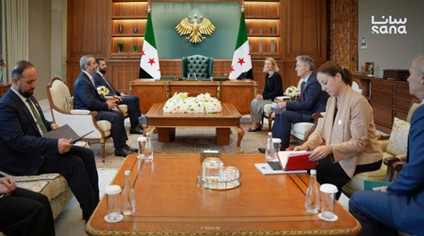
On 29 September 2026, the EU High Representative for Foreign Affairs and Security Policy, Kaja Kallas, travelled to Damascus, where she met President Ahmed al-Sharaa and Foreign Minister Asaad al-Shaibani, and held a joint press conference in which both sides spoke about upgrading the partnership between Syria and the European Union.[i] The visit confirms a shift that has been taking shape since the fall of the Assad regime in December 2024, as the European-Syrian relationship is no longer limited to humanitarian cooperation or political contacts, and is gradually turning into a broader framework that covers the economy, trade, reconstruction and institution building.[ii]
Kallas and Shaibani had met only days earlier in New York, on the sidelines of the 81st session of the UN General Assembly, and before that in Brussels in August.[iii] In January, European Commission President Ursula von der Leyen visited Damascus and promised after her meeting with al-Sharaa that Europe would do everything it can to support Syria’s recovery, while in April the Syrian president was received in Berlin, where Chancellor Friedrich Merz’s statement that he hoped 80 percent of Syrian refugees would return home within three years, a figure he later attributed to al-Sharaa himself, showed how closely the issues of reconstruction and migration are tied together in European capitals, with Germany hosting the largest Syrian community in the EU.[iv] The EU lifted its economic sanctions on Syria in May 2025 and has since appointed an ambassador to Damascus, after an absence of fourteen years.
This visit highlights a few essential questions, such as: How far has the economic track advanced, and what will the new framework look like? And to what extent do European and Syrian security priorities actually coincide?
Economic recovery and the road to a new agreement
The economic dimension is where the relationship has advanced the most. On 11 May 2026, the Council of the EU restored the full application of the 1977 Cooperation Agreement between the European Economic Community and Syria, whose trade provisions had been partially suspended in 2011 in response to the human rights violations committed by the Assad regime.[v] The decision came alongside the High-Level Political Dialogue between the EU and Syria held in Brussels, and the foreign ministers also agreed on lifting the sanctions on the Syrian defence and interior ministers. On 18 May, the EU then removed several Syrian state institutions, including the defence and interior ministries, from its sanctions list.[vi] The distance that remains to be covered is, however, considerable, since EU-Syria trade peaked in 2010 at more than €7 billion, while by 2023 EU imports from Syria had fallen to €103 million and European exports to €265 million.[vii]
In terms of financial support, Kallas stated in Damascus that aid alone cannot build Syria, and that foreign and domestic investment needs trust, which in turn requires security, clear rules, the rule of law, functioning institutions and the equal participation of women in society. The European approach therefore appears to be moving from funding towards the construction of a framework for the relationship, in which assistance is accompanied by rules and institutional reform. Shaibani referred to steps related to the government’s political process too, including convening the People’s Assembly and integrating the Syrian Democratic Forces (SDF).
The process outlined during the press conference includes technical talks this year on political and security issues, as well as on recovery and reconstruction, ahead of another High-Level Political Dialogue before next summer.[viii] According to Shaibani, the two sides aim to produce a joint document by the end of the first quarter of 2027, which would serve as the basis for a new partnership agreement replacing the one dating back to 1977. Damascus also intends to raise its diplomatic representation in Brussels to ambassador level and hopes to be included in the EU’s Multiannual Financial Framework for 2028–2034.[ix]
There is, however, a difference in the language used by both sides. Shaibani frames the partnership in terms of predictability and long-term commitment, implemented through state institutions, whereas Kallas insists on an inclusive transition, national reconciliation and accountability, and on the fact that progress also depends on the Syrian side. The joint document will likely be the first text in which these two approaches will have to be reconciled, as Damascus is seeking resources channelled through the state, while Brussels is trying to keep a degree of influence over the way that state is being rebuilt.
The security sphere: the Golan Heights
The security part of the discussions is more delicate, and it is centred on the Golan Heights. The Syrian position distinguishes between the security track and the legal and sovereign status of the territory. Addressing the 81st session of the UN General Assembly, al-Sharaa said that the Golan will remain Syrian land and that Israel’s measures to annex it are null and void under UN Security Council Resolution 497 of 1981, while reaffirming Syria’s commitment to the 1974 Disengagement of Forces Agreement and calling for Israel to withdraw from the areas it entered after 8 December 2024.[x] Damascus has expressed its readiness to discuss security arrangements aimed at reducing tensions and preventing further escalation, as long as such arrangements do not legitimise the occupation or alter Syria’s right to recover its territory. According to al-Sharaa, Israel has carried out around 500 airstrikes and artillery attacks and more than 1,200 incursions into Syrian territory, and after several rounds of talks, held with the support of the United States, it withdrew from the negotiations.
In Damascus, Shaibani welcomed the EU’s rejection of Israeli sovereignty over the Golan, but also asked Europe not to limit itself to statements of concern. He called on the EU’s Foreign Affairs Council to explicitly characterise the Israeli attacks and to demand that Israeli forces withdraw to the earlier lines, urged that the issue be placed on the agenda of the Political and Security Committee, and asked for European support in renewing the mandate of the UN Disengagement Observer Force (UNDOF).[xi]
The European response was, for the moment, more cautious. Kallas stated that Syria’s sovereignty and the 1974 separation agreement must be respected, and noted that Syria’s restraint towards Israel and its decision to stay out of the US-Iran war helped prevent the conflict from spreading any further, without however committing to the explicit language at Council level that Damascus is asking for.
Security dynamics: EU – Russia and the sovereignty line
Although Europe and Syria agree on many aspects, their understanding of security does not fully coincide. For Brussels, Syria is also part of the wider confrontation with Russia, while for Damascus security is increasingly tied to the possibility of making its own decisions on which foreign actors are present on its territory, and in what form.
European priorities
Kallas was direct on this point in Damascus, recalling that Russia used its bases to help Assad kill Syrians and that Moscow still shelters him, and expressing the hope that the recent memorandum will lead to a reduced Russian military presence and influence, as Syria has credible alternatives to dependence on Russia. The memorandum, announced by the Syrian Ministry of Foreign Affairs on 9 August 2026 after about 18 months of negotiations converts the two military bases (Hmeimim and Tartus) into joint training and qualification centres within a maximum period of three months.[xii] Its interpretation, however, remains open. Damascus presents it as the recovery of control over its coast, while the Russian Foreign Ministry described it as a step aimed at further improving bilateral cooperation in the military sphere, and in early September a Russian convoy resupplied Tartus under the new arrangement.[xiii] From a European perspective, the Russian presence has therefore been reduced and reorganised, but not removed. In this context, the support for the Syrian coast guard mentioned by Shaibani, presented through the idea that the security of the Mediterranean also begins on Syrian shores, represents one of the most concrete alternatives that the EU can offer.[xiv]
Syrian priorities
The Syrian perspective on security becomes visible in the way Damascus manages both the Golan file and its relationship with Türkiye. On 18 August 2026, Israel struck the Abu al-Duhur airbase in north-western Syria, linking the strike to concerns over a possible Turkish military presence at the site at a time when Damascus was discussing security and military arrangements with Ankara. In mid-September, Turkish Foreign Minister Hakan Fidan visited Damascus, where he held a trilateral meeting with Shaibani and Interior Minister Anas Khattab.[xv] The Syrian response to the Israeli strike did not consist in denying the talks with Ankara. Syria’s actions explicitly suggest that decisions on foreign military deployments and defence agreements are sovereign decisions of the Syrian state and that they cannot be imposed from outside. The new administration in Damascus is coherent in applying this policy. It tries to negotiates security arrangements with Israel, reduces the Russian footprint while keeping Moscow as an interlocutor, invests in a common framework with the EU and deepens its military relationship with Türkiye despite Israeli objections.
Europe’s position and its limits
For the moment, the EU finds itself in a comfortable and overall advantageous position, as Syria is openly interested in European funding, market access, institutional expertise and political support on key issues. This leverage, however, has a limit. Syria appears willing to accept conditions related to governance, transitional justice and inclusion, as they are part of the price of reconstruction, but it is much less likely to accept conditions concerning its security partnerships.
A sustainable approach for the EU would be to allow the credible alternatives to speak for themselves in areas such as coast guard capacity, demining, institution building and investment, which would allow Syria to reduce its dependence on Russia as a result of its own decisions. The trajectory of the relationship will likely depend on the outcome of the joint document and on the evolution of the situation in southern Syria, where continued Israeli strikes and the stalled security talks may increase pressure on Brussels to take a clearer position. Respecting the Syrian sovereignty line is, from this perspective, the condition under which Europe’s advantage could last beyond the current visit and engagements in Damascus, and it remains to be seen whether the EU, divided as it often is on Middle Eastern files, will be able to maintain a consistent line on foreign policy in Syria.
[i] https://www.eeas.europa.eu/eeas/media-advisory-hrvp-kallas-travels-syria_en
[ii] https://syrianobserver.com/foreign-actors/kaja-kallas-in-damascus-two-years-that-redrew-syrian-european-relations.html
[iii] https://en.yenisafak.com/world/syria-and-eu-deepen-talks-as-kallas-visits-damascus-3723875
[iv] https://www.aljazeera.com/news/2026/5/11/eu-agrees-to-restore-full-trade-ties-with-syria
[v] https://www.eunews.it/en/2026/05/11/eu-reinstates-cooperation-agreement-with-syria-suspended-in-2011/
[vi] https://www.turkiyetoday.com/region/eus-kallas-visits-damascus-offers-to-upgrade-syria-partnership-3229262
[vii] https://www.aljazeera.com/news/2026/5/11/eu-agrees-to-restore-full-trade-ties-with-syria
[viii] https://www.eeas.europa.eu/eeas/syria-joint-press-conference-high-representativevice-president-kaja-kallas-and-minister-foreign_en
[ix] https://english.enabbaladi.net/archives/2026/09/damascus-seeks-new-partnership-deal-with-eu/
[x] https://sana.sy/en/syria/2348584/
[xi] https://www.turkiyetoday.com/region/eus-kallas-visits-damascus-offers-to-upgrade-syria-partnership-3229262
[xii] https://www.middleeastmonitor.com/20260809-syria-russia-reach-deal-to-reorganize-russian-military-presence-at-hmeimim-tartus-bases/
[xiii] https://www.aljazeera.com/news/2026/9/15/russia-resupplies-military-bases-in-syria-for-first-time-under-new-deal
[xiv] https://www.arabnews.pk/middle-east/eu-top-diplomat-says-bloc-wants-to-upgrade-syria-partnership-3002696
[xv] https://www.mfa.gov.tr/sayin-bakanimizin-suriye-yi-ziyareti–13-14-eylul-2026–sam.en.mfa
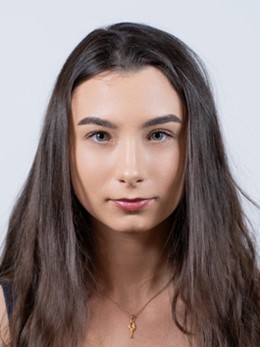
Larisa-Nicoleta PĂTRAȘCU
Junior Researcher at the Middle East Political and Economic Institute (MEPEI). Her research and professional interests center on peacebuilding, diplomacy and conflict resolution, international cooperation, and MENA geopolitics.