Recovery and Sovereignty – Principles for Engagement between Syria and the European Union
October 8, 2026
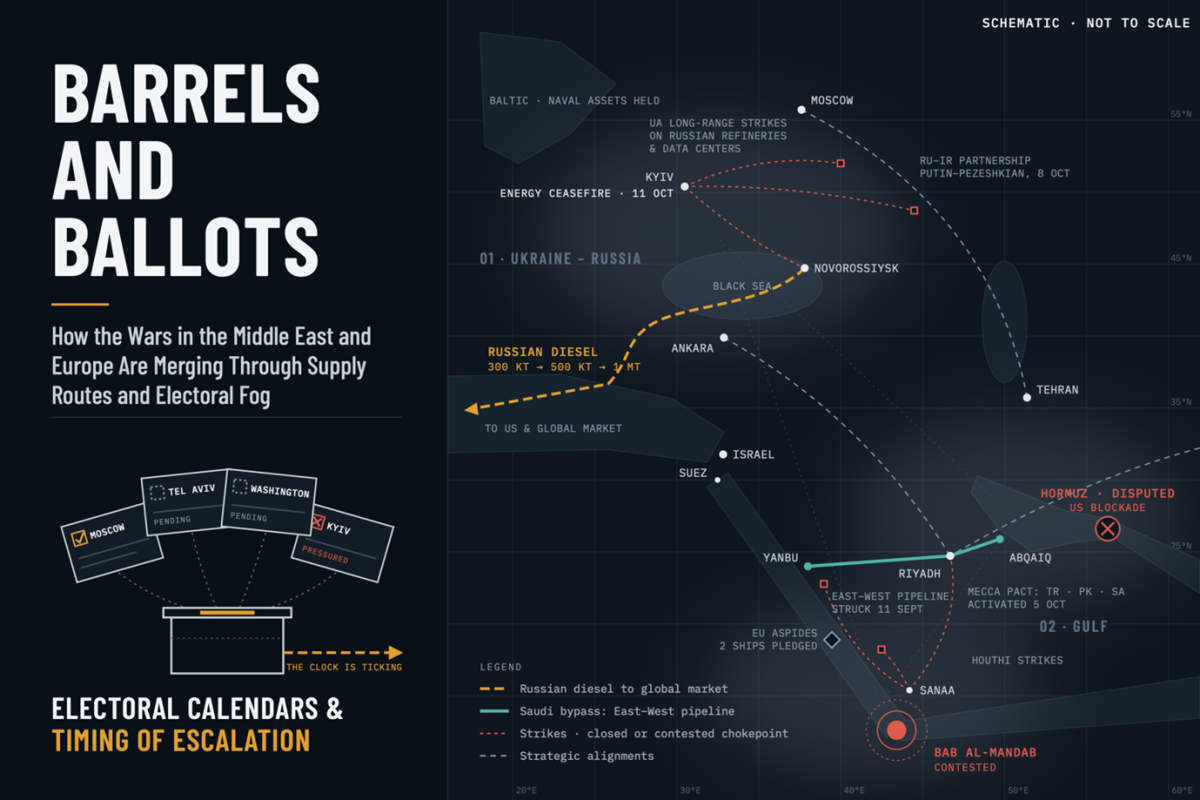
Barrels and Ballots: How the Wars in the Middle East and Europe Are Merging Through Supply Routes and Electoral Fog
October 15, 2026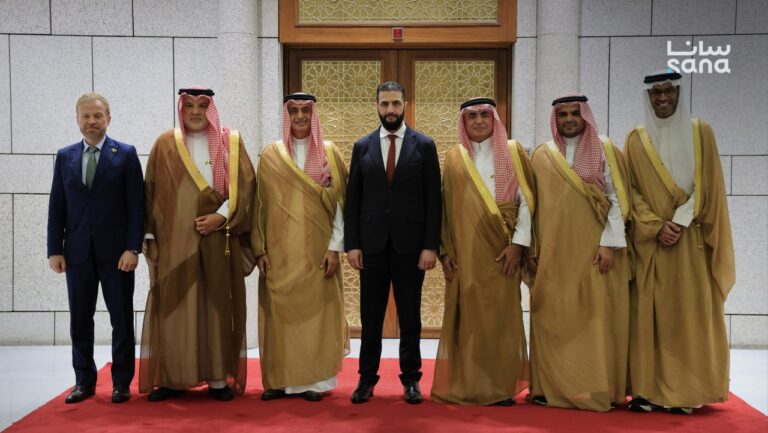
Syrian President Ahmed al-Sharaa’s visit to Riyadh has opened a question that goes well beyond Syrian-Saudi relations. At a moment when Saudi Arabia, Türkiye and Pakistan are activating the Makkah Joint Defense Agreement in response to the escalating conflict in Yemen, Damascus is being drawn into a regional security environment that is changing faster than the institutions of the new Syrian state can adapt to it.
The central question is therefore not simply whether Syria will join the Makkah alliance. It is whether the new Syria can become part of the emerging regional security architecture without being absorbed into conflicts that could undermine the very process of state-building it is trying to complete. For Riyadh, Ankara and Islamabad, a stable Syria has strategic value. For Damascus, however, the value of any alliance will depend on what it receives in return, what it is expected to contribute, and whether those commitments serve Syria’s own interests.
Syria and the Makkah Equation
The Makkah agreement was initially conceived as a collective defense arrangement between Saudi Arabia, Türkiye and Pakistan. Its activation following the escalation of Houthi attacks against Saudi Arabia gives it a practical military dimension that did not exist when the agreement was first announced.
There is, so far, no clear indication that Syria is being invited to become a fourth member. This distinction matters. A country can cooperate with a regional security framework without becoming legally bound by its collective-defense commitments. For Damascus, such a distinction may actually be more useful at this stage. Syria has considerable strategic importance for the three countries. Its geographical position connects Türkiye with the Arab Levant, borders Iraq and Jordan, and places Damascus close to several of the region’s major security fault lines. A stable Syrian state capable of controlling its borders is therefore valuable even if Syria does not contribute combat forces to every regional crisis. What the Makkah partners may ultimately need from Syria is not another army to deploy abroad, but a state capable of preventing its territory from becoming an arena for armed groups, transnational militancy and competing regional powers.
This is also where Saudi Arabia’s relationship with Damascus becomes particularly important. Riyadh has invested political and financial capital in Syria’s reintegration into the Arab system. For Saudi Arabia, supporting the stabilization of Syria can serve a broader objective: reducing the number of ungoverned spaces and unresolved conflicts surrounding the Gulf and the Arabian Peninsula.
For Damascus, meanwhile, Saudi support can provide something that Syria urgently needs: economic investment, political legitimacy, Arab diplomatic backing and assistance in reconstruction.
The relationship is therefore potentially reciprocal. Syria offers strategic geography and political depth; Saudi Arabia offers economic and diplomatic resources. Türkiye contributes military expertise and direct influence over the Syrian security environment, while Pakistan brings military experience and a strategic relationship with Riyadh. The question is how far this cooperation should go.
Yemen and the Limits of Syrian Military Power
The most difficult issue is Yemen. Reports that Damascus is considering military assistance to Saudi Arabia have raised the possibility of Syrian personnel being deployed in support of the Saudi-backed campaign against the Houthis. Damascus has, however, rejected the idea that Saudi Arabia formally requested a Syrian troop deployment and stressed that any military cooperation would have to proceed through official bilateral channels. That distinction is crucial.
Syria can demonstrate solidarity with Saudi Arabia without becoming a belligerent in Yemen. It could provide limited defensive assistance, technical expertise, intelligence cooperation or personnel involved in protecting strategic facilities. Such measures would carry political symbolism without necessarily committing the Syrian army to another prolonged war.
Sending substantial ground forces into Yemen would be an entirely different proposition. The Syrian state is still rebuilding its military institution after fourteen years of war. The army is being reconstructed from a diverse collection of armed formations that fought alongside one another against the previous government but do not necessarily share a single institutional history or military doctrine. Damascus is also dealing with unresolved internal questions involving the south, the Kurdish-led forces in the northeast, minority security and the consolidation of central state authority. Under these circumstances, deploying thousands of Syrian soldiers outside the country would create a strategic contradiction. Syria would be attempting to project military power abroad while still struggling to consolidate the monopoly of force at home.
There is also a regional dimension. A Syrian military confrontation with the Houthis could be interpreted by Iran and its remaining regional partners as a direct Syrian alignment against them. Whatever the transformation of Syria’s foreign policy, Damascus has an interest in avoiding the immediate creation of new enemies while it rebuilds its state.
The question is therefore not whether Syria can physically send fighters to Yemen. It can. The more important question is whether doing so would strengthen the Syrian state or expose it to a new set of military and political risks.
Türkiye’s Role Offers a Possible Model
Türkiye’s position within the Makkah framework is particularly relevant to Syria. Ankara has indicated that its support for Saudi Arabia will focus on defensive and technical capabilities rather than participation in offensive operations against the Houthis. This approach reflects a broader principle: collective security does not necessarily require every member to fight every war in the same way.
Syria could adopt a similar logic. Its contribution to regional security could focus on intelligence, border security, counterterrorism, military training and the protection of strategic infrastructure. Such a role would allow Damascus to become part of the emerging security architecture without turning the Syrian army into an expeditionary force.
Pakistan’s role also demonstrates that regional military cooperation can take several forms. The importance of the Makkah arrangement lies not simply in the number of soldiers deployed, but in the creation of a framework through which the participating states can coordinate capabilities, deterrence and strategic planning.
For Syria, the priority should therefore be building capabilities before making commitments.
Israel Changes the Syrian Calculation
There is another factor that makes a large Syrian deployment to Yemen particularly difficult: Israel. While Damascus is discussing its regional role with Riyadh, Israeli military activity in southern Syria remains a central security concern. Israel has maintained military positions in parts of southwestern Syria and has continued operations inside Syrian territory, while negotiations over security arrangements remain unresolved.
This creates a strategic dilemma for Damascus. How can Syria project military power thousands of kilometers away while facing unresolved security challenges on its own southern border? For the new Syrian government, restoring the state’s ability to protect its territory is likely to remain a more fundamental strategic objective than participating in an external war.
At the same time, the Israeli issue could become an important point of convergence between Syria and the states involved in the Makkah framework. Saudi Arabia, Türkiye and Pakistan have all emphasized Syrian sovereignty and opposed Israeli military actions on Syrian territory. This creates the possibility of a different Syrian role: not simply a military contributor, but a state whose security becomes part of a broader regional security agenda.
Washington’s Unavoidable Role
None of this can be understood without Washington. The United States has moved significantly toward supporting Syria’s reintegration into the international system while maintaining specific measures against terrorism and other security threats. Washington also remains deeply involved in the Syrian-Israeli security equation and in the future of the Kurdish-led forces in northeastern Syria.
The American position toward possible Syrian assistance to Saudi Arabia is therefore likely to be pragmatic rather than ideological. Washington may welcome a greater Syrian contribution to Saudi security if it reduces the need for direct American military involvement. But it also has an interest in preventing Syria from becoming embroiled in a new regional war.
This is precisely why Damascus must distinguish between strategic partnership and strategic dependency. Syria can cooperate with Saudi Arabia, Türkiye and Pakistan without becoming an appendage of any one regional bloc. It can support Saudi security without making Yemen its war. It can oppose violations of Syrian sovereignty without entering an uncontrolled confrontation with Israel. And it can cooperate with Washington without allowing American priorities to define Syrian foreign policy.
The Syrian Role Is Still Being Written
The most consequential outcome of the Riyadh visit may therefore not be Syrian entry into the Makkah alliance. It may be the gradual emergence of Syria as a participant in a new regional security system. The country’s contribution will initially be political, geographic and security-related more than expeditionary. Damascus has strategic assets, but its greatest asset at this stage is the possibility of becoming a functioning state after years of fragmentation.
For Saudi Arabia, a stable Syria can strengthen the Arab regional order. For Türkiye, it can provide a more predictable southern neighbor. For Pakistan, it can broaden the political reach of a new security partnership. For Washington, it can reduce another source of regional instability.
For Syria itself, however, the calculation is more demanding. It must rebuild the army, consolidate state institutions, stabilize its internal front, protect its sovereignty and restore its economy before assuming commitments that could stretch its limited capabilities.
The emerging regional order will not be defined only by who joins which alliance. It will also be defined by which states manage to preserve room for maneuver while participating in collective security. Syria now has an opportunity to return to the center of regional politics. But its success will depend less on how many soldiers it can send abroad than on whether it can build a state strong enough to decide when those soldiers should—and should not—be sent.
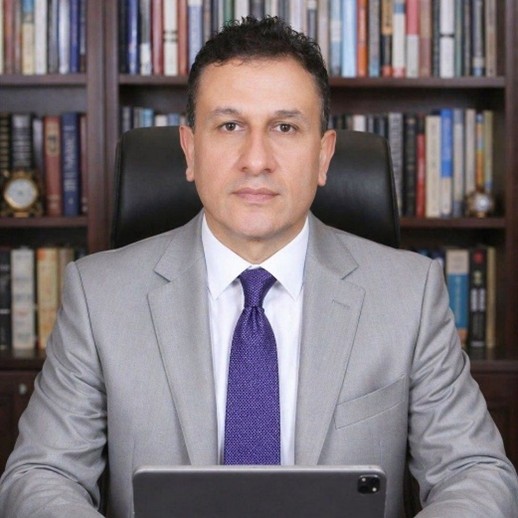
Prof. Shaher Al Shaher
Dr. Shaher Al SHAHER is an Associate Professor at the School of International Studies, Sun Yat-Sen University, China. Shaher@mail.sysu.edu.cn