
The Unacknowledged Sentinel: Egypt’s Diplomatic Absorption and the Preservation of Regional Order during the Gaza War (October 2023 Present)
June 3, 2026
The Oman Nuclear Solution: a Peace Plan for Iran, the USA, and the World
June 20, 2026The Possible U.S.–Iranian Kurdish Partnership: Lessons from Syria and Implications for Europe
Executive Summary
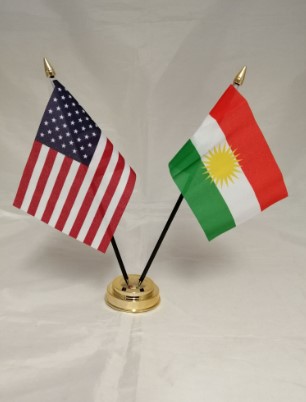
The war that opened against the Islamic Republic of Iran in February 2026 has revived one of the oldest questions in Middle Eastern security: when, and on what terms, does Washington turn to Kurdish armed groups? For Iranian Kurdish parties, long fragmented, largely exiled, and without a reliable external patron, the current crisis may represent one of the most significant strategic openings in decades. Their organisational networks, border position, and long-standing opposition to Tehran could suddenly acquire strategic value for the United States. The Syrian precedent, however, offers a revealing warning. Between 2014 and 2026, the United States built a highly effective partnership with the Kurdish-led Syrian Democratic Forces, before gradually narrowing its commitment once the strategic context changed. Syria showed that this type of cooperation is far easier to activate militarily than to sustain politically. This article argues that U.S.-Kurdish partnerships are best understood not as durable alliances or random improvisations, but as recurring situational partnerships: relationships built around military utility and bounded by regional constraint. The Iranian case remains emerging and unconfirmed, yet its early signals echo the Syrian pattern under harder conditions. For Europe, the stakes are direct. Another U.S.-Kurdish partnership in its neighbourhood would reverberate through Türkiye-EU relations, counterterrorism law, migration and asylum, diaspora politics, and the credibility of Europe’s claim to act as a normative power. Europe should clarify its position before the next partnership unfolds, not after it is already underway.
Keywords: Kurds; United States; Iran; Syria; YPG/SDF; PKK/PJAK; Türkiye; European Union; migration and asylum; counterterrorism; Kurdish diaspora; normative power; proxy warfare.
The Iranian Kurdish Opening
On 28 February 2026 the United States and Israel launched military operations against the Islamic Republic of Iran. Within days, press reporting suggested that the Trump administration was “considering possible efforts to provide material support to Iranian Kurdish groups,” even as the administration itself had “not confirmed any U.S. support.”1 For Iranian Kurdish parties, many of which had spent decades in exile or semi-exile in the mountains of northern Iraq, the timing was striking. It was not accidental in the strategic sense: moments of confrontation with Tehran are precisely when their geography, armed networks, and opposition to the Islamic Republic can become useful to Washington.
For Iranian Kurdish actors, the current crisis may represent one of the most significant openings in decades: a moment in which their organisational capacity, border position, and opposition to Tehran could suddenly acquire strategic value for Washington. The word “may” carries weight here. As of this writing no partnership has been confirmed; what exists is a fast-moving policy conversation, a set of Kurdish parties positioning themselves, and a war whose course remains open. The opening is real, but it is not a guarantee.
Less than two months before that conversation began, a different Kurdish partnership had effectively closed. Between 2014 and 2026 the United States built its most operationally significant ground partnership of the anti-Islamic State campaign around the Syrian-Kurdish People’s Protection Units (YPG), organised as the Syrian Democratic Forces (SDF).2 After the fall of Bashar al-Assad in late 2024, the new authorities in Damascus, in the words of the Congressional Research Service, “compelled an end to Syrian Kurds’ rule over much of northeast Syria, effectively ending their anti-IS efforts with U.S. forces.”3 One Kurdish partnership had ended; another seemed to be emerging.
This tension frames the question this paper examines: if Iranian Kurdish groups become useful to Washington, will the Syrian pattern repeat, and what would that mean for Europe? The analysis treats Syria as a completed precedent and Iran as an emerging test. Its argument is that U.S. cooperation with Kurdish armed groups is neither a durable alliance nor a random improvisation but a recurring situational partnership organised around military utility and limited by regional politics. The Syrian precedent shows that such cooperation is easier to activate militarily than to sustain politically. For Europe, then, the question is not only whether Iranian Kurdish actors could become useful to Washington, but whether Europe is prepared for the consequences of another U.S.–Kurdish partnership in its neighbourhood.
One clarification must come first, because the rest depends on it: there is no single Kurdish actor. Kurdish movements developed inside four different states and remain politically distinct. In Türkiye the dominant force is the Kurdistan Workers’ Party (PKK), designated as a terrorist organisation by the United States, the European Union, and Türkiye. In Iraq the movement is institutionalised in the Kurdistan Regional Government (KRG). In Syria it crystallised around the Democratic Union Party (PYD) and its armed wing, the YPG. In Iran several parties, the Democratic Party of Iranian Kurdistan (PDKI), Komala, the Kurdistan Free Life Party (PJAK), and the Kurdistan Freedom Party (PAK), have operated largely from exile.4 When Washington works with the YPG in Syria, it does not thereby work with the PKK in Türkiye, and supporting the KRG in Iraq buys no influence over PJAK in Iran. Every U.S.–Kurdish partnership is a partnership with a specific armed group in a specific state, and any analysis that blurs those distinctions begins on the wrong foot.
How Kurdish Armed Groups Become Useful to Washington
Since the costly ground wars in Iraq and Afghanistan, the United States has increasingly preferred to fight through local partners rather than deploy its own forces at scale. From Barack Obama’s “no boots on the ground” posture to Donald Trump’s preference for low-cost leverage, partner forces became the default instrument of intervention.5 Inside U.S. military doctrine this is formalised as operating “by, with, and through” partner forces: missions led by partners, with enabling support from the United States, and through American authorities and agreements, securing a degree of control while reducing American risk and cost.6
Kurdish armed groups become attractive within this logic when they possess strategic utility, meaning the capacity to deliver something Washington needs but does not want to provide directly: ground forces that hold terrain, local knowledge, intelligence, and pressure on a shared enemy.
Kurdish forces have repeatedly offered exactly this. They know the ground, they are already organised, they oppose the same adversaries, and they allow the United States to pursue military objectives without owning the war or its aftermath. Strategic utility, in short, is the engine that starts the relationship.
What that relationship is, however, is easily mislabelled. It is not a formal alliance: there is no treaty, no mutual-defence obligation, no commitment to Kurdish political aspirations. Nor is it simply a proxy arrangement in which Washington issues orders and a dependent client obeys. It is better described as a situational partnership: a relationship in which the United States provides air power, training, equipment, intelligence, and funding to a Kurdish armed group that, in turn, conducts ground operations toward shared, time-limited objectives. It is built around a military function, sustained only by political tolerance from Washington, and bounded by the wider regional order.7
The most useful single concept for capturing this relationship is asymmetric mutual instrumentalisation. Both sides use the partnership, but from unequal positions. Washington uses Kurdish armed groups for local military leverage; Kurdish actors use U.S. support for protection, resources, international visibility, and political bargaining power. The mutual character is real, treating Kurdish forces as passive instruments misreads them from the start. But so is the asymmetry, and it operates along three dimensions: unequal exit options (the United States can walk away in a way Kurdish groups cannot), unequal structural power (Washington has many available partners; Kurdish actors have few viable patrons), and unequal risk exposure (the United States risks diplomatic friction, while Kurdish actors risk military defeat, repression, abandonment, or displacement).8
Two structural facts give that asymmetry its bite. Kurdish armed groups are non-state actors, so supporting them irritates state allies who view the same groups as threats. They also have political aims of their own, including recognition, autonomy, and survival. These aims may align with Washington on the battlefield, but they can diverge once the fighting turns to questions of territory and governance. These two features explain why a partnership can be a military success and a political dead end at the same time.
Syria: The Precedent
Syria is the completed case, and the only one in which the partnership has run its full course. It therefore offers the clearest available picture of how this kind of cooperation begins, deepens, and ends. In September 2014 the Islamic State assaulted the Syrian-Kurdish town of Kobanê on the Turkish border. The town’s defenders looked, for weeks, as if they would lose. On 23 September
U.S. aircraft began striking IS positions in Syria, and coordination with YPG fighters on the ground began through the Combined Joint Task Force–Operation Inherent Resolve.9
The beginning was hesitant, and the word is deliberate. Washington was not looking for a Kurdish partner; it was looking for any ground force able to hold a town against IS, and the YPG happened to be there. The political cost was obvious from the start, the PYD was ideologically tied to the PKK, and Ankara protested loudly, but the cost of letting Kobanê fall, and handing IS a propaganda victory, looked higher. Strategic utility, in other words, drove the engagement; the Turkish constraint was present from the first weeks, not as a later complication but as a price Washington accepted up front.10
What followed shows Kurdish actors as agents, not recipients. In October 2015 the YPG was repackaged as the Syrian Democratic Forces, a formally multi-ethnic coalition with a civilian wing, the Syrian Democratic Council. The framing solved an American political problem, Washington could not be seen building a single Kurdish army, but the YPG leadership used it for its own ends, extending the reach of an emerging administration beyond Kurdish-majority areas. Financial and legal infrastructure followed through the Counter-ISIS Train and Equip Fund, and the campaigns at Manbij (2016) and Raqqa (2017) made the SDF the indispensable ground partner of the anti-IS war.11 This is what Kurdish agency, the fact that Kurdish actors mobilise, negotiate, unite, and present themselves strategically rather than passively absorbing American decisions, looks like in practice.
Yet the political ceiling was visible even at the military peak. When Türkiye launched Operation Olive Branch against the YPG-held enclave of Afrin in early 2018, the United States did not intervene: Afrin lay outside the negotiated anti-IS mission. The SDF’s utility had not declined, if anything it was near its height, but regional constraint, the principle that cooperation is always bounded by Washington’s relationships with state actors, overrode it. The message was unambiguous: U.S. protection tracked the mission, not the partner, and the line between protected and unprotected territory was drawn as much in Ankara as in Washington.12
October 2019 confirmed the pattern. President Trump announced a withdrawal from the border zone; within days Turkish forces and allied factions launched Operation Peace Spring, and the SDF lost several towns. The drawdown was partial, forces remained near the eastern oil fields, but the signal was clear. The SDF responded not as a victim but as a strategist, reaching emergency arrangements with Damascus and Moscow within weeks, because only they could deter a wider Turkish push.13 This sequence is what this paper calls the partnership cycle. It begins with hesitant cooperation, moves into military consolidation, reaches an operational peak, and then becomes vulnerable to friction with state allies and shifting U.S. priorities. It is not an iron law, but a recurring pattern that helps explain why similar pressures may produce similar outcomes across cases.
The cycle closed not from Washington but from Damascus. After Assad’s fall, the new Türkiye-backed authorities moved to reassert central control over the northeast, and by 2026 the Kurdish autonomous project had lost the territorial and political conditions that made it meaningful. The partnership did not vanish overnight, a residual counter-IS presence and limited coordination remained, but it ceased to be the politically supported, territorially anchored project it had been.14 The analytical lesson is the one that matters most for Iran: a U.S.–Kurdish partnership can work militarily while remaining politically fragile. Military usefulness can produce partnership; it does not produce protection. The abandonment that follows is not best explained by American treachery but by structure. The partnership was never built to outlast the mission, and its political dimension was deliberately downplayed to manage a state ally’s objections.15
Iran: The Possible New Test
Iran is the emerging case, and it must be written about with more caution. The military campaign began only on 28 February 2026; the administration has “not confirmed any U.S. support” to Iranian Kurdish groups; and those groups have not, as a coordinated armed force, fought inside Iran.16 What can be observed is the presence, or absence, of the early signals that, in Syria, preceded a partnership.
The signals are not trivial. Within roughly a week of the first strikes, the question of Iranian Kurdish involvement had entered serious policy debate in outlets ranging from The Atlantic to dispatches from the Soufan Center, JINSA, and the Atlantic Council, alongside regional analysis from IstanPol and the Bloomsbury Intelligence and Security Institute.17 Iranian Kurdish parties offer real if limited potential in Iran’s western mountains: intelligence, disruption of regime control, and pressure that could force the Islamic Revolutionary Guard Corps to divert resources. The reported destabilisation of the Iranian leadership has, on some accounts, widened that opening further, though such claims remain unconfirmed and should be treated with care.
Crucially, Kurdish agency is already visible. In early 2026, several parties, including PJAK, the PDKI, PAK, and factions of Khabat and Komala, formed the Coalition of Political Forces of Iranian Kurdistan. The coalition was not a unified military command but a political platform designed to give fragmented parties a single, more credible voice in international diplomacy, including in Washington.18 The move closely mirrors the 2015 rebranding of the YPG as the SDF: in both cases, Kurdish actors tried to manufacture the kind of recognisable, organised counterpart that a hesitant Washington would need before committing. Fragmentation had long been a reason given for not engaging them; the coalition was an attempt to remove that reason.
But Iran is harder than Syria, and the differences are structural rather than incidental. Iran is a consolidated state with a capable security apparatus, not a collapsing insurgent adversary like IS; any partnership would have to be built deliberately against a far stronger target rather than layered onto an existing battlefield. Iranian Kurdish parties hold no territory comparable to the SDF’s, and have no permissive ground inside Iran from which to operate. And the regional constraints are already visible, even before the partnership has fully begun. This is the reverse of Syria, where those constraints became more apparent as cooperation deepened.
The geography of constraint also shifts. In Syria the dominant obstacle was Türkiye; in Iran, Ankara’s interest is real but more indirect, described by analysts as a posture of “preventive stabilisation” aimed at keeping any Kurdish empowerment inside Iran from spilling across its border.19 The sharper constraints lie elsewhere. Under a March 2023 security agreement, Baghdad committed to prevent armed groups from using Iraqi territory to attack Iran, and has no interest in being dragged into a U.S.–Iran war. The KRG is the most exposed actor of all: it is the only realistic launching ground for operations into Iran, yet it hosts U.S. forces while remaining economically and militarily dependent on accommodation with Tehran, which has repeatedly struck Kurdish party camps on its soil.20 The KRG is thus trapped between a U.S. partner that may not stay in the fight and a neighbour that can retaliate at will.
The honest summary is a layered one. What is confirmed: the war began, and the Coalition formed. What is reported: internal U.S. discussions about possible material support, mixed signals from Washington, and expected Iranian retaliation if a partnership materialises.21 What remains open: whether Washington moves from discussion to support, whether any support takes a Syria-style or a narrower form, whether the Coalition holds, and whether the war lasts long enough for a partnership to form at all. The analytical point is that Iran may show whether the Syrian model can be repeated, but under more dangerous and more tightly constrained conditions, in which regional constraint is doing its work before strategic utility has even been converted into action.
Why This Matters for Europe
Europe is not a primary actor in either Syria or Iran, and this paper does not argue that it should become one. The argument is narrower and more uncomfortable: Europe lives with the consequences of American choices in its neighbourhood, and a new U.S.–Kurdish partnership would reach Europe through at least five channels whether or not Europe is consulted.
The first is Türkiye–EU relations. Every U.S. partnership with a Kurdish armed group creates friction with Ankara, and that friction is Europe’s problem too. Türkiye is a NATO ally, the host of
U.S. basing, a pivotal migration partner, and one of the EU’s most important neighbours. Yet its accession process has been frozen since 2016, with the Kurdish question a recurring irritant.22 A
U.S. tilt toward Kurdish actors Ankara regards as hostile forces Europe into an uncomfortable straddle: preserving cooperation with Türkiye while accommodating an American policy that lends those actors legitimacy.
The second is a counterterrorism contradiction Europe has already lived once. The PKK is designated as a terrorist organisation by the EU, the United States, and Türkiye, yet the YPG, which Ankara treats as inseparable from the PKK, became the West’s principal partner against IS. Europe was left managing the resulting contradiction in law and diplomacy. A new Iranian case could reopen it, particularly if actors linked to PKK or PJAK networks are involved, since PJAK is widely regarded as the Iranian branch of the same movement.23
The third is migration and asylum. Every phase of escalation in Kurdish-populated zones produces displacement, and Europe sits at the receiving end. The 2019 Turkish operation alone displaced an estimated 180,000 people in northeast Syria within days, and the longer collapse of the Kurdish project fed the broader Syrian displacement that reshaped European politics after 2015, with more than four million Syrians hosted in Türkiye and large communities across Germany, Sweden, and the Netherlands.24 A miscalculated partnership on the Iran–Iraq frontier would land, once again, in European asylum and border systems.
The fourth is diaspora politics. Europe hosts a Kurdish population estimated at one to two million, concentrated in Germany, France, Sweden, and the Netherlands.25 Conflicts abroad become European events through protest, lobbying, policing, and diplomatic tension; a Kurdish mobilisation against Tehran would be felt in European cities as much as in Iranian provinces, and European governments would have to manage it.
The fifth, and most fundamental, is normative credibility. “Normative power Europe” refers to the EU’s claim to shape international politics through human rights, democracy, minority protection, and the rule of law rather than through force.26 The Kurdish case exposes the limits of that claim. The Autonomous Administration of North and East Syria was an imperfect but real experiment in decentralised, multi-ethnic governance, yet Europe’s response to its erosion remained muted, constrained by its dependence on Türkiye. The 2016 EU–Türkiye migration deal made the trade-off explicit: when minority rights collided with border control, the EU chose containment.27 That precedent should worry anyone who expects Europe to speak credibly about Kurdish rights in an Iranian crisis.
These five channels are precisely where MEPEI’s concern with EU–Middle East dialogue becomes concrete. The Kurdish question is not only a military matter for Washington to settle. It binds together regional security, minority rights, state sovereignty, migration, and counterterrorism. These are precisely the issues where European and Middle Eastern interests meet, and where Europe too often finds itself reacting to decisions made elsewhere.
What Europe Should Learn
Several lessons follow. The first is to stop confusing military utility with political strategy. Syria shows that a partnership can be an operational triumph and a political dead end simultaneously; Europe should read any emerging Iranian partnership through that distinction rather than through the drama of the battlefield.
The second is to treat regional constraint as central, not secondary. The Iranian case is being shaped, before it has even begun, by Baghdad’s agreement with Tehran, the KRG’s exposure, and Türkiye’s preventive posture. A European position that ignores these constraints will misjudge both the likelihood and the durability of any partnership.
The third is to recognise Kurdish agency without romanticising it. Kurdish actors are strategic agents who mobilise, hedge, and bargain, but they are also fragmented, internally rivalrous, and capable of pursuing aims that complicate European interests. Neither the heroic nor the purely instrumental caricature survives contact with the evidence.
The fourth is to develop a more precise European vocabulary for Kurdish politics. The KRG, the YPG and SDF, PJAK, PAK, Komala, the PDKI, the PKK, and Kurdish civil society are not one actor, and policy that treats them as interchangeable will produce both legal confusion, especially around terrorist designations, and diplomatic error.
The fifth is to prepare early for the humanitarian and diaspora consequences that escalation reliably produces, rather than waiting for displacement, Turkish pressure, or diaspora mobilisation to force the issue onto the agenda. Europe’s disadvantage is not a lack of capacity to respond but a habit of responding late.
Conclusion
The question this paper began with was whether a new U.S.–Iranian Kurdish partnership would repeat the Syrian pattern, and what that would mean for Europe. Syria supplies the pattern and the warning at once: military usefulness can create a partnership, but it does not create protection, because the relationship is a situational one, activated by strategic utility, bounded by regional constraint, and abandoned when priorities shift. The asymmetry at its core is not a moral failing but a structure: the United States can absorb the political cost of walking away; Kurdish actors absorb the physical cost of being left.
Iran may become the next test of that structure, but under harder conditions: a stronger adversary, no permissive ground, a fragmented Kurdish counterpart, and regional constraints that are visible before the first shot of any partnership is fired. The opening for Iranian Kurdish actors is real and possibly historic; it is also unconfirmed, reversible, and dangerous. Both of those things can be true at once.
For Europe, the mistake would be to treat all of this as a distant American tactical decision. It is not distant: its consequences arrive at Europe’s borders, in its diaspora communities, in its courts, and in its relations with Türkiye. Europe cannot direct the next U.S.-Kurdish partnership. It can, however, decide what it is prepared to say, fund, and refuse before such a partnership forms, rather than after it collapses. The alternative is to keep arriving late to a crisis it could see coming.
Footnotes
1Jim Zanotti, Clayton Thomas, and Christopher M. Blanchard, Iranian Kurds and Possible Support, CRS In Focus IF13172 (Washington, DC: Congressional Research Service, 6 March 2026), 1.
2Michael Knights and Wladimir van Wilgenburg, Accidental Allies: The U.S.–Syrian Democratic Forces Partnership Against the Islamic State (London: I.B. Tauris, 2021), 1, 211.
3Zanotti, Thomas, and Blanchard, Iranian Kurds and Possible Support, 2; see also Christopher M. Blanchard, Syria: Transition and U.S. Policy, CRS Report RL33487, version 183 (Washington, DC: Congressional Research Service, 26 February 2026).
4David McDowall, A Modern History of the Kurds, 3rd ed. (London: I.B. Tauris, 2004), chs. 12, 14; Denise Natali, The Kurds and the State: Evolving National Identity in Iraq, Türkiye, and Iran (Syracuse, NY: Syracuse University Press,
2005), xi–xiv; European Union Agency for Asylum, Türkiye: Situation of Turkish Kurds with Real or Perceived Affiliation with the People’s Protection Units (YPG) in Syria, COI Query Response Q9-2026 (Valletta: EUAA, 24 February 2026), 2–4.
5Daniel L. Byman, “Why States Are Turning to Proxy War,” The National Interest, 26 August 2018; Dylan Maguire, A Perfect Proxy? The United States–Syrian Democratic Forces Partnership, PWP Conflict Studies (Blacksburg, VA: Virginia Tech, 2020), 4–5.
6Knights and van Wilgenburg, Accidental Allies, 1, quoting Gen. Joseph L. Votel and Col. J. Patrick Work.
7On the partnership as bilateral rather than a pure proxy relationship, see Knights and van Wilgenburg, Accidental Allies, 211–14; Maguire, A Perfect Proxy?, 5, 10.
8On the interdependence logic underlying these asymmetries, see Robert O. Keohane and Joseph S. Nye, Power and Interdependence: World Politics in Transition (Boston: Little, Brown, 1977), 8–11; on the structural fragility of
partnerships with non-state armed actors, Idean Salehyan, Rebels Without Borders: Transnational Insurgencies in World Politics (Ithaca, NY: Cornell University Press, 2009), 1–15.
9Knights and van Wilgenburg, Accidental Allies, 1–10; Carla E. Humud, Mary Beth D. Nikitin, and Christopher M. Blanchard, Armed Conflict in Syria: Overview and U.S. Response, CRS Report RL33487, version 161 (Washington, DC: CRS, 2019).
10Knights and van Wilgenburg, Accidental Allies, 1, 14–15.
11Maguire, A Perfect Proxy?, 4, 11; Knights and van Wilgenburg, Accidental Allies, 14–15; on the funding architecture, Lead Inspector General for Operation Inherent Resolve, Lead Inspector General Report to the United States Congress, January 1, 2025–March 31, 2025 (Washington, DC: U.S. DoD OIG, 2025).
12Richard Outzen, “Costly Incrementalism: U.S. PKK Policy and Relations with Türkiye,” All Azimuth 14, no. 1 (2025): 20, 24.
13Knights and van Wilgenburg, Accidental Allies, 214.
14Zanotti, Thomas, and Blanchard, Iranian Kurds and Possible Support, 2; Blanchard, Syria: Transition and U.S. Policy.
15Maguire, A Perfect Proxy?, 10–11.
16Zanotti, Thomas, and Blanchard, Iranian Kurds and Possible Support, 1.
17Robert F. Worth, “The Kurdish Ground Force Preparing to Fight in Iran,” The Atlantic, 29 March 2026; The Soufan Center, “Iran’s Western Frontier: The Kurdish Factor in the Expanding Conflict,” IntelBrief, 4 March 2026; Giran Ozcan and Jonah Brody, “The Kurdish Moment in Iran,” JINSA, 4 March 2026; Atlantic Council, “How Would a Kurdish
Offensive Change the War in Iran?” 6 March 2026.
18Zanotti, Thomas, and Blanchard, Iranian Kurds and Possible Support, 1–2.
19Seren Selvin Korkmaz and Riccardo Gasco, “Kurds, the Iran War, and Türkiye’s Strategy of Preventive Stabilization,” IstanPol, 10 March 2026.
20Zanotti, Thomas, and Blanchard, Iranian Kurds and Possible Support, 2–3; Al Jazeera Staff and Reuters, “Iran Targets Kurdish Groups in Iraq, Begins Wave of Attacks on Israel,” Al Jazeera, 5 March 2026.
21John Davison and Ryan McNeill, “Trump’s Mixed Messages and Iran’s Bombs Kept the Kurds out of the War,” Reuters, 8 April 2026; Trishnakhi Parashar, “The Kurdish Card in the Iran War,” Bloomsbury Intelligence and Security Institute, 13 April 2026.
22Outzen, “Costly Incrementalism,” 20–28; Ömer Taşpınar and Gönül Tol, Türkiye and the Kurds: From Predicament to Opportunity (Washington, DC: Brookings Institution, 2014).
23European Union Agency for Asylum, Türkiye: Situation of Turkish Kurds, 2–4; Zanotti, Thomas, and Blanchard, Iranian Kurds and Possible Support, 1–3.
24Davison and McNeill, “Trump’s Mixed Messages”; European Union Agency for Asylum, Türkiye: Situation of Turkish Kurds, 2–4.
25McDowall, A Modern History of the Kurds, 3–5; Natali, The Kurds and the State, xi–xiv.
26Ian Manners, “Normative Power Europe: A Contradiction in Terms?” Journal of Common Market Studies 40, no. 2 (2002): 235–58.
27European Council, “EU–Türkiye Statement, 18 March 2016,” 18 March 2016.
Disclaimer. The views and opinions expressed in this analysis are those of the author and do not necessarily reflect the official policy or position of MEPEI. Any content provided by our author is of his opinion and is not intended to malign any religion, ethnic group, club, organization, company, individual, or anyone or anything.
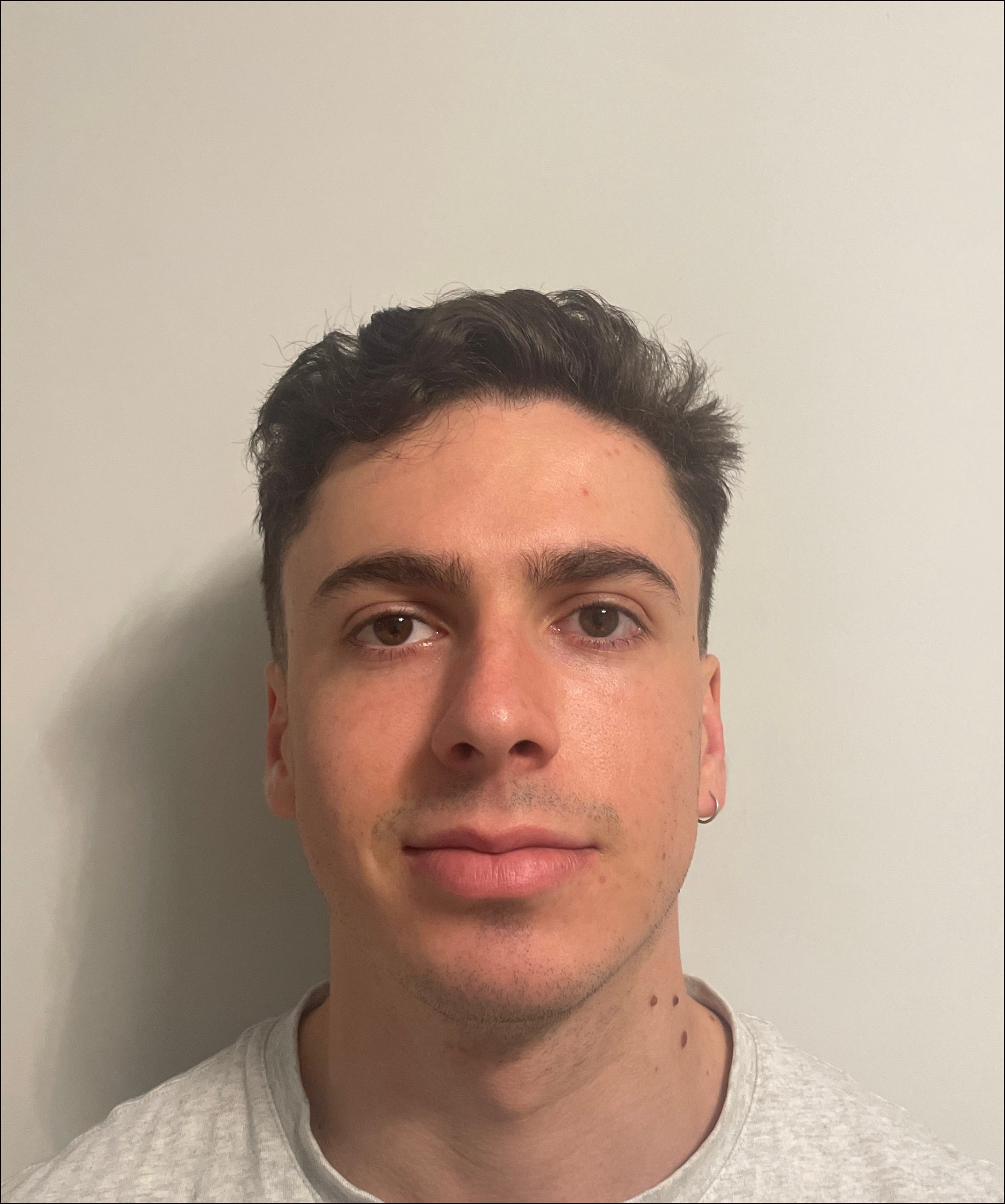
Mr. Rafael MARCOU
Mr. Rafael MARCOU is a Research Intern at the Middle East Political and Economic Institute (MEPEI). He holds a Bachelor’s degree in European Studies from the University of Amsterdam, where he majored in European Politics and wrote his thesis on U.S. partnerships with Kurdish armed groups in the Syrian and Iranian cases. He also studied Political Science and International Relations at Boğaziçi University in Istanbul. He is currently pursuing a Master’s degree in International Relations, Security and Development at the Universitat Autònoma de Barcelona. His research interests include Middle Eastern geopolitics, EU–Middle East relations, security, and Kurdish affairs.