Why Iran Is Allowing Bangladeshi Tankers Through the Strait of Hormuz
March 16, 2026
Without an off-ramp
March 17, 2026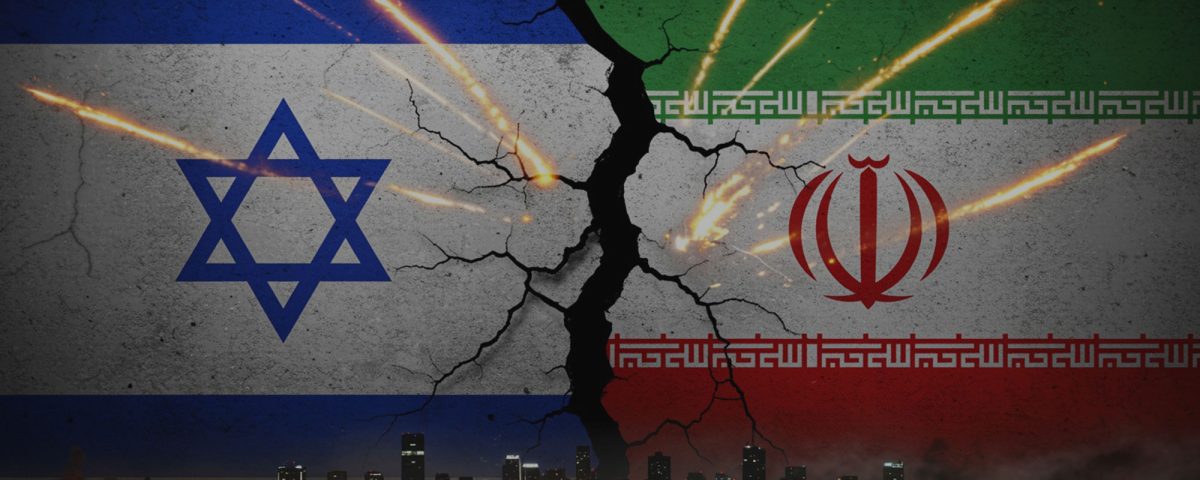
The first two weeks of the war with Iran have been, among other things, a study in how propaganda functions when all sides are using it with different objectives and different target audiences. The US, Israel, and Iran are each engaged in a parallel informational war, the fronts of which often matter as much as the military ones, as they determine who gets to narrate the conflict, and for how long public opinion can be held in a particular direction. Information is tightly regulated from both the Israeli and Iranian sides, and American narratives have been contradictory enough to constitute their own form of confusion.
Wars are not only prepared militarily. Before the first strike, the groundwork is laid in the public sphere, through the construction of an enemy image, the justification of necessity, and the transfer of moral responsibility. Symbolic violence, the delegitimisation of the other side’s right to exist as it is, precedes physical violence and is considerably harder to dismantle, because it builds psychological and social infrastructures that outlast the conflict itself. What the past two weeks have demonstrated is that all parties involved entered this war with those infrastructures already in place, and have been reinforcing them daily since.
On the American side, the conflict has been given a distinctly theological register. Trump’s prayer gatherings in the Oval Office and Pete Hegseth’s carefully constructed public image as a man of faith are deliberate and they frame what is, in strategic terms, a regional war, in the language of biblical necessity instead of explaining the geopolitical calculation to the American and international public.[1] This framing has reached the military itself, with commanders invoking the return of Jesus Christ as context for the war with Iran.[2]
In Israel, the concept of “greater Israel” (defined by its biblical borders) is no longer confined to the domestic far-right. It has entered international discourse, given renewed visibility by US Ambassador Mike Huckabee’s recent interview, which signals, whether officially or not, a certain degree of American endorsement of the idea.[3]
Netanyahu, too, has continued to frame the war in messianic terms, speaking of reaching the “kingdom” and preparing for the Messiah’s return.[4] The language goes back even further. As early as October 2023, his national addresses were invoking Amalek, the biblical enemy of Israel[5], to justify the government’s military actions, even as his international communications maintained a more secular register, a duality that highlights the divergent approaches and who different messages are actually intended for. Religious framing directed at a domestic audience serves a specific function: it binds the population to the war emotionally and morally, replacing justification with a sense of sacred obligation, which is considerably more resistant to doubt and considerably harder to publicly contest.
The war has also amplified pre-existing internal tensions, and the debate around what holds Israeli society together runs in two directions: some analysts argue that the absence of a shared existential threat would deepen the fractures between religious and secular, coalition and opposition, the state and its critics, while others argue that sustained conflict is precisely what is driving democratic backsliding, economic strain, and social polarisation. Netanyahu’s political survival, closely tied to maintaining a wartime footing that keeps his hard-right coalition intact, is part of this equation. The shared enemy has long been the most reliable shortcut to domestic consolidation, and a leader whose legitimacy depends on the continuation of conflict has every incentive to sustain the emotional conditions that make questioning the war socially costly.[6]
One of the recurring justifications for this war, circulated in Western public discourse, is that Iran must be democratised, in what would ironically mark the region’s next democracy under Occidental standards – after Israel and Lebanon, as far as Middle Eastern democracies go. The past two weeks have done more to complicate this framing than any counter-argument could. The growing international condemnation around Israeli policy both in Gaza and the West Bank, as well as in Lebanon and Syria generates defensive consolidation within Israeli society, which is simultaneously under direct physical threat from Iran nowadays and watching its own internal democratic tensions play out in real time.[7]
On the other side of the conflict, Iran shows no sign of imminent collapse and it presents the least religiously charged international public posture of any of the parties directly involved, despite being described by the US Secretary of State as run by “religious fanatic lunatics.”[8] The gap between that characterisation and what the available evidence actually shows is, in itself, a useful measure of how much the informational war has taken over from factual assessment. The Iranian society remains anchored in religious approaches, and the martyrdom of important leadership figures can determine different segments of the population to continue to choose their regime in the face of foreign intervention, with the new Supreme Leader endorsing the narrative of fighting, in its turn a common enemy, the Zionist enemy[9]. However, when it comes to international posture, declarations coming from Iran have carefully and deliberately invoked international law principles and a defensive posture, aimed at maintaining the delicate balance with its Gulf counterparts and with Saudi Arabia.
clearest illustration of this came on March 13, when Iranian President Masoud Pezeshkian joined the Al-Quds Day street rally in Tehran alongside senior officials, including Ali Larijani, secretary of the Supreme National Security Council.[10] The images of leadership present among the population were circulating online at the same time as the US Secretary of Defence was announcing that Iranian leadership was in hiding.[11]
International pro-Israel media, particularly outlets aligned with the Pahlavi restoration movement, immediately framed the street gatherings as leadership using civilians as human shields, with diaspora-based groups urging Iranians to stay home and attributing responsibility for any harm to the Iranian government for calling people into the streets. The internet was also quick to surface the parallel, that has existed in the international debate for years: Israeli military installations, including command centres, intelligence facilities, and air bases, are routinely embedded within or adjacent to densely populated civilian areas, a practice with roots in pre-state militias that used schools and synagogues as arms caches, with the same tactics now cited as justification for targeting infrastructure in the proximity of civilian centres elsewhere.[12]
The speed at which these competing narratives spread is inseparable from the nature of the digital public sphere, where exposure to a single dominant version of events produces the impression of consensus, and where the boundaries between witnessing, interpreting, and taking sides collapse almost instantly. Online crowds are significantly more susceptible to suggestion than their physical counterparts, and the algorithms that influence what people see amplify emotional content, reward outrage, and accelerate the kind of contagion that turns an image or a claim into a political position before any verification is possible. Each side in this conflict has been feeding that machine deliberately.
Ukraine’s involvement has received less attention, but carries significant implications. Kyiv has decided to provide drone expertise and equipment against Iran, a decision that follows the logic of opening a second front against Russian influence in the region, drawing on four years of battlefield experience with drone warfare.[13] Zelensky has also moved to associate Ukraine with the Iranian foreign opposition, meeting with Reza Pahlavi,[14] the son of the pre-revolutionary Iranian Shah and the figure around whom Western-aligned regime change aspirations have been gathering, a meeting that places Kyiv within the same coalitions of actors pushing for a post-Islamic Republic Iran, and aligns Ukraine more explicitly with Israel’s regional objectives.
The online dimension of the conflict has been running on its own parallel track. Online debate quickly turned to the condition of Iran’s new supreme leader, Mojtaba Khamenei, injured in the strike that killed his father[15], and to Benjamin Netanyahu, who had been absent from public view, with reports of his plane landing in Germany and security meetings proceeding without him. Claims of AI-generated appearances spread rapidly, then a video was released through the Prime Minister’s official channels explicitly to refute rumours of his death, attributed to Iranian propaganda.[16] The episode is a precise illustration of how the informational war operates: the objective is not to inform, but to destabilise the opponent’s narrative, to create uncertainty about basic facts, and to keep audiences in a state of agitation that narrows the space for reliable analysis.
What these two weeks have made visible is a public sphere running almost entirely on sentiment management. The content circulating fear, moral outrage, religious symbolism, competing claims of victimhood is aimed at holding an emotional position, and it requires constant feeding because the effects are short-lived. Very little of it constitutes strategic information, or a coherent case for why this war had to happen. The informational war is a fight over feeling, and winning it, for each party, means sustaining a particular emotional state in their respective audiences long enough to prevent the harder questions from surfacing.
The war has also functioned as a lens onto the nature of the regimes involved, and onto what the “democracy in the Middle East” framing actually produces in practice. The conflict has brought to the surface realities that the West has been ignorant to. The Gulf states, despite their economic standing, should not be confused for democratic regimes. Their wealth and their role as regional stabilisers have long been a sufficient substitute for that conversation in Western capitals, but the war with Iran has made the omission harder to maintain. People who shared information about the attacks risk criminal prosecution, a detail that sits uncomfortably next to the rhetoric about bringing democracy to the Middle East.[17]
The harder questions that the informational war is designed to prevent from surfacing are, in the end, fairly simple ones. Who benefits from framing a regional war in the language of biblical prophecy? Who benefits from keeping the public in a state of fear and moral outrage rather than clarity about the strategic objectives? The answers point in the same direction across all three sides: towards governments that needed this war more than their populations did, towards political survival dressed as necessity, and towards a conflict that has been, from the start, as much about managing domestic audiences as about achieving any stated or unstated objective.
What the first two weeks have also confirmed is that the international order supporting this war rests on a set of assumptions the war itself has put under considerable strain. The democracy framing, the rules-based order rhetoric, the selective outrage at press censorship: these have not survived contact with the fast-changing pace of the conflict. The Middle East that has emerged from these two weeks is not more democratic, and the actors most invested in that narrative are among those with the most to answer for. The religious rhetoric will fade when it stops being useful, but the geopolitical realities it was covering for will remain, as well as the human suffering this war is causing on all sides.
[1] https://www.middleeasteye.net/opinion/amid-holy-war-iran-will-west-examine-roots-christian-jewish-rage
[2] https://www.militaryreligiousfreedom.org/2026/03/mrff-inundated-with-complaints-of-gleeful-commanders-telling-troops-iran-war-is-part-of-gods-divine-plan-to-usher-in-the-return-of-jesus-christ/
[3] https://www.bbc.com/news/articles/cn5gkkgdzkyo
[4] https://www.middleeasteye.net/live-blog/live-blog-update/netanyahu-israel-will-reach-kingdom-and-make-it-messiahs-return
[5] https://www.gov.il/en/pages/statement-by-pm-netanyahu-28-oct-2023
[6] https://www.aljazeera.com/news/2026/3/13/success-uncertain-but-israelis-continue-to-back-heroic-war-with-iran
[7] https://www.economist.com/leaders/2025/03/27/israels-expansionism-is-a-danger-to-others-and-itself
[8] https://www.aljazeera.com/news/2026/3/4/why-are-the-us-and-israel-framing-the-ongoing-conflict-as-a-religious-war
[9] https://thesoufancenter.org/intelbrief-2026-march-12b/
[10] https://www.aljazeera.com/news/2026/3/13/explosions-near-tehran-al-quds-day-march-in-solidarity-with-palestinians
[11] https://www.instagram.com/reel/DV1vrvajH3b/?igsh=cDh1azhodTl2dWFn
[12] https://www.trtworld.com/article/12765566
[13] https://www.euronews.com/2026/03/14/iranian-lawmaker-says-ukraines-drone-support-makes-it-a-legitimate-war-target
[14] https://www.president.gov.ua/en/news/volodimir-zelenskij-zustrivsya-zi-spadkoyemnim-princom-iranu-103357
[15] https://www.theguardian.com/world/2026/mar/11/mojtaba-khamenei-was-hurt-in-strike-that-killed-his-father-irans-cyprus-ambassador-confirms
[16] https://www.reuters.com/world/middle-east/netanyahu-posts-video-response-iran-rumours-that-he-is-dead-2026-03-15/
[17] https://www.forbes.com/sites/maryroeloffs/2026/03/12/how-posting-iran-war-info-can-get-you-arrested-in-uae-israel-and-more/

Larisa-Nicoleta PĂTRAȘCU
Junior Researcher at the Middle East Political and Economic Institute (MEPEI). Her research and professional interests center on peacebuilding, diplomacy and conflict resolution, international cooperation, and MENA geopolitics.