
The Mecca Agreement and the Reshaping of Regional Security: Is a New Security Order Emerging in the Middle East?
August 9, 2026
From Alliance with the Regime to Partnership with the State: What Does the New Syrian-Russian Agreement Mean for the Future of Russian Influence in Syria?
August 12, 2026Was Ceuta a Warning to Spain? Migration Pressure, Morocco, and Spain’s Wider Clash With Israel and the United States
EXECUTIVE SUMMARY
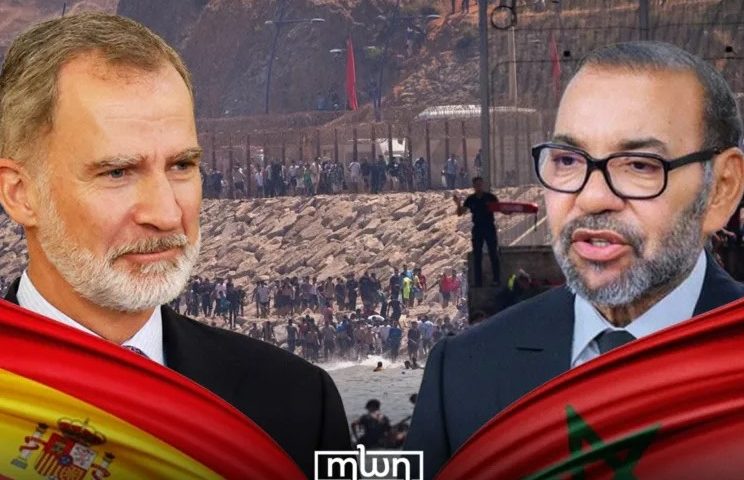
In late July 2026, roughly 60,000 people crossed from Morocco into the Spanish territory of Ceuta within a few days, the largest such movement since 2021. Most returned to Morocco within a week. The political damage did not recede with the tide. Washington and Israeli officials used the images to attack Prime Minister Pedro Sánchez, Italy suspended parts of Schengen with Spain, and an Israeli diplomat’s remark reopened a dispute over Ceuta’s sovereignty. This article reconstructs the crisis chronologically and tests four competing explanations: spontaneous disorder, Moroccan overload, Moroccan tolerance, and a coordinated US-Israeli-Moroccan operation. It finds no credible evidence of coordination, and argues instead that Ceuta functioned as a geopolitical pressure system, in which separate actors, each with their own grievance against Sánchez’s foreign policy on Iran, Gaza, and Algeria, exploited a crisis they did not need to have jointly organised. Its central finding is that the crisis was politically effective without producing a lasting demographic shift, exposing how Europe’s dependence on Morocco’s daily border cooperation, and its reflex to blame the state under pressure, can turn a contained, temporary shock into weeks of diplomatic damage. It closes with recommendations on independent monitoring, attribution protocols, and automatic solidarity mechanisms that Spain and the EU have still not built, five years after the 2021 warning.
Keywords: Ceuta, Morocco, Spain, migration diplomacy, Pedro Sánchez, Western Sahara, Iran war, Israel, Algeria, border externalisation, instrumentalisation, Regulation (EU) 2024/1359
INTRODUCTION
For four days at the end of July 2026, the Spanish city of Ceuta absorbed a population surge equivalent to more than half its normal size.¹ Tens of thousands of people, most young Moroccan men, crossed the breakwaters and fences separating the six-square-kilometre enclave from Morocco. At least 57 died in the attempt.² Within a week, Spain and Morocco reported that roughly 69,500 of those who entered had already returned, leaving a few thousand in Ceuta’s overwhelmed reception centres.³ Measured as a movement of people into the European Union, the event was contained, temporary, and largely reversed. Measured as a political event, it was not contained at all.
Within seventy-two hours, Donald Trump had called the crossing an example of what would happen to the United States “if the Republicans don’t get elected,” the US State Department had accused Sánchez’s government of “deliberate efforts to enable and facilitate mass illegal migration,” Israel’s ambassador to the United Nations had called Ceuta and Melilla “colonial enclaves,” and Italy had suspended Schengen border checks with Spain.⁴ None of this happened in a vacuum. Sánchez had spent the preceding five months in open conflict with Washington over the war on Iran and with Israel over Gaza, and had just returned from Algiers, where he called Algeria, Morocco’s principal rival, a strategic partner.⁵
This article asks a narrow question. Was Ceuta simply an uncontrolled migration event that outside actors happened to notice, or did it function, by design or by convergence, as pressure against a Spanish government pursuing an unusually independent foreign policy? The evidence supports neither a purely innocent reading nor a conspiratorial one. No public evidence shows Morocco, the United States, and Israel jointly planned the crossing. The episode instead demonstrates something arguably more consequential than a plot: a temporary, largely reversed border shock can generate weeks of coordinated-looking pressure on a government, without anyone needing to coordinate at all.
THE 2021 PRECEDENT: A LESSON HALF-LEARNED
The template for reading Ceuta politically was set in May 2021. After Spain admitted Polisario Front leader Brahim Ghali for COVID-19 treatment without notifying Rabat, which considers the Western Sahara independence movement a hostile actor, Moroccan border enforcement relaxed and more than 8,000 people entered Ceuta within two days, including many minors.⁶ Spanish officials at the time accused Morocco of using migration as leverage; Rabat denied ordering any relaxation. Within months, however, Madrid reversed decades of position on Western Sahara and endorsed Morocco’s autonomy plan, a shift that Spanish commentators and Moroccan officials alike linked to the crisis.⁷
Whatever the precise causal chain in 2021, Morocco could reasonably have drawn a lesson: a short interruption in enforcement, followed by firm denial, produced a durable foreign-policy concession from Madrid. Spain and the European Union drew a narrower lesson, that the Ghali dispute needed managing, rather than the structural one, that Spain’s border was only as reliable as Morocco’s daily willingness to police it. Five years later, when a larger crossing occurred amid a different set of Spanish disputes, that structural vulnerability had still not been addressed. This does not mean 2026 repeated 2021’s mechanics. It means the vulnerability 2021 exposed was still there to be exploited, deliberately or not.
SPAIN’S BREAK WITH WASHINGTON AND ISRAEL
The scale of Spain’s estrangement from its two most important security partners in early 2026 is not a matter of inference. On 28 February, the United States and Israel launched military strikes against Iran.⁸ Sánchez condemned the operation immediately: “No to war. No to resolving conflicts with bombs.”⁹ Foreign Minister José Manuel Albares stated on 1 March that the jointly operated bases at Rota and Morón would not be made available, arguing the campaign fell outside both the bilateral defence agreement and the UN Charter, and Defence Minister Margarita Robles confirmed “no assistance of any kind, absolutely none” had been provided.¹⁰ Fifteen US aircraft left the two bases.¹¹ On 30 March, Spain closed its airspace to American aircraft involved in the campaign and declined an invitation from President Macron to join a multinational naval mission in the Strait of Hormuz.¹² Trump responded with threats to cut off trade with Spain.¹³ These were not symbolic gestures. Rota and Morón are central nodes in American power projection into the Mediterranean, the Gulf, and Africa; denying their use, then closing national airspace to an ally’s warplanes mid-conflict, materially constrained Washington’s operational freedom during an active war, making Spain the most visible NATO government resisting American strategy at the moment Washington most needed compliance.
Spain’s rupture with Israel predates the Iran war and runs deeper. Madrid recognised a Palestinian state in May 2024 and by September 2025 had approved a total arms embargo on Israel, banning weapons exports and imports and blocking Spanish ports and airspace to materiel bound for the Israeli military.¹⁴ Sánchez repeatedly accused the Israeli government of pursuing what he termed genocide in Gaza. On 11 March 2026, amid the Iran war, Spain permanently withdrew its ambassador from Israel, capping a relationship that had already gone without ambassadors on both sides for months.¹⁵ By summer 2026, Madrid had accumulated open disputes with Washington over Iran and NATO obligations, and with Israel over Gaza and diplomatic representation, each significant enough to stand alone.
Washington’s irritation went beyond rhetoric. Reuters reported in April 2026 that an internal Pentagon email, drafted by policy adviser Elbridge Colby, floated options for punishing NATO members that had denied the United States access, basing, and overflight rights during the Iran war, explicitly naming Spain and raising the possibility of suspending it from alliance positions.¹⁶ This was an internal policy option under discussion, not an adopted decision, and the Pentagon did not confirm it as policy when asked.¹⁷ It nonetheless shows that senior US officials had already begun contemplating alliance mechanisms as leverage against a resistant ally, which matters for judging how plausible it is that Washington would later seize opportunistically on an unrelated crisis to press the same government.
THE ALGERIA PIVOT
On 20 July 2026, ten days before the crossing began, Sánchez travelled to Algiers, his first visit in four years, received by President Abdelmadjid Tebboune.¹⁸ La Moncloa described Algeria as “not only a neighbouring country but also a strategic partner,” and the two governments agreed to hold an eighth High-Level Meeting in October.¹⁹ The visit covered energy, migration, counterterrorism, industry, and Western Sahara, and confirmed Algeria as Spain’s largest gas supplier, delivered directly via the Medgaz pipeline.²⁰ Algeria remains the principal external backer of the Polisario Front and Morocco’s foremost regional rival; Madrid-Algiers relations had been frozen since Spain’s 2022 shift toward Morocco’s autonomy plan.
There is no public evidence the visit caused the crossing, and this article makes no such claim. What can be said is narrower: the trip signalled Spain diversifying away from exclusive dependence on Morocco, at a moment when Morocco already had reason to doubt Madrid’s reliability on other fronts. Whether Rabat read Algiers as provocation, opportunity, or background noise is not established by the record. The timing, ten days before the largest crossing since 2021, deserves more attention than it has received, even if it cannot bear the full explanatory weight some commentary has placed on it.
RECONSTRUCTING JULY 2026: HOW THE CROSSING HAPPENED
On 8 July, Spain’s Supreme Court ruled, in judgment STS 868/2026, that migrants intercepted while swimming toward Ceuta or Melilla could not be subject to summary “hot returns,” since open water was not legally equivalent to a physical border fence, and separately struck down provisions weakening protections for unaccompanied minors.²¹ The ruling changed procedure, not the ultimate likelihood of return for adults without asylum claims. It did not open the border, grant residency, or bar Spain from later processing and returning arrivals through ordinary channels.
That distinction was lost within three weeks. AP’s fact-checking review, published in early August, traced how the ruling was transformed on TikTok, Facebook, and WhatsApp into a rumour that Ceuta’s border had effectively opened.²² Two Moroccan TikTok accounts alone, with a combined following above 400,000, generated an estimated eleven million impressions; researchers documented videos mapping swim routes and Facebook groups sharing vessel-tracking data to identify moments when coastguard patrols thinned.²³ Who first seeded the claim, and whether the accounts were run by smugglers or opportunists, remains unresolved; several were deleted shortly after the crossing.
The underlying conditions were real. Youth unemployment in Morocco runs near 32 to 37 percent, and roughly a quarter of Moroccans aged 15 to 24 are neither working, studying, nor training.²⁴ Smuggling networks around Fnideq have long profited from organising crossings, and Spanish officials blamed them for exploiting the misreading of the ruling.²⁵ On 30 and 31 July, Spanish authorities reported roughly 60,000 crossings within twenty-four hours, overwhelming the Guardia Civil and prompting Madrid to deploy army units in support.²⁶ Moroccan security personnel were present in large numbers beforehand; accounts describe an initial period of limited resistance, followed within roughly two days by a firmer response that halted the crossings quickly.²⁷ That the movement stopped so fast once Rabat committed to stopping it is one of the more analytically important facts in the episode.
MOROCCO’S EXPLANATION, TESTED
Morocco’s Interior Ministry, through spokesman Rachid El Khalfi, stated that the crisis was “neither the result of temporary circumstances nor spontaneous developments” but stemmed from “the interaction of several overlapping factors, foremost among them the malicious exploitation of digital platforms… the activities of human trafficking networks, and the misinterpretation of legal and administrative provisions.”²⁸ Morocco insists its border deployments were not reduced and that the outcome was contrary to its interests. Each claim has some support: the digital mobilisation was real, the smuggling infrastructure was real, and Morocco’s cooperation with Spain on returns after 31 July was fast and effective, arguing against a state deliberately inflicting lasting damage.
The claims are also incomplete. Spanish intelligence assessments, as reported in European coverage, concluded that Morocco did not plan the mass crossing but did allow it to develop before intervening.²⁹ That formulation, tolerance rather than direction, is consistent with the evidence, but it is an inference, not a documented fact; no satellite imagery, order, or internal communication has been published showing Moroccan commanders were told to stand down. The 2021 precedent makes such tolerance plausible in principle. But plausibility is not proof, and Morocco’s later use of force, and its cooperation on returns, do not establish that the initial passivity, if it occurred, was ordered rather than the product of being genuinely overwhelmed. The evidence leaves open institutional failure, selective tolerance, and a mixture of both, and does not support a firm finding of deliberate state design.
WASHINGTON AND ISRAEL MOVE IN
What is not in doubt is the speed of the exploitation that followed. Trump, at Camp David, described the crossing as looking “like an invasion” and warned that “the same thing is going to happen to us” without Republican victories in the midterms.³⁰ The State Department accused Sánchez’s government of deliberately facilitating illegal migration, a claim at odds with the fact that Spain’s regularisation programme, whatever its merits as a “pull factor” cited even by twenty-two other EU governments, granted no automatic right to cross into Ceuta.³¹ Vice President JD Vance and Senator Ted Cruz used the crisis to attack “radical left-wing globalist” migration policy generally.³² AP’s fact-check found no evidence supporting claims of direct US or Israeli operational involvement.³³
Israel’s UN ambassador Danny Danon went further, stating that Spain, which “never misses an opportunity to lecture Israel,” should “explain to the world why it still maintains colonial enclaves in Africa,” an unmistakable reference to Ceuta and Melilla’s sovereignty, the very claim Rabat itself has made for decades.³⁴ This converted a migration crisis into a challenge to Spanish territorial sovereignty. Israel’s Foreign Ministry, through spokeswoman Dana Erlich, distanced itself within a day, stating the comment “does not represent the position of the State of Israel.”³⁵ That clarification matters: it cannot be read as a shift in Israeli policy. It does not erase that a senior Israeli official chose, unprompted, to invoke Spain’s territorial vulnerability while Madrid managed a border emergency, amid an already severe rupture over Gaza.
None of this constitutes evidence that Washington or Israeli officials had any role in causing the crossing. It demonstrates how quickly a local, largely contained migration event could be folded into unrelated geopolitical grievances against the same government. Political exploitation of a crisis is not operational involvement in creating it, and that distinction is the hinge on which this investigation turns.
MOROCCO’S WIDER HAND
Morocco’s confidence in resisting international criticism is not accidental. Rabat normalised relations with Israel in December 2020 in a deal under which Washington recognised Moroccan sovereignty over Western Sahara, a recognition Israel itself confirmed in 2023.³⁶ Morocco has held Major Non-NATO Ally status since 2004, and in 2026 signed a new ten-year defence roadmap with Washington alongside an annual military action plan with Israel covering training and technology; Israeli firms have supplied it with surveillance drones and reconnaissance satellites, and Moroccan defence spending reached roughly $15.7 billion in the 2026 budget.³⁷,³⁸ None of this is evidence that Israeli or American technology or personnel were used in managing the crossing; no such evidence has been published. What this network plausibly explains is Morocco’s room for manoeuvre: a government this integrated into Western and Israeli security architecture faces a lower risk of diplomatic isolation than one without such ties.
EUROPE COMPLETES THE MECHANISM
The most consequential actor in converting a Ceuta-specific event into a European crisis was Europe itself. Twenty-two of the EU’s twenty-seven member states signed a joint letter calling for “coordinated action and the strengthening of external borders,” and Ireland’s EU presidency convened an emergency meeting of interior ministers.³⁹ Italian Prime Minister Giorgia Meloni imposed a month-long suspension of Schengen checks with Spain, backed by Finland and Denmark, and called for Spain’s suspension from Schengen entirely; France, while offering Madrid logistical support, announced a fivefold increase in police at its own border with Spain.⁴⁰ Sánchez, visiting Ceuta, was met by protesters chanting for his resignation.⁴¹
Almost none of this was proportionate to the underlying movement of people. No evidence indicates a significant number of those who crossed into Ceuta reached mainland Spain, let alone France or Italy; most returned to Morocco within days, and those remaining in Ceuta stayed in local reception centres, not dispersed across the Union.⁴² Ceuta sits outside the Schengen external land border in a way that made Italy’s response more symbolic than operationally necessary, but symbolism was the point: it signalled that Spain, not Morocco or the smuggling networks, would bear the diplomatic cost. This is the mechanism that most needs naming. A state controlling a departure area does not need to overwhelm Europe’s actual absorption capacity. It needs only a few days of dramatic images. European governments, reacting to those images rather than to verified facts about where people actually were, did the rest.
FOUR EXPLANATIONS, WEIGHED
Four explanations for the crisis have circulated. The first holds that the crossing was essentially spontaneous, driven by economic desperation, a distorted reading of a legal ruling, and opportunistic smuggling. This fits the digital evidence, the socioeconomic backdrop, and Morocco’s rapid cooperation on returns, but struggles to explain the initial thinness of Moroccan resistance. The second holds that Moroccan authorities were genuinely overwhelmed, detecting the mobilisation too late before restoring control within roughly two days; this is plausible and not inconsistent with the first, the two may describe the same event from different angles. The third holds that Moroccan authorities knowingly tolerated the crossing for a period, without originating it, to remind Spain of its dependence on Moroccan cooperation, consistent with the 2021 precedent. This is not proven, but cannot be excluded, and Spanish intelligence’s own reported assessment leans toward some version of it. The fourth, a centrally coordinated Moroccan, American, and Israeli operation, has circulated widely online but rests on no documented evidence: no intercepted communication, no financial trail, no credible on-the-record source connects Washington or Jerusalem to the origin of the crossing. This explanation should be rejected on the current record.
The most defensible synthesis combines the first three: genuine socioeconomic pressure and smuggling incentive, amplified by viral misinformation, met by a Moroccan response that was at minimum slow and at most selectively permissive, then exploited independently by American and Israeli political actors already in conflict with Sánchez over unrelated matters. This is the geopolitical pressure system this article describes: several actors pressing the same target for different reasons, at the same moment, producing a combined effect that resembles coordination without requiring it.
LESSONS AND POLICY IMPLICATIONS FOR EUROPE
Europe’s response to Ceuta should not be measured only against Morocco’s conduct. It should be measured against the Union’s own repeated failure to build defences against a vulnerability it has known about since at least 2021.
First, Spain and the EU need independent early-warning capacity that does not depend on Moroccan goodwill: systematic monitoring of sudden spikes in smuggling advertisements, coordinated cross-platform narratives, and unusual transport movement toward border towns such as Fnideq, rather than waiting for Rabat to report its own findings after the fact. Second, Brussels should build a structured attribution protocol, combining intelligence, border observation, digital forensics, and the timing of unrelated diplomatic disputes, to judge whether a surge is spontaneous, criminally organised, tolerated, or state-directed. Its absence is why this article, like every honest account of Ceuta, must speak in probabilities rather than certainties.
Third, a sudden shock at any external border should trigger automatic European logistical, humanitarian, and security support before member states begin publicly blaming the affected government. The sequence seen in 2026, accusation first and solidarity later if at all, lowers the political cost of using migration as leverage, because it shows Europe will do an outside actor’s work by fracturing itself.
Fourth, European governments must separate their public language from the facts on the ground: a crisis contained in an external territory is not a movement into mainland Europe, is not a Schengen-wide threat, is not proven instrumentalisation under Regulation (EU) 2024/1359. That regulation, applicable from 1 July 2026, defines instrumentalisation narrowly, requiring that a third country or hostile actor encourage or facilitate movement with the aim of destabilising a member state, and it does not treat ordinary smuggling as instrumentalisation absent such intent.⁴³ Meloni’s rhetoric about suspending Spain from Schengen ran well ahead of any finding that this threshold had been met, and exaggerated language of this kind can accomplish a coercing actor’s objective regardless of intent.
Fifth, migration agreements with Morocco, Türkiye, Tunisia, and Libya should include crisis-consultation mechanisms, transparency about deployment levels, independent monitoring, and defined consequences for deliberate suspension of cooperation, alongside firm safeguards for migrants’ rights, including non-refoulement and protection for minors. Sixth, Europe should reduce dependence on any single gatekeeper. Spain’s outreach to Algeria points toward the right instinct: working relationships with both Morocco and Algeria, rather than making either indispensable to Europe’s southern border. This is not an argument for treating Morocco as an adversary, which remains an essential partner, but against letting any one partner convert cooperation into leverage.
Seventh, and the tenor of the 2026 debate makes clear it needs restating, the people who crossed into Ceuta were not weapons. They were overwhelmingly young men responding to real unemployment and real rumours, some minors entitled to specific legal protection. Whatever states, smugglers, or opportunistic politicians made of their movement, the individuals retain rights to asylum procedure, non-refoulement, and humanitarian treatment. Language describing the crossing as an “invasion,” used by American officials, obscures this and should be treated as political rhetoric, not fact.
Finally, and most uncomfortably for Madrid, if Spain wants the freedom to disagree with Washington over Iran, with Israel over Gaza, and to rebuild ties with Algeria, it must accept that such independence invites retaliation across unrelated domains, and build resilience accordingly. Strategic autonomy expressed only through speeches, without matching investment in border monitoring, energy diversification, intelligence capacity, and European coalition-building, leaves a state exposed at its point of maximum vulnerability. Ceuta was that point for Spain in 2026. It will not be the last time a European government finds its own.
CONCLUSION
This investigation does not close the case on Ceuta, and it should not pretend to. Whether Moroccan authorities merely failed to respond quickly enough, or chose, at some level, to let the crossing develop before ending it decisively, remains genuinely unresolved on the public record. What can be stated with confidence is narrower and, in some ways, more unsettling than a conspiracy would be. No credible evidence shows that Washington, Israel, and Morocco jointly organised the events of late July 2026. Yet a mobilisation that began with rumour, hardship, and smuggling was absorbed within days into a wider confrontation over Iran, Gaza, and Algeria that had nothing to do with Ceuta’s border fence, and Europe’s own governments, reacting to images rather than verified facts, did much of the remaining damage themselves. Ceuta’s warning is not simply that migration can be used against Europe. It is that Europe’s own dependence on a neighbour’s daily cooperation, and its habit of blaming the state under pressure before establishing what happened, can turn even a temporary, largely reversed border shock into a working geopolitical success for several different actors at once, none of whom needed to pick up a phone and call the others.
ENDNOTES
- Al Jazeera, “Spain deploys military to Ceuta after migrant surge: What we know,” 31 July 2026.
- Al Jazeera, “At least 18 die as thousands cross from Morocco into enclave of Ceuta,” 30 July 2026; Forbes, “Most Migrants Who Crossed Into Ceuta Have Returned To Morocco, As Death Toll Rises To 34,” 31 July 2026 (later Spanish figures put deaths at 57).
- PBS News, “Most of the 60,000 migrants who crossed into territory of Ceuta have left voluntarily, Spain says,” 31 July 2026; Euronews, “More than 48,000 migrants return to Morocco after mass crossing into Ceuta,” 31 July 2026.
- Yahoo News/AP, “Tens of thousands of migrants crossed into Ceuta, Spain. Now Trump says the ‘same thing is going to happen’ in the U.S.,” 31 July 2026; Moroccoworldnews.com, “US Blames Spain’s Migration Policies for Ceuta Crisis,” 31 July 2026; Times of Israel, “Israel’s UN envoy sparks Spain spat with accusation of ‘colonial enclaves’ in Africa,” 31 July 2026; Euronews, “Italy temporarily reintroduces border controls with Spain,” 31 July 2026.
- La Moncloa, “Spain and Algeria have agreed to usher in a new phase in their bilateral relations,” 20 July 2026.
- Al Jazeera, “Scores of migrants and refugees swim to Spain’s Ceuta enclave,” 17 May 2021; Al Jazeera, “Western Sahara independence leader Brahim Ghali back in Algeria,” 2 June 2021.
- ECFR, “Alone at the border: Ceuta and Europe’s solidarity failure,” 2026.
- El País, “Spain’s Pedro Sánchez, on the US and Israeli attack on Iran: ‘No to war, we are not going to be complicit,'” 4 March 2026; Al Jazeera, “An outlier for condemning Israel’s Gaza genocide, Spain says no to Iran war,” 4 March 2026.
- El País, 4 March 2026, op. cit.
- Al Jazeera, “Spain refuses to let US use bases for Iran attacks,” 2 March 2026; CBS Austin, “Spain rejects US base use for Iran strikes: ‘Absolutely none,'” March 2026.
- Yahoo News, “US aircraft leave Spain after government says bases cannot be used for Iran attacks,” March 2026.
- BBC News, “Spain closes airspace to US aircraft involved in Iran war,” 30 March 2026; ABC.es, “España descarta apoyar a Francia en una misión militar en el Estrecho de Ormuz,” 11 March 2026.
- Brussels Signal, “Spain insists on refusing US use of bases for Iran strikes as Trump threatens trade cut-off,” 2026; Reuters, “Spain’s Sanchez to Trump: you cannot play Russian roulette with destiny of millions,” 4 March 2026.
- Al Jazeera, “Spain PM Sanchez imposes ‘total’ arms embargo on Israel to ‘stop Gaza genocide,'” 8 September 2025; La Moncloa, Council of Ministers press conference, 23 September 2025; Al Jazeera, “Spain’s parliament formally approves Israel arms embargo,” 8 October 2025.
- Truthout, “Spain Withdraws Ambassador to Israel Over Gaza Genocide and War in Iran,” 11 March 2026; Times of Israel, “Spain permanently withdraws ambassador to Israel as rift deepens,” 12 March 2026.
- Reuters, “Pentagon email floats suspending Spain from NATO, other steps over Iran rift,” 24 April 2026, as reported via CNBC and Investing.com.
- Japan Times/Reuters, “Pentagon email floats suspending Spain from NATO, other steps over Iran rift,” 25 April 2026 (Pentagon Press Secretary Kingsley Wilson comment).
- France 24, “Spain PM Sanchez visits Algeria for first time in four years as ties thaw,” 20 July 2026.
- La Moncloa, 20 July 2026, op. cit.
- Fuel Cells Works, “Sánchez’s Visit to Algeria: Gas, Green Hydrogen & Friendship Treaty at the Heart of the Discussions,” 21 July 2026; Africanews, “Spain, Algeria seek fresh start as Sánchez visits Algiers,” 20 July 2026.
- CNN, “The Supreme Court ruling at the center of Spain’s Ceuta migrant crisis,” 1 August 2026; El Constitucional, “The Supreme Court sets the limit for hot returns while Spain prepares returns from Ceuta,” 2026.
- Associated Press, “Runaway online rumors sparked frantic rush by migrants to the Spanish territory of Ceuta,” 4 August 2026 (AP Fact Focus).
- AP Fact Focus, 4 August 2026, op. cit.; Euronews, “From TikTok videos to political claims: How misleading information spread during the Ceuta crisis,” 4 August 2026.
- Macrotrends, “Morocco Youth Unemployment Rate (1991-2024)”; The Nation, “The Makings of a Mass Crisis,” August 2026.
- Breitbart, “Morocco Blames Ceuta Migrant Flood on Criminal Trafficking Networks,” 31 July 2026; Hespress, “Interior Ministry: Ceuta migration surge fueled by misinformation, traffickers, and legal misinterpretations,” August 2026.
- Euronews, “At least 60,000 migrants cross into Spanish territory of Ceuta from Morocco in a single day,” 31 July 2026.
- Chatham House, “The Ceuta border crisis heaps pressure on Spain’s Sánchez government, and European unity,” July 2026; Al Jazeera, “Spain deploys military to Ceuta after migrant surge: What we know,” 31 July 2026.
- Atalayar, “The Moroccan Ministry of the Interior Explains the Circumstances of the Crisis in Ceuta and Melilla,” 3 August 2026; Hespress, August 2026, op. cit.
- ECFR, “Alone at the border,” 2026, op. cit.
- Forbes, “Trump Alleges Ceuta Migration Crisis Would Happen In U.S. Under Democrats, Here’s Why That’s Unlikely,” 31 July 2026; Euronews, “Trump calls Ceuta migrant surge ‘terrible’ as White House blames far left,” 31 July 2026.
- Moroccoworldnews.com, 31 July 2026, op. cit.; Al Jazeera, “Why has EU called an emergency meeting on Spain migrant surge?,” 2 August 2026, reporting the joint letter of 22 EU member states.
- Euronews, 31 July 2026, op. cit.
- AP Fact Focus, 4 August 2026, op. cit.
- Times of Israel, 31 July 2026, op. cit.; JNS, “Danon accuses Spain of hypocrisy after it deploys military to Spanish enclave of Ceuta,” 31 July 2026.
- World Israel News, “Madrid accuses Jerusalem of fueling Ceuta migration crisis in wild conspiracy theory,” August 2026 (citing Israeli Foreign Ministry spokeswoman Dana Erlich).
- INSS, “Israeli Recognition of Moroccan Sovereignty in Western Sahara,” 2023.
- US Embassy Morocco/State Department, “U.S. Security Cooperation with Morocco”; Political.org, “Morocco and the United States Seal New 10-Year Defense Cooperation Roadmap,” June 2026; North Africa Post, “Morocco-Israel Joint Military Committee Sets Action Plan for 2026.”
- L’Orient Today, “From Pegasus to Gaza: Morocco and Israel’s expanding security partnership,” 2026; Raksha Anirveda, “Strengthening Defence Cooperation: Israel, Morocco Agree on 2026 Military Action Plan,” 2026.
- Al Jazeera, “Why has EU called an emergency meeting on Spain migrant surge?,” 2 August 2026.
- Euronews, “Italy temporarily reintroduces border controls with Spain,” 31 July 2026; ECFR, “Alone at the border,” 2026, op. cit.
- Chatham House, July 2026, op. cit.
- AP Fact Focus, 4 August 2026, op. cit.; PBS News, 31 July 2026, op. cit.
- Regulation (EU) 2024/1359 of the European Parliament and of the Council of 14 May 2024, EUR-Lex; European Parliament Legislative Train Schedule, “Instrumentalisation in the field of migration and asylum.”
REFERENCES
Africanews. “Spain, Algeria seek fresh start as Sánchez visits Algiers.” 20 July 2026.
Al Jazeera. “At least 18 die as thousands cross from Morocco into enclave of Ceuta.” 30 July 2026.
Al Jazeera. “Spain deploys military to Ceuta after migrant surge: What we know.” 31 July 2026.
Al Jazeera. “Spain refuses to let US use bases for Iran attacks.” 2 March 2026.
Al Jazeera. “Spain PM Sanchez imposes ‘total’ arms embargo on Israel to ‘stop Gaza genocide.'” 8 September 2025.
Al Jazeera. “Spain’s parliament formally approves Israel arms embargo.” 8 October 2025.
Al Jazeera. “Why has EU called an emergency meeting on Spain migrant surge?” 2 August 2026.
Al Jazeera. “Scores of migrants and refugees swim to Spain’s Ceuta enclave.” 17 May 2021.
Al Jazeera. “Western Sahara independence leader Brahim Ghali back in Algeria.” 2 June 2021.
Associated Press. “Runaway online rumors sparked frantic rush by migrants to the Spanish territory of Ceuta.” 4 August 2026.
Associated Press. “Spain denies cooperation with US operations in Mideast.” 4 March 2026.
Atalayar. “The Moroccan Ministry of the Interior Explains the Circumstances of the Crisis in Ceuta and Melilla.” 3 August 2026.
Atalayar. “Pedro Sánchez Begins His Official Tour of Algeria Following Four Years of Diplomatic Rift.” 20 July 2026.
BBC News. “Spain closes airspace to US aircraft involved in Iran war.” 30 March 2026.
Chatham House. “The Ceuta border crisis heaps pressure on Spain’s Sánchez government, and European unity.” July 2026.
CNN. “The Supreme Court ruling at the center of Spain’s Ceuta migrant crisis.” 1 August 2026.
El Constitucional. “The Supreme Court sets the limit for hot returns while Spain prepares returns from Ceuta.” 2026.
El País. “Spain’s Pedro Sánchez, on the US and Israeli attack on Iran: ‘No to war, we are not going to be complicit.'” 4 March 2026.
El País. “Spain refuses to provide military support for US attack on Iran and distances itself from France, Germany and the UK.” 2 March 2026.
European Commission/EUR-Lex. Regulation (EU) 2024/1359 of the European Parliament and of the Council of 14 May 2024 addressing situations of crisis and force majeure in the field of migration and asylum. Official Journal of the European Union, 22 May 2024.
European Council on Foreign Relations. “Alone at the border: Ceuta and Europe’s solidarity failure.” 2026.
European Parliament. Legislative Train Schedule: “Instrumentalisation in the field of migration and asylum.”
Euronews. “At least 60,000 migrants cross into Spanish territory of Ceuta from Morocco in a single day.” 31 July 2026.
Euronews. “Italy temporarily reintroduces border controls with Spain.” 31 July 2026.
Euronews. “Spain’s legal dilemma behind Ceuta’s record migrant arrivals.” 31 July 2026.
Euronews. “Trump calls Ceuta migrant surge ‘terrible’ as White House blames far left.” 31 July 2026.
Euronews. “From TikTok videos to political claims: How misleading information spread during the Ceuta crisis.” 4 August 2026.
Euronews. “More than 48,000 migrants return to Morocco after mass crossing into Ceuta.” 31 July 2026.
Forbes. “Most Migrants Who Crossed Into Ceuta Have Returned To Morocco, As Death Toll Rises To 34.” 31 July 2026.
Forbes. “Trump Alleges Ceuta Migration Crisis Would Happen In U.S. Under Democrats, Here’s Why That’s Unlikely.” 31 July 2026.
Fuel Cells Works. “Sánchez’s Visit to Algeria: Gas, Green Hydrogen & Friendship Treaty at the Heart of the Discussions.” 21 July 2026.
Greenhill, Kelly M. Weapons of Mass Migration: Forced Displacement, Coercion, and Foreign Policy. Ithaca: Cornell University Press, 2010.
Hespress (English). “Interior Ministry: Ceuta migration surge fueled by misinformation, traffickers, and legal misinterpretations.” August 2026.
Institute for National Security Studies (INSS). “Israeli Recognition of Moroccan Sovereignty in Western Sahara.” 2023.
Japan Times/Reuters. “Pentagon email floats suspending Spain from NATO, other steps over Iran rift.” 25 April 2026.
JNS. “Danon accuses Spain of hypocrisy after it deploys military to Spanish enclave of Ceuta.” 31 July 2026.
La Moncloa (Government of Spain). “Spain and Algeria have agreed to usher in a new phase in their bilateral relations by holding the 8th High-Level Meeting in October.” 20 July 2026.
La Moncloa (Government of Spain). “The Government of Spain strengthens the arms embargo on Israel, and bans imports from illegal settlements in Palestinian territories.” Council of Ministers press conference, 23 September 2025.
L’Orient Today. “From Pegasus to Gaza: The scope of security cooperation between Morocco and Israel.” 2026.
Macrotrends. “Morocco Youth Unemployment Rate (1991-2024).”
Moroccoworldnews.com. “US Blames Spain’s Migration Policies for Ceuta Crisis.” 31 July 2026.
Moroccoworldnews.com. “Morocco Says Digital Misinformation, Human Trafficking Networks Fueled Ceuta Crossing Attempts.” August 2026.
North Africa Post. “Morocco-Israel Joint Military Committee Sets Action Plan for 2026.”
PBS News. “Most of the 60,000 migrants who crossed into territory of Ceuta have left voluntarily, Spain says.” 31 July 2026.
Political.org. “Morocco and the United States Seal New 10-Year Defense Cooperation Roadmap, Deepening a 250-Year Alliance.” June 2026.
Raksha Anirveda. “Strengthening Defence Cooperation: Israel, Morocco Agree on 2026 Military Action Plan, Joint Training.”
Reuters. “Spain defies Trump’s threats over stance on Iran war, says ‘will not be vassals.'” 4 March 2026.
Reuters. “Pentagon email floats suspending Spain from NATO, other steps over Iran rift, source says.” 24 April 2026.
The Nation. “The Real Story Behind the Human Wave That Entered Ceuta.” August 2026.
The Nation. “The Makings of a Mass Crisis.” August 2026.
Times of Israel. “Israel’s UN envoy sparks Spain spat with accusation of ‘colonial enclaves’ in Africa.” 31 July 2026.
Times of Israel. “Spain permanently withdraws ambassador to Israel as rift deepens.” 12 March 2026.
Truthout. “Spain Withdraws Ambassador to Israel Over Gaza Genocide and War in Iran.” 11 March 2026.
Tsourapas, Gerasimos, and Fiona B. Adamson. “Migration Diplomacy in World Politics.” International Studies Perspectives 20, no. 2 (2019): 113-128.
US Department of State. “U.S. Security Cooperation with Morocco.”
World Israel News. “Madrid accuses Jerusalem of fueling Ceuta migration crisis in wild conspiracy theory.” August 2026.
Disclaimer. The views and opinions expressed in this op-ed are those of the author and do not necessarily reflect the official policy or position of MEPEI. Any content provided by our author is of her opinion and is not intended to malign any religion, ethnic group, club, organization, company, individual, or anyone or anything.

Mr. Rafael MARCOU
Mr. Rafael MARCOU is a Research Intern at the Middle East Political and Economic Institute (MEPEI). He holds a Bachelor’s degree in European Studies from the University of Amsterdam, where he majored in European Politics and wrote his thesis on U.S. partnerships with Kurdish armed groups in the Syrian and Iranian cases. He also studied Political Science and International Relations at Boğaziçi University in Istanbul. He is currently pursuing a Master’s degree in International Relations, Security and Development at the Universitat Autònoma de Barcelona. His research interests include Middle Eastern geopolitics, EU–Middle East relations, security, and Kurdish affairs.