
Was Ceuta a Warning to Spain? Migration Pressure, Morocco, and Spain’s Wider Clash With Israel and the United States
August 10, 2026
Makkah joint defence agreement: Analysis
August 12, 2026From Alliance with the Regime to Partnership with the State: What Does the New Syrian-Russian Agreement Mean for the Future of Russian Influence in Syria?
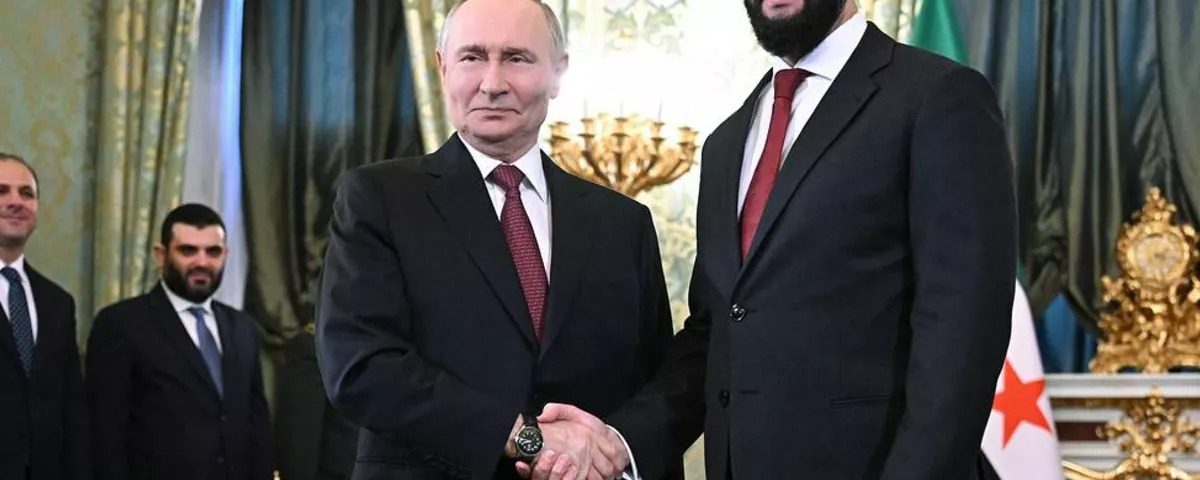
Photo Source: https://omidradio.com/en
The new Syrian-Russian agreement concerning the future of Russia’s military presence at Hmeimim and Tartus is far more than a technical settlement over the fate of two military facilities. At its core, it represents an attempt to redefine one of the most complex geopolitical relationships in Syria over the past decade.
After nearly a year and a half of negotiations, Damascus and Moscow have reached a memorandum of understanding that reorganizes the Russian presence along the Syrian coast. Under the announced arrangements, the Syrian state will regain control over civilian facilities, most notably Hmeimim Airport and the Fourth Commercial Berth at the Port of Tartus, while facilities of a military nature will be redefined as joint Syrian-Russian training and rehabilitation centers. According to the announced timeline, the transition is expected to be completed within three months.
This is where the significance of the agreement lies: “Russia is not leaving Syria, but it is no longer present in Syria in the same way it has been since 2015.”
The End of a Phase That Began in 2015
To understand the significance of the new agreement, it is necessary to return to the legal framework that governed Russia’s presence during the rule of Bashar al-Assad.
In 2015, Russia secured arrangements allowing it to use Hmeimim Air Base and associated facilities in the context of its direct military intervention in the Syrian war. Hmeimim subsequently became the center of Russian air operations in Syria and one of Moscow’s most important military footholds outside the former Soviet space.
The Tartus agreement, signed in 2017, was even more explicit in institutionalizing the long-term nature of the Russian presence. It provided for a 49-year term, with the possibility of automatic extensions for additional 25-year periods, and allowed up to 11 Russian warships to be stationed there simultaneously, including nuclear-powered vessels subject to nuclear safety and environmental conditions.
What is happening today, therefore, is not a marginal administrative adjustment. It represents a reconsideration of the legal and political architecture upon which Russia’s military presence in Syria was built.
From a “Russian Base” to a “Joint Training Center”
The most important term in the new agreement is not “withdrawal,” but “redefinition of function.”
According to the announced arrangements, the military facilities at Hmeimim and Tartus will no longer operate in their previous form as independent Russian bases. Instead, they will be transformed into joint Syrian-Russian training and rehabilitation centers.
This distinction is highly significant.
A military base implies the presence of a foreign military force exercising an independent operational function. A joint training center, by contrast, presupposes, at least in principle, that the host state remains at the center of the arrangement while the external partner continues to provide expertise, training and professional development.
The agreement can therefore be interpreted as a transition from a model of independent Russian military presence to a model of “structured military partnership”.
This does not necessarily mean that Russia’s military role has become irrelevant. Training centers can become strategic instruments of influence if Russia retains a central role in training Syrian forces, operating certain facilities, or providing expertise in aviation, air defense, maintenance and naval operations.
The real question, therefore, is not whether the Russians are staying or leaving. The more precise questions are: “What kind of Russian presence will remain? How autonomous will it be? And who will ultimately control operational decisions?”
Restoring Syrian Sovereignty over Civilian Facilities
Perhaps the clearest aspect of the agreement is the restoration of Syrian administration over civilian facilities.
Hmeimim Airport and the Fourth Commercial Berth at the Port of Tartus are expected to gradually return to the Syrian civilian administrative system. This step has implications that go well beyond administration, because it redraws the boundaries between military use, sovereign authority and economic activity.
This is a crucial distinction.
During the war, military and civilian functions became deeply intertwined. In the phase of state-building and reconstruction, however, one of the conditions for restoring effective sovereignty is the reintegration of national infrastructure into state institutions.
For Damascus, regaining control over these facilities means that its relationship with Moscow will no longer be based on granting Russia broad areas of influence outside the state’s administrative structure. Instead, it will increasingly rest on agreements defined by specific functions.
This is a political transformation before it is a military one.
Why Did Russia Accept This Change?
At first glance, Moscow may appear to be the losing party in the new equation. A deeper reading, however, suggests that Russia is attempting to preserve what it can of its Syrian influence rather than risk losing its presence altogether.
Following the fall of Bashar al-Assad in December 2024, Moscow entered a fundamentally different strategic environment. The leader with whom Russia had built a deep political and military partnership was no longer in power, while Syria’s new leadership was compelled to redefine its international relations on a different basis.
Yet Moscow did not sever its relationship with the new authorities in Damascus. Instead, it opened channels of communication in an effort to preserve its position in Syria. In June, Moscow described negotiations over the “reconfiguration” of the functions of Russian military facilities as part of the evolving cooperation with Damascus.
This suggests that Moscow recognized that maintaining the exact formulas established in 2015 and 2017 was no longer politically viable.
Russia therefore appears to have opted for what might be described as “managed retrenchment” rather than complete withdrawal.”
Tartus: Losing the Base or Preserving the Gateway to the Mediterranean?
The Tartus issue remains particularly sensitive for Moscow.
For years, Tartus was more than a military facility. It served as Russia’s maritime gateway to the Mediterranean and as a logistical support point for the Russian Navy. Abandoning the previous formula, therefore, does not mean that the Syrian coast has lost its strategic importance for Russia.
The difference is that Moscow will now need an arrangement that enables it to preserve part of its logistical and military capabilities without maintaining a Russian base enjoying the extensive privileges that existed under the previous framework.
In recent months, Russian proposals have reportedly included transforming part of Tartus into a logistics and commercial hub while retaining a military presence in another section of the facility.
The new agreement can therefore be understood as an attempt to separate commercial and military functions and place each within a clearer institutional framework.
What About Aircraft, Warships and Air Defense?
This is where the greatest uncertainty begins.
The publicly announced details of the agreement do not yet provide sufficient information regarding the size of the Russian force that will remain in Syria, the types of weapons Moscow may retain, or the precise nature of its operational authority.
Any assertion that Russia’s military presence has ended completely would therefore be premature.
Indeed, transforming the bases into joint training centers could allow a Russian military presence to continue, albeit on a smaller scale and with a greater degree of dependence on Damascus’s approval.
The key questions in the coming phase will therefore be:
Can Russia continue to station military aircraft at Hmeimim?
Will Russian air-defense systems remain?
Will Russian warships continue to use Tartus?
Will Russian forces retain the right to receive military aircraft and military shipments?
And, most importantly, “who will have the final say over any military operation launched from these facilities?”
These details will determine whether the agreement represents a partial Russian withdrawal or a deeper Russian strategic repositioning.
Immunities: The Real Test of Sovereignty
Another issue of equal importance concerns the immunities and privileges previously enjoyed by Russian forces under the earlier agreements.
If the new framework abolishes or significantly reduces these privileges, that would constitute a major legal transformation.
Sovereignty is measured not simply by who raises the flag over a facility. It is also measured by who has the authority to enter it, which jurisdiction applies to those stationed there, and who makes decisions in emergency situations.
For this reason, the full text of the memorandum of understanding, once available, will be more important than the political headlines surrounding its announcement.
The Agreement and Syria’s Relations with the West
The Syrian-Russian agreement cannot be separated from the broader transformation underway in Syria’s foreign policy.
The new Damascus is simultaneously seeking to build relations with the United States, Europe, Arab states and Türkiye, open itself to the international economy, attract investment and reduce the isolation Syria experienced for years.
In this context, restoring Syrian control over civilian facilities can serve a broader objective: demonstrating that the new Syria does not intend to become an exclusive sphere of influence for any single international power.
This also explains the importance of distinguishing Russian cooperation from Syrian sovereignty.
Damascus is not, under the new formula, saying that it wants to sever relations with Moscow. Rather, it is effectively asserting that the relationship with Russia should be a relationship between two states, rather than one between a state and a foreign military base.
That is a major strategic distinction.
What Does Moscow Want in Return?
For Russia, Syria remains important for reasons that extend beyond the former Syrian regime.
Syria provides Moscow with a strategically important geographical position in the Eastern Mediterranean, a channel into the Arab world, and the possibility of maintaining a military and political presence in the Middle East. Moscow also has little interest in allowing the fall of Assad to translate into a comprehensive Russian strategic defeat.
Consequently, the continued presence of Russian trainers and military experts, even within joint centers, could provide Moscow with a means of preserving influence at a lower political and military cost.
Such a model may ultimately prove more sustainable than maintaining large and expensive military bases, particularly amid the pressures Russia is facing as a result of the war in Ukraine.
Israel, Türkiye and the United States: Three Capitals Watching Closely
Moscow and Damascus will not be the only actors affected by the new arrangements.
Israel will closely monitor any possibility of rebuilding Syria’s air-defense capabilities, particularly if advanced Russian air-defense systems are introduced into Syrian service.
Türkiye, meanwhile, will be watching the future of Russia’s role in northern and western Syria and the extent to which Moscow remains integrated into the emerging Syrian security architecture.
The United States will assess the agreement from a broader strategic perspective: “Does it reduce Russia’s ability to use Syria as a military platform in the Eastern Mediterranean, or does the renaming of the facilities conceal the continuation of essentially the same Russian military capabilities?”
Ultimately, the legal designation of a facility matters less than its actual military capacity.
If a facility can receive combat aircraft, store weapons and support external military operations, changing its name from “base” to “training center” will do little to alter the balance of power.
If, however, its functions become genuinely restricted to training and professional development under Syrian administration and joint oversight, then the transformation will be substantive.
Has Russian Influence in Syria Come to an End?
The most accurate answer is: “No.”
What appears to be ending, according to the publicly available information, is a particular model of Russian influence.
Russia no longer possesses the same framework it established with the Assad regime, but it is still seeking to maintain a strategic relationship with Damascus.
At the same time, Syria does not appear to be seeking to replace Russian influence with another foreign power. Rather, it appears to be attempting to expand its room for maneuver among competing international actors.
The agreement can therefore be understood through the concept of “balancing relationships” rather than alignment.”
Damascus wants Russia, but it does not want a Russian Syria.
It wants the West, but it does not want to become a Western state.
It wants broad Arab and regional relations, while simultaneously seeking to preserve its sovereign decision-making.
From “Alliance with the Regime” to “Partnership with the State”
Perhaps this is the most important political conclusion.
The Russian-Syrian relationship under Assad was built to a considerable extent around a personal and political relationship between Moscow and the regime, reinforced by extensive military arrangements created by the conditions of war.
The new relationship requires a different foundation:
“the Syrian state in relation to the Russian state.”
For this reason, the new agreement may mark the beginning of a phase in which the central question is no longer:
“How many bases does Russia have in Syria?”
but rather:
“What can Russia offer Syria, and what can Syria offer Russia?”
That shifts the relationship from the logic of military bases to the logic of mutual interests.
The End of the Base Does Not Mean the End of Russia
The new Syrian-Russian agreement is neither an announcement of Russia’s departure from Syria nor a continuation of the old model.
It is better understood as a “strategic repositioning arrangement”.
Damascus is regaining control over civilian facilities and reaffirming its sovereignty over territory and infrastructure, while Moscow retains a military and strategic channel through joint training and rehabilitation centers.
Yet the final judgment on the agreement will depend on what has not yet been publicly disclosed: the size of the Russian forces, the nature of the weapons they may retain, the status of aircraft and warships, the scope of immunities, command authorities, and the possibility of using the facilities for military operations beyond training.
For this reason, the next three months will be decisive.
If Hmeimim and Tartus genuinely become Syrian facilities with limited Russian cooperation, then Syria will be witnessing the historic end of the Russian military-base model that began in 2015.
If, however, Russia’s major operational capabilities remain intact under new labels, then what has occurred will not be a withdrawal, but rather a “renaming and redistribution of influence.”
In either case, the most important equation has already changed:
“Russia no longer possesses in Syria the bases it once enjoyed under Assad, and the new Syrian state no longer treats the Russian presence as a given.”
That, in itself, marks a transition from an era defined by “the Russian presence in Syria” to a new phase defined by “Syrian-Russian negotiations over the form and limits of Russian influence in Syria.”
Disclaimer. The views and opinions expressed in this op-ed are those of the author and do not necessarily reflect the official policy or position of MEPEI. Any content provided by our author is of her opinion and is not intended to malign any religion, ethnic group, club, organization, company, individual, or anyone or anything.