From Alliance with the Regime to Partnership with the State: What Does the New Syrian-Russian Agreement Mean for the Future of Russian Influence in Syria?
August 12, 2026
Partition by Attrition: The Saudi-Emirati Rivalry in Yemen and the Limits of Gulf Alliance Cohesion
August 16, 2026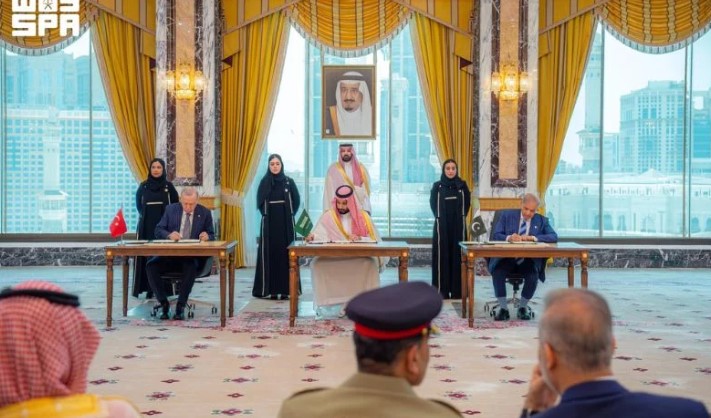
The convergence of strategic thinking among the leaders of Pakistan, Saudi Arabia, and Turkiye led to a landmark security agreement capable of transforming the contemporary Middle Eastern security architecture. Therefore, the agreement has unleashed a debate between the security alliance optimists and pessimists. Indeed, an objective analysis requires a close examination of the agreement to understand its determinants, purpose, intent of implementation, and the capacity of the member states.
Prime Minister Shehbaz Sharif, Saudi Crown Prince and Prime Minister Mohammed bin Salman, and Turkiye’s President Recep Tayyip Erdogan agreed to establish a trilateral security framework at the Makkah Al-Mukarramah Summit for Joint Defense held on August 7, 2026. They signed the Makkah Joint Defense Agreement (MJDA) aimed at strengthening “collective deterrence against any act of aggression.” The MJDA facilitates the expansion of military cooperation among the three States “to further strengthen their collective security and to promote peace, security, and stability in the region and beyond, in pursuit of a secure and prosperous future.” It laid the foundation of a first Pan-Islamic military institutional initiative among three key Muslim States, independent of the West, stretching from South Asia through the Gulf to the Eastern Mediterranean. What are the determinants of this minilateral security group?
Three Muslim Middle Powers located in three regions—South Asia, the Arabian/Persian Gulf, and the Eastern Mediterranean—are facing three identical security challenges. The jeopardizing spillover effects of the prolonged civil wars in their neighboring countries, secondly, vulnerability of their sea trade due to non-state actors, and thirdly, the transnational terrorist syndicates’ threat to their internal security. Hence, the trilateral MJDA seems more substantive than symbolic.
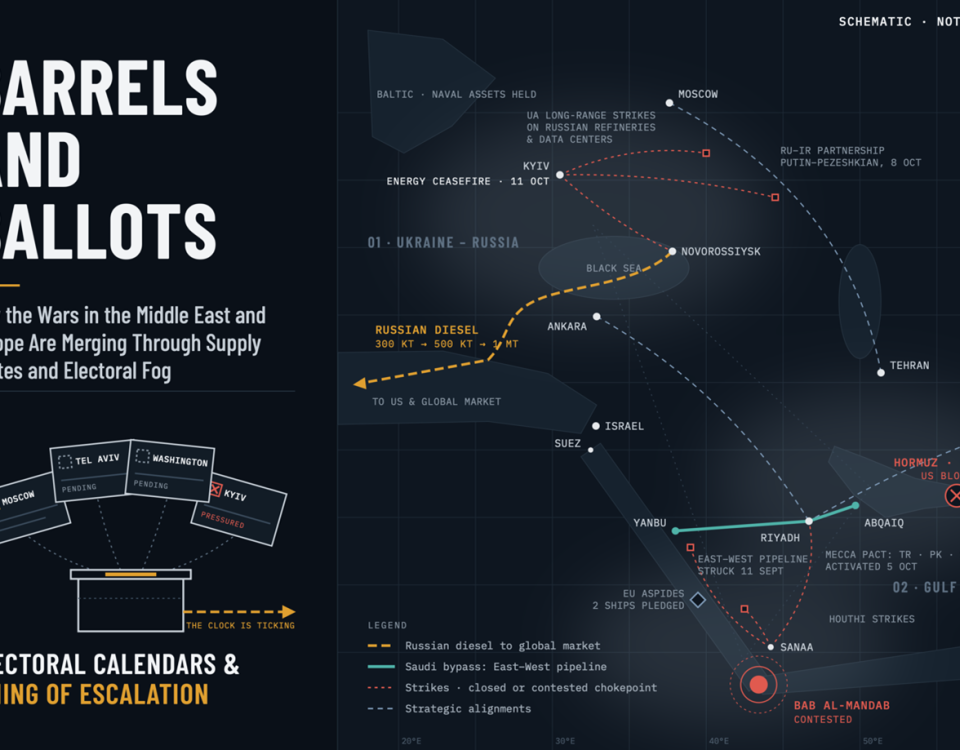
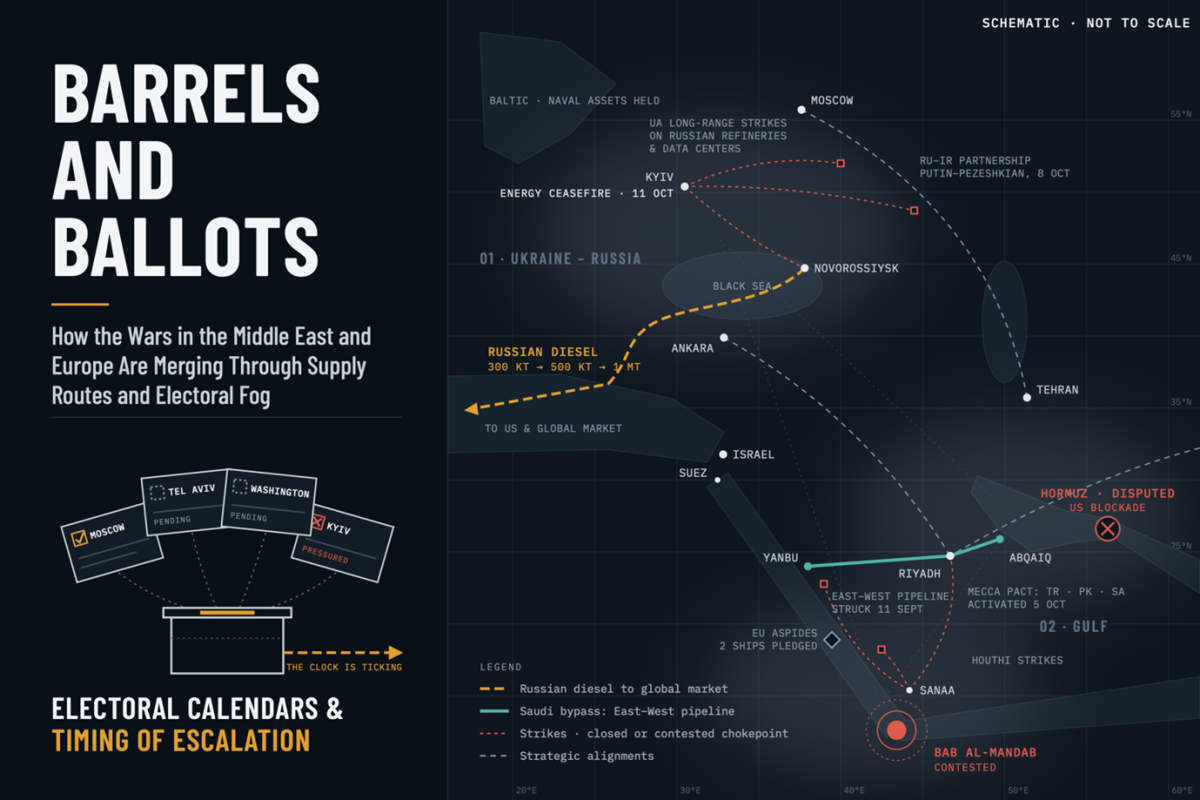
The civil war in Yemen has been haunting Saudi Arabia’s national security. During the last week, the Iran-backed Houthi forces unleashed missile attacks against the Saudi-led coalition and Yemeni government military sites located in Yemeni provinces of Hadramout and Marib. This makes it difficult to ignore Iranian proxies destabilizing Saudi Arabia’s security. Türkiye’s national security has been vulnerable due to the spillover effects from the ongoing civil conflict in Syria and friction points involving regional actors like Iran and Gulf states. Pakistan is one of the biggest victims of state-sponsored terrorism and the anarchical situation in Afghanistan. The MJDA certainly provides these States an opportunity to fight against extremism and terrorism.
Admittedly, Pakistan, Saudi Arabia, and Turkiye have strategic rivalries and compete within their own regions. Still, through this trilateral alliance they would pursue their national security objectives without ensnaring themselves in regional cross-border conflicts. Islamabad can be an eeffective interlocutor between Riyadh and Tehran; similarly, Ankara and Riyadh mediate between Kabul and Islamabad or help lower tensions between Islamabad and New Delhi. Similarly, Islamabad and Riyadh assist in normalizing relations between Ankara and Damascus, improving relations between Turkiye and the Gulf states, including Iran, and resolving chronic disputes between Turkiye and Cyprus and Greece. Precisely, the MJDA is not anti-India, anti-Iran or anti-Cyprus, Greece, and Syria.
Many analysts are referring to the MJDA as a Muslim North Atlantic Treaty Organization (NATO). It is too early to compare it with NATO, even though it is an important security agreement in the Middle East. The analysts are comparing it with NATO because it is intended to strengthen collective deterrence against aggression and stipulates that any armed attack against any one of the three states shall be regarded as an attack against them all. It does resemble the principle expressed in Article 5 of the NATO Charter; however, it does not formulate a military alliance analogous to NATO. It is possible that the trilateral alliance could further improve trust with NATO through Turkiye, an important member of the alliance. Pakistan is not a member of NATO, but it maintains a cooperative “partners across the globe” status with the alliance. Saudi Arabia and Pakistan are major non-NATO allies of the US, which provides them with privileged access to US military training, R&D cooperation, and defense equipment.
The efficacy of the trilateral alliance is debatable. Many security analysts opine that it could serve political and diplomatic objectives, but militarily it would remain ineffective, like the 43-member intergovernmental Islamic Military Counter Terrorism Coalition (IMCTC) founded in 2015. Saudi Arabia, Pakistan, and Turkiye are members of IMCTC, which focuses on four areas: intellectual, media, countering terrorism financing, and military. It ends up symbolic rather than transforming the regional strategic environment. The counterargument is that MJDA builds on the Saudi-Pakistani Strategic Mutual Defense Agreement concluded in September 2025, and on decades of Turkiye and Pakistan’s defense-industrial cooperation to modernize Pakistan’s military. Recently, similar arrangements were made between Ankara and Riyadh; the latter purchased Turkish drones. On July 30, 2026, Pakistan and Turkiye endorsed a Saudi-proposed maritime defense coalition.
To make it a potent trilateral alliance, Pakistan, Saudi Arabia, and Turkiye have to establish a secretariat, develop a consensual doctrine for institutional development, define procedures, build integrated command structures for military planning and interoperability, and carry out regular joint operations grounded in real and hypothetical contingencies. To translate their political commitment into military reality, they need to transform their defense organizations and establish teaching/training institutions along NATO lines, such as the School in Oberammergau, Germany; the Defense College in Rome, Italy; and Centers of Excellence in Ankara, Türkiye, and the Czech Republic. Since 2007, while lecturing at NATO academic institutions as a guest speaker, I have concluded that such institutions are imperative for promoting harmony in the strategic thinking of alliance officials.
The MJDA may cause a security dilemma for a few regional states. To quash the regional security dilemma puzzle, President Erdogan stated that the pact is open to friendly nations and a Saudi deputy minister said the alliance “does not represent an effort to establish a military axis or a sectarian bloc.” The Iranian leadership response is also encouraging. For instance, an adviser to Iran’s supreme leader has said that more cooperation among regional states “can secure its security.” The need of the hour is for MJDA to convince Iran to stop attacking the GCC states, and, conversely, for these states to rely on regional security arrangements instead of extraregional forces for their defenses.
The MJDA will not directly pose any challenge for the Great Powers—China, the Russian Federation, and the United States. However, the Saudis joining the alliance underscores that the American defense umbrella’s credibility in the region has been compromised during the Iran and US war, and it has failed to protect Saudi Arabia and the other Gulf Arab states from Iran and its regional armed allies’ devastating strikes. Hence, the presence of US military assets in these states increases their vulnerabilities rather than improving their security. To summarize, the MJDA will focus on reducing tensions instead of worsening existing fissures between Muslims states in the Middle East, and managing and settling tensions between the Muslim countries. Besides, the trilateral alliance improves the constructive role of regional middle powers in the Middle Eastern strategic stability.
Disclaimer. The views and opinions expressed in this op-ed are those of the author and do not necessarily reflect the official policy or position of MEPEI. Any content provided by our author is of her opinion and is not intended to malign any religion, ethnic group, club, organization, company, individual, or anyone or anything.

Prof. Zafar Nawaz Jaspal
Prof. Zafar Nawaz JASPAL, Nonresident Fellow at MEPEI, is an Islamabad-based analyst and meritorious professor of International Relations at SPIR, Vice Chancellor of the Quaid-i-Azam University and an advisory Board Member of the Institute for East-West Strategic Studies (RIESS), affiliated with Oxford University, U.K. E-mail: jaspal_99@hotmail.com, X: @zafar_jaspal