

How a History of Mistrust is Preventing the Iranian Nuclear Deal
August 1, 2025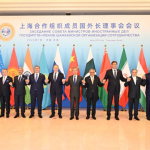
Overview of the Outcomes of the 2025 SCO Member States Foreign Ministers’ Tianjin Meeting
August 3, 2025
Since the end of World War II, the US dollar has maintained unrivalled dominance as the backbone of the global financial system. It currently accounts for nearly 58.4 percent of global foreign exchange reserves according to the International Monetary Fund and is involved in more than 88 percent of international trade transactions. This status has given the United States a powerful economic and political lever enabling it to impose sanctions control capital flows and shape global finance in its own image.
However, with the steady rise of China as a fully integrated economic superpower critical questions are emerging about the sustainability of this monetary order. Can China through deliberate and calculated economic policy challenge the dollar’s supremacy? Are we witnessing the beginning of a global financial realignment?
China is no longer just the world’s manufacturing hub. It has become an economic force of global magnitude. In 2024 China’s nominal GDP stood at 17.7 trillion dollars compared to the United States’ 27 trillion dollars. Yet using the more accurate measure of purchasing power parity China’s GDP reached 33.5 trillion dollars far exceeding the US figure of 26.5 trillion. This economic weight when adjusted for domestic prices and real output places China at the top of the global economy.
Trade figures reinforce this shift. China is now the top trading partner for over 120 countries and it accounts for 14.5 percent of global exports as of 2023 compared to just 8.9 percent for the United States. Moreover, it produces over 28 percent of the world’s industrial output the highest share globally. If China can combine this economic and industrial strength with financial influence particularly through its currency the yuan the structure of the international monetary system could fundamentally shift.
Yet the primary challenge facing Beijing is not its industrial capacity or trade reach. It is the internationalization of the renminbi. Despite being added to the IMF’s Special Drawing Rights basket in 2016 the yuan still comprises only 3.1 percent of global central bank reserves. By contrast the US dollar maintains a massive 58.4 percent share with the euro following at 20.2 percent. This wide gap reflects the deep institutional and structural advantages enjoyed by the dollar including its liquidity legal predictability and unrivalled role in global finance.
Nevertheless, China is pursuing a long-term strategy to challenge this status quo. Over the past decade it has built an alternative financial infrastructure designed to reduce reliance on the dollar. This includes the Asian Infrastructure Investment Bank which has deployed more than 1.3 trillion dollars in cumulative investments and a network of currency swap agreements with more than 40 countries enabling bilateral trade to be settled in yuan.
Perhaps the most innovative and strategic move by China has been the launch of its central bank digital currency the e-CNY. As of mid-2025 digital yuan transactions exceeded 34 billion dollars and pilot programs are expanding across major cities. Unlike cryptocurrencies this digital currency is fully state backed programmable and designed to bypass the Western dominated SWIFT payment system. If adopted by major trade partners particularly in Asia Africa and Latin America it could reduce global dependency on the dollar in cross border settlements.
Moreover, China is increasingly pricing a portion of its exports and bilateral trade deals in yuan. In 2024 roughly 25 percent of China’s exports were invoiced in its local currency up from just 6 percent in 2014. While still far from dollar levels the trend is accelerating particularly among countries facing US financial sanctions or seeking alternatives to dollar denominated systems.
On the other hand, the United States is facing growing structural challenges. Its federal debt has surpassed 34 trillion dollars and rising interest rates have added pressure to the national budget. While the dollar remains dominant the combination of high debt slower growth forecasted at 2 percent annually and increasing geopolitical fragmentation could gradually undermine the dollar’s global supremacy.
Looking ahead forecasts by institutions such as HSBC and the IMF suggest that China could surpass the US in nominal GDP by 2030 provided it maintains an annual growth rate above 4 percent while US growth remains around 2 percent. If this economic trajectory continues combined with further advances in digital payments increased trust in China’s monetary system and more widespread adoption of the yuan in global trade the current dollar centred system may become increasingly pluralistic.
That said the dollar’s dominance is not solely based on economic size. It reflects decades of trust in the US legal framework transparency open capital markets and the depth of its financial system. These are institutional advantages that China has yet to fully replicate. The yuan still operates within a controlled financial system with capital restrictions and limited convertibility factors that significantly reduce its attractiveness to global investors and central banks.
Therefore, it is unlikely that the dollar will be dethroned suddenly or dramatically. However, the emerging reality points toward a gradual erosion of dollar hegemony not its collapse. China’s objective is not necessarily to replace the dollar outright but to fragment its dominance creating a more multipolar financial world in which multiple currencies share influence. This shift is not speculative. It is already unfolding.
By the end of this decade we may well see a global financial architecture that is more diversified less dependent on the dollar and more reflective of new economic power centres in the East. While the dollar will likely remain a central pillar of global finance it will no longer be the sole pillar.
Disclaimer. The views and opinions expressed in this analysis are those of the author and do not necessarily reflect the official policy or position of MEPEI. Any content provided by our author is of his opinion and is not intended to malign any religion, ethnic group, club, organization, company, individual, or anyone or anything.