The Possible U.S.–Iranian Kurdish Partnership: Lessons from Syria and Implications for Europe
June 17, 2026
Syria and the U.S. Terrorism List: A Test of Reintegration in a Changing International Order
June 22, 2026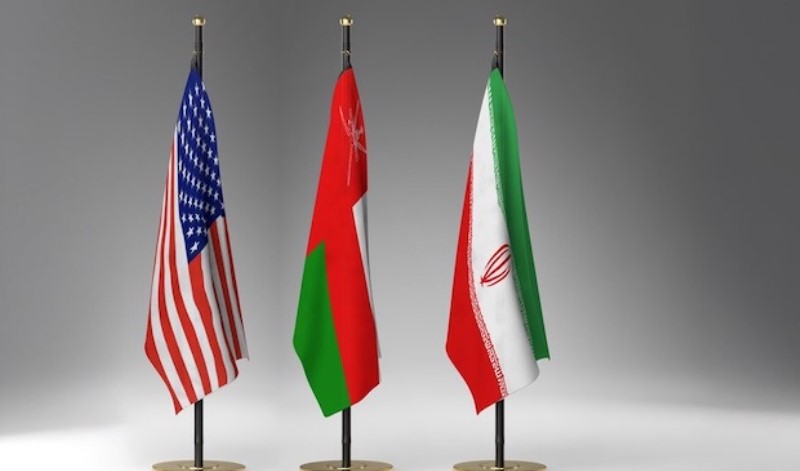
Executive Summary
The world has been fighting over Iran’s nuclear program for over 20 years. Wars have been fought. Sanctions have been imposed. People have died. And still, the problem remains unsolved.
The core issue is not nuclear technology. The core issue is trust.
The United States does not trust Iran. Iran does not trust the United States. After 45 years of hostility, this mutual distrust has made every negotiation difficult and every agreement fragile.
But there is a solution that both sides can trust.
The idea is simple: Move all of Iran’s uranium enrichment to Oman, under a regional consortium model.
Oman is neutral. Oman has diplomatic relations with both the US and Iran. Oman has mediated US-Iran talks for decades. Oman has no nuclear ambitions. Oman wants peace.
Why This Works Even with US Skepticism of Oman:
Recent US administrations have expressed distrust of Oman, accusing it of being “duplicitous” or “almost like employees of the Iranians.” This is precisely why the Oman Solution must not rely solely on Omani trust—but on a layered international framework that includes:
- Full IAEA oversight and verification
- US direct access to inspection data
- UN Security Council resolution enshrining the agreement
- Regional consortium partners (Saudi Arabia, UAE, Qatar) as additional monitors
- Clear consequences for violation (immediate sanctions return)
In this model, Oman is not the “trusted party” in isolation. Oman is the neutral host within a multi-layered verification system—and that is what makes the plan truly resilient.
PART I: The Trust Problem
Why the Current Situation Is Stuck
| Issue | USA’s Concern | Iran’s Concern |
| Nuclear program | Iran will build a bomb | USA will attack our facilities |
| Sanctions | Iran will cheat | USA will never lift them |
| Inspections | Iran will hide things | Inspectors are spies |
| Enrichment | Iran will weaponize | USA wants to take our rights |
The result: Neither side trusts the other. And they are right not to.
Why Trust Matters More Than Technology
The 2015 JCPOA took over 18 months to negotiate. It was a technical masterpiece. It failed because neither side trusted the other to uphold it.
The 2026 MOU is a fragile 60-day pause. It is not a final agreement. It will fail for the same reason—unless the trust problem is solved.
The solution is not more inspections. The solution is a trusted, multi-layered framework with a neutral host.
What About Oman’s Trustworthiness?
Oman has a long history of mediating between the US and Iran. However, the Trump administration has publicly expressed distrust of Oman, with officials calling the country “duplicitous” and “almost like employees of the Iranians.” This perception—whether fair or not—cannot be ignored.
The Oman Solution addresses this skepticism directly:
| US Concern About Oman | How This Plan Addresses It |
| Oman is too close to Iran | Oman is neutral, not allied—its relationships with both sides are what makes it effective |
| Oman cannot be trusted alone | Oman is not the sole monitor—it is one part of a layered system |
| Oman lacks verification capacity | IAEA handles technical verification—Oman handles hosting |
| Oman might be pressured by Iran | UN Security Council resolution protects the facility |
| Oman could be bribed | Regional consortium partners (Saudi, UAE, Qatar) provide oversight |
PART II: Why Oman is the Solution
Oman’s Unique Position
| Factor | Why It Matters |
| Neutrality | Oman is not a US ally or an Iranian ally—it is friends with both |
| Mediation history | Oman has mediated US-Iran talks for decades, including the current negotiations |
| Trust | Both the US and Iran trust Oman’s leadership and intentions |
| No nuclear ambitions | Oman has no interest in nuclear weapons |
| Regional stability | Oman wants peace and prosperity in the Gulf |
| Skepticism addressed | This plan acknowledges US doubts and builds in multiple safeguards |
How Oman Solves Each Side’s Fear
| Problem | Oman Solves It By |
| USA doesn’t trust Iran | Oman hosts the facilities—Iran does not control them |
| Iran doesn’t trust USA | Oman is neutral—USA cannot bomb Omani territory |
| Both sides fear cheating | IAEA + Oman + US + Iran all monitor together |
| Neither side wants war | Oman provides a peaceful, stable location |
| Both sides want verification | Oman allows 24/7 access to all parties |
| USA doesn’t trust Oman | Layered verification, UN resolution, regional partners |
The Core Principle
“The United States and Iran do not trust each other. This is not a secret. It is the reality of 45 years of hostility. And yes, the United States has expressed distrust of Oman as well.
But the Oman Solution does not require blind trust. It requires a layered, multi-party framework where Oman is the neutral host, the IAEA is the technical monitor, the UN Security Council provides legal protection, and regional partners provide additional oversight.
Trust is not given—it is built through structure. And this plan provides the structure.”
PART III: The Plan
How It Works (Simple Version)
| Step | What Happens | Who Benefits |
| 1 | Iran moves all centrifuges and enriched uranium to Oman | The world gets transparency |
| 2 | Oman hosts the nuclear facilities under IAEA supervision | Iran gets a legitimate program |
| 3 | Iran operates the facilities with international oversight | USA gets no bombs in Iran |
| 4 | Enriched uranium is produced and shipped to Iran for civilian use | Iran gets nuclear power |
| 5 | All parties monitor and verify compliance | Israel gets security |
| 6 | UN Security Council provides legal protection for facilities | Both sides get physical security |
The Four Phases
Phase 1: Agreement (Month 1)
- USA and Iran sign a formal agreement
- Oman agrees to host the facility
- IAEA confirms the plan
- UN Security Council approves the deal
- Regional partners (Saudi, UAE, Qatar) sign as observers
Phase 2: Relocation (Months 2-6)
- Iran moves its centrifuges and uranium to Oman
- IAEA inspectors verify the entire process
- Facilities are set up in Oman under international supervision
- The move is completed peacefully and transparently
Phase 3: Operation (Ongoing)
- Iran operates the facilities in Oman
- IAEA monitors 24/7
- Enriched uranium is shipped to Iran for civilian use
- All parties have access to data and verification
- US inspectors have direct access to data (not just IAEA)
Phase 4: Sanctions Relief (Immediate)
- All US and international sanctions on Iran are lifted
- Iran’s frozen assets are released
- Iran rejoins the global economy
- Reconstruction begins with $300 billion in aid
What About Iran’s “Red Line”?
Iran has stated it will not abandon enrichment on its own soil. This plan does not require that. It requires Iran to operate its enrichment program in Oman under joint ownership and full IAEA supervision.
Iran keeps its nuclear program. Iran keeps its sovereignty. Iran keeps its rights. It simply operates them in a location that both sides can trust.
This is not surrender. This is smart diplomacy.
PART IV: The Multi-Layered Trust Framework
Why This Plan Works Even If the US Doesn’t Trust Oman
| Layer | Who | What They Do | Why It Protects US Interests |
| Layer 1 | IAEA | Technical verification, 24/7 inspections | Independent monitoring, not reliant on Oman |
| Layer 2 | Oman | Host facilities, provide logistics | Neutral host, not sole monitor |
| Layer 3 | UN Security Council | Legal protection, binding resolution | Facility cannot be attacked without UN violation |
| Layer 4 | US | Direct access to inspection data | Verification independent of IAEA/Oman |
| Layer 5 | Regional Partners | Additional oversight, political pressure | Multiple eyes, shared interest in stability |
Legal Enforcement Mechanism
| What Happens If | Trigger |
| Iran violates agreement | Immediate UN Security Council action, reinstatement of sanctions, emergency IAEA inspections |
| US attacks facility | UN Security Council resolution invoked, Iran’s sanctions automatically remain lifted |
| Oman compromises | Regional partners step in, IAEA takes direct control |
| Israel acts unilaterally | US guarantees Israeli compliance as part of agreement |
PART V: Making All Parties Happy
Why Each Side Wins
| Party | What They Get |
| Iran | Nuclear program, sanctions relief, $300B reconstruction, international legitimacy |
| USA | No nuclear weapons in Iran, transparency, no more war costs |
| Israel | Guarantees, 24/7 IAEA oversight, Iran cannot cheat |
| Oman | Prestige, investment, economic growth, legacy of peace |
| Gulf States | Regional stability, no nuclear arms race, increased trade |
| World | Peace, lower oil prices, nuclear non-proliferation |
Addressing the Objections
- Objection 1: “Iran will never move its centrifuges”
- Response: Iran’s leadership has already shown willingness to negotiate. Under this plan, Iran keeps its program—it simply operates it in a different location. Iran loses nothing. It gains everything.
- Objection 2: “Israel will never accept it”
- Response: This plan gives Israel exactly what it wants: guarantees that Iran cannot build a bomb. With facilities in Oman under 24/7 IAEA supervision, cheating is impossible. Israel would be more secure.
- Objection 3: “Why would Oman agree?”
- Response: Oman gains economic investment, diplomatic prestige, security, and a legacy as the country that solved the Iran nuclear crisis.
- Objection 4: “The USA will never trust Iran”
- Response: The USA does not need to trust Iran. It needs to trust the IAEA, UN Security Council, and regional partners. All facilities are under international supervision. The USA has direct access to inspection data.
- Objection 5: “Iran wants enrichment on its own soil”
- Response: Iran has stated it will not abandon enrichment. This plan does not require that. It requires Iran to operate its program in Oman under joint ownership and full IAEA supervision.
- Objection 6: “The US doesn’t trust Oman”
- Response: This plan acknowledges that skepticism and builds in multiple safeguards. Oman is not the sole monitor. The US has direct access to data. The UN Security Council provides legal protection. Regional partners provide additional oversight.
PART VI: The Alternative
| Scenario | Result |
| No deal | Sanctions continue, Iran continues enriching, risk of war increases |
| War | Billions spent, thousands of dead, region destabilized, oil prices spike |
| This plan | Peace, prosperity, stability, mutual benefit |
PART VII: Expert Support
- Robert A. Pape, Professor at the University of Chicago: “The idea of a regional nuclear consortium has merit, provided it includes strict verification mechanisms.”
- Marc Finaud, Geneva Centre for Security Policy: “The 60-day timeline is only feasible if expectations remain modest and the goal is to return to something resembling the JCPOA.”
- Linda Bilmes, Harvard Kennedy School: “The true cost of the Iran war will reach $1 trillion. A diplomatic solution is far cheaper.”
- Oman’s Foreign Minister, Badr Albusaidi: Has already confirmed US-Iran agreement on “zero stockpiling” of enriched uranium with full IAEA verification.
- Hossein Mousavian, Former Iranian Nuclear Negotiator: Has publicly proposed a regional consortium model involving Oman as a neutral host.
PART VIII: Comparison To The JCPOA
| Aspect | JCPOA (2015) | Oman Nuclear Solution | Which Is Better? |
| Nuclear Limits | 3.67% enrichment, 300kg stockpile | Zero stockpiling, stricter limits | Oman Solution |
| Enrichment Location | Iran’s soil | Oman (neutral host) | Oman Solution |
| Trust Issue | Assumed compliance | Explicitly addressed through multi-layered framework | Oman Solution |
| Inspection | IAEA only | IAEA + US access + regional partners | Oman Solution |
| Duration | Sunset clauses (15-25 years) | Permanent framework, no sunset | Oman Solution |
| Physical Security | None | UN Security Council protection | Oman Solution |
| Regional Cooperation | Not included | Regional consortium | Oman Solution |
| US Skepticism of Oman | Not applicable | Explicitly addressed | Oman Solution |
PART IX: A Plea for Peace
This is not about politics. This is not about power. This is about people.
The leaders of the United States and Iran sit in their capitals, making decisions that affect millions of lives. They talk about strategy. They talk about leverage. They talk about red lines.
But the people who suffer are not the leaders. The people who suffer are:
- The mother in Tehran who cannot afford bread because sanctions have destroyed the economy.
- The child in Minab who was killed in an airstrike meant for a military target.
- The soldier from Ohio who will never come home to his family.
- The refugee in Lebanon who has lost everything and has nowhere to go.
- The driver in Dubai who cannot afford fuel because oil prices have spiked.
- The family in the UK who cannot pay their heating bills because inflation is out of control.
This war has already cost too much.
- Over 3,300 Iranians dead.
- 13 American soldiers dead.
- Nearly 4,000 Lebanese dead.
- Over 1 million people displaced.
- $29 billion spent in just 40 days.
- And a global economy teetering on the edge of recession.
For what?
So that both sides can prove they are strong? So that leaders can save face? So that politicians can claim victory?
There is no victory in this war. There is only loss.
Both Sides Have Shown What They Are Capable Of
The United States has shown it can strike anywhere, anytime. It has the most powerful military in human history. It can destroy any target it chooses.
Iran has shown it can close the Strait of Hormuz. It can disrupt global oil supplies. It can survive decapitation strikes. It can inflict economic pain on the entire world.
Both sides have proven they can hurt each other.
But what have they proven about peace?
Nothing. Because neither side has tried.
Let Us Overcome the Trust Issue
The United States does not trust Iran. Iran does not trust the United States. This is not a secret.
But trust is not a feeling. Trust is a structure. Trust is a system. Trust is built when both sides have something to lose by breaking it.
The Oman Nuclear Solution is not about trusting Iran or trusting the US. It is about building a system where both sides can verify compliance, where cheating is impossible, where the facilities are protected, and where everyone knows what everyone else is doing.
Trust is not given. Trust is built. And it is built through structure, not blind faith.
Only Humanity Will Suffer
If this war continues:
- More children will die.
- More families will be destroyed.
- More soldiers will never come home.
- More refugees will flee.
- More economies will collapse.
- More inflation will rise.
- More oil prices will spike.
- More suffering will spread.
Who benefits? No one.
Who suffers? Everyone.
Let There Be World Peace
This sounds idealistic. Some will call it naive. They will say: “The world doesn’t work like that.”
But the world works exactly like that. The world works when people choose peace over war. When leaders choose diplomacy over bombs. When nations choose cooperation over confrontation.
The world has seen enough war.
Let the US and Iran shake hands. Let them sign an agreement. Let them show the world that two enemies can become partners.
Let them prove that peace is possible.
The Bottom Line
“Do not gamble the lives of the people who believe in what you are fighting for.”
“Let us not resolve this with bombing each other.”
“Let us overcome the trust issue and move forward.”
“Only humanity will suffer. The oil prices are going up. Inflation is rising.”
“Let there be world peace.”
Conclusion
The Oman Nuclear Solution is not a fantasy. It is a practical, workable plan that addresses the core concerns of every party.
The problem is not nuclear technology. The problem is trust.
Oman is the solution—not because it is perfect, but because it provides the neutral ground where a multi-layered trust framework can be built.
The alternative—continued sanctions, military tension, and the ever-present risk of war—benefits no one.
Peace is possible. Prosperity is possible. The Oman Nuclear Solution makes it happen.
Disclaimer. The views and opinions expressed in this analysis are those of the author and do not necessarily reflect the official policy or position of MEPEI. Any content provided by our author is of his opinion and is not intended to malign any religion, ethnic group, club, organization, company, individual, or anyone or anything.