The Oman Nuclear Solution: a Peace Plan for Iran, the USA, and the World
June 20, 2026
The Contemporary Dynamics of EU-China Relations: Navigating Pragmatic Cooperation, Structural Discrepancies, and Geopolitical Re-Alignment
June 25, 2026Syria and the U.S. Terrorism List: A Test of Reintegration in a Changing International Order
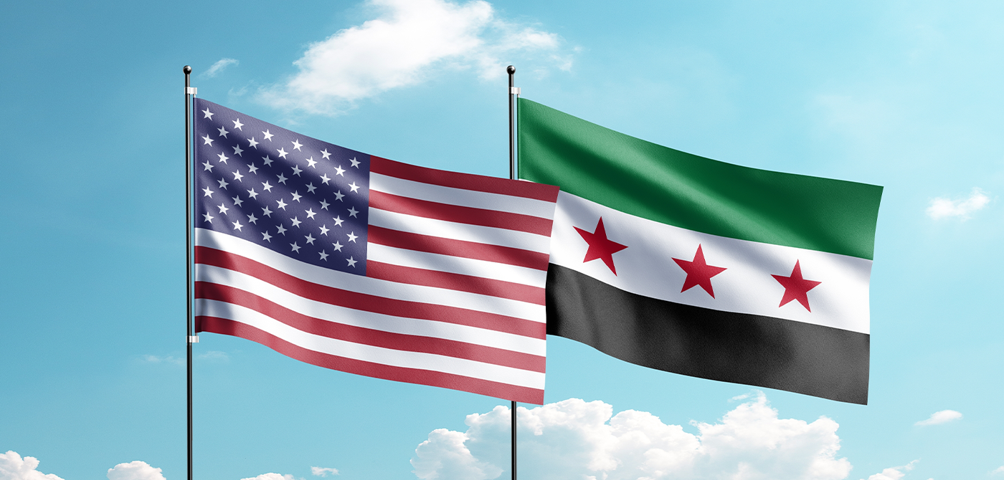
For nearly half a century, Syria’s designation by the U.S. as a State Sponsor of Terrorism has stood as one of the most enduring features of the country’s relationship with Washington. More than a legal classification, the designation has become a symbol of Syria’s prolonged isolation from the Western-led international system and a major obstacle to its integration into global financial and economic networks.
Today, however, Syria finds itself at a pivotal moment. The political transformations that have followed the fall of the Assad regime, coupled with broader shifts across the Middle East, have reopened questions that once appeared settled. Among them is whether Syria’s continued presence on the U.S. terrorism list still reflects contemporary realities or whether it has become a legacy issue awaiting strategic reassessment.
The answer carries implications far beyond bilateral relations. It touches upon the future of Syria’s reconstruction, the flow of international investment, and the broader question of how the international community intends to engage with a post-conflict Syria.
The Origins of a Long-Standing Designation
The State Sponsors of Terrorism list was established by the United States in the late 1970s as part of a broader effort to institutionalize counterterrorism within American foreign policy. Countries designated under this framework face a range of punitive measures, including restrictions on military exports, limitations on dual-use technologies, financial sanctions, and barriers to international lending and investment.
Over time, the list evolved into one of Washington’s most powerful instruments of geopolitical pressure. Unlike targeted sanctions that affect specific sectors or individuals, inclusion on the terrorism list influences an entire country’s relationship with the global financial system.
Syria was added to the list in 1979 and has remained there ever since. This continuity makes it one of the longest-running cases in the history of the designation. While other countries—including Libya, Sudan, and Cuba—were eventually removed following political changes and diplomatic negotiations, Syria’s status has remained unchanged through decades of regional upheaval and international realignments.
Why the Issue Matters Today
The debate surrounding Syria’s designation has gained renewed relevance because the regional environment itself is undergoing profound transformation.
The Middle East is experiencing a gradual reconfiguration of alliances, economic corridors, and security arrangements. Countries that were once viewed primarily through a security lens are increasingly being evaluated according to their role in regional stability, trade connectivity, and economic development.
Within this context, Syria occupies a strategically significant position. Its geographic location links the Eastern Mediterranean with the Gulf and broader Eurasian trade routes. As discussions intensify regarding regional integration, energy corridors, and reconstruction initiatives, Syria’s economic potential is becoming increasingly difficult to ignore.
Yet the terrorism designation remains one of the principal barriers preventing the country from fully participating in these emerging frameworks.
Beyond Sanctions: The Investment Challenge
A common misconception is that the impact of the terrorism designation is limited to formal sanctions. In reality, its most significant effect lies in shaping perceptions of risk.
Global investors assess countries not only according to legal restrictions but also according to political predictability, regulatory stability, and reputational considerations. A country designated as a sponsor of terrorism is automatically viewed as a high-risk environment regardless of improvements in other areas.
As a result, financial institutions become more cautious, access to international credit becomes more expensive, and multinational corporations are often reluctant to commit long-term capital.
For Syria, this challenge is particularly significant because reconstruction requires more than humanitarian assistance or public funding. It requires sustained private-sector participation, access to global markets, modern technologies, insurance mechanisms, and international supply chains. All of these factors are directly influenced by the country’s international standing.
Consequently, even if certain sanctions are eased, Syria’s continued presence on the terrorism list would continue to discourage many forms of large-scale foreign investment.
The Politics of Delisting
Removing a country from the State Sponsors of Terrorism list is not merely a bureaucratic procedure. It is ultimately a political decision shaped by strategic calculations in Washington.
The process requires certification by the U.S. administration that the designated state has fundamentally altered its behavior and no longer supports terrorism. Congress must then be formally notified and allowed to review the decision.
History demonstrates that delisting often occurs not simply because of legal criteria but because broader geopolitical interests align in favor of engagement. Libya’s removal in 2006 and Sudan’s removal in 2020 illustrate how strategic considerations can reshape long-standing policies when circumstances change.
The Syrian case is therefore likely to depend not only on developments within Syria itself but also on evolving U.S. priorities, regional dynamics, and the broader international balance of power.
A Strategic Crossroads
The central question is no longer whether Syria has changed, but whether the international system is prepared to redefine its approach toward Syria.
The country stands at a crossroads between two competing trajectories. One path points toward gradual reintegration into regional and international structures, supported by reconstruction efforts and economic engagement. The other leads to the continuation of legal and political barriers that could prolong economic isolation despite changing realities on the ground.
Ultimately, Syria’s status on the U.S. terrorism list has become more than a legal matter. It is a measure of how the international community intends to navigate a rapidly changing Middle East and a test of whether geopolitical classifications inherited from previous decades can adapt to emerging strategic realities.
As the region enters a new phase of political and economic transformation, the future of this designation may prove to be one of the clearest indicators of Syria’s place in the evolving international order.
Disclaimer. The views and opinions expressed in this analysis are those of the author and do not necessarily reflect the official policy or position of MEPEI. Any content provided by our author is of his opinion and is not intended to malign any religion, ethnic group, club, organization, company, individual, or anyone or anything.
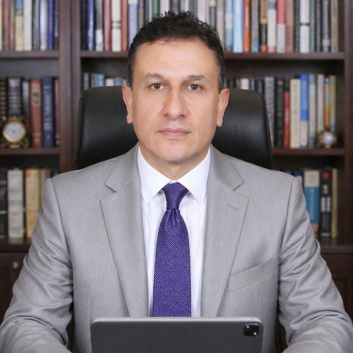
Dr. Shaher Al SHAHER
Dr. Shaher Al SHAHER is an Associate Professor at the School of International Studies, Sun Yat-Sen University, China.