
Syria and the U.S. Terrorism List: A Test of Reintegration in a Changing International Order
June 22, 2026
The Current Relationship between the People’s Republic of China and the Monarchies of the Gulf Cooperation Council
June 28, 2026The Contemporary Dynamics of EU-China Relations: Navigating Pragmatic Cooperation, Structural Discrepancies, and Geopolitical Re-Alignment
Introduction
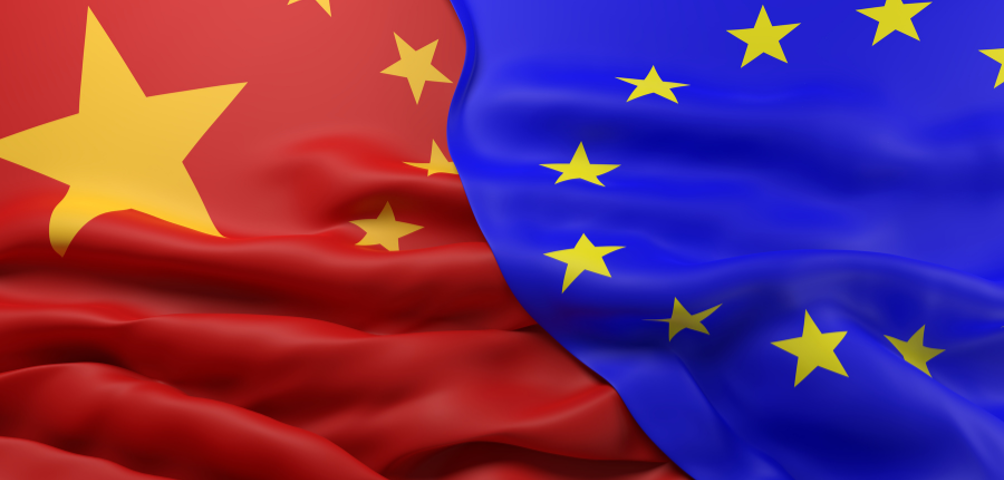
China formally established diplomatic ties with the European Economic Community in May 1975, marking the 50th anniversary of China-EU diplomatic relations in 2025 and entering 2026 at a 51-year milestone. Over the past half-century, bilateral ties have evolved from initial economic and trade exchanges into a comprehensive strategic partnership, emerging as one of the most strategically significant bilateral relationships across the globe. Against the backdrop of accelerated shifts amid profound global changes, intertwined geopolitical conflicts, and surging unilateral protectionism, China and the EU stand as major global economies and key advocates of multilateralism. Their bilateral cooperation is deeply intertwined with industrial development and people’s wellbeing on both sides, while exerting far-reaching influence over the evolution of the global governance system.
Yet the substance beneath the contemporary commemoration tells a far more complicated story. The 25th EU-China Summit, held in Beijing on July 24, 2025, was telling not only in what was said but in how it was staged. Originally scheduled as a two-day dialogue to mark the anniversary, the summit was compressed into a single day at China’s request, and the choreography of the occasion could not disguise the widening gulf on trade, security, and geopolitical alignment. European Commission President Ursula von der Leyen’s characterization of the relationship as having reached an “inflection point” has since become the dominant framing through which Brussels views the bilateral. That inflection point metaphor captures both the sense of gravity and the absence of a clear directional consensus: everyone agrees something must give, but neither side agrees on what the rebalanced equilibrium should look like.
To understand where relations stand as of mid-2026, one must begin with the conceptual architecture that has governed European thinking since 2019, when the European Commission’s strategic outlook formally defined China through a “triple designation” framework as simultaneously a partner for cooperation with whom the EU shares common interests in addressing global challenges, an economic competitor pursuing technological leadership and market dominance, and a systemic rival promoting alternative models of governance. The von der Leyen Commission’s subsequent refinement of this posture—the doctrine of “de-risking, not decoupling”—has functioned as the North Star of EU China policy. In theory, de-risking draws a clean line between sensible supply-chain diversification and the catastrophic economic self-harm of full decoupling. In practice, however, the boundary between risk management and containment has grown increasingly porous, as the EU has rolled out an expanding architecture of economic security instruments that now touch virtually every dimension of bilateral engagement.
Institutional Anchors and Pragmatic Cooperation
Decades of institutional development have helped the China-EU comprehensive strategic partnership build more than 70 regular consultation and dialogue mechanisms spanning politics, economy and trade, science and technology, climate governance, cultural, and people-to-people exchanges. The China-EU Summit, High-Level Strategic Dialogue, and High-Level Economic and Trade Dialogue form the top-tier framework for bilateral communication. Head-of-state diplomacy continues to deliver strategic guidance for bilateral ties. At the July 2025 summit, both sides reaffirmed the fundamental principles guiding bilateral development: mutual respect, seeking common ground while reserving differences, openness for cooperation and win-win outcomes, consolidating the political consensus underpinning their comprehensive strategic partnership.
In the first half of 2026, high-level exchanges remained frequent, and the mechanized dialogue system operated smoothly. In February 2026, German Chancellor Friedrich Merz paid his first official visit to China, accompanied by a high-level delegation of 30 German business representatives, reaching important consensus on deepening practical cooperation and properly handling trade frictions. Similarly, early 2026 saw official visits from Irish Prime Minister Martin and Finnish Prime Minister Orpo, focusing on economic and trade cooperation, green development, and multilateral coordination.
Amid sluggish global economic recovery and mounting trade barriers, economic and trade cooperation remains the bedrock sustaining steady China-EU ties. Bilateral goods trade between China and the EU hit USD 828.11 billion in 2025, rising by 5.4 percent year-on-year. According to alternative data frameworks, this volume stands at approximately 750 to 850 billion euros annually, meaning China and the EU rank as each other’s second-largest trading partners globally, with China serving as the EU’s top source of imports and the EU retaining its position as China’s second-largest merchandise trade market after ASEAN. This robust economic momentum has extended into the first quarter of 2026, where the total trade volume reached USD 212.4 billion, representing a year-on-year increase of 17.6 percent. During this first quarter, China’s exports to the EU were USD 147.77 billion, up 21.1 percent year-on-year, while imports from the EU were USD 64.64 billion, up 10.5 percent year-on-year.
Distinct complementarity characterizes bilateral trade composition. The EU boasts prominent advantages in exporting high-tech equipment, medical devices, and premium consumer goods to China, with China’s imports of EU high-tech products growing by 11.1 percent year-on-year in 2025. Market access for EU agricultural products in China keeps expanding; pork products from 15 EU member states and poultry from seven EU nations have secured official export approval. Meanwhile, Chinese mechanical and electrical products, new energy equipment, and daily manufactured goods stably supply European markets, with over 90 percent of China’s new energy vehicles entering Europe via the Port of Antwerp.
Backed by the China-Europe Railway Express initiative, over 110,000 trains had departed for Europe by the end of 2025, reaching 229 cities across 26 European countries. This overland transport corridor has forged a new channel for inland Eurasian trade and become core infrastructure to hedge against volatility in maritime logistics and stabilize global industrial and supply chains. In the first quarter of 2026 alone, the express operated 5,460 trains and delivered 546,000 TEUs of goods, up 29 percent and 22 percent year-on-year respectively, while customs clearance time at ports was shortened to less than 30 minutes.
The commercial engine of the relationship refuses to stall, driving robust vitality in two-way investment. Cumulative bilateral investment has crossed structural thresholds, approaching 260 to 280 billion USD by mid-2026. In 2025, the EU’s newly added actual investment in China reached USD 6.39 billion, while German firms alone invested over 7 billion euros in China, marking the highest level since 2021. Multinational European conglomerates including Volkswagen, BMW, and Siemens keep scaling up investment in new production and R&D bases within China. According to recent industrial surveys, 68 percent of European enterprises choose to maintain or expand their business in China, and nearly one-third are further deepening localized production. Concurrently, China’s fresh direct investment in the EU stood at USD 9.22 billion in 2025, flowing into greenfield projects in electric vehicles, batteries, and logistics. This is vividly demonstrated by the battery plant jointly built by CATL and Stellantis in Aragon, Spain, and BYD’s expanding electric vehicle manufacturing facilities in Hungary.
Beyond conventional merchandise trade, emerging sectors including green low-carbon development, digital economy, and biomedicine have grown into fresh growth drivers. The entry into force of the Agreement on Cooperation on, and Protection of, Geographical Indications has allowed thousands of featured agricultural products from both sides to obtain mutual market access certification. Complementarity also extends to services trade, despite structural gaps; China recorded a USD 48.3 billion deficit in services trade with the EU in 2025, making the EU China’s largest source of services trade deficit, with China’s annual royalty payments for intellectual property rights to the EU alone exceeding USD 10 billion.
In the digital arena, cross-border e-commerce trade exceeded USD 65 billion in 2025, maintaining an annual growth rate of 32 percent. Chinese telecommunications companies have built more than 70 percent of the 5G network infrastructure in certain European nations, while cloud providers like Alibaba Cloud and Tencent Cloud have established regional data centers to support adjacent economic zones. People-to-people exchanges have steadily rebounded, supported by the implementation of unilateral visa exemption policies for ordinary Chinese passport holders by 25 EU member states. Joint university education programmes and student exchange initiatives run on a permanent footing, while cultural, arts, and sports exchanges have fully recovered from pandemic-era setbacks, steadily consolidating grassroots friendship between the two peoples.
Trade Frictions and Economic Security Defense
Although pragmatic cooperation has expanded in breadth and depth, China-EU relations face tangible frictions and structural discrepancies. The primary economic flashpoint centers on trade imbalances and industrial competition. The headline figure dominating political discourse in Brussels is the EU’s trade deficit with China, which stood at approximately 308 billion euros in 2024 and reached 360 billion euros in 2025—amounting to approximately 1 billion euros per day. By the first quarter of 2026, China’s trade surplus with the EU reached USD 83.13 billion, a year-on-year increase of 30.2 percent. European policymakers argue that this deficit reflects asymmetric market access, state-directed industrial policy, and structural overcapacity in sectors where subsidized production floods global markets. The focus of trade tensions has expanded from traditional sectors like steel to embrace clean energy technologies, as China now accounts for roughly 30 percent of global manufacturing output while representing only 13 percent of global consumption.
In response, certain industrial blocs in the EU fixate one-sidedly on deficits in goods trade while ignoring full-spectrum economic indicators covering services trade, investment returns, and profit distribution along industrial chains. This has pushed forward unilateral de-risking and supply chain diversification policies, leading the EU to expand its trade control toolkit and build an institutional defense perimeter that operates through the internal architecture of the single market. The Foreign Subsidy Regulation, operationalized since 2023–2024, has empowered the Commission to investigate and condition non-EU firms’ participation in public procurement and mergers, landing heavily on Chinese firms.
Furthermore, the Cybersecurity Act 2.0 revision of January 2026 introduced non-technical risk criteria for supply-chain screening, creating mechanisms to exclude Chinese vendors from 18 categories of critical infrastructure. In March 2026, the European Commission unveiled the proposed Industrial Accelerator Act, which folds strategic autonomy into industrial policy by introducing a 49.5 percent ownership ceiling, local-content incentives, and compulsory technology transfer requirements for new investments from countries accounting for 40 percent of global output in strategic sectors like batteries, electric vehicles, and renewables.
More direct trade defense measures have also materialized. On June 5, 2026, the European Parliament adopted the Steel Import Act by an overwhelming majority of 606 to 16. Effective July 1, 2026, this act reduces the tariff-free steel import quota by 47 percent to 18.3 million tons annually and raises the tariff on above-quota imports from 25 percent to 50 percent. This came amid European Commission estimates that global steel overcapacity could reach 721 million tons by 2027, nearly five times total EU steel consumption. In parallel, five EU member countries led by France have pressed the Commission to adopt even more severe protectionist measures, including unilateral tariffs similar to U.S. Section 301 rules. On May 7, 2026, the EU further announced the suspension of public financial support for renewable energy projects using inverter equipment from high-risk sources, including China.
The rare earth dispute further exemplifies how quickly technical trade policy bleeds into strategic anxiety. China’s dominant position across the rare earth value chain gives Beijing extraordinary leverage, and when China introduced new export control measures on rare earth elements and magnets in 2025, European automotive production lines felt the shock almost immediately. Although dependency itself is viewed as a vulnerability in Brussels, in science and technology cooperation, the EU keeps tightening export controls over critical raw materials and high-end manufacturing equipment, erecting institutional barriers for collaboration in cutting-edge fields including artificial intelligence and semiconductors, and artificially fragmenting global innovation chains.
China has firmly opposed these trade defense measures, arguing that unilateral protectionist trade rules run counter to free-trade norms, violate WTO rules, lack technical basis, and will inevitably drive-up consumer costs across Europe while undermining local industrial competitiveness. China’s Ministry of Commerce has stated that if the European side unilaterally introduces discriminatory tools, China will resolutely fight back to protect the legitimate rights and interests of domestic enterprises in accordance with domestic laws, and has already challenged the steel measures at the WTO. Chinese officials emphasize that the trade imbalance is a structural issue resulting from differences in industrial architecture, comparative advantage, and consumer preferences, rather than unfair trade practices, adding that China does not deliberately pursue trade surpluses.
Compounding these frictions, parts of European institutions tend to politicize normal commercial issues. The European Parliament has passed resolutions targeting China’s legal regulations on rare earth export administration and new energy industrial policies, prompting the Chinese Mission to the EU to publicly oppose the practice of securitizing and ideologizing regular commercial regulations. Furthermore, heightened intra-EU coordination costs raise transaction costs for bilateral communication, as the 27 member states hold disparate demands: Central and Eastern European nations prioritize infrastructure and commodity trade cooperation, while certain Western European countries adopt conservative China policies swayed by domestic electoral pressures. Conversely, member states like Germany have expressed deep concerns about a full-scale trade war that would harm European businesses, maintaining an emphasis on economic pragmatism.
Despite these severe structural frictions, both sides have shown a willingness to manage disputes via equal negotiation. The China-EU electric vehicle anti-subsidy case achieved phased progress when the European Commission issued a Guidance Document in January 2026, allowing Chinese electric vehicle enterprises to submit price undertaking applications to replace anti-subsidy duties. Several Chinese automakers, including BYD, Geely, and SAIC, have submitted applications for evaluation, reflecting a shared desire to resolve differences through dialogue within the WTO framework. In a parallel effort to maintain open legislative channels, an EU Parliament delegation led by Anna Cavazzini visited Beijing and Shanghai from March 31 to April 2, 2026, marking the first Parliamentary delegation to China in eight years and focusing on digital economy issues, consumer protection, and product safety.
Climate Cooperation and Global Governance
In contrast to economic frictions, climate change and environmental protection remain the most robust pillars of cooperation within the bilateral relationship. Both sides recognize that global climate goals cannot be achieved without their joint participation, as they are the world’s two largest emitters of greenhouse gases, accounting for approximately 40 percent of global carbon dioxide emissions combined. The China-EU High-Level Environment and Climate Dialogue, launched in 2020, operates on a regular basis, facilitating coordinated policy formulation on renewable energy R&D, carbon market rule alignment, and circular economy implementation. Highlighting this alignment, the EU, China, and Brazil officially launched the Open Coalition on Compliance Carbon Markets on May 7, 2026, in Florence, Italy. The coalition aims to enhance the integrity and effectiveness of global carbon markets by developing robust monitoring, reporting, and verification systems, sound carbon accounting methodologies, and high-integrity offset standards, with Brazil chairing the first two years and China and the European Commission serving as co-chairs.
Bilateral environmental interaction has accelerated through several specialized pathways in early 2026. The 3rd EU-China Water Policy Dialogue was held in Brussels on February 2, 2026, co-chaired by EU Environment Commissioner Roswall and Chinese Minister of Water Resources Li Guoying, focusing on water resource management, flood prevention, and water pollution control. In April 2026, a specialized workshop on deforestation-free sustainable supply chains was convened during Shanghai Climate Week, bringing together cross-sector stakeholders.
Technical collaboration is further sustained via the EU-CHINA BRIDGE Program, a Horizon Europe initiative supporting collaborative research on decarbonizing energy-intensive industries, developing innovative net-zero pathways, and compiling emissions datasets. Additionally, both sides are implementing a joint research program on blue carbon, focusing on coastal marine ecosystems and their role in climate change mitigation. In the industrial sphere, the China-EU Energy Technology Innovation Cooperation Platform announced in May 2026 the addition of a special working group on biomass energy, to be officially established at the 4th China-EU Energy Technology Innovation Cooperation Forum in late June.
Yet even within this bright spot, tensions remain embedded. The EU has expressed concerns about its growing dependence on China for clean energy technologies and critical minerals, utilizing the Critical Raw Materials Act and Net-Zero Industry Act to explicitly reduce this reliance and build European industrial capacity. China, conversely, argues that European protectionist measures in the green technology sector undermine global climate action by increasing costs and slowing the deployment of renewable energy. Chinese officials emphasize that China’s leadership in clean energy technologies has been instrumental in driving down global prices, making the energy transition more affordable worldwide. Nevertheless, global shifts toward green and digital transformation continuously compel both sides to look toward unlocking untapped complementarity across industrial chains, with green investment and financing emerging as fresh contributors to trade growth.
This cooperative imperative extends to the broader arena of global governance and international affairs. As stalwart defenders of multilateral trade rules, China and the EU share an inherent common ground to jointly counter protectionism, defend the WTO-centered multilateral trading system, and refine global economic regulations. Within the United Nations framework, the two sides possess years of collaborative experience in counter-terrorism, poverty alleviation, and public health governance, with ample room to expand joint initiatives. In regional security, both sides share an interest in resolving conflicts in the Middle East that disrupt global energy markets and trade routes; the EU’s diplomatic channels with Iran, combined with China’s influence as a major trading partner and investor, could be leveraged to encourage diplomatic negotiations. In Afghanistan, both the EU and China retain a stake in preventing the country from becoming a haven for terrorism, presenting potential for cooperation on humanitarian assistance and economic development.
Geopolitical Divergences and the Transatlantic Overlay
Geopolitical differences have become increasingly prominent, creating significant strains in the bilateral relationship. Russia’s war of aggression against Ukraine remains the top priority of the EU’s foreign policy and stands as the most significant point of geopolitical divergence. The EU views the war as an existential threat to European security and the rules-based international order, and has forced a permanent re-socialization of security thinking across the continent. When Brussels insists that China’s relationship with Russia is becoming the determining factor in EU-China ties, it reflects a hardening consensus that neutrality is no longer politically sustainable.
Consequently, the EU’s 19th sanctions package, rolled out in late 2025, targeted entities in China alleged to be supporting Russia’s military-industrial base, with individual EU member states following third-party unilateral sanctions and adding Chinese enterprises to sanction lists. China’s Ministry of Commerce has lodged repeated solemn representations against such moves, urging the EU to abide by international law, while Beijing continues to advocate resolving the crisis through political negotiations and firmly opposes unilateral sanctions. Despite these deep differences, both sides have expressed a willingness to engage in dialogue, leading to limited discussions about potential humanitarian cooperation.
The transatlantic security-commerce nexus introduces further external pressure. Chinese policymakers see the EU drifting closer into an alliance dominated by Washington, especially under the disruptive return of Trump-era trade warfare where the EU itself has been hit with tariffs and has had little choice but to negotiate a precarious accommodation with the United States. From Beijing’s perspective, if the EU will not defend its declared strategic autonomy against American pressure, its claim to pursue an independent China policy rings hollow, bringing outside interference to the development of EU-China relations.
At the same time, the EU has increasingly focused on the Indo-Pacific region, adopting its first Indo-Pacific Strategy in 2021 to promote a free, open, and rules-based architecture. China views this strategy with suspicion, seeing it as part of a broader U.S.-led effort to contain China’s rise, and has expressed concerns about the potential for the EU to become involved in regional security issues. The EU has reaffirmed its commitment to freedom of navigation and overflight in the South China Sea, as guaranteed by the United Nations Convention on the Law of the Sea, while expressing explicit concern over tensions in the Taiwan Strait and calling for a peaceful resolution of cross-strait differences through dialogue. Taiwan looms as the ultimate stress test of the entire framework—the one scenario where partner-competitor-rival compartmentalization would collapse entirely.
Future Evolutionary Logic and Conclusion
As of mid-2026, the honest assessment is that EU-China relations are simultaneously over-securitized and under-institutionalized. They are over-securitized in the sense that risk has become such an expansive category—spanning artificial intelligence research, student exchanges, port cranes, and commercial products—that it threatens to swallow normal economic exchange. They are under-institutionalized in the sense that there is no positive, forward-looking framework agreement or grand bargain on the horizon to stabilize expectations. What exists instead is a dual-track reality: one track of managed confrontation where legal-institutional tools harden the defensive perimeter, and another track of functional engagement where climate cooperation, global governance coordination, and pro-business diplomacy keep the channels open.
The near-term trajectory will likely be defined by three critical variables: first, whether the EU can translate de-risking from a compelling slogan into a calibrated, proportionate set of policies that achieve genuine diversification without collapsing into protectionist self-isolation; second, whether Beijing is prepared to offer concrete, verifiable concessions on market access, subsidy transparency, and supply-chain predictability; and third, how the broader geopolitical environment—above all, the evolution of the Ukraine conflict, U.S.-China rivalry, and Middle Eastern instability—continues to pull the EU’s risk calculus in contradictory directions.
In May 2026, EU High Representative Josep Borrell delivered a keynote speech in Beijing, outlining the EU’s priorities by emphasizing the need to rebalance economic ties and accelerate environmental cooperation while addressing these deep geopolitical differences. The 24th EU-China Summit, scheduled for the second half of 2026, will provide the next major high-level platform to navigate these competing interests.
The paradox of the current moment is plain: the EU and China remain too deeply intertwined to decouple without inflicting profound damage on both sides’ growth models, green transitions, and global stability—yet too fundamentally misaligned in their geopolitical orientations and economic structures to return to the optimistic integrationist logic of previous decades. Nevertheless, shared interests vastly outweigh divergences. For the European side, plagued by persistently high domestic inflation, arduous energy transition, and sluggish domestic demand, tapping into China’s massive consumer market and leveraging its sophisticated industrial chains constitutes a pragmatic development choice. For the Chinese side, upholding the diplomatic principles of respecting sovereignty and non-interference remains paramount, as Beijing actively expands market access and optimizes its business environment to ease European anxieties.
Ultimately, contemporary China-EU comprehensive strategic relations feature prominent overall cooperation alongside partial divergences and outstanding resilience. Half a century of diplomatic engagement has forged solid interest bonds and mature institutional dialogue frameworks that equip both sides to withstand external shocks. Current trade disputes and policy discrepancies represent routine challenges in state-to-state engagement and will not alter the core partnership positioning.
Should the EU abandon bloc-binding ideological constraints and shake off the shackles of unilateral protectionism to formulate China policies based on its own practical economic needs, China and the EU, leveraging their combined economic weight, are well-positioned to deepen all-round cooperation. Such progress will deliver tangible benefits to nearly two billion people, inject stability and growth momentum into a volatile global landscape, and further advance the steady progression of economic globalization worldwide.
Disclaimer. The views and opinions expressed in this analysis are those of the authors and do not necessarily reflect the official policy or position of MEPEI. Any content provided by our authors is of their opinion and is not intended to malign any religion, ethnic group, club, organization, company, individual, or anyone or anything.
Mingyuan Tan, Yixuan Xie, Xinyu Cui and Yanan Xiao are MEPEI interns and students at Chinese universities, in Law and Engineering.