The Contemporary Dynamics of EU-China Relations: Navigating Pragmatic Cooperation, Structural Discrepancies, and Geopolitical Re-Alignment
June 25, 2026
The Funeral of a Leader, the Renewal of the Iranian Nation’s Commitment to Safeguarding the Legacy of Independence, Resistance, and National Strength
July 3, 2026The Current Relationship between the People’s Republic of China and the Monarchies of the Gulf Cooperation Council
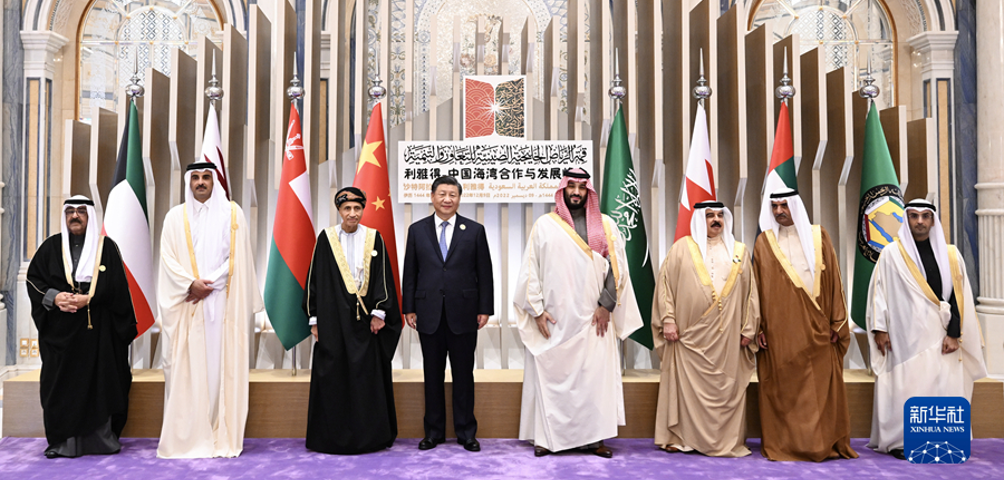
Photo’s Source: CGTN
Introduction
The relationship between the People’s Republic of China and the six monarchies of the Gulf Cooperation Council (GCC)—Saudi Arabia, the United Arab Emirates, Qatar, Kuwait, Oman, and Bahrain—has undergone a profound qualitative transformation over the past four decades. What began in the 1980s and 1990s as a modest, narrowly transactional arrangement built on crude oil exports in exchange for Chinese manufactured goods has today evolved into a multi-dimensional, comprehensive strategic partnership. Against the backdrop of accelerating global multipolarity, a deepening global energy transition, and the expansion of the BRICS mechanism, this relationship has entered a golden age of high-quality development, emerging as one of the most dynamic and influential bilateral alignments in the Middle East.
As of May 2026, China-Gulf relations stand at an unprecedented historical high, successfully navigating complex international challenges such as regional conflicts, global energy volatility, and economic slowdowns. The landmark First China-GCC Summit held in Riyadh in December 2022 served as a historic turning point. During this summit, where President Xi Jinping became the first Chinese leader to address the council, both sides issued a joint statement establishing their strategic partnership and adopted the China-GCC Strategic Dialogue Action Plan 2023–2027. This milestone opened a new era, establishing a summit-level leadership mechanism and initiating the comprehensive upgrading of bilateral ties.
The true significance of this modern relationship lies in the fact that cooperation has moved from the margins of Gulf foreign policy into the very core of the Gulf states’ post-oil development strategies. Seeking to diversify their economies away from oil dependence under national frameworks like Saudi Arabia’s Vision 2030, the UAE’s “We the UAE 2031,” Qatar’s National Vision 2030, and Oman’s Vision 2040, the Gulf countries have found a reliable partner in China. China’s world-class manufacturing system, technological capabilities, and infrastructure strengths map perfectly onto the modernization priorities of the Gulf, while Beijing views the region as a critical hub for its energy security, economic expansion, and the high-quality development of the Belt and Road Initiative (BRI). Operating on the principles of mutual respect, equality, and non-interference, the China-Gulf axis has become a model for South-South cooperation and an important pillar of global strategic stability.
Historical Evolution and Political Foundations
The trajectory of China-GCC relations can be understood through four distinct developmental stages. The first was the Diplomatic Establishment Stage in the 1980s and 1990s, during which China established formal ties with all six GCC countries and the council itself, laying a foundation centered on energy trade. This was followed by the Strategic Dialogue Stage in the 2000s and 2010s, marked by rapid commercial growth and the creation of a strategic dialogue mechanism in 2010 that expanded ties into political and security fields. Next came the Comprehensive Cooperation Stage, where the in-depth implementation of the BRI broadened interaction into infrastructure, finance, and culture. Every GCC member state eventually signed a BRI cooperation document with Beijing, culminating in the fourth and current stage: the Comprehensive Strategic Partnership Stage initiated by the historic 2022 summit.
Today, this partnership is guided by an institutionalized political framework. The two sides operate a “summit-led, ministerial-driven, departmental-implemented” system consisting of 27 ministerial-level dialogue mechanisms covering politics, economy, energy, and security. High-level exchanges have become frequent and regular, with the heads of state meeting 17 times since 2022, and foreign ministers holding consultations twice a year.
This robust political mutual trust has been repeatedly demonstrated through high-level interactions across 2025 and 2026. In May 2025, Chinese Premier Li Qiang attended the ASEAN-China-GCC Summit in Kuala Lumpur, where a joint statement was issued to enhance collaboration in supply chains, trade, and energy transition. In December 2025, Foreign Minister Wang Yi met with GCC Secretary-General Jasem Mohamed Albudaiwi in Saudi Arabia to reaffirm commitments to accelerate Free Trade Agreement (FTA) negotiations. In March 2026, Vice Foreign Minister Miao Deyu held a group meeting with GCC diplomatic envoys in China, reiterating Beijing’s firm support for the Gulf states’ sovereignty, security, and development interests. Most recently, on May 26, 2026, Foreign Minister Wang Yi met with Bahraini Foreign Minister Abdullatif bin Rashid Al Zayani in New York during a UN Security Council high-level meeting, praising Bahrain’s role as the current GCC rotating presidency and expressing China’s readiness to promote the healthy development of China-GCC relations.
In international affairs, the two sides maintain a high degree of strategic coordination, firmly supporting each other on core interests and development rights. They share common positions on upholding multilateralism, defending the purposes and principles of the UN Charter, and opposing hegemonism and bloc politics. Working together within multilateral frameworks like the United Nations, the G20, and BRICS, they actively promote the democratization of international relations and the reform of the global financial system to better safeguard the common interests of developing countries.
Economic Integration, Trade, and the Financial Infrastructure
Economic and trade cooperation has maintained strong growth momentum, firmly positioning China as the GCC’s largest trading partner for 16 consecutive years. By 2025–2026, China had overtaken the United States, Britain, and the Eurozone combined in trade with the region. According to the General Administration of Customs of China, total trade volume between China and the GCC reached $387.2 billion in 2025, representing a year-on-year increase of 14.8%.
The UAE has emerged as China’s primary trading partner in the Middle East. In 2025, non-oil trade between China and the UAE reached $111.5 billion, marking a 24.5% year-on-year increase and crossing the $100 billion threshold for the first time. This milestone reflects a highly successful diversification away from fossil fuels, with the UAE now accounting for nearly 30% of China’s non-oil trade with all Arab countries. Having watched bilateral trade grow 800-fold since establishing diplomatic ties in 1984, both nations have set an ambitious target to double their bilateral trade to $200 billion by 2030, driven by innovation, artificial intelligence, robotics, and start-ups.
This thickening commercial fabric is being rewired by a rapid expansion of bidirectional capital flows and financial integration. Historically, Gulf sovereign wealth funds (SWFs) treated China as a passive index-weighting play within global portfolios, but between 2023 and 2025, they moved aggressively into direct, strategic equity stakes. Focusing on Chinese champions in new energy vehicles (NEVs) like BYD and NIO, battery giants like CATL, advanced manufacturing, and A-share blue chips, estimated GCC outbound investment into China crossed the $20–25 billion range in 2025 alone, with Gulf SWFs collectively investing more than $120 billion in China as of May 2026. Concurrently, cumulative two-way investment exceeded $280 billion, with Chinese enterprises embedding themselves in over 300 major infrastructure projects, including Saudi Arabia’s NEOM City, the UAE’s Dubai South, and Qatar’s Lusail City. Chinese firms have transitioned from simple contractors to long-term investors, establishing manufacturing bases and regional headquarters, such as Lenovo’s $1 billion PC facility in Riyadh and Chinese port operators taking concessionary roles at the UAE’s Khalifa Port.
Monetary cooperation and the internationalization of the Renminbi (RMB) have accelerated significantly, reducing dependence on the US dollar and enhancing financial stability. As of the first quarter of 2026, the RMB accounted for 41.2% of China’s crude oil trade with the Middle East, making it the second-largest currency for oil pricing and settlement in the region. In 2025, the proportion of RMB settlement specifically reached over 42% in China-Saudi trade and 38% in China-UAE trade, supported by Cross-Border Interbank Payment System (CIPS) nodes and RMB clearing arrangements. The Shanghai International Energy Exchange has further anchored this trend by launching RMB-denominated crude oil futures contracts linked directly to Gulf crude.
To lock in this economic momentum, both sides are making a final push toward finalizing a comprehensive China-GCC Free Trade Agreement (FTA), an effort ongoing for over 20 years. Following a framework signing in Riyadh in mid-2025, provisional application clauses have already begun reducing tariffs on over 1,400 product categories—ranging from cosmetics to industrial machinery—and streamlining customs documentation. With conditions deemed highly favorable, both sides are striving to finalize the agreement at the earliest opportunity, particularly in preparation for the Second China-Arab States Summit and the Second China-GCC Summit scheduled to take place in China in 2026.
The Evolving Energy Alliance: Traditional to Green Transition
While energy remains the gravitational center of China-Gulf relations, the character of the alliance is transforming from a simple “oil-for-goods” transaction into a comprehensive, full-industry-chain partnership. The GCC still supplies roughly one-third of China’s crude oil imports, with China importing 216.8 million tons from the bloc in 2025, accounting for 41.7% of its total crude imports. Saudi Arabia remains China’s top supplier, delivering 89.2 million tons in 2025. To ensure stability, the two sides have locked in long-term supply agreements extending to 2035.
A major shift involves structuralized energy security through multi-year purchasing agreements designed to insulate supply chains from spot-market volatility and external trade frictions. For instance, in April 2025, China National Offshore Oil Corporation (CNOOC) signed a five-year LNG supply agreement with the Abu Dhabi National Oil Company (ADNOC) for 500,000 tons per year starting in 2026, alongside ADNOC’s separate 15-year, 1-million-ton annual contract with ENN Natural Gas. These agreements guarantee Gulf producers predictable offtake to justify multi-billion-dollar capacity expansions like the UAE’s Al Ruwais LNG terminal. Furthermore, traditional corporations like Saudi Aramco have significantly expanded their investment footprint in China, with total investments exceeding 240 billion yuan (around $33 billion) as of December 2025. Aramco has prioritized advanced petrochemicals, materials, and low-carbon tech for the “next 50 years and beyond,” exemplified by a $3.3 billion contract awarded in April 2026 to China’s Sinopec and Spain’s Tecnicas Reunidas to build a gas processing facility at Saudi Arabia’s Jafurah field.
Concurrently, the energy partnership has bifurcated into a dual-track model, experiencing explosive growth in renewable energy, green hydrogen, and advanced technologies. Chinese enterprises have undertaken more than 60% of the large-scale photovoltaic and wind power projects in the Gulf. This includes the 1.2 GW Al Dhafra photovoltaic power plant in the UAE—the world’s largest single-site solar plant built by a Chinese consortium—and the 2.6 GW Al Shuaibah complex in Saudi Arabia.
Rather than simply exporting products, Chinese green tech leaders like Longi, Jinko, Trina, and Envision are engaging in a “capacity transplant,” co-investing in locally embedded manufacturing ecosystems. In April 2026, Saudi energy giant ACWA Power announced plans to invest at least $30 billion in China by 2030, with $5 billion allocated for 2026 alone to target green hydrogen, green ammonia, wind and solar storage, and seawater desalination. Similarly, in May 2026, Saudi Arabia Refineries Co. (SARCO) signed a memorandum of understanding with China’s Ally Hydrogen Energy to establish a green ammonia plant in Jazan Industrial City alongside a local equipment manufacturing hub. Backed by a joint China-Saudi hydrogen energy research center, these initiatives align directly with the Gulf’s carbon neutrality goals and Saudi Arabia’s strategy to generate 50% of its electricity from renewable sources by 2030.
Digital Economy, Infrastructure, and Innovation
The digital economy and high-tech sectors have become a critical engine of China-Gulf alignment, shifting the focus of the Belt and Road Initiative from traditional projects like Qatar’s Lusail Stadium to digital infrastructure and smart cities. As Gulf states vigorously pursue digital transformation, advanced Chinese technologies in 5G, cloud computing, artificial intelligence, and e-commerce have seen widespread application across the region.
Chinese telecommunications firms, most notably Huawei, have established partnerships with major telecom operators across all GCC countries, building more than 70% of the region’s 5G network infrastructure. Simultaneously, Alibaba Cloud and Tencent Cloud have established advanced data centers in the UAE and Saudi Arabia, providing cloud services for the entire Middle East. Driven by this digital connectivity, cross-border e-commerce trade between China and the GCC exceeded $65 billion in 2025, maintaining a remarkable annual growth rate of 32%.
Security Coordination and Regional Stability
Security cooperation between China and the Gulf countries has deepened based on the principles of mutual respect and equality, expanding from traditional counter-terrorism and anti-piracy into non-traditional fields like cybersecurity and maritime security. China has continued its long-standing anti-piracy operations in the Gulf of Aden, escorting over 7,500 ships from various countries, and the two sides have conducted eight joint counter-terrorism exercises supported by a regular security dialogue mechanism. In the digital sphere, the UAE and China have signed specific cooperation agreements to combat cybercrime and protect critical information infrastructure.
Diplomatically, Beijing has maintained a disciplined posture, refusing to be drawn into hard military alliances while acting as a stabilizing broker in a region where it holds hundreds of billions of dollars in exposed assets. Following its notable diplomatic coup in facilitating the March 2023 Saudi-Iran rapprochement (the Beijing Agreement), China has maintained an objective and impartial stance during recent Middle East conflicts, consistently calling for immediate ceasefires, de-escalation, and the protection of civilians.
In March 2026, China’s Special Envoy for the Middle East Zhai Jun visited Saudi Arabia to consult with Saudi Foreign Minister Prince Faisal bin Farhan Al Saud on regional de-escalation. During the same month, Vice Foreign Minister Miao Deyu held collective meetings with GCC envoys in Beijing, commendably praising the GCC countries for their calm response amidst regional tensions. He emphasized that China opposes military strikes against sovereign states without UN Security Council authorization and condemns attacks on innocent civilians, offering enhanced Chinese diplomatic channels to promote a balanced, effective, and sustainable regional security architecture. While Gulf leaders highly appreciate Beijing’s rhetorical adherence to sovereignty and non-interference, they remain realistic about the limits of China’s hard-security enforcement capabilities, ensuring they carefully preserve their existing great-power portfolios and relations with the West.
People-to-People Connections and Cultural Exchange
A key pillar consolidating public support for the China-GCC friendship has been the flourishing of cultural and educational exchanges. The year 2025 marked the 35th anniversary of diplomatic ties between China and Saudi Arabia, celebrated as the China-Saudi Arabia Year of Culture. This initiative featured Chinese film festivals, language promotion activities, and the highly successful “Spring Festival Market” held in Riyadh in January 2025, which introduced traditional Chinese New Year temple fairs to large numbers of Saudi visitors. To foster ties among the younger generation, the 2026 “China-Gulf Year of Youth Exchanges” launched over 100 dedicated exchange activities.
Educational cooperation has seen similar expansion, with over 25,000 Gulf students currently studying in China, supported by the establishment of 12 Confucius Institutes and 4 Confucius Classrooms across the GCC to promote Chinese language and culture.
This social architecture is reinforced by a rapidly liberalizing framework of mobility. Building upon earlier mutual visa exemption agreements with the UAE and Qatar, China implemented a unilateral visa-free trial in June 2025 for ordinary passport holders from Saudi Arabia, Kuwait, Oman, and Bahrain. In November 2025, this policy was extended until December 31, 2026, achieving full visa-free coverage for the entire GCC bloc. These measures have triggered a surge in travel and tourism; flight frequencies have expanded, and global travel data from Skyscanner reveals that Shanghai has become the top emerging destination for Saudi travelers in 2026, with flight searches from the Kingdom increasing by 285%.
Global Governance and Broadening Strategic Alignments
On the international stage, the strategic partnership is increasingly viewed as a foundational beam of a crystallizing Global South economic order. A major milestone occurred in January 2026, when Saudi Arabia, the UAE, and Qatar officially joined the BRICS mechanism, establishing a powerful multilateral platform to deepen trade settlement, financial cooperation, and joint global governance alongside Beijing.
Furthermore, trans-regional cooperation formats are continually broadening. The launch of the ASEAN-China-GCC trilateral framework—advanced at the May 2025 Kuala Lumpur summit—demonstrates that Beijing and the Gulf are thinking beyond bilateral conveniences. They are actively building a triangular economic architecture that connects Southeast Asian energy demand, Gulf supply capabilities, and Chinese integration capacity, injecting new momentum into regional prosperity and ensuring the secure operation of global supply chains.
Challenges, Friction Points, and Strategic Constraints
Despite exceptional progress, an objective assessment reveals persistent structural constraints and realistic challenges within the relationship. The complex and volatile security situation in the Middle East, including tensions along the Red Sea and critical maritime corridors, poses ongoing risks to project implementation and personnel safety. Global economic uncertainties, such as fluctuating inflation and supply chain disruptions, also create short-term friction as both China and the GCC adjust their domestic industrial structures during economic transformation. Cultural and cognitive differences in business practices and values similarly require continuous management through people-to-people channels.
The most critical external vulnerability stems from tech-security decoupling pressure emanating from Washington. US restrictions on advanced semiconductors, AI chips, and telecommunications infrastructure have placed Gulf states in an uncomfortable squeeze; they heavily court Chinese 5G networks, drone technologies, and smart-city platforms, yet remain dependent on American military protection and Western financial infrastructure. This has forced a region-wide practice of “hedging by design,” typified by Saudi Arabia, which simultaneously courts US defense guarantees and hosts US forces while signing multi-billion-dollar contracts with Chinese technology giants, pursuing autonomous semiconductor and nuclear ambitions on multiple sides. Another structural constraint is China’s refusal to rupture its own comprehensive strategic partnership with Iran—a vital node in the westward corridor of the Belt and Road Initiative. Because Beijing cannot become a purely pro-Gulf security actor, there remains a definitive cap on the depth of the Sino-Gulf alignment at the hard-security level.
Conclusion and Future Prospects
As of May 2026, the comprehensive strategic partnership between China and the Gulf countries stands at an unprecedented, mature high, defined by robust political trust, deep economic integration, and a dense web of commercial, financial, and developmental interdependencies. The strategic alignment has outgrown its original oil-for-goods framework to encompass green energy transitions, advanced technologies, and regularized summit architectures, raising the disruption costs for all external powers.
Looking ahead, the momentum of this relationship remains structurally irreversible within any medium-term horizon. The developmental logic is clear: the GCC requires China’s massive market, capital-recycling capacity, and technology ecosystem to execute its post-oil modernization, while China relies on the GCC’s energy security, sovereign capital, and vital geographic positioning at the crossroads of Eurasia to secure its global supply chains. Guided by the common interests of the Global South, China and the GCC countries are poised to further consolidate their political foundation, expand emerging high-tech frontiers, and finalize the historic China-GCC Free Trade Agreement, ensuring this enduring partnership continues to serve as a model of international cooperation and a vital anchor for regional peace and global economic growth.
Disclaimer. The views and opinions expressed in this analysis are those of the authors and do not necessarily reflect the official policy or position of MEPEI. Any content provided by our authors is of their opinion and is not intended to malign any religion, ethnic group, club, organization, company, individual, or anyone or anything.
Mingyuan Tan, Yixuan Xie, Xinyu Cui and Yanan Xiao are MEPEI interns and students at Chinese universities, in Law and Engineering.