The EU’s Mediterranean Pact: Counterweight or Complement to US Regional Strategy?
November 22, 2025Fourth Nuclear Age
November 24, 2025
Introduction
A decade ago, under the pretext to aiding the Hadi government to establish themselves in the northern parts of Yemen and maintain security in the region. Initially Saudi led coalition saw gains however the Houthis military arsenal grew significantly beginning in 2019. Much of these weapon technologies were supplied to them by the Iran.[1] The use of these weapons by Houthis against Saudi Arabia resulted in significant economic loses for the country which is aspiring to diversify its economy. These attacks mostly targeted oil fields, airport and civilian infrastructures which proved to be hurdle in Saudi Vision 2030 to diverse their revenue source. The attacks led to a change in Saudi approach towards Houthis. Beginning from 2021, Saudi Arabia started holding talks with Houthis and signing multiple ceasefires agreement as per as Houthis conditions finally leading to a withdrawing of Saudi led coalition in 2023.
This change in the foreign policy of Saudi Arabian government can be understood due to past attacks and the economic damages it faced through Houthis attacks.
History of The Saudi Led Intervention
Yemen descended into a civil when Houthis captured the capital city of Sana’a in 2014 from the government control. A Saudi led coalition announced military intervention in the ongoing Yemen civil. The coalition of more than 10 nations were also aided by the United States and other western nations.[2] The coalition launched multiple airstrikes and on ground attacks to expel Houthis from the capital city and reinstate the Hadi led government. However, what was hoped to last as a six weeks military operation turned into years long conflict.
The invasion also drew international condemnation for the deaths of thousands of civilians by the coalition forces and displacement of over 2.5 million people. The war left 80% of the population, over 20 million people in need of aid and lead to a food shortage and credit crises in the country. Both the Saudi Arabia and United State failed in their efforts to take control over the capital city of Sana’a and weaken Houthis in Yemen. [3]
Instead, the Houthis grew stronger due to Iranian support and by 2019 the tide of the invasion was turned against Saudi Arabia as Houthis started capturing solider, many of whom belonged to Saudi Arabian forces and attacking inside the Saudi territories targeting oil fields, airports, military bases and cities.[4]
Initialisation of Drone Attacks by Houthis
According to Saudi Authorities from 2015-2021, Houthis launched 430 missiles and 851 armed drones at Saudi Arabia damaging Saudi infrastructures and killing 59 civilians. Most of the drones were used from 2019.[5] No other non-state actor has been reported to use loitering munitions at the level at which Houthis are using. These attack not only damaged the civilian infrastructure but were also able to damage oil facilities hindering the oil supply.
An ACLED analysis showed that the drone attacks against Saudi Arabia spikes from 2019-2021. In 2019, most of the drone attacks targeted Saudi Arabia which reduce to half of total attacks in 2020-2021. The year 2022-2023 saw most of the attacks against Yemen government, a sudden decrease from 2019-2021 trend. In 2024, most of these attacks targeted Red Sea while none targeted Saudi Arabia. [6]
In April 2018, Houthis started using a combination of missiles and drones to attack Abha International Airport in Aseer province and Najran province. which is being expanded as part of Saudi Vision 2030 to attract international tourist. In 2019 on multiple occasions, Houthis attack infrastructures at Jizan Airport and Abha Airport. Houthis also claimed to attack military position and aircrafts hangers in Abha and Jizan Airports. These attacked have claimed civilian lives and led to burning of a plane.[7]
Damaging an important structure like airport which deal with tourist posed a major threat for Saudi Arabia. It can lead to fear among people making it hard for Saudi Arabia to attract tourist in southern provinces. At the same time, it can lead on distrust among investors regarding the safety of their investment in tourism and industrialisation projects.[8]
Disturbance in Oil and Gas Sector
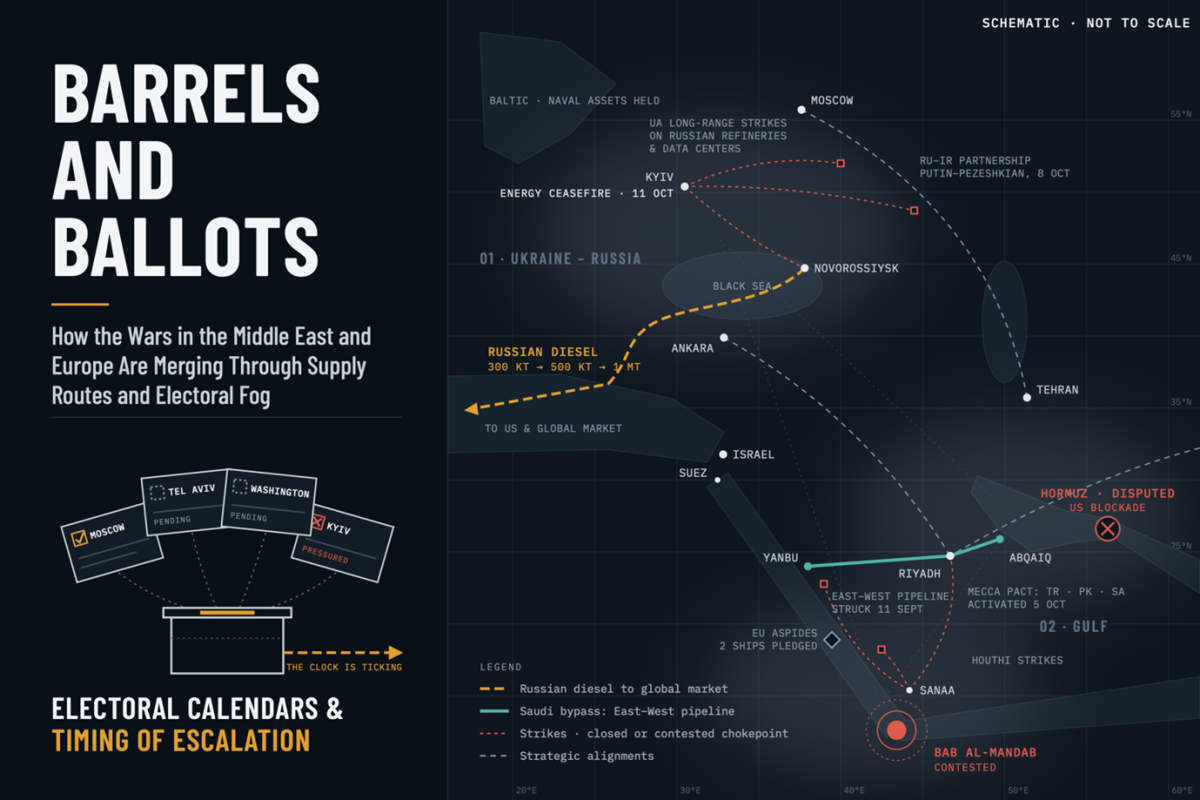
In May 2019, Houthis attacked two pumping stations of east-west pipeline running from its oil-rich Eastern Province to the Yanbu Port on the Red Sea. The drone targeted station 8 and station 9 out of which station 8 was successfully sabotage causing a fire which led to temporary closure of the facilities. A spokesperson for Houthis said nearly 7 drones were used to attack the facilities.[9]
In august 2019, Houthis used loitering munitions to attack Shaybah oil field located on the northern edge of rub al-Khali (empty quarter) desert. Houthis used a combination of 10 drones causing fire at the site which Saudi Aramco consider the most remote oil facility in the Kingdom, with the total oil reserve of 14.3 billion. By this Houthis sent a message that they can target anywhere within the Saudi Arabia.[10]
In September 2019, Houthis attacked the world’s largest oil refineries at Abqaiq and Khurais in Saudi Arabia using a combination of 25 drones and missile. The attack reduced the Saudi oil output by 50% or 5.7 million barrels of oil leading to reducing 5% of global oil supply and rising the oil prices by 20%. Houthis reportedly used Shahed 131 loitering munition.[11]
The damage let to a serious surge in oil prices disturbing the international energy trade. The brent crude Benchmarks rose up by 15%. The U.S. benchmark West Texas crude rose up by 10%. The brent crude Benchmark raised by briefly 20% before settling closer to 10%. It rose up by $6 to $66.28 per barrel. It rose again in the further up to $70 per barrel.[12]
In march 2022, Houthis attacked oil facilities at Jeddah, Saudi Arabia targeting Tanura and Rabigh refineries with drones. Strikes were also done against natural gas plant in the southern region of Jizan and the Yasref refinery at the port of Yanbu. Later Houthis also attacked an Aramco plant in city of Jeddah which led to fire, a power station at Dhahran al Janub, gas facility at Khamis Mushait and desalination facility at al-Shaqeeq. The attack led to reduction in the refinery output.[13]
Following multiple attacks, the international oil prices were disturbed. A rise of 1.4% was seen in the crude oil prices among different benchmarks. Brent crude benchmark rose to $120.65 up by $1.62. US west Texas intermediate crude rose $113.90 up by $1.56.[14]
In late 2019, following the attacks on Khurais and Abqaiq, Houthis declared a ceasefire against all their attacks on Saudi Arabia pressing on Saudi Arabia to withdraw their attacks against Houthis and Sana’a airport restrictions.[15]
The First Phase of Ceasefire between Houthis and Saudi Arabia
In March 2021, Saudi Arabia proposed another ceasefire to Houthis. The Saudi Foreign Minister Prince Faisal al Saud while talking on the proposal referred to the rebel forces saying “The Houthis must decide whether to put their interests first or Iran’s interests first” indicating that the Kingdom may be ready to make peace if the Houthis dissociate their relations with Iran.[16]
The Second Phase of Ceasefire between Houthis and Yemen Government
In April, 2022 UN sponsored a temporary ceasefire between Houthis and the internationally recognized Hadi government were agreed by both the parties beginning with the month of Ramadan.[17]
Houthis knowing, they hold a leverage over Hadi government and Saudi Arabia in October refused to extend the ceasefire on the previously agreed conditions demand the Saudi led coalition to pay the salaries of employees from Yemen oil revenue and other exaggerated demand.[18]
The 5 days September 2022 talks between Houthis and Saudi Arabia saw a change in Saudi attitude towards Houthis. The Saudi Defense Minister Prince Khalid bin Salman while speaking on the meeting referred the Houthis as “Sana’a delegations” rather than Ansar Allah or rebel forces as they previously did and called the talks as “positive result” indication the growing Saudi acceptance of Houthis as the formal government in North Yemen.[19]
The Third Phase of Permanent Ceasefire
While addressing the leaders and media at World Economic Forum in January, 2023 Saudi Foreign Minister pressed on having a permanent ceasefire in the Yemen civil war. He stated Saudi Arabia is also trying to co-operate with Iran to find the solution to end the conflict as soon as possible.[20]
Reportedly in April 2023, delegations from Saudi Arabia and Oman held talks with Houthis in Sana’a to reach further understanding towards a permanent ceasefire. The delegations reportedly also reached a mutual agreement to reinstate the ceasefire broken by the UN in 2022. Houthis also agreed to remove their blockade of Taiz while Saudi Arabia agreed to remove restrictions on Sana’a airport and Houthis Red Sea Port. This further lead to a mutual acceptance of each other and helped Houthis shift their attacks from Yemen towards Red Sea. [21]
In July 2023, the talk gets halted due to difference in Houthis and Saudi stance of payment of wages. Although Saudi Arabia agreed to pay the salaries of Yemen employees but it refused to do it from the Yemeni oil and gas revenues of but in form on an Islamic charity, which Houthis rejected.[22]
Saudi Arabia appreciated the recent deal in July 2024 between the Houthis and Hadi government in Yemen to stop sanctions against banks in each other region. The deal came after Saudi Arabia under Houthis pressure, pressed Yemen government to remove the sanctions Following.[23]
Silence in the Red Sea Crises
November 2023, Houthis started using a combination of missiles and loitering munitions to target merchant ships. They have attacked over 90 merchant ships, taken control over one and sank two. These attacks also posed loses for Red Sea ports of Jeddah and Jizan. However, despite this, Saudi Arabia which a decade ago would cease any opportunity to attack Houthis remained relatively silent in the conflict keeping it away from any kind of military actions against Houthi forces.[24]
Contrary to their earlier stance, Saudi Arabia had been critical of any US bombing in Yemen, which has killed hundreds of civilians in Yemen and had extensively lobbied for a peace deal and put pressure on trump on ending all form of military attacks against Houthis. Saudi Arabia also welcomed the 2015 peace deal between United States and Houthis emphasising on adopting a more “political solutions” rather than military actions.[25]
Conclusion
This change reflects not only the high cost of prolonged conflict but also Riyadh’s growing interest in regional stability and economic diversification. Houthis waged an economic warfare against Saudi Arabia to create pressure to withdraw the Saudi led coalition from Yemen and recognise its’ legitimate governance over northern Yemen.
These deals indicate a changing stance on Houthis in the Persian Gulf, where they are no longer viewed just as a militant group but an established institution in North Yemen.
In a notable shift, Saudi Arabia has remained relatively silent to the attacks of Houthis in Red Sea. A decade ago, in 2015, the Kingdom intervened in the Yemen civil war in favour of Hadi government but now it is nowhere to be seen in the ongoing conflict in the Red Sea.
References
[1] International Institute for Strategic Studies (IISS). (2025, April). Made in Yemen: Assessing the Houthis’ arms production capacity. IISS.
[2] United Nations, Security Council. (2015, March 27). Letter dated 26 March 2015 from the Permanent Representatives of the member states of the Gulf Cooperation Council (Bahrain, Kuwait, Qatar, Saudi Arabia, and United Arab Emirates) to the United Nations addressed to the President of the Security Council (S/2015/217). https://www.securitycouncilreport.org/atf/cf/%7B65BFCF9B-6D27-4E9C-8CD3-CF6E4FF96FF9%7D/s_2015_217.pdf
[3] Tisdall, S. (2016, March 25). Saudi Arabia campaign leaves 80% of Yemen population needing aid. The Guardian.
[4] Yemen: Houthis claim capture of thousands of troops in Saudi raid. (2019, September 28). Al Jazeera.
[5] Houthis have fired 430 missiles, 851 drones at Saudi Arabia since 2015 – Saudi-led coalition. (2021, December 27). Reuters.com.
[6] Nevola, L. (2023, January 17). Beyond Riyadh: Houthi cross-border aerial warfare (2015-2022). ACLED.
https://acleddata.com/2023/01/17/beyond-riyadh-houthi-cross-border-aerial-warfare-2015-2022/
[7] Al Jazeera. (2019b, September 14). Timeline: Houthis’ drone and missile attacks on Saudi targets. Al Jazeera.
https://www.aljazeera.com/news/2019/9/14/timeline-houthis-drone-and-missile-attacks-on-saudi-targets
[8] Kumar, P. (2023a, September 26). Tourism masterplan unveiled for
Saudi’s highest peak. Arabian Gulf Business Insight.
[9] Al Jazeera. (2019a, May 14). Saudi Arabia says oil stations attacked by armed drones. Al Jazeera.
https://www.aljazeera.com/news/2019/5/14/saudi-arabia-says-oil-stations-attacked-by-armed-drones
[10] Al Jazeera. (2019b, August 17). Drone attack by Yemen rebels sparks fire in Saudi oil field. Al Jazeera.
[11] Al Jazeera. (2019c, September 14). Houthi drone attacks on 2 Saudi Aramco oil facilities spark fires. Al Jazeera.
[12] Neuman, S. (2019, September 16). Attack on Saudi oil facilities makes oil prices spike. NPR.
[13] Al Jazeera. (2022a, March 25). Saudi Aramco’s Jeddah oil depot hit by Houthi attack. Al Jazeera.
https://www.aljazeera.com/news/2022/3/25/saudi-aramco-jeddah-storage-facility-hit-by-attack
[14] Oil rises to over $120/bbl after attack on Saudi facilities. (2022, March 26). Reuters.com. https://www.reuters.com/business/energy/oil-drops-supply-crunch-fears-ease-trading-costs-rise-2022-03-25/
[15] Al Jazeera. (2019, September 20). Yemen’s Houthis say will stop all attacks on Saudi Arabia. Al Jazeera.
https://www.aljazeera.com/news/2019/9/20/yemens-houthis-say-will-stop-all-attacks-on-saudi-arabia
[16] Al Jazeera. (2021, March 22). Saudi Arabia proposes ceasefire plan to Yemen’s Houthi rebels. Al Jazeera.
[17] Al Jazeera. (2022a, April 1). Yemen’s warring parties agree to two-month truce, UN says. Al Jazeera.
https://www.aljazeera.com/news/2022/4/1/yemens-warring-parties-agree-to-two-month-truce-un-say
[18] Al Jazeera. (2022, October 3). Yemen’s warring sides fail to agree extension to UN-backed truce. Al Jazeera.
[19] Gambrell, J. (2023, September 20). Saudi Arabia praises “positive results” after Yemen’s Houthi rebels visit kingdom for peace talks. AP News.
https://apnews.com/article/saudi-arabia-yemen-war-peace-talks d2a9ad9efe1ab0b4f5d51597098f46a2
[20] Al Jazeera. (2023, January 18). Saudi foreign minister sees progress towards ending Yemen war. Al Jazeera.
https://www.aljazeera.com/news/2023/1/18/saudi-foreign-minister-sees-progress-towards-ending-yemen-
[21] Magdy, S. (2023, April 9). Saudi officials visit Yemen’s capital for talks with rebels. AP News.
https://apnews.com/article/yemen-saudi-arabia-houthis-peace-war-faf722203eca078d91e040c1c296a8f7
[22] Houthis say negotiations with Riyadh stalled over salaries. (2023, July 23). The New Arab. https://www.newarab.com/news/houthis-say-negotiations-riyadh-stalled-over-salaries
[23] Whalley, N. (2024, July 23). Saudis give in to Houthi pressure, force CBY-Aden to back down. Sana’a Center For Strategic Studies. https://sanaacenter.org/publications/analysis/23062
[24] AP. (2024, November 18). Suspected attack by Yemen’s Houthi rebels’ targets ship in the Red Sea. The Hindu.
[25] Arab News. (2025, May 7). Saudi Arabia welcomes US-Houthi ceasefire deal. Arab News. https://www.arabnews.com/node/2599880/saudi-arabia
Disclaimer. The views and opinions expressed in this analysis are those of the author and do not necessarily reflect the official policy or position of MEPEI. Any content provided by our author is of his opinion and is not intended to malign any religion, ethnic group, club, organization, company, individual, or anyone or anything.

Mr. Swapnil SUJAL
Mr. Swapnil SUJAL is an undergraduate student of humanities and social sciences student with a strong academic focus on international relations, comparative politics, and political theory. His work often explores Global South perspectives, non-Western IR traditions, and development models especially in context of West Asia and North Africa. He is currently focusing of Saudi Vision 2030 and Iranian Proxy Warfare.