
The Understanding of the Changing Balance within the Scope of the Istanbul Cooperation Summit 2025
November 21, 2025
A Decade of Changing Saudi Foreign Policy Towards Houthis in Yemen
November 23, 2025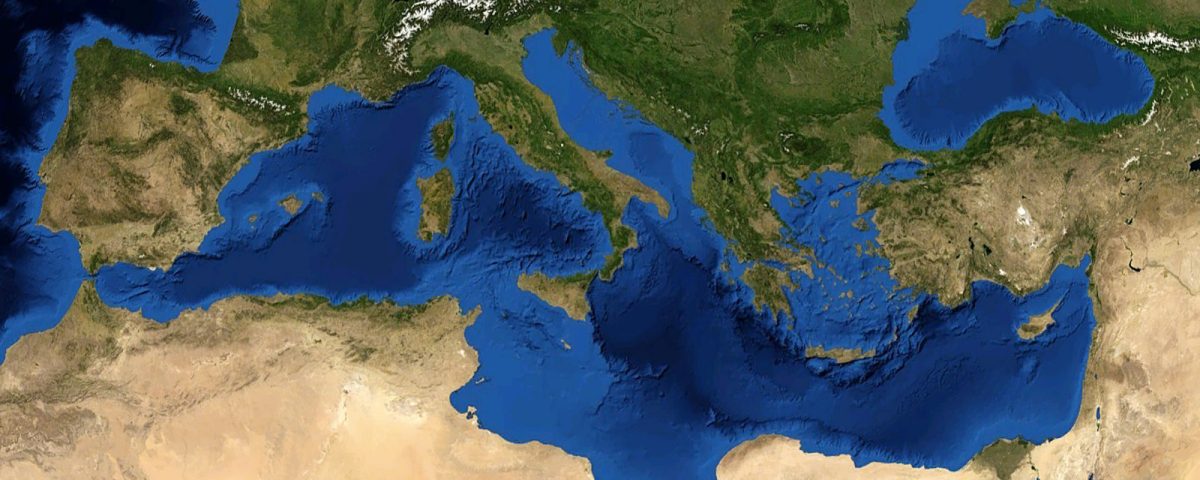
In October 2025, the European Union unveiled the New Pact for the Mediterranean, a landmark initiative aimed at deepening cooperation between Europe and its Southern Mediterranean neighbors. The pact envisions expanding its scope over time, potentially including Gulf partners, due to their strategic position bridging Europe, Asia, and Africa. The European initiative seeks to address a wide range of challenges across the “broader Mediterranean region” in an increasingly complex global geopolitical landscape.
This pact emerges against the backdrop of Trump 2.0 US policies toward North Africa, characterized by bilateral deals, transactional diplomacy, and a narrower focus on immediate US interests. This article explores how the New Pact reflects a European drive for strategic autonomy and assesses whether it constitutes a genuine multilateral effort or simply an adjustment to US bilateralism—especially regarding trade, migration, security, and diplomatic recognition.
Trump-Era US Policies in North Africa: Bilateralism and Transactional Diplomacy
While the US recalibrates its Middle East engagement after 2017-2021, Trump 2.0’s approach to North Africa prioritizes securing American strategic advantages through selective partnerships. The administration moves away from traditional commitments to development, democratization, education, and governance, favoring instead economic and energy-driven pragmatism. This approach builds on deals such as the recognition of Moroccan sovereignty over Western Sahara, favoring transactional relationships centered on investment opportunities and resource security over diplomacy or governance reforms.
Deep multilateral commitments are avoided, and military involvement is limited in favor of protecting strategic interests and expanding economic footholds. Notably, Washington announced efforts to broker an Algeria-Morocco peace deal—a rare initiative in the historically fractured Maghreb. Success in this endeavor could unlock regional trade, advance infrastructure projects like the Nigeria-Morocco gas pipeline, and reassert US influence in a region where Russia and China have deepened their presence.
The New Pact for the Mediterranean: A European Vision
In sharp contrast, the New Pact for the Mediterranean signifies a clear European push toward strategic autonomy through multilateral cooperation. It emphasizes co-ownership with partner states, joint responsibility for shared challenges, and sustainable economic development benefiting youth and vulnerable communities.
What distinguishes this pact is its unique and extensive consultative process, which involves civil society, EU and Southern Mediterranean institutions, the private sector, academia, think tanks, and cultural and economic organizations. This inclusive dialogue has helped shape a flexible, adaptable framework built around three interconnected pillars:
- People: Fostering connections, innovation, and empowerment through higher education, vocational training, mobility, youth engagement, cultural heritage, and tourism.
- Stronger, Sustainable, and Integrated Economies: Modernizing trade and investment, boosting renewable energy and clean technologies, enhancing water and digital infrastructure, promoting blue economy and agriculture, and creating jobs.
- Security, Preparedness, and Migration Management: Enhancing regional security cooperation, disaster preparedness, integrated migration management, and countering migrant smuggling.
The pact mobilizes multiple EU financial instruments and anticipates contributions from member states, Southern partners, international financial institutions, and private enterprises, intending to generate synergies and concrete benefits for people and businesses on both shores of the Mediterranean.
Contrasts and Complementarities
The divergence between the New Pact and Trump-era US policies is striking. While the US pursued narrowly focused bilateral deals and immediate interests—like strengthening ties with Morocco and backing its sovereignty claims—the EU’s multilateral agenda targets root causes of instability: governance deficits, economic shortcomings, and migration pressures. The Pact aims to forge shared regional frameworks, not fragmented bilateral relations, marking a firm assertion of European strategic autonomy that balances global influences including those of the US.
Yet, this autonomy is not isolationist. The Pact recognizes the enduring US presence and influence in the region and complements it by providing a multilateral platform to stabilize and strengthen Mediterranean cooperation from a European vantage point. Rather than outright opposing US bilateralism, it reflects a sophisticated adjustment and dialogue.
This strategic autonomy unfolds amid a complex multipolar milieu with significant global actors: China’s economic ascendancy through massive investments in ports, infrastructure, and renewable energy projects; and Russia’s assertive military involvement in Libya and Syria. Meanwhile, evolving regional diplomatic and political dynamics such as Algeria, Tunisia, and Egypt’s cooperation to stabilize Libya—underscore the internal complexities the Pact must navigate and take in consideration.
By positioning itself as an independent yet complementary actor to the US, the EU seeks to manage delicate interdependence between transatlantic solidarity and regional independence. However, tensions remain: navigating US pragmatism, China’s cautious economic presence, and Russia’s strategic interventions requires deft diplomacy to ensure Mediterranean states retain their agency rather than become pawns in great-power competition.
Conclusion
The New Pact for the Mediterranean is a decisive milestone in Europe’s quest for strategic autonomy within its broader Mediterranean neighborhood. Emerging partly in reaction to Trump-era US bilateralism and transactional diplomacy, the Pact offers a coherent, inclusive multilateral framework to address pressing challenges in trade, migration, security, and diplomatic recognition.
However, the Mediterranean today is a multipolar arena shaped not only by Euro-US ties but also by China’s economic assertiveness and Russia’s geopolitical ambitions. The Pact acknowledges that achieving autonomy demands skillful diplomacy and flexible partnerships beyond internal cohesion.
Without rejecting its closest ally, the US, the Pact balances transatlantic interests while forging European-driven multilateralism, hedging against external power plays and prioritizing regional ownership. This pragmatic yet aspirational framework aspires to transcend fragmented bilateralism, fostering collective resilience and shared prosperity amid competing global ambitions.
Disclaimer. The views and opinions expressed in this analysis are those of the author and do not necessarily reflect the official policy or position of MEPEI. Any content provided by our author is of her opinion and is not intended to malign any religion, ethnic group, club, organization, company, individual, or anyone or anything.

Ms. Martina MALAMAN
Ms. Martina MALAMAN holds an MSc in Politics of the Middle East from SOAS University of London and a BA in Languages and Cultures of Asia and Mediterranean Africa from Ca’ Foscari University of Venice. Her work focuses on MENA politics, enriched by research experience in Tunisia, Morocco, Türkiye, and Jordan. She has collaborated on policy and field research with the Arab Institute for Human Rights in Tunis and currently conducts political analysis as a Research Intern at the Middle East Political and Economic Institute. Fluent in English, Spanish, and Arabic, and proficient in Turkish and French, Martina combines strong analytical skills with deep regional knowledge.