
Navigating AI in the Gulf: Opportunities and Challenges Amidst Conflict
July 21, 2026
Saudi Arabia’s Nuclear Ambitions and Washington’s Strategic Dilemma: Redefining Non-Proliferation Rules in a Changing Middle East
July 24, 2026A Review of the Possibility of a Saudi Arabia – United States Nuclear Cooperation Deal, from Civilian Energy Cooperation to a Nuclearized Competition
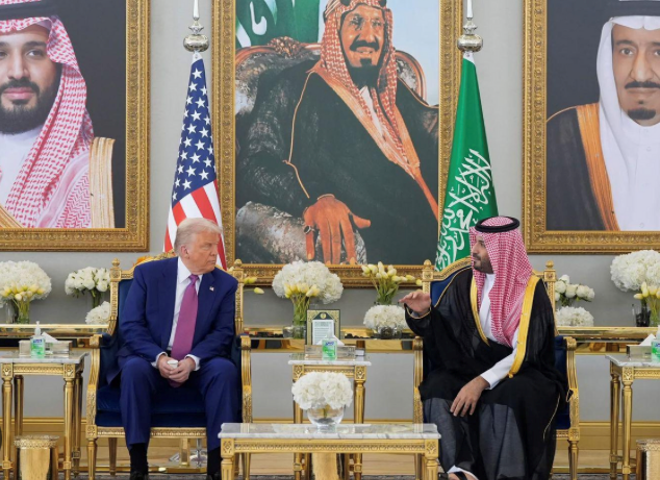
The Trump administration approved a civil nuclear cooperation agreement with Saudi Arabia at a delicate moment for Middle Eastern security. The proposed 30-year accord would enable American companies to invest in the development of Saudi nuclear infrastructure, eventually enriching uranium inside the Kingdom.[1] With Saudi Arabia’s diversification priorities, moving away from an oil-based economy toward a technological oriented approach – for example the Kingdom dropped one of the biggest projects it ever proposed, “The Line”, allegedly converting it from a city concept into data-centre infrastructure[2] – the nuclear cooperation agreement complements the new vision. Yet, in the current context, the possibility that one of the motivations behind the US decision lies within the efforts to combat Russian, Chinese or other competitors from being involved in Saudi Arabia’s emerging nuclear sector.
At the same time, the agreement is being advanced during the US war with Iran, which is publicly justified by the objective of destroying Tehran’s domestic enrichment capabilities, preventing it from obtaining a nuclear weapon. Creating a framework that allows Saudi Arabia to enrich uranium introduces a politically consequential double standard[3], as it could potentially strengthen Iran’s arguments that Western non-proliferation policy is not based on universally applicable rules. This, in turn, could intensify Iranian objectives to preserve, or further militarise, its own nuclear capabilities.
The deal, in its current form, reflects a fundamental change in US foreign policy in the Middle East. The discussions started a long time ago, but up until now, it sought to incorporate nuclear cooperation into a broader strategic deal that could have reshaped the regional order, under which Saudi Arabia would normalise relations with Israel.[4] The Trump administration separated the two tracks, which translates to two main shifts in the dynamics:
- The US and Israel continue to diverge in how they approach current conflicts, with Washington following an economic oriented approach, while Israel continues to stick to its securitized view. The extent to which this points to worsening US – Israel relations remains a subject of debate, and can not yet be determined, as both countries now act under the pressure of elections. However, the American decision, if approved by Congress, would be not only a diplomatic, reputational and technological hit for Tel-Aviv, but also a security threat.
- Saudi Arabia obtained a major concession, removing one of Washington’s principal instruments of leverage. The Abraham Accords for normalization with Israel have been a major objective of President Trump’s Middle Eastern interests, but Saudi Arabia normalized with Iran in early 2023 due to China’s mediation, and continued to refuse to normalize with Israel, using the Palestinian issue as a justification, especially after Israel’s response to the October 7 attacks.
Israeli actors have consequentially warned that a civilian Saudi nuclear programme could end up transforming into a weapons programme, trigger a regional arms race, or become a target during future confrontations with Iran. The “Gold Standard” was invoked, which refers to both a prohibition on enrichment and a requirement that Saudi Arabia adopts the International Atomic Energy Agency’s Additional Protocol, that allows for snap inspections and access to undeclared locations.[5]
Saudi Arabia itself has had a relatively balanced approach to the nuclear issue. It acceded to the Treaty on the Non-Proliferation of Nuclear Weapons (NPT) in 1988 and since 2009 has had a comprehensive safeguard agreement (CSA) with the IAEA on all nuclear facilities. CSAs entail monitoring and inspections designed to impede the development of nuclear weapons. Saudi Arabia has not concluded an Additional Protocol to its CSA, which would enhance the IAEA’s ability to investigate undeclared nuclear facilities and activities. In July 2017, Saudi Arabia approved a National Project for Atomic Energy, including plans to build large and small nuclear reactors for electricity production and water desalination. Saudi authorities have worked to develop required nuclear energy laws and regulations with the support of the IAEA. IAEA officials completed a nuclear infrastructure review in Saudi Arabia in 2018 and issued a final report in January 2019. The kingdom established a Nuclear and Radiological Regulatory Commission in March 2018 and, in March 2022, created the Saudi Nuclear Energy Holding Company (SNEHC) to develop and operate planned nuclear facilities. In May 2022, Saudi officials invited technical bids related to the planned construction of two 1.4 gigawatt electric (GWe) reactors at Khor Duweihin, a coastal area between the kingdom’s borders with Qatar and the United Arab Emirates (UAE). As of July 2024, China National Nuclear Corporation, EDF of France, the Korea Electric Power Corporation (KEPCO), and Rosatom of Russia reportedly were approved bidders. Saudi Arabia also has received bids for project management and consultancy related to the proposed construction.[6] The type of deal that the Trump administration has reached with Saudi Arabia is called a 123 Agreement, which establishes a legally binding framework between nations on nuclear cooperation. The obligations of such an agreement are aimed at ensuring non-proliferation of nuclear weapons. The United States has 26 such agreements with 51 governments and the International Atomic Energy Agency.[7]
However, uranium enrichment or plutonium reprocessing are not necessarily evidence of an immediate intention to develop nuclear weapons, but rather fits into Saudi Arabia’s broader strategy of preserving its own autonomy, while balancing competing external powers. In this context, Riyadh offers Washington a rare opportunity under the form of access to extensive investment, infrastructure and energy contracts capable of generating profit for American companies, but it still maintains open the alternative to turn to Chinese, Russian, or other interested partners. Nuclear cooperation in the current war environment therefore allows Saudi Arabia to align itself with the US, without accepting the political conditions previously attached to that relationship (i.e. normalization with Israel, as there are still certain limitations considered within the deal regarding how the control of the programme will function), while reaffirming its position as the Arab world’s principal regional power and an increasingly autonomous actor in the emerging security and economic order. The Kingdom also signed a strategic Mutual Defence Agreement with nuclear-armed Pakistan in September 2025, under which an attack on either side is treated as an attack on both. Although the published terms do not explicitly mention a formal nuclear guarantee, the pact has fuelled speculation that Riyadh may already benefit from extended Pakistani deterrence. However, a domestic fuel-cycle capability would give it a greater leverage over Iran by providing the technological basis for nuclear latency and reducing the distance between a civilian programme and a future weapons option – ironically mirroring Iran’s model of deterrence.
Even if Saudi Arabia intends to weaponize the programme, it would not happen overnight, thus the immediate danger lies in how Israel and Iran would respond before any weapon existed. Israel would likely accept the erosion of its yet officially unconfirmed position as the region’s only nuclear-armed state and could treat the emergence of a Saudi enrichment capability as aa threat requiring preventive action. Iran, confronted with a US that now supports enrichment in Saudi Arabia while its own programme remains the object of military attacks and economic sanctions, would gain a stronger political justification for retaining its nuclear infrastructure and expanding retaliatory operations against American, Israeli and allied interests across the region.
This agreement, as it is presented at the moment, does not simply contribute with a civilian nuclear programme to the Middle East, but it can fundamentally alter the decisions of every major actor, expand the number of facilities and states drawn into the conflict, and risk pushing the current confrontation into a more intense and increasingly difficult to reverse phase. Although it is not a definitive deal yet, just the speculations it generates have an impact over the current war with Iran and how it is perceived by all sides. If the proposal materializes into a real, official US – Saudi Arabia nuclear energy cooperation, the possibilities will definitely be numerous, but so would the risks. The most important variables remain timing, standards applicability and external perceptions.
[1] https://www.wsj.com/world/middle-east/trump-approves-landmark-nuclear-deal-with-saudi-arabia-in-big-win-for-kingdom-2ed77584
[2] https://www.datacenterdynamics.com/en/news/saudi-arabias-neom-megaproject-could-be-redesignated-as-a-data-center-hub/
[3] https://www.theguardian.com/us-news/2026/jul/22/saudi-arabia-would-enrich-uranium-under-reported-deal-with-us#maincontent
[4] https://www.jpost.com/international/article-903247
[5] https://www.timesofisrael.com/trump-to-seek-congress-approval-for-us-saudi-nuclear-energy-pact-without-safeguards/#main-content
[6] https://www.congress.gov/crs_external_products/IF/HTML/IF10799.web.html
[7] https://www.nytimes.com/2026/07/21/us/politics/trump-saudi-nuclear-deal.html

Mrs. Larisa-Nicoleta Pătrașcu
Mrs. Larisa-Nicoleta PĂTRAȘCU is a Junior Researcher at the Middle East Political and Economic Institute (MEPEI). Her research and professional interests center on peacebuilding, diplomacy and conflict resolution, international cooperation, and MENA geopolitics.