
Together for Tomorrow: Global Governance Initiative’s Vision
November 6, 2025
The Understanding of the Changing Balance within the Scope of the Istanbul Cooperation Summit 2025
November 21, 2025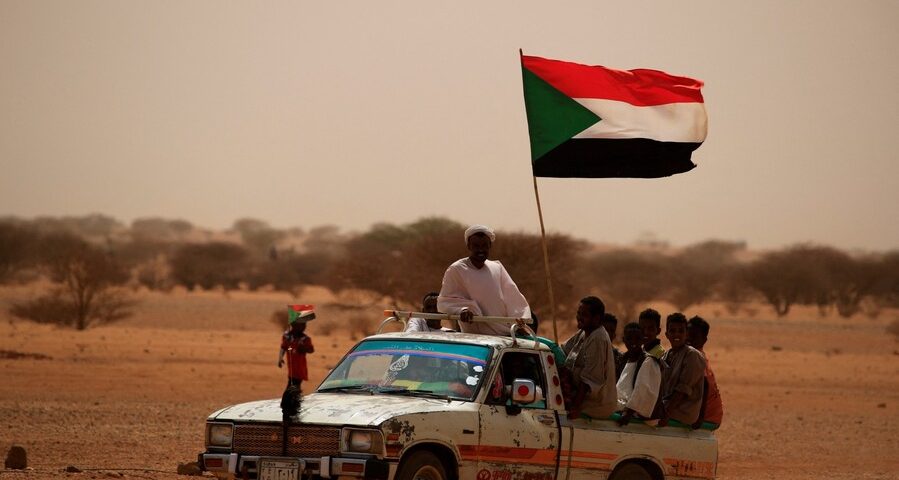
Photo’s source: https://www.ispionline.it
Introduction
On October 30, 2025, the United Nations (UN) Under-Secretary-General for Humanitarian Affairs, Tom Fletcher, delivered a stark assessment of the deteriorating situation in Al-Fashir. He reported that “women and girls are being raped, people [are] being mutilated and killed – with utter impunity,” and emphasized the gravity of the crisis with the remark “Blood on the sand. Blood on the hands.” His statement came as the Rapid Support Forces (RSF) militia advanced to seize control of North Darfur’s capital city (Mishra, 2025).
Al-Fashir, one of Sudan’s largest cities, served as the final stronghold of the Sudanese Armed Forces (SAF) in North Darfur, a region of strategic importance to the Rapid Support Forces (RSF). Control over North Darfur provides the RSF with access to key supply routes through Libya, Chad, South Sudan, and the Central African Republic, enhancing its military and logistical capabilities and facilitating further expansion toward Kordofan, Northern State, and the Libya–Sudan border triangle, according to BBC Arabic, as cited in a recent situation assessment prepared by the Unit for Political Studies at the Doha Institute. ( Arab Center for Research & Policy Studies, 2025).
A report released in March 2025 indicated that, although Sudan’s official government may have exported greater quantities of gold than the Rapid Support Forces (RSF) in 2024, all parties to the conflict sought to expand their control over gold reserves and exports to generate revenue and finance arms procurement. The conflict—at least partially sustained by foreign involvement—further underscores Sudan’s longstanding regional divide in gold exploitation. The Sudanese Armed Forces (SAF) predominantly controlled production in the Red Sea, Northern, River Nile, and West Kordofan states, whereas the RSF oversaw extraction activities in Darfur and parts of West Kordofan (Soliman & Baldo, 2025, S. 17-25).
Sudan lost significant wealth and revenue in 2011, when the split from South Sudan resulted in the loss of approximately 75 % of its oil reserves (U.S. EIA, 2024), and in a dramatic 84 % crude oil exports decrease between 2000 and 2023 according to International Energy Agency reports (Imonmion, 2025).
As international media reports hint at further possible territorial divisions, it must be acknowledged that Sudan’s political and security challenges have a difficult history, and the region itself was relatively less stable than others across the world even before what appears to be a renewed superpower competition, at less than four decades after Soviet Union’s disintegration.
The wider landscape of this conflict includes the strive to reshuffle Middle East and North Africa (MENA) geopolitical landscape, in which Israel and its Abraham Accords allies would overtake influence from what appears to be a regressing United States (US), the latter refocusing on larger and more fundamental competitions, like the one with China and BRICS Plus (BRICS+). As of beginning of November 2025, the international relations impasse/deadlock is gaining pace, with an unclear perspective on peace as priority, as reflected by geopolitical moves undertaken by the US, Russian Federation and China, and the increasingly less-distinguishable European attitude on matters of global importance, and reportedly grave violations of human rights in multiple theaters – a pillar of European politics and its international affairs.
This study examines the fighting in Al-Fashir and the reported potential violations of international law from both an international legal and United Nations (UN) perspective. It also reviews the underlying “gold conflict” and the involvement of international actors beyond the two principal belligerents, while exploring possible linkages between the Sudanese conflict and other regional or global confrontations.
The analytical framework is grounded in the principles of classical realism, which recognizes the anarchic nature of the international system, the persistent struggle for power and influence, and the central role of states in shaping political and security outcomes. Within this theoretical lens, the Sudanese civil war is understood as a contest between two primary domestic actors whose capabilities and endurance are, however, profoundly shaped by external power projection. Neither side would likely have been able to sustain hostilities at the currently observed levels without foreign backing. Consequently, the conflict—while appearing domestic in form—is significantly driven by exogenous interests, including post-colonial dynamics and the pursuit of specific strategic and economic outcomes. These external influences extend to matters of global relevance, such as control over gold supply chains, access to the Red Sea, and dominance of vital trans-African trade routes.
Accordingly, a comprehensive balance-of-power assessment must account for both internal and external dimensions of power competition. The persistence of the conflict in Sudan reflects not only the absence of decisive dominance by either domestic actor but also the strategic calculations of major powers, whose engagement is conditioned by the economic logic of power projection—namely, the costs of intervention and the expected returns from regional influence. Within this context, the notion of a proxy actor, frequently associated with the Rapid Support Forces (RSF), underscores the broader confrontation between its external sponsors—such as, but not limited to, the United Arab Emirates—and the Sudanese state apparatus represented by the Sudanese Armed Forces (SAF). This dynamic reveals the conflict’s potential to evolve into a proxy war, given the RSF’s lack of a sovereign institutional base and dependence on external sources of power and legitimacy.
The present research does not adopt an exclusively resource-based interpretation of the Sudanese conflict. Rather, it situates the war within a broader framework of enduring great power competition, where divergent understandings of international order, strategic value, and acceptable conflict thresholds increasingly shape outcomes. From a competition sustainability perspective, the international community’s responsibility to mitigate the conflict’s humanitarian and systemic repercussions is frequently constrained—or even overshadowed—by the imperatives of safeguarding great power interests and maintaining relative advantage within the global balance of power.
Therefore, while potentially the UAE (as suggested by claims but not confirmed by the Abu Dhabi) or other potential RSF-backers are not at war with the Sudanese government, their competing interests may be, within or beyond the international legal framework, and the availability of resources, from diplomatic to economic and military, represent a central factor in the evolution of international relations. Consequently, the Sudanese civil war is considered a product of both internal struggles, and exogenous power projection on yet another theater, on an increasing list of violent conflicts and potential new wars.
At the same time, it must be acknowledged, that while states represent poles of power, they are not the exclusive actors in large-scale confrontations or wars, especially in the post-2001 War on Terror (WoT) context, unless the freedom of organizations or individuals operating from or within various states is equaled to the responsibility of that state for their actions. The dichotomy between state’s responsibility for actions of its subjects and the freedom of operation within laws of certain jurisdictions is a much broader topic, and will not be analyzed in the context of Sudan’s civil war, but it is consistent with classical realism and the concept of anarchy in international relations, implying that while a state’s responsibility is not absolute, its overall policies have the potential to ultimately impact its relative role on the international stage on long term.
Al Fashir siege, RSF, and atrocities
The history of the Rapid Support Forces (RSF) is closely linked to the origins of the Darfur conflict, which began in 2003. During this period, several rebel groups emerged, including the Sudan Liberation Army (SLA)—reportedly associated with external actors such as Israel (Ali, 2008) —and the Justice and Equality Movement (JEM), which was initially managed from the Netherlands. These groups later merged to form the Sudan Revolutionary Front.
Parallel to these developments, the Janjaweed, a transborder militia operating between Sudan and Chad, played a significant role in the escalation of violence. The RSF subsequently evolved as a paramilitary organization engaged in prolonged violent confrontation with both the Sudanese government and the Sudanese Armed Forces (SAF) over control of territory within Sudan. This conflict has been associated with severe humanitarian consequences, reportedly contributing to widespread famine and the starvation-related deaths of approximately 522,000 children (The New Arab Staff , 2025). Additional reports from March 2025 indicate that about 457,000 children in North Darfur were suffering from acute malnutrition (Merlo, 2025). Al-Fashir, one of the largest urban centers in Sudan and a key transportation hub in the western Darfur region, is strategically located along the main route connecting Khartoum and N’Djamena.
In early October 2025, international reports indicated that Ali Muhammad Ali Abd-Al-Rahman—identified as a Janjaweed commander—was found guilty of 27 counts of crimes against humanity, committed between August 2003 and April 2004 in Darfur. These crimes included murder, torture, rape, and the ordering or co-perpetration of such acts (ICC, 2025). In a separate communiqué, the ICC reaffirmed that, under United Nations Security Council Resolution 1593 (2005), the Court retains jurisdiction over crimes committed in the ongoing Darfur conflict, and reiterated its warning to all parties regarding accountability for violations of international humanitarian law (ICC Office of the Prosecutor, 2025).
The most recent siege of Al-Fashir by the Rapid Support Forces (RSF) developed gradually beginning in 2023 and became continuous for more than sixteen months, according to reports published in August 2025. This prolonged siege resulted in widespread violence and the obstruction of humanitarian assistance, coinciding with Sudan’s most severe cholera outbreak in decades (UNICEF, 2025).
According to data cited from the Armed Conflict Location and Event Data (ACLED) project, at least 11,292 attacks were recorded across Sudan between 15 April 2023 and 28 March 2025. Of these incidents, the Sudanese Armed Forces (SAF) were responsible for initiating approximately 5,615 attacks, while the RSF initiated 4,291. The remaining 1,386 incidents were attributed to other armed groups, including the Darfur Communal Militia, the Darfur Arab Militia, and the Sudan People’s Liberation Movement–Twic Clan Militia, among others (Hussein, 2025).
Darfur initially served as the RSF’s principal stronghold, where the organization began integrating Janjaweed militias to combat local insurgent groups. However, open conflict between the Sudanese authorities and the largely autonomous RSF did not erupt until the government attempted to formally incorporate the RSF into the SAF.
When hostilities began, RSF commander Mohamed Hamdan Dagalo, commonly known as Hemedti, had already established a complex network of loyalty within the paramilitary force, reinforced by his family’s extensive economic influence. By 2018, Al Gunade, a company owned by Hemedti’s family, was reportedly exporting gold bars to the United Arab Emirates, circumventing oversight by Sudan’s central bank. Following the seizure of the Jebel Amer gold mines in Darfur in the aftermath of the 2003 rebellion, Hemedti was reportedly permitted to retain control of these mines by then-President Omar al-Bashir, who considered him a key protector of his regime (Abdelaziz, Georgy, & El Dahan, 2019).
After taking full control of the Jebel Amer mines in 2017, Hemedti began expanding operations from Darfur into South Kordofan and other regions. However, conflicts with local populations soon emerged, such as the October 2019 protests and clashes near the Al Gunade plant in El Tagola/Talodi, South Kordofan (Ayin Network, 2019).Although the state attempted to establish a monopoly on gold trade in August 2025 (Sudan Tribune Gold Monopoly, 2025), maintaining security and control over the gold economy remains challenging. Hemedti’s RSF continues to derive revenues from gold outside government oversight and appears focused on expanding its influence and dominance within Sudan’s gold industry.
The civil war between the RSF and the Sudanese government has reportedly been accompanied by atrocities from the outset. As of January 2024, reports indicated that RSF forces and allied militias were targeting non-Arab communities in Darfur, resulting in the deaths of 1,300 members of the Massalit minority. Systematic sexual violence against women and girls was widespread, children were forcibly recruited, and the harvest in Gezira state was destroyed (Ali H. , 2024).
Although reports of human rights violations and abuses in Sudan have been nearly continuous since April 2023, the Sudanese government accused the UAE of “complicity to genocide” at the International Court of Justice (ICJ) in April 2025 (Holligan, 2025). Nevertheless, it was only after the final siege and occupation of Al Fashir by the RSF that international organizations and media outlets significantly shifted their coverage, emphasizing the scale of atrocities in Sudan.
Sudanese Minister of State for Social Welfare, Salma Ishaq, recently reported that during the first two days in Al Fashir (October–November 2025), the Rapid Support Forces (RSF) killed 300 women and subjected 25 others, including journalists, to sexual violence. She reportedly stated that “sexual violence targeted even children in front of their mothers, who were then killed. Everyone has seen these scenes in videos” (Satti, Abdelrheem, & Abu Shamala, 2025). Upon entering Al Fashir, the paramilitary group allegedly killed 460 patients at the Saudi Hospital, according to Tedros Adhanom Ghebreyesus (Magdy, 2025).
Furthermore, the Sudan Doctors Network reportedly characterized the situation as “a true genocide,” noting that more than 1,500 people were killed within three days (Al Jazeera Staff & News Agencies, 2025). Numerous disturbing images and videos have surfaced, with reports describing “a new horrific phase” of the civil war, including “mass executions,” “a killing rampage,” and “pools of blood large enough to be seen from space” (Schifrin & Warsi, 2025). U.S. Senator Jim Risch reportedly stated on social media that “The RSF has waged terror and committed unspeakable atrocities, genocide among them, against the Sudanese people” (Schneid, 2025).
Sudanese Prime Minister Kamal Idris reportedly called the Al Fashir developments “the most heinous crimes against humanity… war crimes, genocide, forced displacement” and called upon UN Security Council to take “practical measures” vis-à-vis the Al Fashir crisis (Abdelraheem & Abu Shamala, 2025). Hence, the question of sanctions emerges: how did Sudan get so far?
The RSF leader, Hemedti, was added to the U.S. Treasury sanctions list in early January 2025 pursuant to Executive Order 14098. The accompanying press release cited sanctions against several UAE-based companies, including Capital Tap Holding LLC, for providing financial support and weapons to the RSF, as well as Creative Python LLC, Al Zumoroud and Al Yaqoot Gold & Jewellers LLC, Al Jil Qadem General Trading LLC, and Horizon Advanced Solutions General Trading LLC – Sole Proprietorship. The release further stated that U.S. Secretary of State Antony Blinken had determined that “the RSF has perpetrated genocide in the Darfur region of Sudan during the course of the war.” (US Treasury, 2025). However, a U.S. Senate Foreign Relations Committee press release dated October 30, 2025, suggested that calls to designate the RSF as a “potential Foreign Terrorist Organization or Specially Designated Global Terrorist organization” indicate that the RSF is currently listed on neither of these designations. (US FRC, 2025). The release also highlights the potential role of the negotiation “Quad,” comprising the United States, Saudi Arabia, Egypt, and the United Arab Emirates, in mediating between the warring parties to restore peace in Sudan. However, reports regarding this initiative are accompanied by predictions of potential secession, echoing the 2011 split with South Sudan—a division that remains salient in the Sudanese collective memory.
A Sudanese civil war or a gold war?
Although not directly comparable, the post-2023 Sudanese civil war recalls the atrocities and ethnic cleansing witnessed in earlier conflicts, such as the Darfur crisis (2003–2005) and the Rwandan genocide (1994). Unlike these earlier conflicts, contemporary globalization has significantly increased the speed and scope of financial networks, satellite surveillance, and media dissemination. Consequently, comparing conflicts and conditions based on available evidence has become more complex, as the means of obtaining and processing information have changed dramatically.
The role of gold in Sudan’s economy was limited prior to the 2011 secession of South Sudan, when the country heavily relied on oil revenues. The Hassai gold mine, located in the Red Sea Hills, began operations in 1992 and was jointly held by the Sudanese national company Ariab Mining (60%) and the Canadian company La Mancha (40%) as of 2011 (Mining Technology, 2011), before being acquired in 2012 by the wealthy Egyptian billionaire family, the Sawiris (Fasken, 2012).
Following the 2011 secession of South Sudan and the resulting hard currency crisis due to the loss of oil revenues, Sudan’s gold industry experienced significant growth, particularly in artisanal mining—a trend that has persisted, at least partially, in certain regions to the present day. To regulate the sector, the Sudanese government issued mining licenses to companies linked to the Sudanese Armed Forces (SAF), the National Intelligence and Security Services, and Russian enterprises (de Simone, 2025).
By 2022, the gold processing facility in Al Ibaidiya, reportedly referred to as Gold Town, was associated with a Wagner-linked company, Meroe Gold. A 2022 CNN report alleges that approximately 85% of Sudan’s gold was sold through ad hoc bidding to merchants, reportedly connected to this Russian-affiliated company (Meroe Gold from Al Ibaidiya) (Elbagir, et al., 2022). The 2012 attempt to assert control over the newly discovered Jebel Amer gold mines reportedly triggered attacks by the Janjaweed, under the leadership of Musa Hilal, on the Hussein community—an ostensibly tribal confrontation with gold as the underlying motive. While artisanal mining continued at Jebel Amer, by 2017 the Rapid Support Forces (RSF) had assumed control over gold processing and export, led by Hemedti and Al Gunade (de Simone, 2025). De Simone further notes that in 2020, the Transitional Government of Sudan transferred ownership of the mines to the government through a $200 million payment arrangement for Al Gunade, overseen by Hemedti’s brother, Abdul Rahim Dagalo, who also served as RSF deputy leader, and facilitated the transfer of a 33% stake in the Sudamim Company to Al Gunade. The ongoing conflict in Sudan is closely linked to the struggle for control over the gold industry, a contest that has repeatedly undermined state authority and stability. This competition is not confined to domestic actors; it also involves international alliances and external supporters, highlighting the transnational dimensions of resource-driven conflict.
Multiple sources report that much Sudanese gold reaches the UAE via third-party countries that obscure its origin, like Kenya, Uganda (Craze, 2025), Chad, South Sudan Egypt (France24/AFP, 2025), and Eritrea (Soliman & Baldo, 2025). Analysis of the OEC World database further indicates that the UAE has emerged as a leading global gold importer, with $71.1 billion imported in 2023 alone, of which $42.5 billion originated from African countries, including Guinea, Ghana, Mali, Zimbabwe, Togo, Uganda, Zambia, Nigeria, Tanzania, Chad, Sudan, and Egypt (oec.world, 2025). A 2023 report also alleged that the UAE provided financial support to the RSF, paying approximately $0.5 million in wages and supplying combat drones and ammunition, while the Russian Federation initially supported Hemedti with mercenaries through the Wagner Group/African Corps (Coloma, 2025). Coloma further claims that, as of January 2019, the UAE paid $100 million to Burhan and Hemedti for deploying Janjaweed forces in Yemen, when the two leaders were still allied, and that Egypt and Iran supplied arms to the Sudanese Armed Forces (SAF). Additional sources suggest that Türkiye also provided weapons to the SAF, alongside Russia and Iran, in exchange for gold (Walsh & Chutel, 2025).
Thus, the Sudanese conflict represents a theater in which foreign powers project influence, reflecting broader competitions over gold trade, regional security, and strategic control in Africa and the Red Sea. The historical context of African decolonization underscores the long-term significance of external involvement: in 1960 alone, fifteen African states gained independence, and of the seventeen new members admitted to the United Nations that year, sixteen were African (Mindaoudou, 2015). Subsequent waves of independence included Sierra Leone and Tanzania (1961), Uganda (1962), Kenya (1963), Namibia (1990), Eritrea (1993), and South Sudan (2011).Although certain African borders remained unstable following the Second World War, and the continent accounted for the majority of conflict-related deaths between 1989 and 2024—approximately two million out of a global total of 3.9 million (Herre, 2024) —Africa has generally not experienced wars on the scale of the Vietnam or Korean conflicts. Post-World War II African conflicts have typically involved at least one exogenous power, either as a proxy supporter or as a direct participant, as exemplified by interventions in Libya.
Arms and munitions have reportedly reached Sudan through countries such as Libya, Chad, the Central African Republic (CAR), Uganda (Ali H. , 2024), Ethiopia, Somalia (Gentili, 2024). Given the relative porosity of many African borders, a strictly country-to-country assessment may be insufficient to capture the full dynamics of arms transfers, which are often influenced by tribal affiliations, temporary alliances, or broader geopolitical objectives. In addition to the structural involvement of actors such as the UAE and the Russian Federation in the gold industry, and the provision of weapons in exchange for gold as noted in prior literature, other states have reportedly participated in the conflict in various capacities. Reports of meetings between Mossad officials and Hemedti in 2021 reportedly provoked significant domestic controversy in Sudan and were described at the time as a “conspiracy” by Abdel Fattah Al-Burhan and Abdullah Hamdok. Further sources suggest an earlier meeting between Yossi Cohen and Hemedti in August 2020 in Abu Dhabi (Magally & Younis, 2021). While RSF forces have reportedly used Israeli-manufactured LAR-160 artillery, available sources do not directly link Israel as the supplier; rather, they indicate that only a limited number of countries possessed this type of weapon at the time(Abdul, 2023).
The London-based Campaign Against Arms Trade (CAAT), which also published the statement “Stop arming the UAE! Stop the Sudanese genocide!” has specifically analyzed British weapons exports to the UAE and highlighted allegedly weak export control procedures, alongside similar issues in U.S. and other European arms exports. CAAT concludes that ending arms sales to the Emirates could contribute to halting the conflict in Sudan (CAAT, 2025).
Beyond the admitted or unacknowledged involvement of states in supplying weapons that fuel the conflict, it is evident that international diplomacy and peace mechanisms have, as of November 6, 2025, produced no decisive outcomes. The only tentative measure has been a (limited) humanitarian ceasefire proposed by the Quad mechanism and approved by the RSF, while the Sudanese Armed Forces pledged to continue military operations against the RSF (Sudan Tribune, 2025). A few days later, the army reportedly outlined its own proposal for a “humanitarian truce” (Sudan Tribune, 2025).
In January 2025, Caleb Weiss, writing for the Foundation for Defense of Democracies, reported on an alleged call “for jihad in Sudan” issued by the so-called Islamic State (IS), citing the group’s weekly Al Naba newsletter. Weiss notes that IS appeared to echo Al-Qaeda, which had reportedly called for jihad in late 2022, “just months before the country’s current civil war began” (Weiss, 2025). The article asserts that so-called IS characterized both the Sudanese Armed Forces (SAF) and the Rapid Support Forces (RSF) as components “of the infidel world order. “Amid uncertainty regarding the impact of this initial call, a subsequent article by Weiss announced that IS had “redoubled” its call for jihad in Sudan, explicitly urging foreign fighters to migrate to the country. (Weiss, Caleb, 2025). Citing further reports from Al Naba, the author describes the organization’s efforts to expand its presence in Sudan, suggesting that the so-called IS had begun operating through a dedicated cell in the country as early as 2019. Weiss also notes that Sudanese nationals were among the largest contingents of foreign fighters active in Libya around 2016.
Although there are no clear indications of i.e., Al-Shabaab’s presence in Sudan, the country faces an additional and significant security threat beyond Al-Qaeda and the so-called Islamic State (IS). As of August 2025, Sudan had reportedly become a “Captagon hub,” with nineteen recorded instances of drug seizures or discovered manufacturing sites since 2015. A report by the New Lines Institute indicates that Captagon-related activity increased sharply after 2023, suggesting that the revenue generated from this trade provides the RSF with financial resources capable of prolonging the conflict (Rose & Lipschitz, 2025). From this perspective, the Sudanese civil war displays not only characteristics typical of African conflicts but also features reminiscent of post-2001 “War on Terror” dynamics—namely, the involvement of transnational terrorist organizations and the proliferation of illicit narcotics, particularly Captagon.The analysis in this section indicates that the post-2023 Sudanese conflict is driven primarily by competition over gold and political power, rather than by political disputes in which gold plays only a secondary role. Gold has reportedly functioned as a form of hard currency, enabling the procurement of weapons, and sustaining a protracted civil war marked by mass casualties—described by some observers as genocidal—widespread famine, large-scale displacement, and escalating regional instability.
Despite numerous initiatives, post-2011 Sudan has failed to transform its gold wealth into sustainable national prosperity. Instead, competition over control of gold revenues has intensified, culminating in the Rapid Support Forces’ (RSF) announcement in September 2025 of an alleged parallel “government” (Woldemichael, 2025). raising renewed concerns about potential partition. Sudan’s experience as a resource-rich state diverges markedly from that of countries that have successfully integrated natural wealth into stable or expanding economic sectors. Rather than serving as a foundation for development, gold has become a driver of violence, famine, and mass displacement. From an international relations perspective, it remains difficult to identify a recent historical moment when the international community effectively intervened to mitigate such crises. As of 2025, however, escalating global tensions and rapid rearmament trends appear to further diminish the conditions necessary for a sustainable peace, despite overlapping appeals for negotiation and humanitarian relief expressed by various actors.
The Sudanese gold conflict in the context of global escalation
Global military expenditure reportedly reached $2.72 trillion in 2024—an increase of 9.4% compared to 2023—marking the steepest annual rise in decades (SIPRI, 2025). Within this context, peace itself risks becoming a scarce and costly commodity in the coming years, as large-scale rearmament rarely produces “peace through strength” unless accompanied by clear and mutually recognized strategic, economic, and military advantages.
Contemporary developments suggest a resurgence of great power competition, even though a strictly bipolar world has not yet re-emerged. Current dynamics indicate that the United States continues to strive to maintain a global order centered on the U.S. dollar, while the BRICS+ framework advances a vision of multipolarity. Although these orientations stem from distinct political and economic traditions and are not inherently contradictory, differing perceptions of power balance and international roles appear to have generated increasingly divergent interpretations of global governance and security. Illustrative of this evolving geopolitical complexity is the case of Abu Mohammed al-Jawlani, who reportedly rebranded himself as Syrian President Ahmed al-Sharaa, was listed by the United States as a wanted terrorist with a $10 million bounty (Salem, 2025) and still met with different Western leaders. Equally notable are reports of Ukrainian military assistance—through drone operations and personnel—in efforts to remove former Syrian President Bashar al-Assad (Reuters, 2024), Such developments underscore a shifting and, in many ways, unprecedented landscape of international relations, where traditional distinctions between state and non-state actors, legitimacy and illegitimacy, or conflict and intervention, have become increasingly blurred. Depending on the analytical framework applied, questions surrounding peace, war, and accountability may thus yield markedly different interpretations.
In recent years, the United States’ efforts to consolidate its financial position have been reflected not only in tariff policies but also in attempts to maintain dominance over strategically significant commodities such as hydrocarbons and rare earth elements. This dynamic evokes the patterns of global power competition witnessed before, during, and after the twentieth-century world wars. Contemporary manifestations of this hegemonic contest include conflicts such as the war in Ukraine, renewed discussions about granting the United States access to former military bases in Afghanistan, perceived threats of U.S. intervention in Venezuela, and the recent, unexpected suggestion of potential U.S. military involvement in Nigeria. The latter development follows Nigeria’s earlier designation as a “Country of Particular Concern” under the first Trump administration and its subsequent delisting by the Biden administration in 2021 (Amaize, 2025). While American values have profoundly influenced global governance and political thought since the early twentieth century, it must also be acknowledged that both Venezuela and Nigeria share a defining characteristic: the possession of abundant natural resources, particularly petroleum and natural gas. This intersection of strategic resource wealth and geopolitical interest continues to shape patterns of engagement and competition in the evolving global order.
The possession of vast hydrocarbon resources has not translated into sustained economic prosperity for countries such as Venezuela and Nigeria—nor for others similarly endowed, including Iran, Iraq, and Libya. From this perspective, Sudan’s gold wealth may likewise serve external business interests more than the welfare of its own citizens, while the ongoing conflict risks further territorial fragmentation. Although international relations appeared to enter a period of relative détente following Perestroika, the reassertion of Russian influence—symbolized by President Vladimir Putin’s speech at the 2007 Munich Security Conference—marked a turning point in global geopolitics. This shift did not necessarily represent a simple return to Cold War dynamics but rather the emergence of a more complex multipolar environment. In contrast to the latter half of the twentieth century, when the United States and its allies faced the Soviet Union and non-alignment movements sought to maintain neutrality, the contemporary concept of the “Global South”—embodied by frameworks such as BRICS+ and related cooperation mechanisms—appears to have achieved a degree of cohesion and influence far greater than was possible half a century ago. The Russian Federation is not currently at the peak of its historical power, nor does it appear to seek direct rivalry with the United States or Europe in isolation. Instead, it has pursued a strategy of reasserting influence through a network of strategic partnerships and regional engagements. Notable examples include military cooperation agreements signed with Mali, Niger, and Burkina Faso in August 2025 (ASA, 2025); cooperation negotiations with Egypt in September 2025 (Egypt Independent, 2025), and the conclusion of the Trade in Services and Investment Agreement (TISIA) with the United Arab Emirates in August 2025 (Anderson, 2025). Earlier in the same year, Moscow reportedly delivered military equipment to Mali following a partial withdrawal from its bases in Syria (Guy, 2025), signed a 20-year Treaty on Comprehensive Strategic Partnership with Iran, and was reported to have assisted President Nicolás Maduro in withstanding U.S. pressure. Some reports even suggest that Russia may be considering the deployment of medium-range ballistic and cruise missiles to Venezuela (Khomenko, 2025).
While certain parallels can be drawn with twentieth-century geopolitical developments—particularly the pursuit of strategic control over hydrocarbon resources and maritime trade routes as key advantages in potential large-scale conflicts—the global context of 2025 differs markedly. All major actors are acutely aware of these historical patterns, suggesting that contemporary strategies are shaped as much by efforts to anticipate and counterbalance traditional power maneuvers as by attempts to replicate them. While the United Arab Emirates (UAE) appears to be the principal importer of Sudanese gold, several broader factors must be considered in this context. Beyond its role in the gold trade, the UAE ranked as the fourth-largest investor in Africa between 2019 and 2023, with a total investment of approximately $110 billion (WAM, 2025). More generally, by 2023 the UAE had become the world’s sixth-largest exporter in terms of export volume per capita (oec.world, 2025).
These developments suggest the need for future research to determine whether Sudan’s gold trade with the UAE—whether declared or undeclared—constitutes an exception or reflects a broader pattern in African–Emirati economic relations. The UAE has become a leading buyer of African gold, and estimates indicate that between 321 and 474 metric tons of gold produced across the continent go undeclared (Soguel & Turuban, 2024). Moreover, the UAE’s rise as a global gold hub—surpassing the United Kingdom in 2023 (TOI World Desk, 2025) —and its simultaneous emergence as a trade and investment powerhouse may reveal evolving patterns in global economic and geopolitical dynamics.
From a global competition perspective, the intersection of the Sudanese conflict, the gold trade, and the emergence of new gold hubs may signal deeper structural shifts in the international order. These developments may either underscore persistent challenges to the transparency of global commodity markets or point to the formation of a new world order in which transparency in gold trading is deprioritized amid accelerating rearmament, intensifying geopolitical rivalries, and existential pressures on smaller or militarily less assertive states.
Consequently, the era of secret service–led coups and dollar-centered global finance appears to have reached the apex of its classical form. This raises critical questions about the future of international relations and whether the post–World War II achievements in peace and global governance can be preserved and further developed. Alternatively, the world may face a more turbulent and costly reshuffling, one that could redefine the global order while imposing severe human and economic costs. Such a process would unfold amid pressing challenges, including climate change, environmental degradation, and the broader task of reconstructing a sustainable and resilient global system. Within this context, ensuring transparency in the gold market, alongside the implementation of other progressive measures, will be essential to supporting equitable and stable international governance.
Conclusion
In the context of the Rapid Support Forces’ (RSF) takeover of Al Fashir, this study examined the conflict’s background and the growing body of reports documenting escalating violence in Sudan. Numerous sources link the RSF’s advance to widespread famine, children trapped in conditions of starvation, killings, sexual violence, torture, and, in the broader context of the war with the Sudanese Armed Forces (SAF), mass displacement affecting a significant portion of the country’s population. The terminology employed in these reports to describe the outcomes of the Al Fashir siege and conquest includes terms such as “atrocity,” “true genocide,” “mass killing,” and “slaughter.” Many media accounts have highlighted what they characterize as the world’s “blind eye,” noting the failure of the international community to prevent a predictable and escalating wave of violence in Sudan—violence that has manifested in Al Fashir and may extend to other regions if decisive action is not taken.
Despite the urgent humanitarian crisis, UN officials have rarely employed language reflecting the severity of the situation, though the International Criminal Court (ICC) has warned that reports of potential crimes will be investigated and that justice will be pursued. This occurs concurrently with the sentencing of a former Janjaweed leader for war crimes and crimes against humanity committed in Darfur between 2003 and 2004, underscoring the continued relevance of accountability mechanisms. Collectively, these circumstances underscore the imperative for immediate and decisive international action to contain the ongoing violence in Sudan.
The conflict in Sudan is closely linked to and driven by gold, according to the sources analyzed. The ongoing confrontation between the Rapid Support Forces (RSF) and the Sudanese Armed Forces (SAF) has been associated with the Dagalo family’s control over gold processing facilities in key mining regions, alongside the central government’s unsuccessful attempts to nationalize the gold sector, despite providing substantial financial incentives to the RSF-affiliated Al Gunade company.
Analysis of multiple reports indicates that undeclared Sudanese gold has reached countries such as the United Arab Emirates and the Russian Federation, among others, often transiting through neighboring states before arriving at final destinations, primarily Dubai. Sudan’s extensive and porous borders have also facilitated the entry of smuggled weapons, frequently paid for with gold, according to several sources.
Within the regional geopolitical landscape, actors including Arab Persian Gulf states, Egypt, Türkiye, Iran, and Israel appear to project influence in Sudan, sometimes independently of clearly identifiable great power backing. The UAE emerges prominently in numerous reports, including as a defendant in legal action filed by the Sudanese government. Israel appears to pursue a dual-track approach, engaging both the Sudanese government—signatory to the Abraham Accords—and Hemedti through separate channels. The Quad mediation format, comprising the United States, Egypt, Saudi Arabia, and the UAE, has thus far achieved limited results, with only a fragile humanitarian ceasefire partially imposed on the SAF. This raises questions about whether the initiative is proportionate to the scale of the challenge and whether the composition of the Quad is sufficiently representative to achieve meaningful outcomes in the face of the evident urgency.
As of November 2025, the world appears to be approaching a geopolitical crossroads. The language of international relations has grown increasingly assertive, while the BRICS+ framework presents a visible challenge to the older, established global order. Under such conditions, any escalation carries the risk of contributing to a broader, more generalized conflict. The ongoing war in Sudan raises critical questions about whether these recent dynamics signify a genuine shift in the international system or a form of progress, and whether both traditional and emerging powers can fulfill the fundamental purpose of international cooperation: the maintenance of peace, both within Sudan and across the broader global landscape.
Bibliography
Abdelaziz, K., Georgy, M., & El Dahan, M. (2019, November 26). Exclusive:Sudan militia leader grew rich by selling gold. Retrieved from Reuters: https://www.reuters.com/article/world/exclusivesudan-militia-leader-grew-rich-by-selling-gold-idUSKBN1Y01DQ/
Abdelraheem, A., & Abu Shamala, R. (2025, November 01). Sudan demands accountability for paramilitary RSF after killing patients, medical staff in El-Fasher. Retrieved from Anadolu Agency: https://www.aa.com.tr/en/africa/sudan-demands-accountability-for-paramilitary-rsf-after-killing-patients-medical-staff-in-el-fasher/3731181
Abdul, K. (2023, October 07). Israeli artillery seen with RSF forces. Retrieved from Military Africa (updated April 30th, 2024): https://www.military.africa/2023/10/israeli-artillery-seen-with-rsf-forces/
Al Jazeera Staff & News Agencies. (2025, October 29). ‘A true genocide’: RSF kills ‘at least 1,500 people’ in Sudan’s el-Fasher. Retrieved from Al Jazeera: https://www.aljazeera.com/news/2025/10/29/horrific-violations-arab-nations-slam-rsf-killings-in-sudans-el-fasher
Ali, H. (2024). The War in Sudan: How Weapons and Networks Shattered a Power Struggle. Retrieved from GIGA Hamburg, GIGA Focus Middle East, Number 2 | 2024 | ISSN: 1862-3611: https://www.giga-hamburg.de/en/publications/giga-focus/the-war-in-sudan-how-weapons-and-networks-shattered-a-power-struggle#:~:text=The%20RSF%2C%20on%20the%20other%20hand%2C%20is,the%20local%20Fur%2C%20Massalit%2C%20and%20Zaghawa%20minorities.
Ali, W. (2008, February 27). Darfur rebel group inaugurates local office in Israel. Retrieved from Sudan Tribune: https://sudantribune.com/article/26218
Amaize, O. (2025, November 05). With Trump’s threats of military intervention in Nigeria, Tinubu faces a delicate balancing act. Retrieved from Atlantic Council: https://www.atlanticcouncil.org/blogs/new-atlanticist/with-trumps-threats-of-military-intervention-in-nigeria-tinubu-faces-a-delicate-balancing-act/
Anderson, R. (2025, August 11). UAE signs Trade in Services and Investment Agreement with Russia to expand economic ties . Retrieved from Finance – Middle East: https://www.financemiddleeast.com/trade/uae-signs-trade-in-services-and-investment-agreement-with-russia-to-expand-economic-ties/
ASA. (2025, August 19). Russia–AES Military Cooperation: Developments and Regional Context. Retrieved from African Security Studies: https://www.africansecurityanalysis.org/updates/russia-aes-military-cooperation-developments-and-regional-context
Ayin Network. (2019, October 12). Poisonous practice: the ongoing fight to close Sudan’s gold mines. Retrieved from Ayin Network: https://3ayin.com/en/sudans-poisonous-gold-mines/
CAAT. (2025, October 31). Genocide in Sudan, the Role of the UAE, and the Complicity of the West. Retrieved from Campaign Against Arms Trade: https://caat.org.uk/news/genocide-in-sudan-the-role-of-the-uae-and-the-complicity-of-the-west/
Coloma, T. (2025, March). Smuggled gold fuels Sudan war. Retrieved from Le Monde Diplomatique: https://mondediplo.com/2025/03/10sudan
Craze, J. (2025, July 21). Black Gold, Liquid Metal: The Political Economy of Gold in Sudan . Retrieved from Noria Research: https://noria-research.com/mena/black-gold-liquid-metal-the-political-economy-of-gold-in-sudan/#_ftn9
de Simone, S. (2025, April 30). The Role of Gold in the Sudanese War. Retrieved from ISPI: https://www.ispionline.it/en/publication/the-role-of-gold-in-the-sudanese-war-207364
Egypt Independent. (2025, September 18). PM: Egypt, Russia discuss ways to advance joint cooperation. Retrieved from Egypt Independent: https://egyptindependent.com/pm-egypt-russia-discuss-ways-to-advance-joint-cooperation/
Elbagir, N., Arvanitidis, B., Qiblawi, T., Mezzofiore, G., Al Gheit, M. A., & Tarasova, D. (2022, July 29). Russia is plundering gold in Sudan to boost Putin’s war effort in Ukraine . Retrieved from CNN World: https://edition.cnn.com/2022/07/29/africa/sudan-russia-gold-investigation-cmd-intl/index.html
Fasken. (2012, July). La Mancha Resources acquired by Weather Investments II for US$500 million. Retrieved from Fasken: https://www.fasken.com/en/experience/2012/07/la-mancha-resources-acquired-by-weather-investments-ii-for-us$500-million
France24/AFP. (2025, March 27). Sudan’s booming wartime gold trade flows through the UAE. Retrieved from France24: https://www.france24.com/en/live-news/20250327-sudan-s-booming-wartime-gold-trade-flows-through-the-uae
Gentili, C. (2024, May 23). Countering the arms race in Somalia. Retrieved from Global Initiative against Transnational Organized Crime: https://globalinitiative.net/analysis/arms-trafficking-somalia-ocindex/
Guy, M. (2025, February 05). Russia Delivers Military Hardware to Mali — After the Fall of Assad Regime . Retrieved from InDepthNews: https://indepthnews.net/russia-delivers-military-hardware-to-mali-after-the-fall-of-assad-regime/
Herre, B. (2024, July 15). Millions have died in conflicts since the Cold War; most of them in Africa and intrastate conflicts. Retrieved from OurWorldInData (updated in July 2025): https://ourworldindata.org/conflict-deaths-breakdown
Holligan, A. (2025, April 10). Sudan accuses UAE of ‘complicity in genocide’ at world court. Retrieved from BBC: https://www.bbc.com/news/articles/cq8009pl4xjo
HSBA. (2011, 09 06). Sudan Liberation Army-Abdul Wahid (SLA-AW). Retrieved from Sudan Human Security Baseline Assessment (HSBA), Small Arms Survey Geneva: https://smallarmssurvey.org/sites/default/files/HSBA-Armed-Groups-SLA-AW.pdf
Hussein, M. A. (2025, April 14). Animated maps show two years of war in Sudan. Retrieved from AL Jazeera: https://www.aljazeera.com/news/longform/2025/4/14/animated-maps-show-two-years-of-war-in-sudan
ICC. (2025, October 06). Ali Muhammad Ali Abd-Al-Rahman declared guilty of war crimes and crimes against humanity committed in Darfur, Sudan . Retrieved from International Criminal Court: https://www.icc-cpi.int/news/ali-muhammad-ali-abd-al-rahman-declared-guilty-war-crimes-and-crimes-against-humanity
ICC Office of the Prosecutor. (2025, November 03). Statement of the ICC Office of the Prosecutor on the situation in El-Fasher, North Darfur . Retrieved from International Criminal Court: https://www.icc-cpi.int/news/statement-icc-office-prosecutor-situation-el-fasher-north-darfur
Imonmion, E. (2025, October 16). Sudan’s Oil Output Plunged After South Sudan’s Secession. Retrieved from The Journal – Nigeria: https://thejournalnigeria.com/sudans-oil-output-plunged-after-south-sudans-secession/
Khomenko, I. (2025, November 04). Did Russia Just Restart the Cuban Missile Crisis With Venezuela? . Retrieved from Uinted24 Media: https://united24media.com/latest-news/did-russia-just-restart-the-cuban-missile-crisis-with-venezuela-13101
Magally, N., & Younis, A. (2021, June 26). Mossad Meetings with Hemedti Stir Anger in Sudan . Retrieved from Asharq Al-Awsat: https://english.aawsat.com/home/article/3048136/mossad-meetings-hemedti-stir-anger-sudan
Magdy, S. (2025, October 29). Sudan’s paramilitary killed hundreds at Darfur hospital . Retrieved from Genocide Watch: https://www.genocidewatch.com/single-post/sudan-s-paramilitary-killed-hundreds-at-darfur-hospital
McGregor, A. (2012, 02 10). The Strange Death of Dr. Khalil Ibrahim and the Future of the Darfur Insurgency. Terrorism Monitor Volume: 10 Issue: 3, pp. https://jamestown.org/program/the-strange-death-of-dr-khalil-ibrahim-and-the-future-of-the-darfur-insurgency/.
Merlo, F. (2025, March 27). Sudan: Hundreds of thousands of children face starvation. Retrieved from Vatican News: https://www.vaticannews.va/en/world/news/2025-03/sudan-hundreds-of-thousands-of-children-face-starvation-unicef.html
Mindaoudou, A. (2015, September 15). From Independence to Long-term Stability: United Nations Efforts in Africa. Retrieved from United Nations – UN Chronical: https://www.un.org/en/chronicle/article/independence-long-term-stability-united-nations-efforts-africa#:~:text=In%201960%2C%20a%20crucial%20year%20for%20both,brought%20to%20a%20speedy%20and%20unconditional%20end.
Mining Technology. (2011, June 28). Hassai Gold Mine. Retrieved from Mining Technology: https://www.mining-technology.com/projects/hassai-mine/
Mishra, V. (2025, October 30). ‘Blood on the sand. Blood on the hands’: UN decries world’s failure as Sudan’s El Fasher falls . Retrieved from United Nations: https://news.un.org/en/story/2025/10/1166224
oec.world. (2025, November 04). United Arab Emirates (Imports/Exports 2023). Retrieved from oec.world: https://oec.world/en/profile/country/are?selector343id=Import
Reuters. (2024, December 11). Ukrainian operatives aided Syrian rebels with drones, Washington Post reports. Retrieved from Reuters: https://www.reuters.com/world/ukrainian-operatives-aided-syrian-rebels-with-drones-washington-post-reports-2024-12-11/
Rose, C., & Lipschitz, R. (2025, August 12). Sudan’s Emergence as a New Captagon Hub. Retrieved from New Lines Institute: https://newlinesinstitute.org/nonstate-actors/sudans-emergence-as-a-new-captagon-hub/
Salem, M. (2025, May 15). Trump’s embrace of Syria and its jihadist-turned-president could shake up the Middle East . Retrieved from CNN World: https://edition.cnn.com/2025/05/14/middleeast/syria-trump-meeting-analysis-intl
Satti, A., Abdelrheem, A., & Abu Shamala, R. (2025, November 02). Rapid Support Forces killed 300 women in first 2 days after entering El-Fasher: Sudanese minister. Retrieved from Anadolo Agency: https://www.aa.com.tr/en/middle-east/rapid-support-forces-killed-300-women-in-first-2-days-after-entering-el-fasher-sudanese-minister/3732911#
Schifrin, N., & Warsi, Z. (2025, October 31). Sudan’s brutal civil war escalates as paramilitary forces go on killing rampage. Retrieved from PBS: https://www.pbs.org/newshour/show/sudans-brutal-civil-war-escalates-as-paramilitary-forces-go-on-killing-rampage
Schneid, R. (2025, November 01). ‘Blood On the Sand’: Thousands Missing As Militia Accused of Massacres During Capture of Key City in Sudan. Retrieved from Time.com: https://time.com/7330421/sudan-el-fasher-rsf-darfur/
SIPRI. (2025, April 28). Unprecedented rise in global military expenditure as European and Middle East spending surges . Retrieved from sipri.org: https://www.sipri.org/media/press-release/2025/unprecedented-rise-global-military-expenditure-european-and-middle-east-spending-surges
Soguel, D., & Turuban, P. (2024, May 30). Hidden wealth: Swiss NGO maps Africa’s undeclared gold flows . Retrieved from Swiss Info: https://www.swissinfo.ch/eng/multinational-companies/hidden-wealth-swiss-ngo-maps-africas-undeclared-gold-flows/79009684
Soliman, A., & Baldo, S. (2025). Gold and the war in Sudan. London: XCEPT – Africa Programme, Chatham House.
Sudan Tribune Gold Monopoly. (2025, August 21). Sudan restricts gold trade, imports in new economic crackdown. Retrieved from Sudan Tribune: https://sudantribune.com/article/304174
The New Arab Staff famine. (2025, July 08). Khartoum: Destroyed buildings, cars covered in ash tell horrors of war in Sudan capital. Retrieved from The New Arab: https://www.newarab.com/news/khartoum-extensive-destruction-tells-horror-war-sudan
TOI World Desk. (2025, June 14). Where does the world’s second-largest gold hub, Dubai, get its gold from? Retrieved from India Times: https://timesofindia.indiatimes.com/world/middle-east/where-does-the-worlds-second-largest-gold-hub-dubai-get-its-gold-from/articleshow/121830191.cms
Tubiana, J. (2008). The Chad–Sudan Proxy War and the “Darfurization” of Chad: Myths and Reality. Geneva: Small Arms Survey.
U.S. EIA. (2024, March 20). South Sudan. Retrieved from U.S. Energy Information Administration: https://www.eia.gov/international/overview/country/SSD
- (2009, 04 22). At five-year mark, Darfur crisis is only worsening – UN aid chief. Retrieved from United Nations: https://news.un.org/en/story/2008/04/256942
UN Rep. (2021). UN S/2021/40 – Final report of the Panel of Experts on the Sudan, 13.01.2021. Digital Library: United Nations.
UNICEF. (2025, August 26). After 500 days under siege, children in Sudan’s Al Fasher face starvation, mass displacement, and deadly violence . Retrieved from UNICEF: https://www.unicef.org/press-releases/after-500-days-under-siege-children-sudans-al-fasher-face-starvation-mass
US FRC. (2025, October 30). Risch, Colleagues on Violence in Sudan . Retrieved from US Senate, Foreign Relations Committee: https://www.foreign.senate.gov/press/rep/release/risch-colleagues-on-violence-in-sudan
US Treasury. (2025, January 07). Treasury Sanctions Sudanese Paramilitary Leader, Weapons Supplier, and Related Companies . Retrieved from U.S. Department of the Treasury: https://home.treasury.gov/news/press-releases/jy2772
Walsh, D., & Chutel, L. (2025, October 28 updated 29). A Dramatic Shift in Sudan’s Brutal Civil War. Retrieved from The New York TImes: https://www.nytimes.com/2025/10/28/world/africa/sudan-el-fasher-burhan-rsf.html
WAM. (2025, October 27). US$110 billion in UAE investments in Africa position country as world’s fourth-largest investor: Bin Touq. Retrieved from WAM Emirates News Agency: https://www.wam.ae/en/article/bmez9sb-us110-billion-uae-investments-africa-position
Weiss, C. (2025, October 31). Analysis: Islamic State redoubles call for jihad in Sudan, urges foreign fighters to migrate. Retrieved from FDD’s Long War Journal: https://www.longwarjournal.org/archives/2025/10/analysis-islamic-state-redoubles-call-for-jihad-in-sudan-urges-foreign-fighters-to-migrate.php
Weiss, C. (2025, January 24). Islamic State calls for jihad in Sudan. Retrieved from fdd.org: https://www.fdd.org/analysis/op_eds/2025/01/24/islamic-state-calls-for-jihad-in-sudan/
Woldemichael, S. (2025, September 02). Sudan’s RSF Proclaims Parallel Government, Raising Threat of Partition . Retrieved from International Crisis Group: https://www.crisisgroup.org/africa/sudan/sudans-rsf-proclaims-parallel-government-raising-threat-partition
Prof. Ecaterina MAȚOI
Prof. Ecaterina MAȚOI is Program Director at MEPEI, and President, Strategic Dialogue for Global Affairs Initiative (SDGAi)