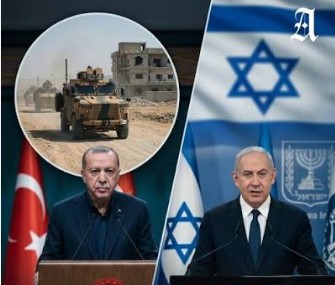

Strategic Depth or Strategic Dilemma: Israel – Türkiye Competition in Syria’s Post-War Theater
April 25, 2025
Apel la propuneri de comunicări pentru participarea la conferința națională
April 27, 2025The Middle East’s New Chessboard: How Türkiye and Saudi Arabia Are Redrawing the Region’s Power Map in 2025

In 2025, the Middle East is undergoing a seismic shift. The long-standing patterns of rivalry—once defined by sectarian divides and foreign interventions—are being reshaped by two assertive powers: Türkiye and Saudi Arabia. With contrasting ideologies and ambitions, Ankara and Riyadh are now central to a new strategic game. While not at war or in direct confrontation, both are engaged in a high-stakes competition for influence that could define the region’s trajectory for the years to come.
A Rapprochement Wrapped in Rivalry
Following years of tensions over the Arab Spring, the Khashoggi assassination, and clashing policies in Egypt, Libya, and Syria, 2025 has witnessed a cautious thaw between Türkiye and Saudi Arabia. Diplomatic visits have increased, high-level defense talks are underway, and both sides are rebranding their relationship. Yet beneath the public gestures, there lies a deeper, unresolved rivalry.
This new phase is not about reconciliation—it is about strategy. Both nations are moving from reactive policies to proactive regional agendas. Their goal: to dominate the narrative and future of the post-American Middle East through military power, economic influence, and media soft power.
Türkiye’s Expanding Horizon
President Erdoğan’s vision of a resurgent Türkiye continues to unfold. No longer content with NATO’s periphery, Ankara is projecting power across multiple regions. In 2025, its military-industrial complex has matured, marked by the export of indigenous drones, naval vessels, and the KAAN fifth-generation fighter jet. Türkiye’s military footprint currently spans the Horn of Africa, Qatar, and Northern Cyprus.
Ankara’s “Mavi Vatan” (Blue Homeland) doctrine is reshaping the eastern Mediterranean, leveraging maritime power and energy exploration to challenge Greek and Cypriot claims. Meanwhile, Turkish firms are positioning themselves in Syria’s post-Assad reconstruction—a chance to influence border dynamics and counter Kurdish militants.
Saudi Arabia’s Strategic Overhaul
Crown Prince Mohammed bin Salman (MBS) is transforming Saudi Arabia internally and externally. Vision 2030 has moved beyond rhetoric into execution, backed by massive sovereign wealth fund investments in tech, tourism, infrastructure, and defense.
Riyadh is no longer reacting to instability—instead it is shaping outcomes. A Saudi-led initiative in Syria post-Assad has placed the Kingdom at the center of reconstruction diplomacy. MBS is forging pragmatic alliances, welcoming Turkish defense deals, courting China’s Belt and Road, and using energy leverage to maintain European influence.
Saudi Arabia is also deepening its reach in Africa, where it competes with Türkiye through port deals, security pacts, and food infrastructure. Riyadh is fast becoming the Gulf’s anchor state with aspirations beyond the region.
Defense as Diplomacy
One of the most notable shifts in 2025 is emerging defense cooperation. Türkiye and Saudi Arabia are negotiating a major arms deal—potentially involving naval assets, drones, and even the KAAN fighter jet. This move suggests a shift from parallel military strategies to overlapping capabilities.
But this is not a sign of alignment; it’s mutual leverage. Türkiye seeks buyers for its expanding arms industry. Saudi Arabia wants to diversify beyond U.S. suppliers amid tensions with Washington. However, should talks collapse, both are ready to fall back into competition—especially in conflict zones like Libya, Yemen, and Sudan, where their proxies already clash.
Flashpoints and Divergences
Despite warming ties, major fault lines persist. In Libya, Turkish backing of the Tripoli-based government still conflicts with Saudi-aligned eastern forces. Across the Red Sea and Horn of Africa, both countries compete for strategic footholds through infrastructure projects and security cooperation.
Media rivalry adds another layer—Turkish and Saudi-backed outlets push divergent narratives across the Arab world. In Iraq, Türkiye’s military activity against Kurdish groups risks undermining Saudi efforts to stabilize the Sunni political landscape.
These tensions reflect deeper strategic divergence. Whereas Türkiye leans toward assertive militarism and ideological projection, Saudi Arabia pursues a more economic and diplomatic approach—though they both seek similar ends: influence and leadership.
The U.S. Pivot and Global Openings
The U.S. strategic pivot—marked by military drawdowns and greater focus on Asia—has created space for regional powers to rise. Türkiye and Saudi Arabia are seizing the opportunity, but aligning differently.
Türkiye is gravitating toward an Eurasian realignment, engaging with Russia and China on trade, energy, and defense. Saudi Arabia, though still entrenched in U.S.-led systems, is hedging: increasing economic ties with China, in 2023 expressing its intention to join BRICS, and embracing multipolar diplomacy.
Both nations now operate as mid-tier powers navigating the great power game—leveraging their regional rivalry to court superpower attention and investment.
Toward a New Balance?
The Saudi-Turkish dynamic in 2025 is paradoxical: cooperative and competitive, pragmatic yet symbolic, regional in focus but global in implication. This is not a Cold War-style standoff—it’s a flexible rivalry, unfolding through economic deals, defense diplomacy, and ideological projection.
Whether this relationship stabilizes into long-term strategic coexistence or reverts to zero-sum competition depends on several volatile variables: Syria’s transition, global energy shifts, unrest in North Africa, and the outcome of the U.S. presidential race.
Yet one thing is clear—2025 represents a turning point. The Middle East is no longer defined solely by Iran-Israel tensions or Western interventions. A new chessboard is emerging, and Türkiye and Saudi Arabia are maneuvering with deliberate intent. The game is ongoing, and these two players are no longer just reacting—they are shaping the board.
Conclusion: A Rivalry That Shapes More Than a Region
This unfolding rivalry is no mere regional squabble—it reflects a fundamental reordering of Middle Eastern power. As traditional hegemonies fade and external powers shift focus, Türkiye and Saudi Arabia are filling the vacuum with competing, yet increasingly sophisticated, visions of leadership.
Türkiye’s assertive military and cultural projection is now matched by Saudi Arabia’s economic and diplomatic overdrive. Their interactions are neither purely confrontational nor consistently cooperative—they are strategic, transactional, and highly situational.
The stakes are global. As both nations expand their reach—from Africa to Asia, from BRICS summits to drone sales—their actions will shape not just the region’s future but the global order emerging from a fractured unipolar era. In 2025, the Middle East is no longer a chessboard managed by foreign hands. Türkiye and Saudi Arabia are writing the next chapter, applying one calculated move at a time.
Disclaimer. The views and opinions expressed in this op-ed are those of the authors and do not necessarily reflect the official policy or position of MEPEI. Any content provided by our authors is of their opinion and is not intended to malign any religion, ethnic group, club, organization, company, individual, or anyone or anything.