
Egypt’s Strategic Posture in a Transforming Middle East – The Octagon and Egypt’s Regional Role
July 10, 2026
Navigating AI in the Gulf: Opportunities and Challenges Amidst Conflict
July 21, 2026
On July 7, 2026, President Donald Trump announced from Ankara that the United States would lift CAATSA sanctions imposed on Türkiye in 2020 and would consider restoring Türkiye’s access to the F-35 fighter jet program. The announcement, made during the first presidential visit to Türkiye in eleven years, marked a dramatic reversal of six years of U.S. policy predicated on the principle that NATO allies could not simultaneously possess Russian S-400 air defense systems and American F-35 stealth fighters. Trump’s declaration—“We’re going to be taking the sanctions off. It’s time. We don’t want to sanction friends”—was accompanied by effusive praise for President Recep Tayyip Erdogan, whom Trump described as a “very strong leader” with whom he had “chemistry” (ABC News 2026; Al Jazeera 2026).
The policy shift has drawn sharp criticism from Israel, bipartisan congressional opposition, and concern from European allies. Yet beneath the diplomatic theater lies a more fundamental question: what has Türkiye actually paid to secure this reversal? This policy analysis examines the strategic calculus underlying Türkiye’s diplomatic offensive, the concessions Ankara has extended, and the implications for regional balance of power in the Eastern Mediterranean and beyond. The analysis draws on official statements, congressional testimony, and scholarly assessments of U.S.-Türkiye relations.
The Strategic Context: From Sanctions to Alignment
The origins of the U.S.-Türkiye rift lie in Ankara’s 2019 acquisition of the Russian S-400 air defense system. Washington responded by removing Türkiye from the F-35 program, where Ankara had been both a purchaser and a production partner, and imposing sanctions under the Countering America’s Adversaries Through Sanctions Act (CAATSA). The rationale was clear: integrating a Russian system with American fifth-generation fighter technology would compromise sensitive U.S. military technology and provide Russia with intelligence access (Springer 2025; JINSA 2026).
Trump’s reversal marks a fundamental reorientation of U.S. policy toward Türkiye . The president has framed the shift in personal and transactional terms, emphasizing Türkiye’s loyalty relative to other NATO allies. “Türkiye has been, in many ways, much more loyal than other countries that we think would be loyal,” Trump stated, contrasting Ankara’s support with the reluctance of Italy, Germany, and France to join U.S. military operations in the Strait of Hormuz (Reuters 2026). This framing is consistent with what scholars have identified as Trump’s characteristically transactional approach to foreign policy, in which personal relationships and bilateral exchanges override institutional constraints and alliance commitments (Brookings Institution 2026).
The academic literature on U.S.-Türkiye relations has identified three distinct periods in Turkish foreign policy under Erdogan: 2002 to 2012, 2013 to 2023, and the current alignment marked by a pragmatic recalibration of relations with Washington. The Trump-era rapprochement marks a departure from the confrontational posture that characterized much of the Obama and Biden administrations, reflecting both the personal chemistry between the two leaders and Türkiye ‘s calculation that alignment with Washington serves its strategic interests (Foreign Policy Research Institute 2025). As the Brookings Institution (2026) has noted, the Iran war both vindicated Türkiye ‘s hedging instinct and exposed its limits. When Iranian ballistic missiles entered Turkish airspace, NATO intercepted them, serving as a reminder that strategic autonomy remains an aspiration more than a reality.
What Türkiye Has Paid
The public record reveals that Türkiye has extended several significant, if largely unspoken, concessions to secure this diplomatic breakthrough. These payments have come in strategic currency rather than financial transfers, reflecting Ankara’s calculation that alignment with Washington offers greater value than continued hedging.
Strategic Realignment on Iran
The most substantive payment appears to be Türkiye ‘s alignment with U.S. policy toward Iran. Trump explicitly linked his willingness to restore F-35 access to Türkiye’s cooperation on Iran, stating that the U.S. had an “obligation” to maintain Turkish F-16 engines because Türkiye had been “more helpful” on Iran than other NATO countries (The Hill 2026; Aerospace Global News 2026). The context matters here: Trump has framed his Iran policy as a “denuclearization” military operation, and he praised Türkiye’s support while criticizing other NATO allies for declining to assist U.S. operations in the Strait of Hormuz.
Türkiye’s shift on Iran marks a significant departure from its previous posture. Ankara has historically maintained complex relations with Tehran, balancing economic ties with geopolitical competition. By aligning more closely with U.S. Iran policy—including potential support for maritime security operations and diplomatic pressure—Türkiye has signaled a recalibration of its regional positioning. Oğuz (2023) notes that Türkiye has been a NATO member since 1952 and remains a key eastern anchor for the Alliance, but that its official stance on Iran has been carefully calibrated to reflect its long-standing preference for strategic autonomy. The F-35 deal suggests that Ankara has concluded that alignment with Washington on Iran offers greater strategic value than continued hedging, at least for the moment.
NATO Cohesion and Burden-Sharing
Trump’s emphasis on NATO burden-sharing suggests Türkiye has offered assurances regarding its commitment to alliance obligations. The president contrasted Türkiye’s loyalty with his disappointment in other NATO members, stating that “if it weren’t held in Türkiye, where my friend happens to be a very strong leader, it’s possible that I wouldn’t have attended” the summit (Bloomberg 2026). This framing implies that Türkiye has positioned itself as a reliable NATO partner at a moment of transatlantic strain, potentially offering commitments on defense spending, military contributions, or strategic coordination.
Türkiye’s reintegration into the F-35 program would strengthen NATO’s southern flank and address longstanding concerns about burden-sharing. A recent analysis of Greek-Turkish-Iranian alignment dynamics suggests the alliance is evolving into a more fragmented, burden-sharing-driven, and regionally stretched entity, in which the United States expects European allies to assume greater responsibility for their own defense (Zenodo 2025). Türkiye’s willingness to align with U.S. priorities on Iran and its demonstrated commitment to NATO burden-sharing positions Ankara as a valuable ally in this emerging architecture. Yet the durability of this alignment remains uncertain, given Türkiye’s continued possession of the S-400 system and its ongoing tensions with Greece and Cyprus.
De-escalation in the Eastern Mediterranean
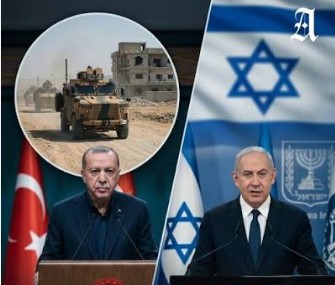
Türkiye’s regional rivals—particularly Israel, Greece, and Cyprus—have mobilized against the F-35 sale. Israeli Prime Minister Benjamin Netanyahu warned that restoring Türkiye ‘s access to F-35s would “upset the power balance in the Middle East, which is ultimately guaranteed by Israeli air superiority” (Jerusalem Post 2026). The fact that Trump proceeded despite this opposition suggests Türkiye has offered assurances regarding its regional behavior, potentially including commitments to de-escalate tensions in the Eastern Mediterranean, restrain rhetoric toward Israel, or moderate its position on Cyprus.
Academic analysis of the Eastern Mediterranean strategic triangle suggests that the region comprises three powerful states (Egypt, Israel, and Türkiye), two EU member states (Greece and Cyprus), and several failing or contested entities (Taylor & Francis 2025). The reconfiguration of U.S.-Türkiye relations threatens to disrupt the existing balance, potentially pushing Greece and Cyprus to deepen their alignment with Israel and Egypt. That same analysis contrasts the transactive triangle comprising the United States, Israel, and Greece, together with the Greek Cypriot Administration, with the more static triangle of Russia, Iran, and Syria (Taylor & Francis 2025). Türkiye’s ability to act within these structures depends on its strategic positioning, and the F-35 deal enhances that positioning considerably.
Implicit Commitment on S-400 Resolution
While Trump dismissed concerns about Türkiye’s continued possession of the S-400 system—“I have no concerns at all about anything”—the legal framework presents an obstacle. U.S. law prohibits F-35 transfers unless the president certifies that Türkiye no longer possesses the S-400 system. Speculation has emerged about transferring the Russian system to a third country, though no agreement has been finalized. Türkiye has implicitly committed to resolving this issue, whether through neutralization, transfer, or some other mechanism, to enable the certification required for F-35 access.
As JINSA (2026) has argued, the S-400 is merely the legal trigger for Türkiye’s exclusion. The underlying concerns about NATO interoperability, technology security, and alliance reliability remain unresolved. The National Defense Authorization Act explicitly prohibits the transfer of F-35s to Türkiye unless the president certifies that Türkiye no longer possesses the S-400 system. Any resolution would require either congressional action or a certification that Türkiye has resolved the issue, both of which present significant obstacles.
Personal Diplomacy and Strategic Patience
Beyond concrete concessions, Türkiye has invested heavily in personal diplomacy with Trump. Erdogan welcomed Trump with a lavish state ceremony, and the two leaders have cultivated a relationship characterized by mutual praise and personal chemistry. This investment reflects a strategic calculation: Trump’s transactional approach to foreign policy rewards personal relationships, and Türkiye has positioned itself as a reliable partner worthy of presidential favor (Council on Foreign Relations 2026).
The underlying logic of Türkiye’s diplomatic offensive reflects a sophisticated understanding of the transactional nature of Trump-era foreign policy. The Council on Foreign Relations (2026) observes that Erdogan has simultaneously denounced the United States and cozied up to Trump, personifying the national strength that Türkiye relies on in an anarchic and illiberal world. This dual-track approach—maintaining nationalist rhetoric domestically while offering concrete strategic concessions to Washington—has proven remarkably effective.
The Regional Implications
The F-35 deal carries profound implications for the regional balance of power. The restoration of Türkiye’s access to the F-35 program would fundamentally reconfigure military capabilities in the Eastern Mediterranean and beyond, with consequences that would be felt across multiple regional alignments.
Israel’s Strategic Concerns
Israel has emerged as the most vocal opponent of the policy shift. Netanyahu’s warning that F-35 sales to Türkiye would “upset the power balance in the Middle East” reflects genuine strategic anxiety. Israel has long relied on qualitative military edge as a cornerstone of its security doctrine, and Türkiye’s acquisition of fifth-generation fighters would challenge that advantage (Al-Monitor 2026).
Israeli Ambassador Yechiel Leiter convened an emergency meeting with Greek and Cypriot ambassadors, alongside military attaches and Jewish and Christian leaders, “to discuss the evolving security landscape and reinforce regional stability in the Eastern Mediterranean” (Al Jazeera 2026). This diplomatic mobilization reflects Israel’s concern that a U.S.-backed, militarily resurgent Türkiye could reshape the regional balance, particularly given Erdogan’s hostile rhetoric toward Israel and Türkiye ‘s support for Hamas. The Eastern Mediterranean geopolitical complex is fundamentally altered by Türkiye’s military modernization, and Israel’s response will likely involve deeper alignment with Greece, Cyprus, and potentially Egypt (Taylor & Francis 2025).
Congressional and European Resistance
Bipartisan congressional opposition presents a significant obstacle. Republican Representative Nicole Malliotakis enumerated Erdogan’s transgressions—“aligned himself with Iran and Russia, harbored Hamas, refused to sanction Russia, undermined American counter-ISIS operations, continues to illegally occupy part of Cyprus, and has repeatedly directed illegal military jet overflights above the Greek Islands”—concluding that “providing Türkiye with our most advanced fighter jet would jeopardize U.S. national security” (The Hill 2026).
Senator Lindsey Graham, a close Trump ally, acknowledged that “there might be some pushback in Congress” while expressing openness to a solution (The Hill 2026). The path forward remains uncertain, with legal barriers under the NDAA and CAATSA requiring either congressional action or presidential certification that Türkiye has resolved the S-400 issue. This bipartisan opposition reflects a deeper concern: that rewarding Türkiye with F-35 access without resolving the underlying tensions would set a dangerous precedent, signaling that authoritarian behavior and strategic defiance carry no lasting consequences (JINSA 2026).
The Quadrilateral Alignment
Türkiye’s diplomatic offensive should be understood in the context of broader regional realignment. The emergence of the Egypt-Pakistan-Saudi Arabia-Türkiye quadrilateral reflects a convergence driven by shared concerns about regional instability. Türkiye’s reconciliation with Saudi Arabia and Egypt, combined with its improved U.S. relations, positions Ankara as a central player in an emerging security architecture that may counterbalance Iranian and Israeli influence.
The quadrilateral alignment represents a significant shift in Middle Eastern security dynamics. Taylor and Francis’s analysis of the region identifies two emerging alliances as particularly significant: the quadrilateral of Egypt, Türkiye, Saudi Arabia, and Pakistan, and the UAE-Israel defense partnership (Taylor & Francis 2025). Türkiye’s reintegration into the F-35 program strengthens its position within this emerging architecture, potentially allowing Ankara to play a more assertive role in regional security coordination.
Conclusion: The Price of Alignment
Türkiye has paid a significant price for Trump’s policy reversal, but the returns on this investment remain uncertain. Ankara has aligned more closely with U.S. Iran policy, signaled commitment to NATO burden-sharing, offered implicit assurances regarding regional de-escalation, and invested heavily in personal diplomacy with the Trump administration. These concessions add up to a meaningful recalibration of Turkish foreign policy, one that reflects a calculation that alignment with Washington serves Türkiye’s strategic interests better than continued hedging.
The deal, however, is not yet done. Congressional opposition, Israeli lobbying, and the legal framework governing arms transfers all present obstacles that cannot be easily overcome. Even if the F-35 sale ultimately proceeds, the underlying tensions in U.S.-Türkiye relations—the S-400 issue, differences over Syria and Libya, and Türkiye’s increasingly authoritarian governance—are unlikely to disappear.
Several factors nonetheless suggest that this realignment could prove more durable than earlier cycles of cooperation and confrontation between Washington and Ankara (Foreign Policy Research Institute 2025). Türkiye’s strategic calculus has shifted in response to the Iran conflict and the wider reconfiguration of Middle Eastern security architecture. The quadrilateral alignment with Egypt, Pakistan, and Saudi Arabia gives Türkiye regional partners who share its concerns about Iranian influence and instability. And the costs of continued estrangement from Washington have become harder to ignore, particularly given Türkiye’s need for advanced military technology and continued access to U.S. defense supply chains (Springer 2025).
Yet significant obstacles remain. The S-400 issue is not easily resolved, given Russia’s interest in retaining leverage over Türkiye and the technical and legal complexity of transferring or neutralizing the system. Congressional opposition is unlikely to dissipate, given the depth of bipartisan concern about Erdogan’s governance and Türkiye’s regional assertiveness. Israel’s opposition, backed by real influence in Washington, will keep complicating any effort to restore Türkiye’s F-35 access. As JINSA (2026) has argued, lifting CAATSA sanctions does not resolve the deeper questions about NATO interoperability, technology security, and alliance reliability that made Türkiye’s exclusion possible in the first place.
In Trump’s transactional foreign policy, loyalty functions as currency, and Türkiye has positioned itself as a reliable partner at a moment of transatlantic strain. Whether that translates into a durable realignment or proves to be a temporary accommodation remains an open question. What is already clear is that Türkiye has shown a willingness to shape its own fate through strategic calculation rather than ideological rigidity—and the F-35 deal, whatever its ultimate outcome, marks a significant moment in the evolution of U.S.-Türkiye relations and the broader reconfiguration of Middle Eastern security architecture.
References
ABC News. 2026. “Trump Says He’ll Consider Giving Türkiye F-35 Jets, Adds That US Will Lift Sanctions.” July 7.
Aerospace Global News. 2026. “Trump Signals Türkiye F-35 Transfer after Pledge to Lift Sanctions.” July 7.
Al Jazeera. 2026. “Trump Says Will Lift Sanctions on Turkiye, ‘Consider’ Selling F-35s.” July 7.
Al-Monitor. 2026. “Trump Says US Will Lift CAATSA Sanctions on Türkiye , Consider F-35 Sale.” July 7.
Bloomberg. 2026. “Trump Says US May Sell Türkiye F-35s, Nix Sanctions.” July 7.
Brookings Institution. 2026. “Türkiye ‘s Search for a Middle East Order.” Washington, DC: Brookings.
Council on Foreign Relations. 2026. “How Trump and the NATO Summit Lend Legitimacy to Türkiye ‘s Autocratic President.” July 2.
Foreign Policy Research Institute. 2025. “Reflecting on Turkish-American Relations in a Second Trump Term.” January 14.
Jerusalem Post. 2026. “Benjamin Netanyahu Warns Donald Trump against Sale of F-35s to Türkiye .” July 6.
JINSA (Jewish Institute for National Security of America). 2026. “Still a Flight Risk: Holding the Line on Türkiye’s F-35s.” June 18.
Oğuz, Şafak. 2023. “F-35 Crisis between the U.S. and Türkiye: Is This the End of American Nuclear Assurance for Türkiye?” Insight Türkiye 25(1): 75-89.
Reuters. 2026. “Trump Says US Will Lift Sanctions on Türkiye, Heaps Praise on Erdogan.” July 7.
Springer. 2025. “F-35: Rise and Fall of Defense Industrial Cooperation.” In Defense Industrial Cooperation in the Age of Strategic Competition. Cham: Springer.
Taylor & Francis. 2025. “Balancing Russia in the ‘New Eastern Mediterranean.’” In The New Eastern Mediterranean: Geopolitics and Security. London: Routledge.
The Hill. 2026. “Trump’s Pledge to Lift Türkiye Sanctions Sets Up Fight with Congress, Allies.” July 7.
Zenodo. 2025. “Türkiye–Iran Alignment & Greece’s Absolute Decision of Sovereignty: Strategic Implications for the Eastern Mediterranean.” December 27.
Disclaimer. The views and opinions expressed in this analysis are those of the author and do not necessarily reflect the official policy or position of MEPEI. Any content provided by our author is of her opinion and is not intended to malign any religion, ethnic group, club, organization, company, individual, or anyone or anything.