NATO’s Southern Flank in Transition: The Istanbul Cooperation Initiative and Regional Security in the Middle East
July 9, 2026
The Price of Alignment: Türkiye’s Strategic Calculus in the Trump-F-35 Deal
July 15, 2026Egypt’s Strategic Posture in a Transforming Middle East – The Octagon and Egypt’s Regional Role
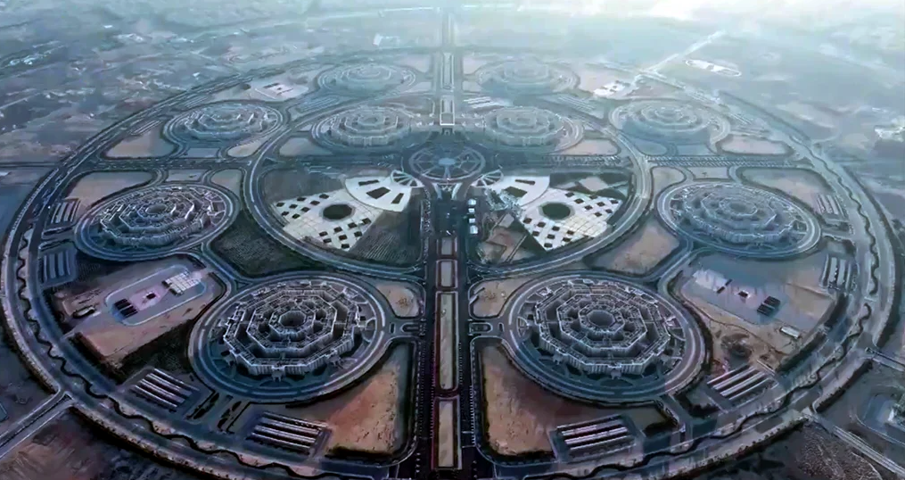
The inauguration of Egypt’s State Strategic Command Headquarters, “The Octagon,” on July 4, 2026, represents more than a military modernization project. It signals a deliberate declaration of Egypt’s ambitions in a region undergoing fundamental transformation. Covering approximately 92 square kilometers and comprising around 2,800 buildings, the Octagon is the largest complex of its kind in the Middle East, housing 13 integrated strategic and logistical zones, eight interconnected octagonal buildings representing different armed forces branches, and over 11 specialized data centers (State Information Service 2026). President Abdel Fattah El-Sisi described the facility as “a fundamental pillar in the state’s capacity to confront challenges and exceptional circumstances,” operating with “a comprehensive vision and advanced systems that place the nation’s security and stability above all else” (State Information Service 2026).
The symbolism is unmistakable. By locating this command hub in the New Administrative Capital, Egypt projects an image of a state that is modernizing, centralizing, and preparing for a future defined by complex, multi-domain threats. Al-Ahram Weekly’s coverage of the launch captured the underlying logic: contemporary wars “are not determined by firepower alone, with their outcomes being increasingly shaped by access to information, rapid decision-making, and effective crisis management” (Al-Ahram Weekly 2026). The Octagon embodies this philosophy, integrating advanced command, control, communications, and artificial intelligence systems designed to accelerate decision-making and optimize coordination across all armed forces branches (Cairo Scene 2026).
Scholarship on Egypt’s regional role has increasingly framed Cairo’s behavior through the lens of middle-power theory and niche diplomacy (Chaziza and Lutmar 2026; Priya and Quamar 2025). Chaziza and Lutmar (2026) argue that Egypt’s influence stems less from episodic policy shifts than from enduring structural endowments—its geostrategic location, demographic weight, historical legacy, and civilizational authority. Similarly, a study examining Egypt’s evolving role as a middle power through niche diplomacy found that Cairo leverages its strategic advantages across four key domains: mediation, energy hub ambitions, geopolitical positioning at the Arab-African and Mediterranean crossroads, and religious and cultural diplomacy (MDPI 2025). These niches enable Egypt to maintain agency, manage external dependencies, and project influence despite structural vulnerabilities (MDPI 2025).
Egypt’s regional role has expanded significantly in recent years. Alongside Türkiye and Qatar, Cairo played a central role in mediating the October 2025 ceasefire that brought the two-year Gaza conflict to a halt (Al-Ahram Weekly 2026). It has maintained open channels with the Trump administration while simultaneously engaging with Israel, Iran, and Hamas—a balancing act that has positioned Egypt as an indispensable mediator in regional crises (Kertcher and Lutmar 2026). A new quadrilateral alignment has emerged, bringing together Egypt, Pakistan, Saudi Arabia, and Türkiye in response to a Middle Eastern security landscape “being transformed beyond recognition” (Al-Ahram Weekly 2026). This grouping is best read as Egypt’s effort to maintain relevance and influence amid shifting alliances. China Daily’s coverage frames this emergent alignment as something short of a NATO-style pact, describing it instead as a convergence shaped by high-level diplomatic engagements, defense dialogues, and security coordination talks (China Daily 2026).
Geopolitical Threats Facing Egypt
Egypt confronts a multi-front security environment that has become increasingly complex and interconnected. The convergence of multiple crises—the Gaza transition, Red Sea instability, and the Grand Ethiopian Renaissance Dam (GERD) stalemate—has created what analysts describe as a multi-front security crisis that Cairo can no longer ignore (Al-Ahram Weekly 2026).
The Gaza and Palestinian Front. The fragile peace in Gaza remains a persistent concern. Egypt fears that disruptions to the ceasefire could spill over into domestic tensions, including the risk of displacement of Gaza residents into Egyptian territory (State Information Service 2026). Cairo has consistently opposed any forced displacement of Palestinians, viewing it as a threat to its national security that could “liquidate the Palestinian cause” (Al-Ahram Weekly 2026). However, as Kertcher and Lutmar (2026) observe, the post-October 7 wars have intensified domestic and regional pressures on Egypt to reconsider its peace agreement with Israel. Despite these pressures, the durability of the Egyptian-Israeli peace deal reflects two primary factors: elite positions and interests reinforced by strong domestic institutions, and mediator involvement and guarantees (Kertcher and Lutmar 2026).
The Red Sea and Horn of Africa. Instability in the Red Sea and the Horn of Africa presents direct threats to Egyptian national security. Developments in Sudan, Libya, and the Horn carry direct implications for Egypt and the stability of the entire region (State Information Service 2026). Egypt has progressively redefined its regional posture, attaching greater strategic importance to Africa and specifically to the Red Sea–Horn of Africa region (Donelli 2025). President Sisi has articulated an increasing focus on a North–South strategic axis, linking the Mediterranean, the Nile Basin, the Horn of Africa, and the Indo-Pacific (Donelli 2025).
Egypt’s engagement in the Horn of Africa has intensified, particularly through its alliance with Eritrea. The Egypt–Eritrea understanding stems from a broader convergence of interests shaped by concerns over Ethiopia’s growing regional influence, the future of Red Sea security, and the unresolved Nile waters dispute (MP-IDSA 2026). Egypt considers its presence and influence in the Horn of Africa as an essential component of its national security and geopolitical strategy, driven by its geographical location and vital dependence on the Nile River (MP-IDSA 2026).
The Nile and Water Security. The GERD stalemate remains one of Egypt’s most pressing strategic concerns. Egypt has strategically linked the Nile to the Red Sea, viewing Ethiopian dam operations through the lens of existential threat (Al-Ahram Weekly 2026). The dispute is rooted in competing hydrodiscourses: Egypt promotes “historic rights use” as a hegemonic hydrodiscourse, while Ethiopia advocates “equitable and reasonable use” as a counter-hegemonic hydrodiscourse (Nature 2025). These polarized discourses, reinforced by state-run media, contribute to the failure to endorse a binding regulatory policy framework, leading to conflicting terms rather than cooperation between the two riparian countries (Nature 2025).
Iran and Regional Escalation. The Iran file adds further complexity. Egypt, already anxious about developments in Libya, Sudan, and Gaza, fears that Iran-US tensions could further fuel existing crises (Cairo Scene 2026). Cairo has intensified diplomatic outreach to cool tensions, engaging officials across the region to prevent escalation (Al-Ahram Weekly 2026).
The Octagon as Strategic Response
The Octagon is Egypt’s institutional answer to these convergent threats. It is a comprehensive crisis management center designed to enhance the state’s capacity for rapid response and effective decision-making under pressure (State Information Service 2026). The complex’s advanced data systems, specialized data centers, and integrated operations centers enable real-time command and control over national defense and security operations across the country (Cairo Scene 2026).
President Sisi’s message during the inauguration was clear: Egypt has built “an integrated system for crisis and disaster management” reflecting “the readiness of state institutions and the protection of national security” (State Information Service 2026). The Octagon is not merely a military headquarters but a comprehensive national command hub that brings together defense-related functions of various government agencies in one place, facilitating clear, thorough, and dynamic strategic assessments (Al-Ahram Weekly 2026).
The facility’s technological sophistication is central to its purpose. Equipped with advanced digital technologies and secure satellite communications, it supports centralized military command, operational planning, and coordination between defense institutions and civilian government bodies (Cairo Scene 2026). These systems “rival those of the world’s leading militaries,” reflecting Egypt’s defense philosophy of building comprehensive national power through the combination of advanced weapons systems with cutting-edge command, control, communications, and information management (Al-Ahram Weekly 2026).
The Octagon is also part of Egypt’s broader strategic diversification. Egypt has been diversifying its military partners away from the United States, engaging with China, Russia, and European powers to enhance its strategic autonomy (LSE 2025). This diversification is driven by concerns about US reliability and a desire to maintain a balance of power in the region (Jerusalem Post 2025).
Balance of Power in the Region
The regional balance of power is undergoing significant transformation, and Egypt is positioning itself to remain a central player. Scholars have analyzed the Middle East through the lens of Regional Security Complex Theory, which examines how the distribution of power and changing patterns of amity and enmity among regional states shape security dynamics (Buzan and Wæver 2003). The emergence of the Egypt-Pakistan-Saudi Arabia-Türkiye quadrilateral reflects a realignment driven by shared concerns about regional instability and the need for coordinated responses (Al-Ahram Weekly 2026). This grouping, which held its first foreign ministers meeting in Riyadh on March 19, 2026, signals that Arab states are no longer simply arenas for great-power competition but are “finally [able to] shape their own fate” (Al-Ahram Weekly 2026). Two emerging alliances stand out in this respect: the Egypt-Türkiye-Saudi Arabia-Pakistan quadrilateral, and the UAE-Israel defense partnership (China Daily 2026).
Critically, Egypt’s military buildup is not primarily directed at confronting Israel. As one analyst noted, “Israel isn’t supposed to see Egypt’s military buildup as a threat” (Al-Ahram Weekly 2026). The Octagon “leaves Egypt free to deal with greater threats in the region” (Al-Ahram Weekly 2026). However, Israeli security circles have raised strategic concern regarding Egypt’s broader military buildup and recent deployments of regular army units closer to the Israeli border (Al-Ahram Weekly 2026). The long-term force buildup equations of the Israel Defense Forces must account for Egyptian power “as a risk factor, though not yet a ‘threat,’ even in the absence of current aggressive intent” (Al-Ahram Weekly 2026).
Egypt’s strategy has shifted from reclaiming traditional Arab leadership to “maintaining a balance of power crucial to preserving Egypt’s strategic depth” (Al-Ahram Weekly 2026). The approach is characterized by managing geopolitical risks rather than pursuing ideological visions (George and Bennett 2005). This pragmatism is evident in Egypt’s simultaneous engagement with the United States, Israel, Iran, and Hamas, leveraging its unique position as a strategic US ally while maintaining channels of communication with all regional actors. Chaziza and Lutmar (2026) conclude that Egypt’s niche diplomacy exemplifies both the adaptive potential and the intrinsic fragility of middle-power strategies in a fragmented regional order.
Conclusion
The Octagon is both symptom and symbol of Egypt’s evolving strategic posture. It speaks to a recognition that Egypt’s security environment has become more complex, more interconnected, and more demanding. The facility embodies a comprehensive approach to national security that integrates military, technological, and institutional dimensions, preparing Egypt to confront threats ranging from Gaza instability to Red Sea competition to Nile water security.
Yet this narrative of assertive modernization is not universally shared inside Egypt. Domestic critics have questioned whether resources poured into the Octagon are proportionate to a state still managing a strained economy and rising public frustration over living costs. Some observers argue that the emphasis on military grandeur functions partly as a display of state capability at a moment when economic performance offers less to point to. This tension between external projection and internal strain is unlikely to be resolved by the Octagon alone. Whether Cairo can sustain this posture depends as much on domestic economic resilience as on regional diplomacy.
Egypt’s role in the region has shifted from the traditional Arab leadership of the Nasser era to a more pragmatic, risk-managing approach centered on mediation, alliance-building, and strategic balancing. The Octagon supplies the institutional architecture for this new role—a command hub for a state that seeks to remain central to regional security while managing multiple, overlapping threats. Whether this posture will prove sufficient to navigate the challenges ahead remains an open question, but Egypt has clearly signaled its intent to remain a major player in the Middle Eastern balance of power.
References
Al-Ahram Weekly. 2026. “The Octagon Inaugurated in the New Capital.” Al-Ahram Weekly, July 4.
Buzan, Barry, and Ole Wæver. 2003. Regions and Powers: The Structure of International Security. Cambridge: Cambridge University Press.
Cairo Scene. 2026. “Octagon Military Headquarters Opens in New Capital.” Cairo Scene, July 4.
Chaziza, Mordechai, and Carmela Lutmar. 2026. “Egypt.” In Middle Eastern Emerging Middle Powers. London: Taylor & Francis.
China Daily. 2026. “Flexibility Marks Strategic Reshuffle in Middle East.” China Daily, June 29.
Dergipark. 2026. “Gas Discoveries and the New Energy Geopolitics in the Eastern Mediterranean: Strategic Interdependence between Israel and Egypt.” Uluslararası İlişkiler ve Diplomasi Dergisi 9(1): 45-72.
Donelli, Federico. 2025. “Egypt and Türkiye in the Hornet’s Nest of the Horn of Africa.” IEMed Mediterranean Yearbook 2025: 89-104.
Elsevier (Power Struggles in the Middle East). 2025. “Unveiling the Iranian-Egyptian Cold War.” Middle East Journal 79(2): 156-178.
George, Alexander L., and Andrew Bennett. 2005. Case Studies and Theory Development in the Social Sciences. Cambridge, MA: MIT Press.
Jerusalem Post. 2025. “Egyptian Military Build Up Poses Risk to Israeli Security.” Jerusalem Post, October 21.
Jerusalem Post. 2026. “Should Israel Fear Egypt’s New Octagon Military Headquarters?” Jerusalem Post, July 8.
Kertcher, Chen, and Carmela Lutmar. 2026. “Explaining the Post-October 7 Durability of Israel’s Peace Deals with Egypt and Jordan.” Middle East Policy 33: 67-86.
LSE (London School of Economics). 2025. “Egypt Is Diversifying Its Military Partners Away from the US.” Africa at LSE, July 4.
MDPI (World Journal). 2025. “Between Constraint and Opportunity: Egypt’s Niche Diplomacy in a Shifting Global Order.” World 6(4): 138.
MP-IDSA (Manohar Parrikar Institute for Defence Studies and Analyses). 2026. “Shifting Alignments in the Horn of Africa: Egypt, Eritrea and Ethiopia.” MP-IDSA Issue Brief, June 25.
Nature (Humanities and Social Sciences Communications). 2025. “Hydrodiscourse of the Egyptian and Ethiopian Media over the Grand Ethiopian Renaissance Dam.” Humanities and Social Sciences Communications 12: 1293.
Priya, Lakshmi, and Md. Muddassir Quamar. 2025. “‘Niche Diplomacy’ by Middle Powers in the Middle East: Cases of Saudi Arabia, Iran, Türkiye and Egypt.” India Quarterly 81(2): 112-134.
Springer (Egypt as Israel’s New Ally). 2025. In The Middle East and the New Global Order. Cham: Springer.
State Information Service (Egypt). 2026. “The Inauguration of the State Strategic Command Headquarters ‘The Octagon’ in the New Capital.” July 4.
Whittington, Dale, Jim Hall, Anna Murgatroyd, and Kevin Wheeler. 2025. “Should Egypt Be Afraid of the Grand Ethiopian Renaissance Dam? The Consequences of Adversarial Water Policy on the Blue Nile.” Water Policy 27(1): 104-117.
Disclaimer. The views and opinions expressed in this analysis are those of the author and do not necessarily reflect the official policy or position of MEPEI. Any content provided by our author is of his opinion and is not intended to malign any religion, ethnic group, club, organization, company, individual, or anyone or anything.