
The Funeral of a Leader, the Renewal of the Iranian Nation’s Commitment to Safeguarding the Legacy of Independence, Resistance, and National Strength
July 3, 2026
NATO’s Southern Flank in Transition: The Istanbul Cooperation Initiative and Regional Security in the Middle East
July 9, 2026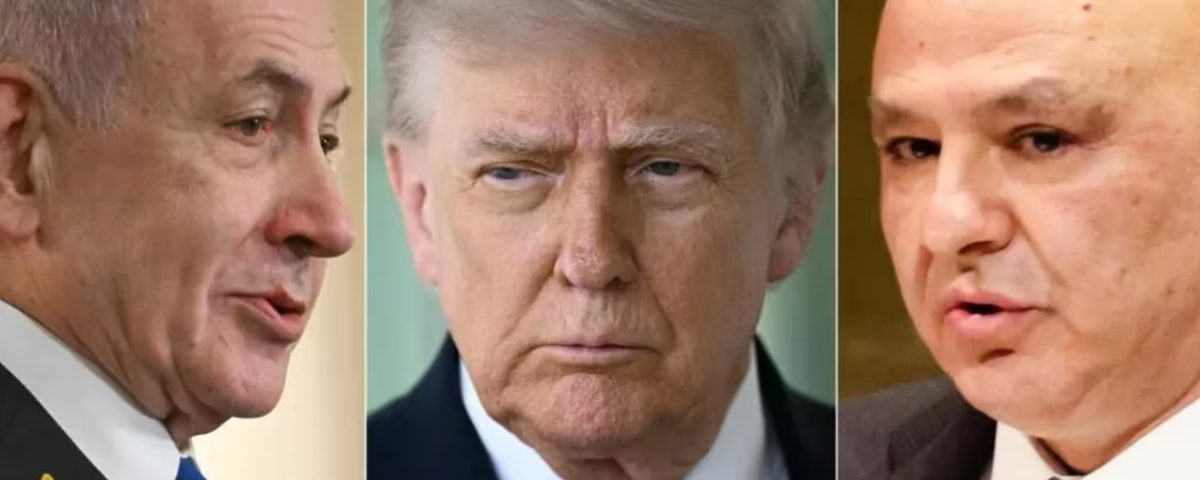
Photo’s Source: https://dailybeirut.com/
There is a version of this story Washington likes to tell itself: the U.S. and Iran finally cut a deal, the guns go quiet, and the region exhales. That version was initially expected to culminate in a formal signing ceremony in Switzerland on June 21, 2026, with Vice President JD Vance leading the American delegation and putting his name to a memorandum of understanding that sets out a 60-day window to negotiate a final agreement, including the future of Iran’s nuclear program. In the end, the agreement was signed earlier through a mix of high-profile and remote channels, with political symbolism taking a back seat to speed and mediation.
But on the ground, things do not line up with that timeline. Israeli strikes are still hitting southern Lebanon. Iran says those strikes already violate the deal it just helped negotiate. And Netanyahu has made it clear he does not see Washington’s signature as binding on Israel.
This is not a secondary issue, but one that sits at the core of the negotiating logic.
Iran’s position going into this deal was never just about its own centrifuges. Tehran’s foreign minister told diplomats that in Iran’s reading, the memorandum’s two real parties are the U.S. and Israel on one side, and Iran and Hezbollah on the other, meaning a deal that leaves Israeli boots in Lebanon is not a real deal at all in Tehran’s eyes. Iran has gone so far as to warn that continued strikes in Lebanon would constitute a violation of the agreement, and demanded that Israeli forces withdraw as part of it.
Israel’s answer has been blunt. Its defense minister confirmed troops will stay in a so-called security zone stretching deep into Lebanese territory, and Israeli officials made the position explicit: as one put it, “Trump’s agreement does not bind us.” Strikes continued in places like Nabatieh province even as the ink was supposedly drying on the broader deal, with Lebanese officials reporting strikes in towns near the border this week.
Trump’s frustration with Israel’s Lebanon campaign has produced calls and statements, not enforcement. When he told mediators he had instructed Israel to cancel a strike on Beirut’s Dahieh, a Hezbollah stronghold, Netanyahu reversed it hours later, vowing to continue to operate in southern Lebanon as planned. By the G7 summit in June 15–17, 2026, Trump’s complaint had narrowed to exactly this: he was “not happy with the way Israel has handled themselves with Lebanon and with Hezbollah,” similarly he suggested that Syria, not Israel, should “take care of” Hezbollah instead. Floating Damascus as an alternative enforcer is not the posture of a man confident that he can make Tel Aviv stand down.
Lebanon is not a side conflict. It’s the leverage.
Washington keeps treating Lebanon like a distraction from the real negotiation, the one happening in conference rooms in Geneva or Muscat, wherever the cameras happen to be that month. But that gets it backward. Every strike that lands in southern Lebanon is doing real work in the negotiation, shaping what Tehran is willing to accept and what Netanyahu thinks he can get away with, whether or not it shows up on anyone’s official agenda. Lebanon is not a distraction from the talks. It’s where the talks are actually being decided, even while officials in Washington keep filing it under a separate, lower priority heading.
For Israel, the logic is continuity, not crisis management. Long before this latest round of talks, Israeli operations against Hezbollah followed a pattern of sustained, rolling strikes rather than a war with a defined endpoint, one built to keep Hezbollah permanently off balance regardless of whatever else is happening at the negotiating table. That doctrine does not pause for a signing ceremony in Switzerland. It runs on its own logic: keep degrading Hezbollah’s capacity to rebuild, indefinitely, regardless of what gets initialed elsewhere.
For Netanyahu specifically, there is also a domestic calculation layered on top. A deal that locks in Iran’s nuclear constraints while leaving Hezbollah standing and Israeli troops eventually withdrawn from Lebanon is, politically, close to a worst-case outcome for a prime minister whose entire brand is built on being the man who finishes what he starts. Squeezing Lebanon now, while the world’s attention is on the U.S. Iran signing, is also a message to three audiences at once. To Trump, that Israel’s hands are not tied. To Iran, that Hezbollah’s degradation continues on Israel’s clock, not Tehran’s. And to Israeli voters, ahead of elections that could come as early as September.
That same instinct to show independence from Washington showed up just days ago, when Netanyahu said he wanted to phase out American financial aid entirely, calling it welfare he does not want and saying he would like the process to start soon, on the grounds that Israel’s economy is now strong enough to finance itself. It is a small comment next to the strikes and the troop numbers, but it fits the same pattern running through everything else here. Netanyahu is telling Washington, in as many ways as he can, that Israel does not need to be managed or bankrolled by it, and therefore does not need to take its cues from it either, on Lebanon or on anything else.
Iran, meanwhile, is using the same battlefield as leverage in the opposite direction, insisting that any cessation of hostilities has to cover all fronts, Lebanon included, because Hezbollah’s continued viability is itself a chip in the broader negotiation, not a separate Lebanese domestic matter.
Three actors, one battlefield, zero agreement on the rules
Strip away the diplomatic language, and what is left is a three-way mismatch Washington would rather not admit. The U.S. wants compartmentalization: nuclear file here, Lebanon de-escalation there, handled by different desks and different envoys who rarely talk to each other and answer to different parts of the bureaucracy. Israel does not recognize that boundary; its military posture treats Hezbollah as a permanent project, not a negotiating chip to be traded away by envois, and it has shown no interest in syncing its own timeline to whatever Washington and Tehran are working out elsewhere.
And Iran treats Lebanon as exactly that, a chip, the most valuable one it has left after a brutal year of losses to Hezbollah’s leadership and arsenal, which is why Tehran keeps insisting it be folded into the broader deal rather than carved out as someone else’s problem.
Those three logics do not average out into a stable equilibrium. They produce exactly what we are watching now: a signing ceremony in one capital and airstrikes in another, in the same week, each claimed by its perpetrators as fully consistent with the deal everyone just agreed to, even though those two realities cannot actually coexist for very long.
What Washington keeps refusing to admit
The deeper problem is not that Israel is sabotaging the deal in some cartoonish sense, though Tehran is certainly framing it that way for its own reasons. The problem is structural. Washington negotiated an agreement that assumes Lebanon can be handled later, separately, as a footnote to the nuclear file, the kind of detail that gets resolved in a follow-up annex rather than the main text. Israel never signed onto that assumption, and is not about to start now just because Trump wants a clean diplomatic win on the books before election season heats up in Tel Aviv too, with Netanyahu facing his own pressure to show voters something more than a ceasefire he did not fully choose.
With roughly six weeks left before the August 17 deadline for a final agreement, if the Trump administration actually wants this deal to hold for the full 60 days it is supposed to govern, let alone produce something durable afterward, it will need to do something it has so far avoided: force the issue with Israel directly, rather than treating Netanyahu’s continued strikes as an inconvenient sideshow to be managed quietly behind the scenes. Iran has already said, repeatedly and on the record, that it will not treat Lebanon as a sideshow, and has tied its own compliance to what happens there. Continuing to pretend otherwise is not statecraft. It is wishful thinking with a signing ceremony attached.
Disclaimer. The views and opinions expressed in this analysis are those of the author and do not necessarily reflect the official policy or position of MEPEI. Any content provided by our author is of his opinion and is not intended to malign any religion, ethnic group, club, organization, company, individual, or anyone or anything.
Dr. Asad ULLAH
Dr. Asad ULLAH is a postdoctoral fellow in International Politics at Shandong University focusing on Middle Eastern geopolitics, regional security, and great power competition.