Morocco Competes with Algeria in the African Sahel
June 1, 2025
Embassy of the Islamic Republic of Iran Bucharest-Romania: Press Release – Regarding Israeli Regime’s military aggression against the territory of The Islamic Republic of Iran on 13 June 2025
June 13, 2025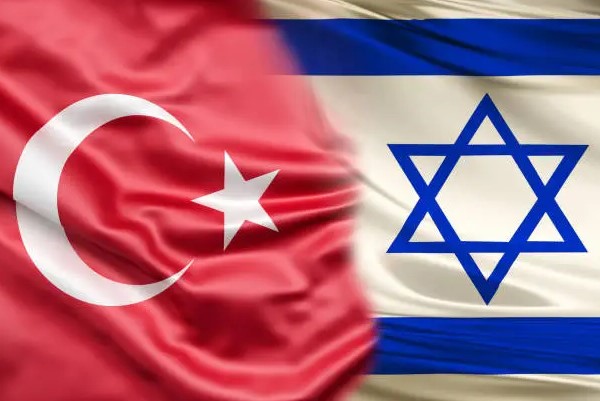
When an amalgam of rebel factions led by Hayat Tahrir al-Sham toppled the Bashar Al-Assad regime, whose family had ruled Syria for fifty years until December 2024, the organisation’s leader, Ahmed al-Shara, inherited an extremely fragmented country, destroyed economically, infrastructurally, and socially by virtue of its thirteen year-long civil war. Two regional powers, Türkiye and Israel, were quick to seize the power vacuum and consolidate their presence in the country. Israel hastily carried out 500 airstrikes in two days and occupied some 460 square kilometres of Syrian territory, whilst Türkiye sought to maintain its status as the dominant military power in Syria. This paper will analyse Turkish and Israeli ambitions for the new Syria, and map recent efforts by both countries to avoid direct conflict in the region, as well as remaining points of contention.
Türkiye’s involvement in Syria can be traced back to the post-Arab Uprisings context and Assad’s reluctance to step down despite Turkish mediation efforts, but in recent times the country has loosely collaborated with Hayat Tahrir al-Sham (HTS) as Turkish army outposts along Syria’s southern border helped HTS keep regime forces at bay from its de facto autonomous enclave in Idlib. This, however, was done not out of an alliance with HTS but out of a concern for ensuring the north-western front remains conflict-free as to avoid another surge of Syrian refugees into Türkiye. The country has been primarily concerned with maintaining its foothold in Syria in order to demobilise groups such as the Islamis State (IS/ISIS) – as part of a regional coalition with Lebanon, Jordan, and Iraq – and the Syrian Democratic Front (SDF) – though the latter has recently announced its intention to integrate its forces into the Syrian armed forces – and foster an environment of stability and security conductive to the return of three million Syrian refugees living in Türkiye. The fact that Türkiye has been working closely with the new interim President Ahmed Al-Shara as it seeks to consolidate control of several Syrian airbases has particularly triggered the eerie of Israeli officials, as has the concern that it may hinder Israel’s capability to fly over Syria without being detected by Turkish radars in the event that it will choose to make use of Syrian airspace in order to target other countries.
For Israel, the fall of Assad represented both an opportunity and several challenges. Syrian-Israeli relations have a history marred by conflict, and although a United States-brokered disengagement agreement was signed between the two in the aftermath of the 1973 Arab-Israeli War, Assad’s close alignment with Iran, Israel’s chief regional adversary, continued to create tensions between the two. Israeli Foreign Minister Gideon Sa’ar has repeatedly advocated for a federal Syria, made up of several autonomous regions, in order to weaken the central government as a precaution to what the country perceived to be a possible future threat. Therefore, Assad’s departure was rapidly seized as an opportunity for establishing informal spheres of influence, particularly in Syria’s south, as well as create buffer zones. However, Israel is also concerned that Al-Shara will fail to consolidate control over the entirety of Syrian territory given its sectarian history and the numerous rebel groups that sought control over various regions, which in turn will give way to an Iranian assertion of influence and maintenance of Syria as a supply route for Hezbollah – an Islamist political party and paramilitary group that opposes Israel but one that has been largely made redundant by a series of Israeli attacks in late 2024 – in Lebanon. Alternatively, this failure may also give way to an increase in Turkish influence, expected to come in the form of an Islamist axis that may replace the Iranian but encourage anti-Israel sentiments all the same. Turkish-Israeli relations themselves have deteriorated since Israel’s war on Gaza, with officials on both sides often relinquishing diplomatic language in favour of accusations such as that made by Israeli foreign minister that Turkish President Recep Tayyip Erdoğan is a “dictator [who] revealed his antisemitic face” by denouncing Israel’s war on Gaza and its genocide (consistent with the United Nation’s Special Committee findings). However, Al-Shara has repeatedly stated that his country seeks no conflict, and no conflict with Israel in particular.
These concerns have, nonetheless, led Israel to bomb Syria’s Tiyas air base (also known as T4) near Palmyra on the 2nd of April, just as Ankara moved to establish its air defense system – complete with armed drones and surveillance aircraft – there. In an op-ed to local outlet Ynet News, Israeli defense reporter Ron Ben-Yishai declared that “Türkiye’s intention to introduce air defense systems and radar to central Syrian airports poses a direct threat to Israel’s freedom of action in Syria”. Several Israeli officials defended the attack by deeming Al-Shara’s government to be made up of “radical jihadists” whose collaboration with Türkiye on the takeover of several airbases would not be tolerated. The aggression sparked concerns of an Israeli-Turkish conflict, with relations at their lowest point in decades and at a time when Türkiye was seen as growing closer to the Syrian establishment given the two’s months-long effort to negotiate a defense pact and – misplaced – Israeli suspicions that a “Sunni crescent” of Turkish, Syrian, and Egyptian cooperation is evolving. Türkiye, in turn, drafted plans to temporarily deploy a Russian-made S-400 air defense system to the base in order to deter further attacks.
However, those conflict concerns have been increasingly disproven in recent weeks. Although there is no love lost between Türkiye and Israel, Turkish foreign minister Hakan Fidan’s statements that “Syria doesn’t belong to Türkiye; Syria doesn’t belong to Israel.” and that “we don’t want to see any confrontation with Israel in Syria because Syria belongs to Syrians” were recently reported by Reuters, in line with the Turkish narrative that the intention is to support Syria’s sovereignty and stability. The two countries also moved from words to actions, engaging in Azeri-mediated negotiations on several occasions in an attempt to de-escalate and avoid outright conflict. A 24/7 hotline was established soon thereafter as a deconfliction mechanism in order to avert military clashes, similar to that established between Israel and Russia in 2015. Nevertheless, the major point of contention for Israel – Ankara’s air defense systems and radars – remains. Negotiations are ongoing, and Israel signalled it would allow Turkish land forces such as tanks and infantry in Syria, but Türkiye maintains the bases near Palmyra are crucial to its capacity to track and strike IS groups, which operate near Palmyra in the desert. Yet, Foreign Minister Hakan Fidan has stated on numerous occasions that his country would not intervene if Syria and Israel – who are similarly negotiating with the help of Azeri mediation – came to an agreement.
Although no announcements have been made on the progression of negations since late May, the US decision to lift sanctions on Syria – and President Donald Trump’s overall positive language on Syria – and confirmation that Türkiye is providing Syria’s armed forces with training and advisers, and that it has no plans to withdraw or relocate any of its troops and bases, may point toward the continuation of a Turkish presence in Palmyra. However, the battle for the new Syria is far from over as many consider Israel is not prepared to relent its perception of both its neighbour and Türkiye as a significant threat, though it is unlikely this will lead to any further direct clashes between the two.
Bibliography:
Gumrukcu, T. (2025) “Türkiye backing Syria’s military and has no immediate withdrawal plans, defence minister says.” Reuters [online] 4 June. Available at: https://www.reuters.com/world/middle-east/turkey-backing-syrias-military-has-no-immedate-withdrawal-plans-defense-2025-06-04/ (Accessed 8 June 2025).
Hinnebusch, R. and Tur, O. (2016) Türkiye-Syria Relations: Between Enmity and Amity. London: Routledge.
Khalifa, D. and Zonszein, M. (2025) “How Israel’s Overreach in Syria may Backfire.” Crisis Group.
Makovsky, D. and Saidmehr, S. (2025) “The Coming Clash Over Syria.” Foreign Affairs.
Menshawy, M. (2017) State, Memory, and Egypt’s Victory in the 1973 War: Ruling by Discourse. London: Palgrave Macmillan.
Oktav, O. Z., Parlar, D. E., and Kurşun, A. M. (2018) Violent non-state Actors and the Syrian Civil War: the ISIS and YPG cases. Cham: Springer.
Pinfold, R. G. (2025) “Why is Israel Escalating its Strikes Against Syria?” Royal United Services Institute.
Reuters (2025) “Türkiye’s Fidan on Syria, Israel, Ukraine war, ties with U.S.” Reuters [online] 4 April. Available at: https://www.reuters.com/world/turkeys-fidan-syria-israel-ukraine-war-ties-with-us-2025-04-04/ (Accessed 4 June 2025).
Schaer, C. (2025) “Could Israel-Türkiye war of words lead to armed conflict?” DW [online] 8 April. Available at: https://www.dw.con/en/israel-turkey-tensions-could-lead-to-military-confrontation/a-72173780 (Accessed 7 June 2025).
Schulze, K. E. (2017) The Arab-Israeli Conflict. London: Routledge.
Soylu, R. (2025) “Türkiye and Israel set up hotline over Syria tensions.” Middle East Eye [online] 21 May. Available at: https://www.middleeasteye.net/news/turkey-israel-establish-hotline-syria (Accessed 8 June 2025).
United Nations (2024) UN Special Committee Finds Israel’s Warfare Methods in Gaza Consistent with Genocide, Including use of Starvation as Weapon of War. Available at: https://www.ohchr.org/en/press-releases/2024/11/un-special-committee-finds-israels-warfare-methods-gaza-consistent-genocide (Accessed 8 June 2025).
Walther, O. J. and Steen, P. (2020) “Rebel Fragmentation in Syria’s Civil War.” Small Wars & Insurgencies 31 (3), pp. 445-474.
Disclaimer. The views and opinions expressed in this analysis are those of the author and do not necessarily reflect the official policy or position of MEPEI. Any content provided by our author is of her opinion and is not intended to malign any religion, ethnic group, club, organization, company, individual, or anyone or anything.

Ms. Larisa Beatrix FANCA
Ms. Larisa Beatrix FANCA is a Master’s student at the University of St Andrews, focusing on Middle East, Caucasus, and Central Asian security. Her current research explores conflict, reconciliation contexts and dynamics, and the contemporary politics of the Gulf region.