
Middle East evolutions: a review in anticipation of President Trump’s May 2025 visit to the Persian Gulf
May 11, 2025
Trump’s Gulf Countries Visit: A Strategic and Economic Overview
May 25, 2025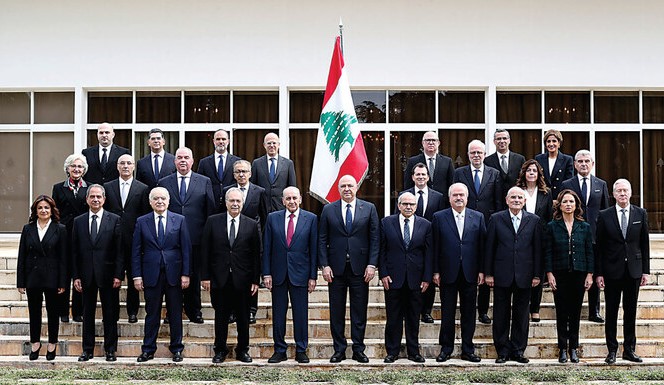
Slogans and posters of a “new era” have taken over the streets of Lebanon, but what does this new era entail? Is there a shift in the hegemonic discourse? What kind of reforms are put on the Lebanese government’s table? And is the era of post-sectarianism near or is it still a far-fetched dream?
Indeed, with the respective election and designation of a President Aoun and Prime Minister Salam earlier this year, Lebanon has finally gotten out of its political purgatory. According to Amnesty International (2025), the prime minister introduced the government’s ministerial statement to the parliament, outlining a promise to “rescue, reform, and rebuild” the country amid its deepening crises. The statement also highlighted commitments to economic reforms and strengthening rights, including better access to health care, social protection, and support for people with disabilities. Nevertheless, the statement was not binding and offered only broad, general outlines for addressing major challenges such as the financial and economic collapse.
Nonetheless, on April 24th, 2025, a tangible reform came to light. The Lebanese parliament approved measures giving regulatory authorities expanded access to bank account information – a necessary reform required by international lenders before the crisis-hit country can access bailout funds. Prime Minister Salam described the changes to the banking secrecy laws as “an essential step toward the financial reforms our government has committed to” and “a cornerstone of any recovery strategy” (The New Arab, 2025).
At the same time, one reform that has remained the elephant in the room since the 1989 Taif Agreement is increasingly haunting Lebanon: the disarmament of Hezbollah. The dismantling of non-state armed groups is a historical issue that can be traced back to both international and national agreements, including the Taif Agreement and UN Resolutions 1559 and 1701. Nevertheless, the actual disarmament process is still difficult and mostly unsolved in spite of these frameworks.
According to David Wood from the Crisis Group, Lebanon’s options include either dismantling Hezbollah’s military structure or merging its fighters and weapons with the national army. He noted that the “safest strategy” would be to “proceed carefully and slowly.” Meanwhile, Karim Bitar, a Middle East Studies professor at Sciences Po Paris, affirmed that Hezbollah might surrender some heavy weaponry while distancing itself from arms held by allied individuals. However, he stressed that without Iran’s approval, Hezbollah is unlikely to willingly transfer its arms to the Lebanese army, even if offered the opportunity to create a semi-autonomous battalion within it. Ultimately, he concluded, much will depend on the outcome of US-Iran negotiations (Atalayar, 2025).
Indeed, the United States has recently increased pressure on the Lebanese government to proceed with Hezbollah’s disarming, linking this issue to the negotiations with Iran over its nuclear program, as noted in a recent Al Jazeera (2025) story. Washington considers weakening Hezbollah’s power as a component of its plan to limit Iranian influence in the area. Lebanese authorities and academics warn that strong US measures could backfire, potentially enhancing Hezbollah’s domestic position by escalating sectarian differences within Lebanon and igniting nationalist sentiments. Therefore, how do these developments translate into concrete impacts on the ground?
Certainly, the disarmament of Hezbollah is a societal challenge as much as it is a governmental one. The Shia community, which constitutes the backbone of Hezbollah’s support, sees the group not only as a resistance force but also as a political and social representative. In a country where sectarian identity politics are deeply entrenched, any move towards disarmament must be gradual, conditional, and tied closely to tangible improvements in security, economic stability, and the rule of law. Hence, the government must not only promise reforms but deliver concrete results that demonstrate clear benefits for the Shia community to prevent fears of marginalization.
Hezbollah’s disarmament would likely only be possible if accompanied by substantial national reforms and strong guarantees of continued political representation and security, addressing the real fear among supporters of losing critical protections and services. As echoed by Karim Safieddine, a Lebanese political writer and doctoral student, “Hezbollah wouldn’t accept to give up its arms de facto out of principle. Instead, they could disarm in exchange for big benefits” (Al Jazeera, 2025). Additionally, as seen during the war on Lebanon that erupted in September 2024, Hezbollah’s extensive welfare network provided necessary support to displaced Shia families by offering financial aid, food, and medicine, especially at a time when government institutions were absent (The Guardian, 2024). Disarming Hezbollah would thus significantly weaken its influence in Lebanese politics and its role as a provider of essential services and shift the country’s delicate balance of power.
Moreover, it should be noted that a significant portion of the population derives a sense of security from the presence of the resistance faction, perceiving it as the sole defender of Lebanese lands against aggressions from Israel. The strong association between safety and the group’s presence further complicates the disarmament process, emphasizing the need for a carefully planned and strategic approach to replacing its role without triggering instability. In addition, recent developments reinforce these concerns: the Israeli Defense Forces (IDF) have been targeting roads and towns in southern Lebanon. Since the ceasefire in November, Israeli actions have resulted in at least 71 civilian deaths in Lebanon, based on data from the UN High Commissioner for Human Rights. Lebanese Minister of Information, Paul Morcos, has reported a much higher toll of 190 fatalities. Additionally, Morcos documents over 2,700 incidents he considers violations of the ceasefire (Vega, 2025).
In brief, while foreign entities, particularly the United States, have focused on the disarmament of Hezbollah as a primary reform, such a move is neither conceivable nor advisable if done under the current conditions. As discussed, tensions between Israel and Lebanon remain extremely high, especially following the violation of ceasefire agreements and recent escalations in several Lebanese regions. Lebanon must first seek comprehensive security reforms that guarantee Israeli threats to Lebanese sovereignty are adequately addressed before any significant disarmament efforts can begin. In other words, Lebanon needs to follow a cautious and inclusive transitional process that offers concrete improvements to all citizens and prevents growing sectarian divisions if the promise of a “new era” is to be achieved.
And, in the future, following successful reforms and the disarmament of Hezbollah, attention should be directed toward promoting a post-sectarian environment. It will be important to frame the defense against external threats, including the Israeli question, as a national responsibility carried out by the army, rather than as a sectarian cause.
References
Salhani, J. (2025, April 16). The battle over Hezbollah disarmament intensifies. Al Jazeera. https://www.aljazeera.com/news/2025/4/16/will-us-pressure-tactics-on-lebanon-make-hezbollah-disarm-faster
Vega, J. C. (2025, April 22). Lebanon faces the difficult challenge of disarming a weakened Hezbollah. EL PAÍS English. https://english.elpais.com/international/2025-04-22/lebanon-faces-the-difficult-challenge-of-disarming-a-weakened-hezbollah.html
Iran’s decline accelerates the disarmament of Hezbollah. Atalayar. (2025, April 20). https://www.atalayar.com/en/articulo/politics/irans-decline-accelerates-the-disarmament-of-hezbollah/20250420170000213386.html
Lebanon amends banking secrecy law in key reform. The New Arab. (2025, April 24). https://www.newarab.com/news/lebanon-amends-banking-secrecy-law-key-reform
Lebanon: New Government must prioritize critical need for human rights protections. Amnesty International. (2025, February 28). https://www.amnesty.org/en/latest/news/2025/02/lebanon-new-government-must-prioritize-critical-need-for-human-rights-protections/
“They are taking incredible care of us”: Lebanon’s Shia put their faith in Hezbollah. The Guardian. (2024, October 13). https://www.theguardian.com/world/2024/oct/13/lebanon-shia-faith-hezbollah-food-cash-medicines-conflict
Disclaimer. The views and opinions expressed in this analysis are those of the author and do not necessarily reflect the official policy or position of MEPEI. Any content provided by our author is of his opinion and is not intended to malign any religion, ethnic group, club, organization, company, individual, or anyone or anything.

Mr. Nour HALABI
Mr. Nour HALABI is a MA of Communication Studies: Journalism and Media in Europe Vrije Universiteit Brussel. Also, he has MA in Political Science Universite Libre de Bruxelles and BA in Political Studies American University of Beirut. Currently, he is an intern at MEPEI.