Partition by Attrition: The Saudi-Emirati Rivalry in Yemen and the Limits of Gulf Alliance Cohesion
August 16, 2026
Türkiye and Israel: From a Struggle for Influence to the Brink of Regional Confrontation?
August 25, 2026Who Governs Global Football? The Rise of Arab Influence Inside FIFA: The August 2026 FIFA crisis and the rise of institutional influence in global football governance
Executive Summary
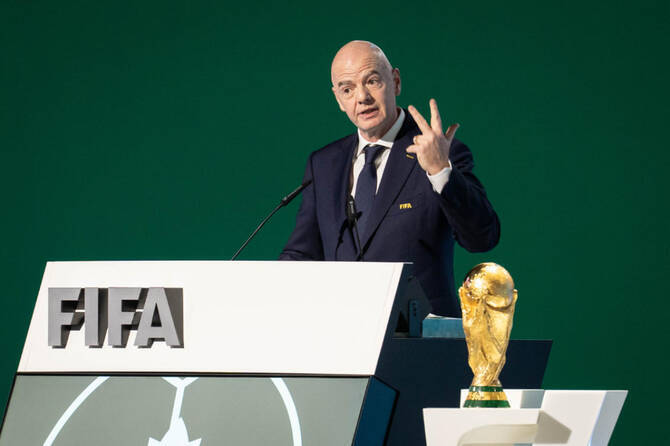
On 13 August 2026, the football federations of Qatar, Morocco, Egypt, Lebanon, Sudan, and Mauritania issued a joint statement backing FIFA President Gianni Infantino, days after UEFA, the Asian Football Confederation (AFC) and CONCACAF had called for his removal over a failed plan to sell a stake in World Cup commercial rights. The statement looked, at first glance, like an Arab bloc crossing FIFA’s continental lines: two of the six sit in Asia, four in Africa. A closer look tells a more precise story. Four of the six simply followed the African confederation, CAF, which had already backed Infantino. Only Qatar and Lebanon genuinely broke from their own confederation, the AFC. This article argues that the crisis reveals not an Arab voting bloc but something narrower and more interesting: a small number of Arab officials, above all in Morocco and Qatar, who now hold overlapping seats in government, national federations, continental bodies and FIFA itself. That layered position, not shared identity, is what increasingly lets them help shape outcomes from inside football’s machinery, rather than only project image from outside it.
Introduction
On 13 August 2026, the heads of six Arab football federations, Qatar, Morocco, Egypt, Lebanon, Sudan and Mauritania, released a joint statement expressing “full support” for FIFA President Gianni Infantino and “confidence in his leadership.” Reuters carried the story worldwide. On its face this was a minor item in a much larger governance crisis: Infantino had spent two weeks fighting to save his position after a plan to sell a fifth of FIFA’s World Cup commercial rights to private investors collapsed under pressure from UEFA, the AFC and CONCACAF, the three confederations that together represent 136 of FIFA’s 211 member associations.
Looked at more closely, the six-country statement is stranger than it first appears. FIFA’s world is organised by continent. Qatar and Lebanon belong to the AFC, which had just joined the call for Infantino’s resignation. Morocco, Egypt, Sudan and Mauritania belong to the Confederation of African Football (CAF), which had already backed him. A statement signed jointly by federations from two rival confederations, in the same week those confederations took opposite positions, is not something FIFA’s institutional architecture is meant to produce. Continental blocs are supposed to vote together; here, an Arab sub-group cut across them.
This article asks why. It also asks a larger question the episode opens up: does the 2026 crisis show Middle Eastern actors moving from the well-documented business of using football to build reputations abroad, soft power, mega-events, club ownership, toward a different kind of influence altogether: occupying the seats, committees and networks that actually govern the sport? The evidence below answers more precise than a simple yes or no. Most of the six federations were doing nothing more exotic than following their confederation or protecting their funding. But two or three individuals, above all Morocco’s Fouzi Lekjaa and Qatar’s Sheikh Hamad bin Khalifa Al Thani, illustrate something genuinely new: an Arab institutional presence inside FIFA that no longer depends on hosting a tournament to be felt.
1. The Crisis That Exposed FIFA’s Political Geography
On 28 July 2026, Infantino unveiled the FIFA Forward Enterprise, a plan to fold FIFA’s broadcasting, sponsorship and ticketing rights into a new commercial vehicle valued by JPMorgan at roughly $20 billion, then sell a 20 percent minority stake to outside investors led by Josh Kushner’s Thrive Capital, raising up to $4.2 billion. In exchange, FIFA promised to more than double its flagship development programme, FIFA Forward: funding of about $8 million per member association for the 2023-2026 cycle would rise to $20 million, and then to $22-24 million by 2038.
The backlash was immediate. Carlos Cordeiro, Infantino’s own senior adviser and a member of the White House World Cup task force, resigned in protest. UEFA’s 55 members voted unanimously on 30 July to boycott FIFA competitions unless the plan was dropped, calling it “governance by intimidation” cooked up “on fast-track timescales by faceless individuals.” CONCACAF’s 41 associations objected to the lack of due process, noting FIFA had just banked its most profitable World Cup ever and did not obviously need outside capital. By 31 July, three days after it was announced, Infantino scrapped the plan, saying it had “created divisions” that outweighed its purpose.
The retreat did not end the crisis; it relocated it to the question of Infantino’s own position. On 5 August he convened FIFA’s leadership at the confederation’s African regional office near Rabat, Morocco, and received their public backing. On 6 August, CAF’s 54 members did the same, with CAF president Patrice Motsepe endorsing FIFA’s account that “mistakes were made in the process.” On 10 August, UEFA, the AFC and CONCACAF issued a joint letter insisting the problem was judgment, not process, and that any review had to be independent rather than run by FIFA itself. Three days later, on 13 August, the six Arab federations added their own statement.
By the second week of August, FIFA’s confederations had sorted into two camps. CAF and CONMEBOL backed Infantino; UEFA, the AFC and CONCACAF did not. The Arab statement was published inside that split, and it did not sit cleanly on either side of it, because Arab football itself does not sit inside a single confederation.
2. The Arab World Does Not Fit FIFA’s Map
FIFA’s governance is built around six confederations, each corresponding to a continent. Arab football does not respect that geography. Qatar and Lebanon vote through the AFC, alongside China, Japan, Australia and Iran. Morocco, Egypt, Sudan and Mauritania vote through CAF, alongside Nigeria, South Africa and Cameroon. There is no Arab confederation inside FIFA’s formal structure.
Once that is understood, the 13 August statement looks less like a single anomaly and more like two different stories stitched together. For Morocco, Egypt, Sudan and Mauritania, backing Infantino cost nothing: their confederation, CAF, had already done so a week earlier. Their signatures added an Arab layer to a position they held anyway. The genuine outlier is Qatar and Lebanon, whose own confederation, the AFC, was publicly demanding Infantino’s departure. It is worth noting who leads the AFC’s opposition: Sheikh Salman bin Ebrahim Al Khalifa, a member of Bahrain’s ruling family, who lost the 2016 FIFA presidential election to Infantino and has called the 2026 plan “totally unacceptable.” An Arab federation head sits at the head of the anti-Infantino camp. Shared Arab identity, on its own, explains neither the AFC’s opposition nor Qatar and Lebanon’s break from it.
What might explain it is a different institution altogether: the Union of Arab Football Associations (UAFA), founded in 1974 and grouping 22 Arab federations from both CAF and AFC. UAFA describes its purpose as strengthening relations and building common positions among its members, and it is currently led by Prince Abdulaziz bin Turki Al Faisal, who is simultaneously Saudi Arabia’s Minister of Sport. Its deputy president for the Asian zone, elected in September 2025, is Sheikh Hamad bin Khalifa Al Thani, who is both president of the Qatar Football Association and Qatar’s Minister of Sports and Youth. Morocco’s Fouzi Lekjaa has sat on UAFA’s executive council since 2021. Three of the six signatories to the 13 August statement, then, already meet regularly inside a body built to produce common Arab positions, one that cuts across the CAF/AFC line the rest of FIFA is organised around.
No public evidence shows that UAFA formally coordinated the 13 August statement, and it should not be assumed that it did. UAFA’s own president, Saudi Arabia, did not sign it: the Saudi federation was mid-transition, holding elections for a new president on 30 August, and chose to stay silent until that process concluded. What UAFA plausibly supplies is not a chain of command but a standing network, relationships and a habit of joint statement-writing that make it easier for a subset of Arab federations to align quickly when they choose to, regardless of which FIFA confederation they formally belong to.
3. From Sports Diplomacy to Institutional Power
For two decades, the dominant lens for understanding Gulf and Arab involvement in football has been image management: Qatar’s 2022 World Cup, Saudi investment in domestic clubs and sponsorships, the purchases of Paris Saint-Germain, Manchester City and Newcastle United. Scholars writing in this tradition, including recent work on Gulf sport diplomacy published in 2024 and 2026, treat these moves as forms of soft power or “sportswashing” aimed at improving how Gulf states are perceived by foreign publics. That literature is careful and largely persuasive on its own terms. It is also explicit about what it does not cover. A 2024 framework by Jonathan Grix and Paul Michael Brannagan on sport diplomacy and sportswashing focuses entirely on external image effects and does not examine how FIFA or the IOC actually make decisions internally. A 2026 comparative study of Gulf sport diplomacy acknowledges, almost in passing, that “institutional influence, such as agenda-setting in global sporting bodies like FIFA,” exists, but does not investigate it in any depth, focusing instead on ownership, infrastructure and narrative.
That gap is the opening this article works in. The audience for soft power is external: foreign publics, tourists, investors, journalists. The audience for what happens inside UAFA, the FIFA Council and CAF’s executive committee is internal: other football officials, confederation presidents, FIFA’s own secretariat. Influencing that second audience does not require a stadium or a broadcast deal. It requires a seat, a committee membership, a vote, or a relationship built up over years of attending the same congresses. Call it institutional football power: the capacity to shape outcomes by occupying the rooms where football’s rules are written, rather than by shaping how football makes a country look.
4. FIFA’s Political Economy
FIFA is a useful case for this shift because of an unusual feature of its constitution: every member association, from Germany to Mauritania, has exactly one vote in Congress, including for presidential elections. Scholarship on FIFA’s governance, notably a 2019 European Journal of International Law study of the organisation’s corruption crisis, has long argued this arrangement creates a specific kind of politics. Economic power in football is extremely concentrated: Deloitte’s 2026 Football Money League found the top 20 clubs, all European, generated a combined €12.4 billion in the 2024/25 season, with Real Madrid alone earning €1.2 billion. Voting power is not concentrated at all. Trinidad and Tobago’s vote counts the same as England’s.
That mismatch gives FIFA’s development spending unusual political weight. FIFA Forward currently allocates about $8 million per member association over the 2023-2026 cycle, plus $60 million per confederation. For a federation like Mauritania’s, whose government presides over a national economy of roughly $12 billion, or Sudan’s, whose football administration has continued to operate through a civil war that has devastated a $40 billion economy, that funding is not marginal; it can be close to existential for keeping national leagues and youth programmes running. The abandoned FIFA Forward Enterprise plan made the stakes explicit by reportedly threatening funding cuts of up to 75 percent for federations that did not go along with it, a detail that helps explain why the proposal generated so much anger even among federations that might otherwise have welcomed more money.
None of this proves support for Infantino was bought. No evidence links the six federations’ statement to any funding transaction, and this article does not make that claim. What the FIFA Forward numbers do establish is an incentive structure: a sitting FIFA president controls a redistribution mechanism that matters more to smaller, poorer federations than to larger ones, and those federations, in turn, hold exactly as much formal power over his re-election as anyone else. That reciprocal dependence, not any specific act of patronage, is the structural fact worth taking seriously. It also means the six-country statement should not be read as one thing: Qatar and Morocco, both wealthy relative to the others and central to FIFA’s hosting calendar, plausibly had different motives from Lebanon, Sudan and Mauritania, for whom continued development funding is a much larger share of what football administration can afford.
5. Morocco as a Bridge State
If one figure embodies the shift from external image-building to internal institutional position, it is Fouzi Lekjaa. Lekjaa has been president of the Royal Moroccan Football Federation since 2014, re-elected three times. He is also, since October 2021, Morocco’s Minister Delegate for the Budget, a senior cabinet post in which he has overseen billions of dirhams in state spending. Inside African football, he has sat on CAF’s executive committee since 2017 and became CAF’s first vice-president in April 2025, one step from the confederation’s presidency. Inside FIFA, he has held a seat on the FIFA Council, the organisation’s highest decision-making body between congresses, since 2021. Inside the Arab football world, he has sat on UAFA’s executive council since 2021. And inside the 2030 World Cup, which Morocco will co-host with Spain and Portugal, he chairs both Morocco’s bid structure and the Morocco 2030 Foundation responsible for delivering it.
No other football official currently combines quite that range of positions: a national government ministry, a national federation, a continental executive committee, FIFA’s own council, the regional Arab body, and the organising structure of a men’s World Cup, simultaneously. The point is not that Lekjaa has accumulated titles for their own sake. It is that each position sits inside a different institutional space, African football, Arab football, FIFA’s global governance, and a World Cup that is jointly European and African, and Lekjaa is present in all of them at once. That is structurally different from owning a club or hosting a tournament. It does not depend on public attention. It depends on being in the room.
Morocco’s broader position reinforces the same pattern. The 77th FIFA Congress, at which the 2027 presidential election will be decided, is scheduled for Rabat on 18 March 2027: whatever happens to Infantino, Morocco supplies the room in which it will be settled. The Royal Moroccan Football Federation formally proposed Infantino’s candidacy for that election back in May 2026, months before the crisis began, and it was quick to reaffirm that position once the crisis hit. Combined with the 2030 co-hosting arrangement, which requires years of technical cooperation with the Spanish and Portuguese federations and with UEFA, Morocco now sits at the intersection of African football, Arab football, European football and FIFA’s own leadership politics. That looks less like the traditional Gulf playbook of hosting and ownership, and more like what international relations scholars call brokerage: occupying a structural gap between otherwise separate networks and gaining influence from connecting them. Morocco’s football federation, not only its diplomacy more broadly, increasingly fits that description.
6. Testing the Institutional Power Hypothesis
To test how much of this generalises beyond Morocco, it helps to set out what is actually known about each of the six signatories, and about a natural comparison case, Saudi Arabia, which did not sign.
| Federation | Confed. | Position, 13 Aug 2026 | UAFA link | FIFA Council seat | Hosting tie | Federation head also in government | Broke with confederation | GDP 2025 (US$bn, IMF est.) |
| Qatar | AFC | Support | UAFA Asia deputy president (Sheikh Hamad, elected Sept. 2025) | No | Hosted 2022 World Cup | Yes, Minister of Sports and Youth | Yes | 221 |
| Morocco | CAF | Support (also proposed Infantino’s candidacy, May 2026) | UAFA executive council member (Lekjaa, since 2021) | Yes, since 2021 (Lekjaa) | 2030 World Cup co-host; 2027 Congress host | Yes, Minister Delegate for the Budget | No, aligned with CAF | 183 |
| Egypt | CAF | Support | UAFA member federation | Yes, Hany Abo Rida (CAF seat, retained March 2025) | None identified | Not established in sources | No, aligned with CAF | 365 |
| Lebanon | AFC | Support | UAFA member federation | No | None identified | Not established in sources | Yes | 34.5 |
| Sudan | CAF | Support | UAFA member federation | No | None identified | Federation operating amid civil war; ties unclear | No, aligned with CAF | 39.7* |
| Mauritania | CAF | Support | UAFA member; signed UAFA hosting pact, Sept. 2025 | Not confirmed independently | None identified | Not established in sources | No, aligned with CAF | 12.3 |
| Saudi Arabia | AFC | No statement issued | UAFA presidency (Prince Abdulaziz bin Turki, also Minister of Sport) | Vacant at time of crisis (federation in leadership transition) | 2034 World Cup host | Yes, UAFA president is a government minister | N/A, no statement | 1,277 |
* Sudan figure reflects an IMF estimate for an economy substantially disrupted by civil war since 2023 and should be read as indicative only. GDP figures are IMF 2025 nominal estimates. Table compiled from sources listed below; blank explanatory cells indicate that no public source could confirm the item, not that the item is absent.
Three patterns stand out. First, confederation membership, not Arab identity, predicts most of the outcome. Morocco, Egypt, Sudan and Mauritania supported Infantino because CAF did; that is the least surprising part of the story, and treating it as evidence of Arab coordination overstates the case. Second, the two federations that did break with their confederation, Qatar and Lebanon, both belong to the wider Arab network built around UAFA, and Qatar in particular is led by an official, Sheikh Hamad, who holds the same kind of overlapping government-federation-regional-body position that Lekjaa holds in Morocco. That overlap, more than shared Arab identity in the abstract, looks like the better explanation for why Qatar was prepared to break from the AFC’s leadership. Third, Saudi Arabia’s absence is itself informative. If this were simply an Arab bloc exercising bloc influence, the country that chairs UAFA and hosts the 2034 World Cup would be the most likely signatory, not the most notable non-signatory. Its silence had a specific, disclosed cause, an internal leadership transition, a more mundane explanation than any account resting on coordinated Gulf strategy.
A further complication is worth flagging rather than smoothing over. Days before the Arab federations’ statement, European football executives were reported to be pushing Qatari businessman Nasser Al-Khelaifi, president of Paris Saint-Germain and a UEFA executive committee member, as their preferred alternative to Infantino. Al-Khelaifi’s spokesperson denied any interest in the role. The episode still illustrates something the “Arab bloc” framing misses entirely: Qatari-linked capital and personnel are not confined to one side of this fight. PSG’s ownership runs through Qatar Sports Investments; Al-Khelaifi also chairs the Qatari-owned beIN Media Group and sits on both UEFA’s executive committee and FIFA’s Council. The same country whose federation was backing Infantino was, through an entirely different individual, being floated by his opponents as the answer to the crisis. That is not evidence of a single Qatari strategy. It is evidence that Gulf capital and Gulf-linked officials are now woven into multiple, sometimes contradictory positions across football’s governing institutions, which is a different and arguably more significant development than a bloc voting together would be.
7. Why Europe Should Care
Europe’s position in this story is easy to misread in either direction. UEFA’s economic weight is not in question. Its 55 member federations sit above clubs that generated €12.4 billion between them last season, more than the rest of world football combined, and UEFA proved it can use that weight decisively: a single unanimous boycott vote forced Infantino to abandon the FIFA Forward Enterprise within three days of announcing it. That is real, fast, institutional power.
What UEFA’s leverage does not obviously convert into is influence over the slower, more granular politics of FIFA’s one-country-one-vote Congress, the arena that will decide whether Infantino survives to a fourth term in March 2027. A boycott threat is a blunt instrument, effective against a single bad proposal, harder to deploy in a contest for well over a hundred votes out of 211. Building that kind of majority requires the standing relationships, funding programmes and overlapping institutional memberships that CAF, several Gulf and Arab officials, and Infantino himself have spent years accumulating. It is not obvious that UEFA, historically confident in its economic dominance, has invested in that kind of coalition politics to the same degree.
The 2030 World Cup, co-hosted by Morocco, Spain and Portugal, complicates any reading in which Europe is simply losing ground to the Gulf and North Africa. It is a European tournament as much as an African or Arab one, and it exists because Morocco’s football establishment, led by a minister who also sits on FIFA’s Council, built a credible partnership with two European federations. Likewise, the Al-Khelaifi episode shows that when UEFA looked for its own preferred successor to Infantino, the name it reached for was tied to Qatari capital anyway: PSG’s ownership, beIN’s broadcasting reach, a UEFA executive committee seat. The boundary between “European” and “Gulf” interests inside football’s institutions is already blurred at the level of money and personnel, even where it remains sharp at the level of confederation politics.
The precise lesson for European policymakers and football administrators, and the one most relevant to an audience thinking about Europe’s standing in global institutions more broadly, is not that Europe has lost power in FIFA. It is that commercial dominance and moral authority, the tools Europe used effectively to stop the FFE plan, are not the same tools required to win a one-country-one-vote election. Actors who have quietly built overlapping institutional positions across confederations, over years, may be better placed to win that specific, narrower contest, regardless of who generates the sport’s revenue.
Conclusion
The six-country statement of 13 August 2026 will likely be remembered, if at all, as a minor episode in a FIFA governance crisis that Infantino ultimately survived or did not. That would understate what it shows. The more useful finding is not that Arab federations backed Infantino, most of them for reasons, confederation loyalty and development funding, that have little to do with being Arab. It is that a small number of individuals, Fouzi Lekjaa above all, and to a lesser extent Sheikh Hamad bin Khalifa Al Thani, have built the kind of layered institutional position, spanning national government, national federation, continental confederation, FIFA’s own council and a World Cup organising structure, that lets them operate inside football’s governing machinery in ways the soft power and sportswashing literature was never designed to capture.
That literature asked how states use sport to change how they are seen. The 2026 crisis suggests a narrower, sharper question is now more useful: which individuals and institutions have positioned themselves to be present, formally and repeatedly, in the rooms where football’s own rules get written, and does that presence let them shape outcomes that hosting a tournament or buying a club cannot. For Morocco, tied together by Lekjaa’s overlapping roles and by the accident of geography that makes it simultaneously African, Arab and, through 2030, European, the answer increasingly looks like yes. For most of the other five signatories, the evidence points somewhere more modest: alignment with a confederation, or a stake in development funding that has little to do with grand strategy.
The right question going forward is not why Middle Eastern states spend so much on international sport. It is whether they are learning to convert that spending, along with proximity and access built over a decade, into standing seats inside the institutions that decide what world football becomes next. On the evidence of August 2026, a few clearly are. Most are still simply following the incentives the current system already gives them.
Sources
Al Jazeera, “FIFA’s Infantino backed by six Arab federations including Qatar and Morocco,” 13 August 2026.
South China Morning Post (Reuters), “Arab federations publicly back Infantino, affirm confidence in his leadership,” 13 August 2026.
Al Jazeera, “FIFA forced to scrap World Cup private investment plan after backlash,” 31 July 2026.
Time, “FIFA Draws Fury Over Plan to Sell Stakes in World Cup,” 29 July 2026.
CBS Sports, “UEFA to boycott FIFA competitions after rejecting Gianni Infantino’s investment plan; Concacaf also against,” July-August 2026.
Sky Sports, “Gianni Infantino abandons plans to sell World Cup profits to private equity after widespread criticism,” 31 July 2026.
NPR, “FIFA scraps controversial deal to sell stakes in World Cup to private investors,” 31 July 2026.
ESPN, “Gianni Infantino has ‘lost UEFA’s confidence’ as World Cup investment plan fails,” August 2026.
Al Jazeera, “UEFA says it has lost confidence in Infantino’s FIFA leadership,” 1 August 2026.
Al Jazeera, “UEFA, AFC, CONCACAF hit out at Infantino over World Cup privatisation plan,” 10 August 2026.
Morocco World News, “FIFA Leadership Backs Infantino After Emergency Meeting in Rabat,” 6 August 2026.
ESPN, “CAF agree to support Gianni Infantino amid FIFA governance crisis,” 6-8 August 2026.
CAF Online, “CAF Executive Committee (EXCO) Media Statement,” 6 August 2026.
The Guardian (Nigeria), “UEFA, others’ response to FIFA expose weakness in CAF,” August 2026.
Al Jazeera, “Infantino’s FIFA World Cup crisis: Who could replace president?,” 1 August 2026.
Goal.com, “Al-Khelaifi reveals in an official statement the truth about his desire to succeed Infantino,” 31 July 2026.
Goal.com, “Won’t act before September: what lies behind Saudi Arabia’s silence in the Infantino crisis?,” August 2026.
Saudi Press Agency, “Prince Abdulaziz bin Turki Elected President of Arab Football Federation [UAFA],” 15 September 2025.
The Peninsula Qatar / Qatar Football Association, “Sheikh Hamad elected Union of Arab Football Associations Vice President,” 16 September 2025.
Union of Arab Football Associations, official site, uafa-ac.com.
The New Arab, “Moroccan Fouzi Lekjaa appointed as CAF first vice-president,” 26 April 2025.
Kingfut, “Hany Abo Rida Retains FIFA Council Seat as CAF Representative,” 12 March 2025.
Grix, J. and Brannagan, P.M., “Sports Mega-Events as Foreign Policy: Sport Diplomacy, ‘Soft Power,’ and ‘Sportswashing’,” 2024.
Devendra, N., “Soft power or geoeconomic contest? A comparative study of Gulf sport diplomacy,” 2026.
“Whose Game? FIFA, Corruption and the Challenge of Global Governance,” European Journal of International Law, vol. 30, no. 3, 2019.
FIFA, “FIFA Forward core principles,” inside.fifa.com.
Deloitte, “Football Money League 2026,” Deloitte UK.
Worldometers / IMF World Economic Outlook, GDP by country, 2025 nominal estimates.
Disclaimer. The views and opinions expressed in this op-ed are those of the author and do not necessarily reflect the official policy or position of MEPEI. Any content provided by our author is of her opinion and is not intended to malign any religion, ethnic group, club, organization, company, individual, or anyone or anything.
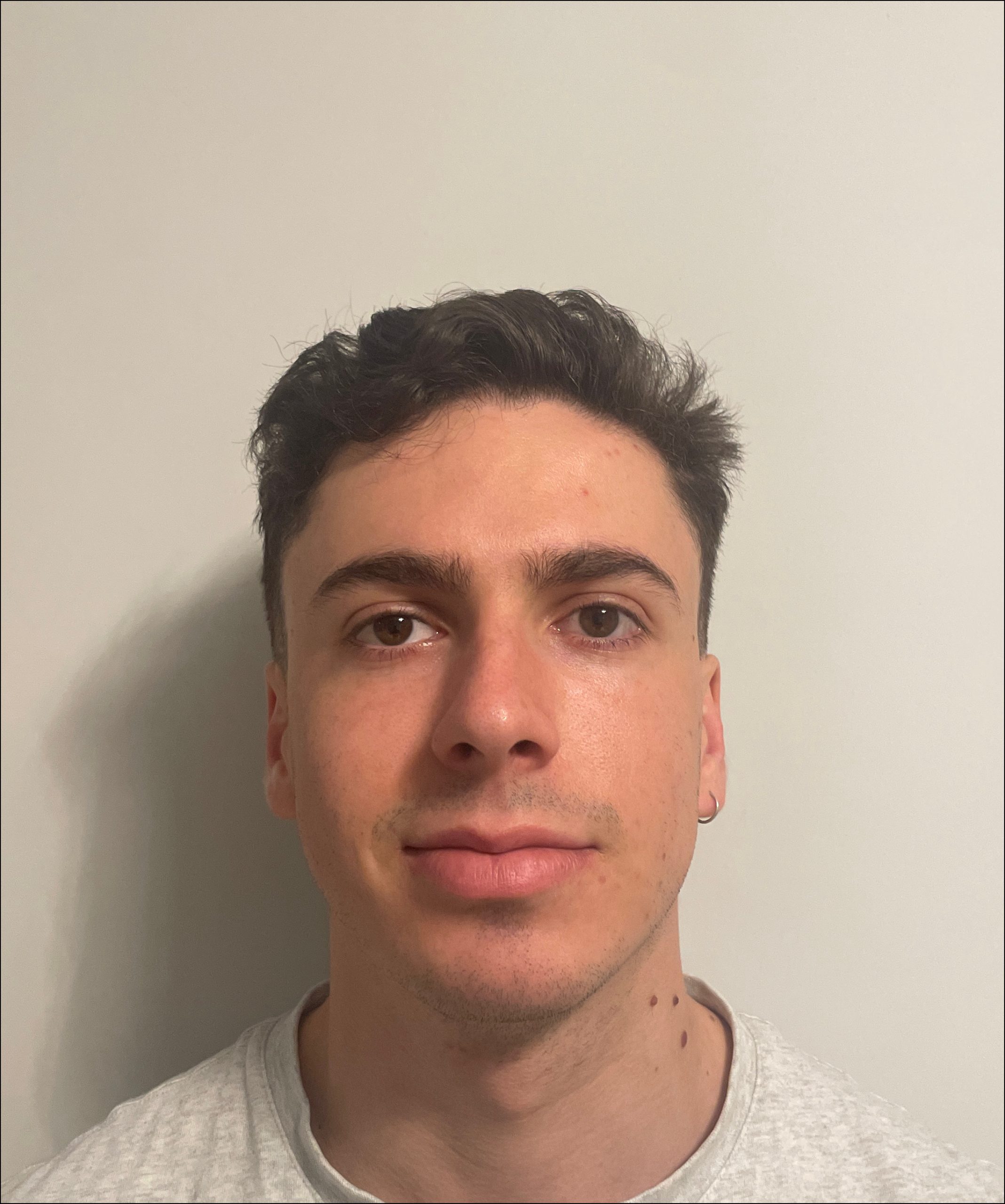
Mr. Rafael MARCOU
Mr. Rafael MARCOU is a Research Intern at the Middle East Political and Economic Institute (MEPEI). He holds a Bachelor’s degree in European Studies from the University of Amsterdam, where he majored in European Politics and wrote his thesis on U.S. partnerships with Kurdish armed groups in the Syrian and Iranian cases. He also studied Political Science and International Relations at Boğaziçi University in Istanbul. He is currently pursuing a Master’s degree in International Relations, Security and Development at the Universitat Autònoma de Barcelona. His research interests include Middle Eastern geopolitics, EU–Middle East relations, security, and Kurdish affairs.